
31 july 2026
John Bjarne Grover
On Rilke's 5th Duino Elegy
It has been said many times, I think, that the 5th elegy is about Picasso's artwork 'Les saltimbanques' which allegedly hung on the wall of Hertha Koenig in München when Rilke was there. From Gerhard Oberlin: Zu Rainer Maria Rilkes Gedicht "Die fünfte Elegie":
"Zu den Quellen dieser Elegie ist seit spätestens 1914 auch Picassos Ölgemälde La famille des saltinbanques zu rechnen, das er der Kunstsammlerin Hertha Koenig zum Kauf empfohlen hatte, bevor er es in deren Münchner Wohnung im Jahr darauf einige Monate lang vor sich sehen und bewundern konnte. Es soll dieselbe Gauklertruppe darstellen, die Rilke im Jardin du Luxembourg einst erlebt hatte".
However, I recently discovered a perhaps even more relevant artwork to this elegy of Rilke - it is Giambattista Tiepolo's "The Madonna of Carmel and the Souls of the Purgatory" (I dont know who made the title):

I notice particularly the lines (translated with translate.google.com):
|
Aber der junge, der Mann, als wär er der Sohn eines Nackens und einer Nonne: prall und strammig erfüllt mit Muskeln und Einfalt. |
But the young man, as if he were the son of a neck and a nun: plump and firm, filled with muscles and simplicity. |
The 'Nacken' is very visible in the pointing angel, and the 'Nonne' no less - she is in black and white to the left just under the Madonna. "...mit Muskeln und Einfalt" is the prostrate man with the muscles down left. It seems that most of the elegy can be recognized in this work of Tiepolo which shows the Madonna giving the black textile to Simon Stock.
If Rilke had seen this artwork before he wrote his elegy? That is not so important - it is probably a matter of universals anyhow. I myself found twice (with one week's interval) a black and humid textile when entering tram #1 in downtown Vienna. Perhaps one can see this artwork of Tiepolo as showing an arriving train or tram - coming up from the lefthand half of the canvas. That is like me - the tram #1 was coming from my lefthand side.
In addition, I looked a little closer at one of the two textiles I found with one week's interval - it was partwise folded so that it was double in a part of it (maybe in one third or a half of it - but I could not unfold all of it so I cannot tell it more precisely). This reproduction from the Pinacoteca di Brera shows the details a little better - it is seen that the textile to the left folds around the body of the angel - and hence it corresponds to the fold on the textile I found. This is what Rilke calls 'Aufschlag' - but would he have used this word if he was reproducing an impression from this artwork of Tiepolo?
Here is the 5th Duino Elegy of Rilke
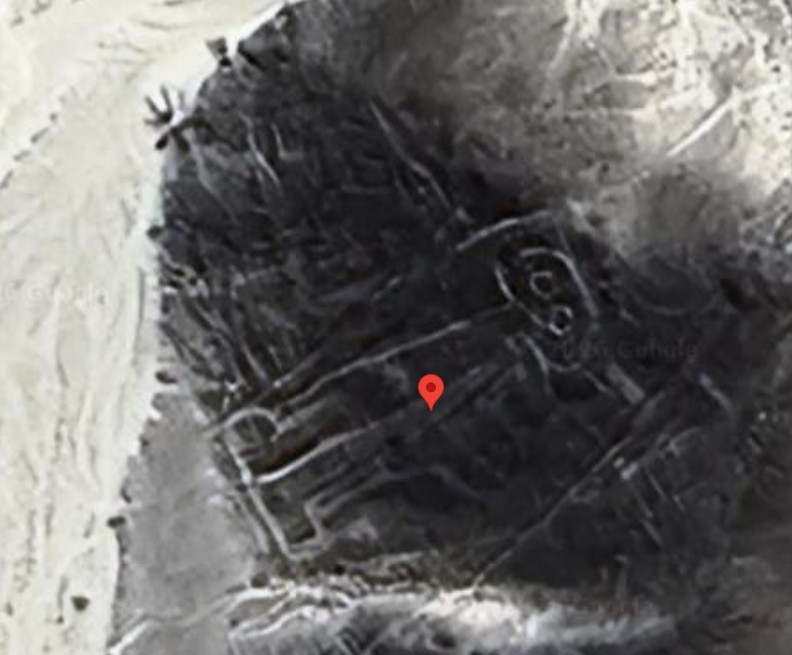
2/8-2026: Today I came across yet another interesting observation with high relevance for this complex: The socalled 'Nazca Lines' are giant formations in the landscape made from a culture in Peru probably some 2-3000 years ago. Here is a collection of the more important ones. One of the more mysterious is the socalled 'astronaut' or 'giant' - or 'owlman' - an appr. 25 meter high figure carved into a mountainside. From this photo I made a contrast-enhanced version which I compare with Picasso's 'Les saltimbanques' horizontally mirrored:
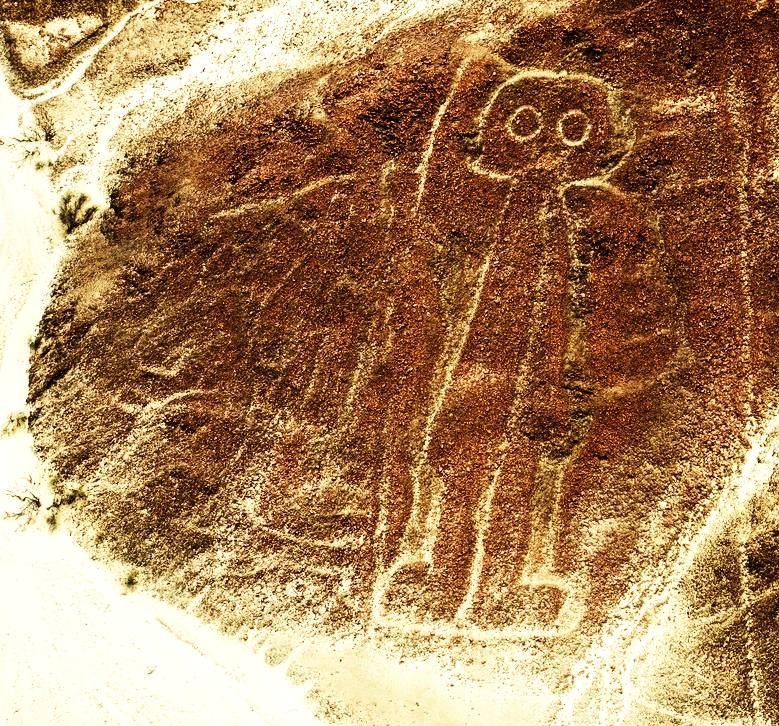 Photographically enhanced version of 'The giant' (Source of the reproduction) |
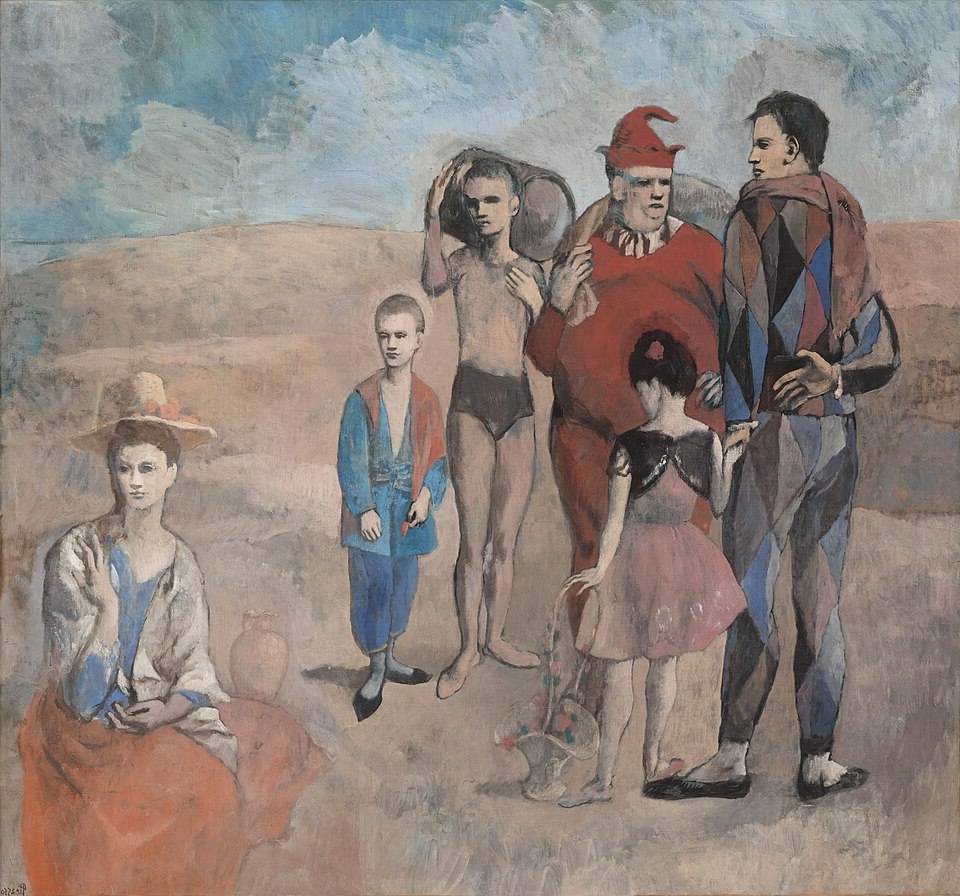 Picasso's 'Les Saltimbanques' horzontally mirrored (Source of the reproduction) |
From this image I excerpt the following detail which I enhance for contrast and light to show the outlines of the sitting woman to the left of the group - and I notice also the 'black textile' character of the darker field between her and the rest of the group:
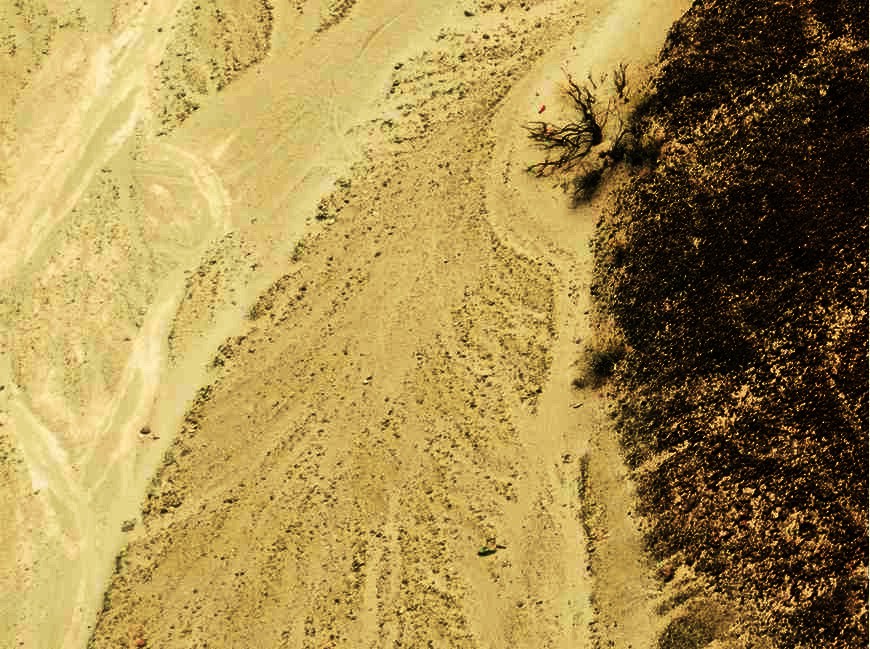
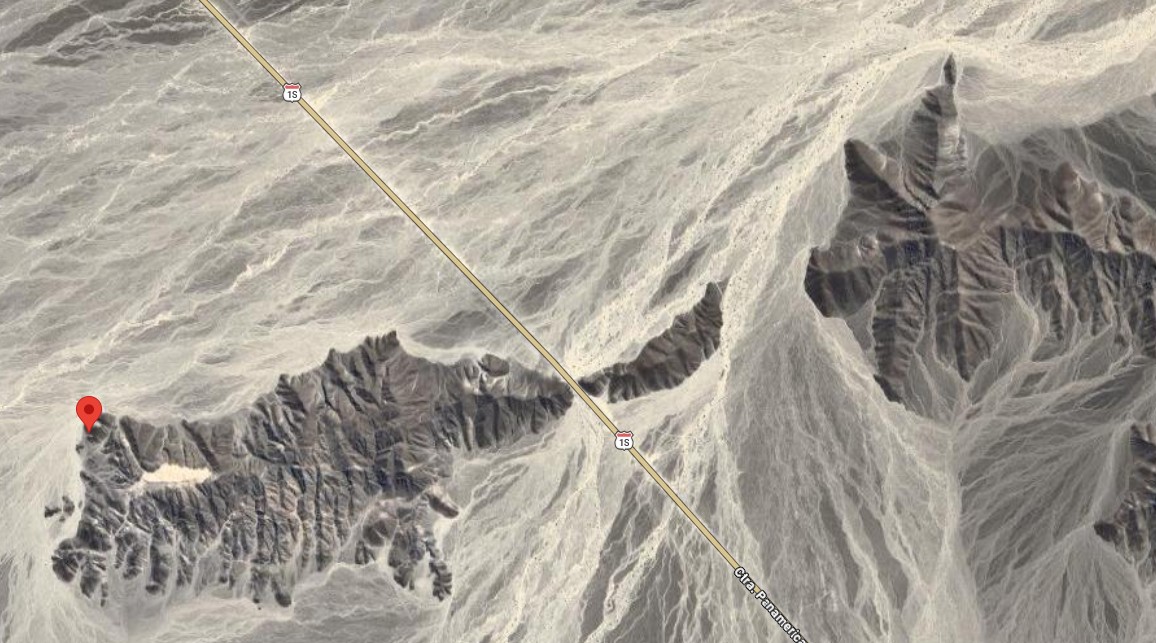 The landscape with the 'giant' in red Google map source of the screenshot |
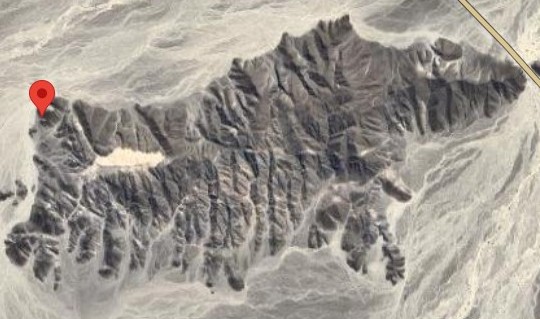
 Detail of the landscape Google map source of the screenshot |
The 'giant' (or socalled 'astronaut') is found near the tail of the 'bull' (or Auerochs, sort of) that faces rightwards. Interestingly, the bull seems to put its nose towards the stalk of a flower the petals of which are seen to the right. This is another of the large and ancient 'geoglyphs' in this Nazca landscape:

 The landscape 'bull' or 'Auerochs' (Google map source of the screenshot) |
 'The hands' (source of the reproduction) |
PS I was not aware of these 'Nazca lines' before I read this sad newspiece today. 'Naska' is norwegian for 'pilfered'. I did not steal any lines, though. ('Tryna' is norwegian 'slang' for 'falling forwards with the face down onto the ground').
© John Bjarne Grover
On the web 31 july 2026
Last updated 2 august 2026


