


If the sunflower matrix of Senbi is considered to be 'on a twig', the twig seems on a closer inspection to be of apparently the curly 'water sign' type, as shown in this detail from a photo of the relevant part of the rock wall. The water-wave sign seems to have been painted on but there seems also to be a carved basis for its framework. (I cannot determine on the authenticity of the age of these images - if they have been exposed to sandstorms etc for 4000 years they are not probable - the phenomenon is interesting only if the tomb were well closed throughout these many years). When I returned from Italy to Vienna in early march 2021, I found the main fuse (detached while I was away) had gone out and had to be replaced and in the refridgerator I found a huge lump of amorphous and non-smelling brown substance on the bottom glass plate and seeds of probably millet or rice type spurted around on the walls and ceiling but not on the bottom. Some 2-3 weeks later there was the volcanic eruption on Iceland, in Geldingadalur not far from Reykjavik - it had for a period 2 outlets (in short distance) - which I associated with the two electric outlets over my kitchen bench on the other side of the wall with the fusebox. I still fancy that volcanos cannot so far be engineered by smart technology. Then a couple of weeks after this again there were the news of a mystery object found on the beach of 'Rekvika' not far from Tromsø in northern Norway. The distance from this 'Rekvika' to 'Rekavik' ('Reykjavik') of the volcano is about 1823 km. (Cp. the undertitle 'And wages we got the distance from' to my 'Stillhetens åndedrag').
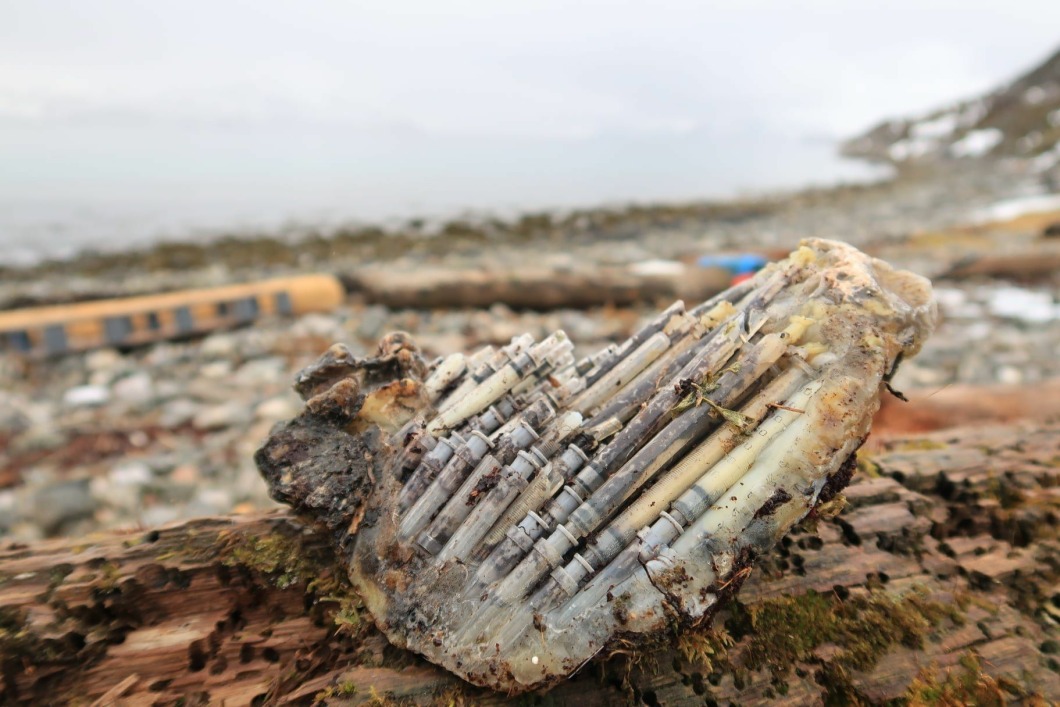
Photo 1 of the mystery object
Photo 2 of the mystery object
Detail of the mystery object
Detail of the 'calibration point'
The question is of course the authenticity of the mystery object - but I have found some reasons (in art of Delacroix and Rafael) to assume that there could be a sensible reason in it - it could be associated with a concept of 'Apollo's lyre'. The mystery object of Rekvika seems (as I guess from the photos) to have been found in or on a rather decayed piece of timber ('twig') on the beachside. It is when history tries to 'calibrate' the two end parts of the discontinuity of time that have been 'scissored' together that the two boats seen on the tomb illustration tells of the attempt of divine-controlled History to smooth the scissoring edge out so that it looks 'natural' and thereby causes no problems of confidence or faith in the humans (and a crash on Wall Street thereby is prevented). This Wall (Street) illustration from the egyptian tomb seems to tell of the nature of this 'calibration point' - which in my book is from the end of poem 50 in harmony with what I heard of Nono's quartet in 1985. As this egyptian tomb illustration shows, it is the form of the calibration point which smooths the two parts of discontinuous history together for a meaningful and nerve-calming conjunction - and that is when the phonetic and logical form of language are 'the same'. Hence one can expect this 'screen' between the two boats - meeting from either side of a scissored historic reality - to display a phonetic = spectrographic form of the one side of the reality which also will contain the logical aspects of the other side of the scissoring edge - and a perfect match between the meeting-points of discontinuous historic reality is found when the phonetic and the logical forms are 'the same': That is when 'wellformed linguistic form' applies in accordance with the assumed innate linguistic faculty.
The hieroglyphic forms above Senbi and Meres to the right in comparison with the signs above the 'transcendent' reality to the left are clearly the same as the signs above the respiratory organs held on the lower row of the wall image of 'Eva' discussed above - and it is seen how the 'sphinx' has the function of joining or 'smoothing' the two discontinuous parts together. It seems that this sphinx by its forearms could serve the function of a phonetic 'R' - and it is even possible that the hieroglyphs make for the phonetic form of 'R-ekvika' on the one side and 'R-ekavik' (for 'Reykjavik') on the other.
The 'sunflowers' are seen much more clearly and even in such apparent 'calibration' function in Blackman's description part 2 from the necropole - that is from the tomb of Senbi and Meres' son 'Ukh-Hokp':
