24 may 2025
John Bjarne Grover
The Endmorgan Quartet #461 and the mountain Gasherbrum 1
TEQ #461
Exodus 16:15
ויראו בני ישראל ויאמרו איש אל אחיו מן הוא כי לא ידעו מה הוא ויאמר משה אלהם הוא הלחם אשר נתן יהוה לכם לאכלה׃
While it is ahalf,
then she's graspin' forward,
then she's got
globere der Prinse,
rötere der Prinse.
Oi!
- in the lock of the press.
Miller and Livingstone,
Supports
The relation between poem and parallel hebrew is very interesting here:
1. ויראו - Overview of forms
i. 3 ppl pret or m pl imperative of to fear, revere, respect
ii. 3 mpl fut of To see, to have vision; figuratively, to perceive. (archaic) To observe, look at; figuratively, to consider
iii. 3 m pl fut of be seen, seem, appear
2. בני - Sing/plur (constr) of
(N) son, boy, male descendant, (V) to understand or archaic preposition in, with, during etc - notice also 7. (mathematics, followed by a feminine ordinal number) To the power of: Indicating an exponent.
3. ישראל - Israel
4. ויאמרו - 3 p m pl fut say, tell, intend, mean
5. איש - man, husband
6. אל - God, El, strength; ram, stag, hart; ('pillar of an archway'?)
7. אחיו - Sing/plur (possessive) of brother, fellow, (male) nurse, heart, fireplace
8. מן - manna
9. הוא - he, she, it; be, fall, become
10. כי - because, for, since, (vulture?)
11. לא - not, no, negation
12. ידעו - 3 p plur/imp of knowledge, know, [have sexual intercourse with], inform, make definite
13. מה - what, which
14. הוא - he, she, it; be, fall, become
15. ויאמר - will say, will be said
16. משה - Moses
17. אלהם - variant of God, El, strength; ram, stag, hart; ('pillar of an archway'?)
18. הוא - he, she, it; be, fall, become
19. הלחם - portmanteau or ה + bread, food, eat, wreak, combat, battle, fight, solder (metal used for welding)
20. אשר - introduces relative clause, or defective for happiness, be authorized/confirmed or approve, allow, confirm
21. נתן - to give, to allow, permit, let, (archaic) to put, place, (archaic, Biblical Hebrew) to turn into
22. יהוה - IHWH
23. לכם - to, for etc +2 m pl personal pronoun
24. לאכלה - food, nourishment - it is seen that hebrew א can serve as prefix to verbs for the meaning 'I will', and when כלה can mean 'bride', 'daughter-in-law', or simply 'to be done/finished/completed', there could be an inherent wedding formality at the end/completion of the verse.
As to the last word, it is seen that there could be some reason for it in my poem - with a 'Prinse', the insertion of the ring (oi!) and the wedlock, even the signature could lend some meaning to this.
What would be the interpretation of this series of glosses? Tentatively:
Appears to understand during fall-down from higher dimensions - (respect/observe boy/son (in))
Israel will tell husband - (Israel intending to (be?) husband)
('pillar of an archway'?)
brother/heart/fireplace manna
falls because no knowledge
which Moses will say
('pillar of an archway'?)
becomes the bread
which IHWH will give to you - as (bride) in a wedding/completion
It starts with a 're-spect' = 'mirroring' of the end/completion whereby son/groom and daughter/bride also mirror each other
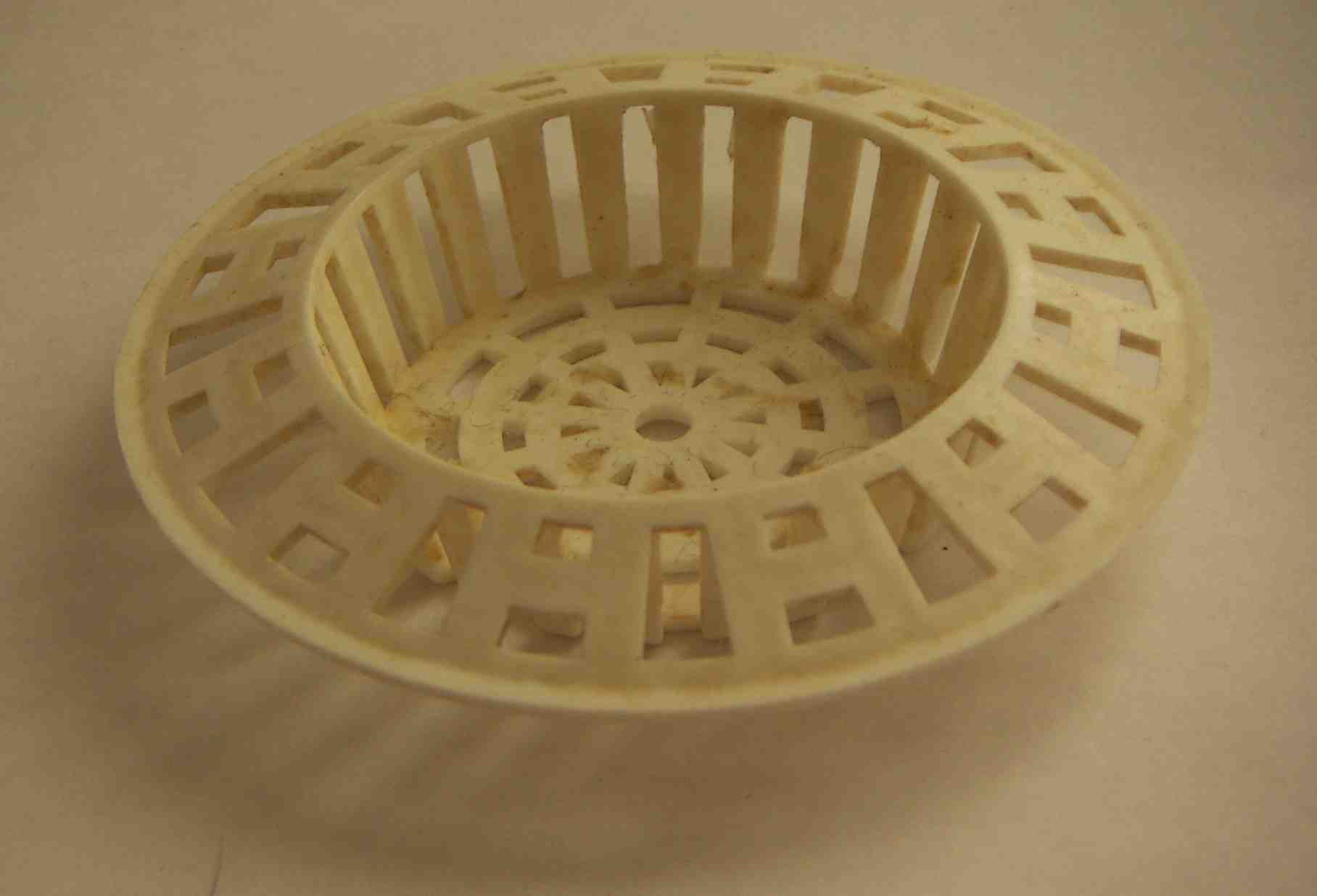
It is seen that the verse itself, the sentence from its beginning to end, could be taken to be self-referential throughout (it ends with the end/completion etc) - in which case the story from 2006 with the formation of the 'potato peel filter' that fell down in my bathtub seems relevant:
This fell down with a peculiar rumbling sound in my bathtub (and landed on exactly the mid line of the bathtub) while I was writing something about Saddam Hussein who was sentenced to death by hanging - that is, by falldown.
This potato peel filter makes sense of the 'pillar of an archway' that goes around like the verse when it self-referentially mirrors itself. In view of the 'Stonehenge' associations to it, this could make sense of the signature to TEQ #461 - "Miller & Livingstone, supports".
It is likely that the Miller & Livingstone is the wedding couple, while the 'supports' is the beginning and end words. And hence my poem describes how Exodus 16:15 can be folded along the middle for an explanatory value of the mirroring of the two halves. Therefore the poem starts with 'while it is ahalf'. It is seen that when read in this way from the middle towards the beginning and end, then the 'pillar of an archway' occurring in both halves comes to be the correlate to 'globere der Prinse, / rötere der Prinse'. Oi! is the finding of the 'ex nihilo' bread (the manna) on the ground.
It is seen that the phenomenon of Exodus 16:15 conceived in this way is described well also in Ouyang Xiu part 6.
If the 'pillars of archway' be compared with Stonehenge, and recognizing an anglophonic universal substrate in Ouyang Xiu part 5, this phenomenon of part 6 is quite interesting. (Then part 4 could be compared with the cliff fallout of Beachy Head?)
Now clearly the 'ex nihilo' piece of the bread from 2014 (#5 among these samples) could be of relevance for this poem (due to the 'bread' of Exodus 16:15). It can be suggested that the piece divides in half (left-right) and the two halves differ like the verse Exodus 16:15 does when it is interpreted by my TEQ #461.
I search among mountains in Himalaya for a correlate and find Gasherbrum 1 which is the 11th highest peak on earth and which exhibits interesting similarities:

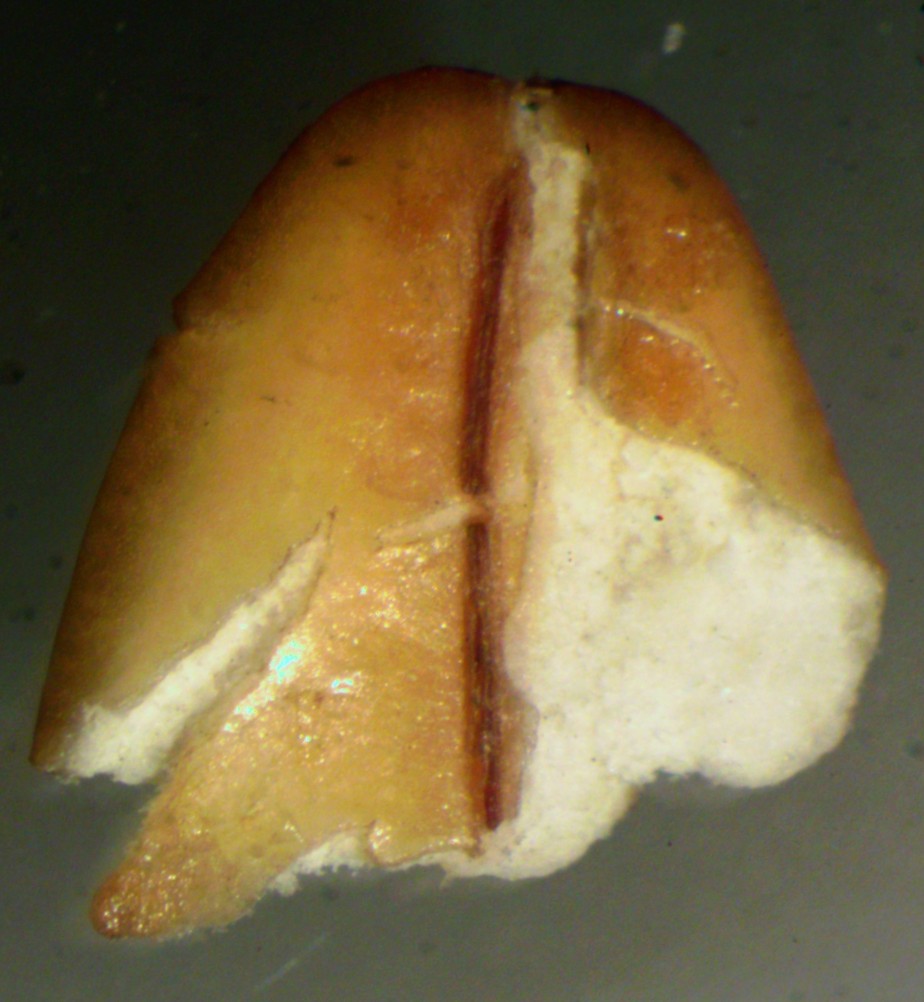
The reason why this looks appropriate is in the back side of the 'bread' which looks like a fingerprint - and which has an interesting counterpart in the map of the Karakoram district of Himalaya (source) where this Gasherbrum 1 is found:
|
|
|
Gasherbrum is seen at the red spot on the righthand side of the map. Then the relation between the front and the back of the bread piece tells of the relation between the peak and the landscape - that is, a difference in dimensions like the line and the area are different in dimensions and hence tell of the exponential function of natural logarithms.
It is seen that after my comparable studies of TEQ #463 and TEQ #462 in the days 16-20 may 2025, the next theme of my studies inevitably suggests itself to be TEQ #461 - which I have discussed above. It is not the least the relation to the hebrew of Exodus that is of interest as concerns these mountains of Himalaya. It is possible that some unfortunate crime could have tried to come before me in 'public attention' as far as this #461 is concerned - the newspiece of yesterday about the shooting of two employees at the israeli embassy in Washington two days ago. It would likely have been the names 'Milgrim & Lischinsky' of the couple that could have been found by computer search for being comparable to my 'Miller & Livingstone' which could have been the reason why they possibly were targeted. Very deplorable that is indeed. I notice also the mention of the 'keffiyeh' as possibly relevant to the earthquake outside Urakawa.
Sources:
Exodus 16:15 from The Bible Hub
Google satellite map of Karakoram, Himalaya
Grover, J.: The Endmorgan Quartet. Vienna 2013.
Grover, J.: Translation of Ouyang Xiu. May 2017.
Horrell, M.: Photo of Gasherbrum 1
Wikipedia: Karakoram (including this map).
© John Bjarne Grover
On the web 24 may 2025