16 may 2025
John Bjarne Grover
The Endmorgan Quartet #462-463
The sphinx and the Jesus child
Inspired by the success of my poem TEQ #464 relative to the mountain 'Khumbutse' at Base Camp at the foot of the Mount Everest, I wondered if there would anything similar for the world's second highest peak which is 'K2' (source) - which looks like a pyramide - could be Cheops or one of those (source). I looked for the closest 'base camp' and found that the nearest settlement (a village or town) is called Askole or Askoli. Looking from this village/town up towards the high mountains, one sees a landscape of lions (source) - which thereby quickly calls for the idea of the egyptian sphinx (source) with pyramids in the background. It is easy to see how there is a lioness (annotated in red) and a man (annotated in green) lying next to her in the mountainside:
I cannot find out if it is K2 in the background there, but it is perhaps not so far away.
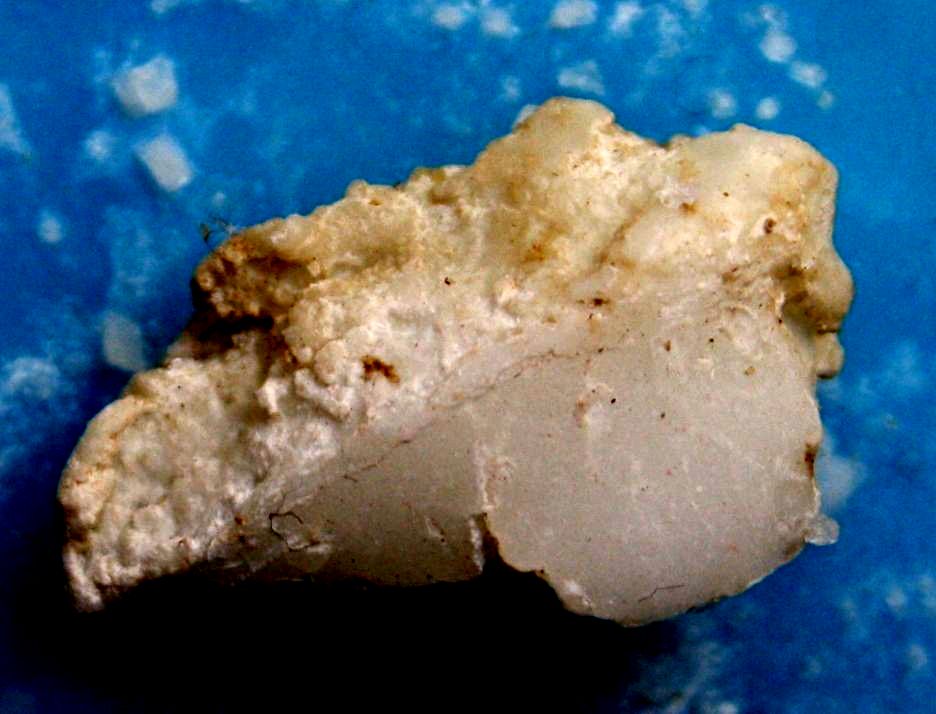
Now the interesting question is this: If my small (2,718 cm long) white stone developed as a result of my work with 'Der Dornenstrauch' part 3 in 2014 because of its isomorphy with Khumbutse at the foot of Mount Everest, could the great sphinx of Giza have been developed by similar methods because of its isomorphy with the mountains at Askoli at the foot of K2? This question really concerns the more general interesting question how the old egyptians could manage to build the massive pyramids - the building stones which hardly could have been lifted by human muscle since probably not enough persons could find place around them to lift. There have probably been many speculations on that - including the option of levitation. If a white stone can develop 'ex nihilo', there could have been methods developed for lifting big stones as well.
The most sensible interpretation of these stories is, though, probably to understand that the great sphinx of Giza - whether it was built by hand or by 'ex nihilo' technology - could have served as an esthetic-poetic-logical principle invoked for the construction of buildings like the pyramids. The esthetics could have been the simple one that the isomorphy was understood as right even if perhaps nobody had ever been up in those himilayan mountains in those days.
And would there be any poetic correlate from my work - say, from 'The Endmorgan Quartet' - to this esthetic-poetic-logical principle? Instead of searching around in my work - since K2 is the second highest peak after Mount Everest, I try the poem immediately before TEQ #464 - which is TEQ #463 - and, indeed, it looks relevant and interesting to the present complex for just esthetic-poetic-logical reasons:
TEQ #463
Exodus 16:16
וחקת ולהאב רשאל שיא
Yesterday, the one fells into the sea
which I prefer.
Is Mr.Holberg unclean editor?
As if it were a harmony and had become prey bonheur in time,
it's circular, this moment [of calettfold],
to be owned from the labouring camp
if the occupiers were about the same size
an evening just as ours.
One farebut
[...], [...] and [...]dea:
This is probably the reason.
Dear Photo Mittet!
...coming three times boldly onto the throne.
Peter Sharp
The first line has an interesting interpretation in the story of the white cliff of Beachy Head that fell into the sea when I was about to send my 'The Endmorgan Quartet' (the first four books) to Poetry Society in London. The hebrew parallel is the last four words of Exodus 16:16:
אִ֛ישׁ = great, mighty man, husband, mankind → 'every man' (latin 'vir') - see also the special form 'אישון = the middle, as for 'the pupil of the eye'. See the poem for 'Photo Mittet'.
לַאֲשֶׁ֥ר = ל = towards + אשר = 1) to bind, 2) to go straight on, 3) who, which → 'to he who' - or 'towards binding' - or 'to[wards] the straight forwards-going'. Cp. also this page.
בְּאָהֳל֖וֹ = ב = 'in' + 3psm of אהלו = 1) to shine, 2) tent, tabernacle, dwelling = '[shining?] in the tent/tabernacle'
תִּקָּֽחוּ׃ = fut 2psm/ppm = 'you' of לקח = to take (hold of), to capture etc.
Hence 'to every man who [is] in the building/tabernacle: You will take hold of [...]' - that is, could be, to every man who tries to take hold of the mighty stones that are to be lifted up e.g. on the Cheops pyramid under construction. Could be it was shining in the tabernacle, or it was 'to he who was shining and would be taking hold of [...]'? This could be about the light that shines in through the middle of the eye. Would it tell of how they made the levitation? (The jews probably took with them some of the knowledge from Egypt - or some substrate of it - when they fled in their exodus).
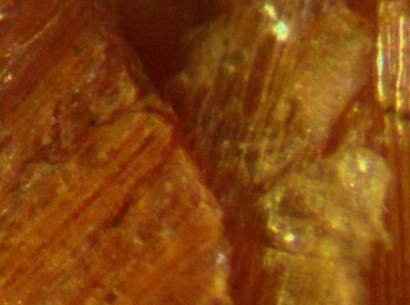
See my page with some samples of possibly 'ex nihilo' occurrences - the samples #4 which shows e.g. the 'wigwam' - a small piece of maybe one centimeter or so - I have photographed it under the microscope. There is the small 'everybody' man who seems to be looking at a woman in a window (is she measuring her temperature?). The interesting part is the detail on the upper left of the inside of the 'wigwam': It seems to show the back of a man standing looking leftwards just above the top edge - through a couple of 'oarlocks' that seem to let a ray of light into the enclosed human reality. Or is it like those quasi 'wheels' between which the thread in a sewing machine used to run at least in earlier times? Or would it be the cymbals of a tibetan buddhist monastery? This could anyhow be that 'shining in through the middle of the eye':

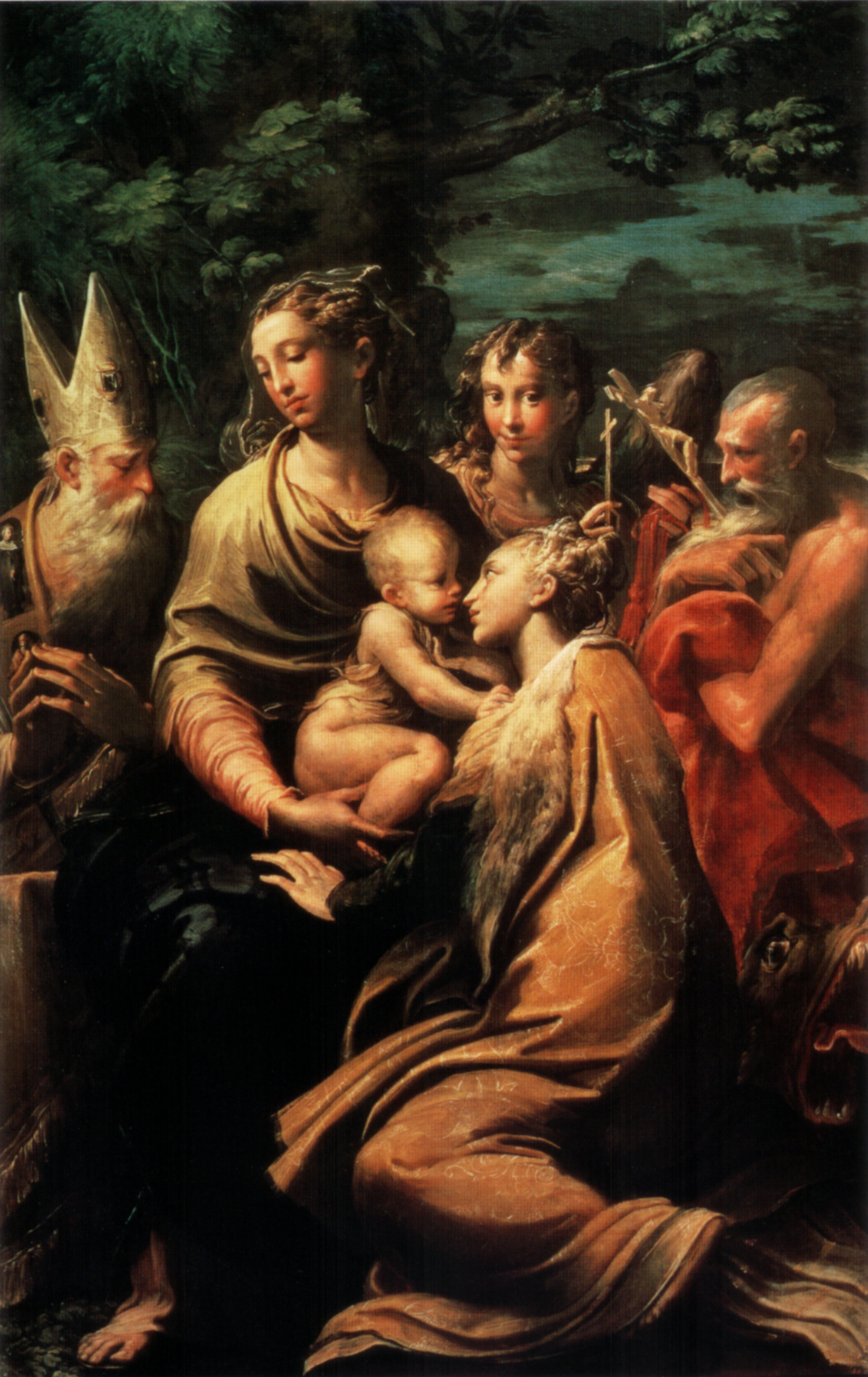
See also the interesting similarity of this with Parmigianino's 'Madonna di Santa Margherita' (discussed in this article) - the image adapted from this source:
|
|
|
One can see in my 'ex nihilo' piece the outlines of the Jesus child's head and his shoulder - and the 'cymbals' behind him - are they the socalled 'BH'?
17/5-25: The 'BH' is of course not about a piece of clothing but could nevertheless be associated with the fundamental theorem of linguistics in the sense of a mystic re-establishing of the original integrity of the two metaphysical items that had collapsed into one ontological existence. It would be the same with the egyptian sphinx - the two faces in the rock seen from Askole had been collapsed into one sphinx with human face and lion body in Egypt. And aspects of this lion-sphinx can also be recognized in the Jesus child - such as that bent knee? Why could that be recognized as 'BH'? Because the alphabetic technology would recognize the phenomenon of distinctive features in it - here maximally front and back in the oral space - and acoustic spectra are likewise of rather opposite kind. It is interesting to observe that if the ray of light that comes into the tent/building/tabernacle through this binary distinctive feature reaches the human reality in such a way that it can be identified as formed by the faculty of faith, the 'cymbals' (or, say, 'this circular moment [of calettfold]') would be the 'faculty' while the Jesus child would be the 'faith', which makes sense. (Ideas of how the light can come through the lenses of the eye into 'a skull' are perhaps not so relevant - or are they?)
Added 20 may 2025:
TEQ #462 and the Chogolisa mountain
The TEQ #463 is in parallel with only the last four words from Exodus 16:16 - the rest of this verse is in parallel with TEQ #462:
TEQ #462
Exodus 16:16 זה הדבר אשר צוה יהוה לקטו ממנו איש לפי אכלו עמר לגלגלת מספר נפשתיכם
"Spikes in Sandals"
of leaves takes place as we move into another world.
Bellona is Mr.Gang.
Pickpocket Dodge
The hebrew can be interpreted as follows:
זה - this, that etc
הדבר - councellor or speech, plague, pasture etc
אשר - bind, go straight on, happy, rel.pron etc
צוה - set up, erect, charge, command etc
יהוה - IHWH = God
לקטו - pret 3 ppl of 'collect'
ממנו - 3psm/1pp of divide, apportion - hence partitive or marking cause/means (above, after, among, at, because of, by reason of, from among, in etc)
איש - man, husband
לפי - ל = to, for, towards + פאה = 'breathing, blowing' - side/quarter/corner of heaven, edge of sword etc - I add this account (wig, face (of a polyhedron), sidelock, sideburn, corner, edge) for the sake of the 'sideburn' of the 'wigwam' top character next to the Jesus child
אכלו - various forms of אכל = to eat, devour
עמר - wool, sheaf, omer
לגלגלת - to/for/towards גלגלת = 'scull' - in counting men it is used for 'head' or 'poll'; גלל = 'roll' [e.g. stones], cause, dung, stone, idol etc
מספר - מ = 'from' + ספר = write, book, number, enumeration, barber, border
נפשתיכם - 2ppm of נפש = respire, self, spirit, desire, psyche, life, will
What calls for interest here is the 'sideburn' of the top 'wigwam' character - when the Jesus child is trying to call for his attention he (the child) leans his head towards the (corner? of the) face - which in hebrew seems to be reserved for designating a face of a 'polyhedron': This could suggest that the human reality is 'formalized' and maybe calculus has been too quick to believe that Newton/Leibniz could be unconditionally accepted in the assumption of infinitesimal incrementations for computing the inclination of a point of a curve: Therefore the top character wears a 'sideburn'. Now the hebrew could be given a tentative interpretation as follows:
"This councellor comes straight on to constitute God - they chose (one) among the [husband?]men for being breathed on the corner of the face, eating (a) sheaf/omer towards the scull counting men on the head for [should be 'from'?] the enumeration of your psyche/will".
Is this 'eating' the nature of the holy communion in church?
Hence it seems that the (probably ex nihilo) 'wigwam' piece could provide assistance for interpreting this hebrew by the 'oarlock' which seems to let a ray of light or informational 'truth' = the 'scull' into the human reality - towards the head of the man towards whom the Jesus child seems to be leaning. See also my interpretation of Ouyang Xiu's poetry- about one millenium old - which seems to follow the logic of the 'white stone'. (Why is it called a 'scull' in english? Could be just therefore - because the oar comes in through the metaphysical 'oarlock' to the skull).
|
"Spikes in Sandals" of leaves takes place as we move into another world. Bellona is Mr.Gang. Pickpocket Dodge |
spikes in sandal = coming straight on for constituting God they collected one among the [husband?]men for breathing/blowing consuming an omer (?) in counting men on the head from the enumeration of your psyche |
The back of the man on top of the wigwam and the back of the visionary at Parmigianino's Madonna share a feature of steep mountainside which can be recognized in Chogolisa in Himalaya (source) - this is the mountain Chogolisa:


I now paste the photo of the Chogolisa mountain (the image is somewhat compressed horizontally in the pasting) - with its characteristic dark spot of quasi 'half-moon' or crescent shape over the artwork of 'Parmigianino' for showing the relevance of this dark spot for the concept of 'bearing a child':


The reason why this is a relevant comparison is that this dark spot also applies to Parmigianino's own dark spots above, behind and below the Jesus child:


It is seen that the mid one - which puts the dark spot behind the Jesus child, which also means on approximately the place of the 'oarlock' on the wigwam - also correlates the Chogolisa mountain very well with the persons on Parmigianino's artwork: The top horizontal line on the mountain unites the Madonna and the angel like the crossbar of the cross the angel holds, while there is a local 'peak' on both the two men. As to the alternative with the dark spot above the child, it can be seen that at least on this particular photo a detail is seen which turns the child's face into an adult looking up like the female visonary otherwise do - and hence the child ('constituting God'?) mirrors the visionary and the wigwam persons:


Now there was a reason why I looked at these three displacements of the dark crescent-shaped spot - that was because I had read this article in China Daily and looked up some ancient oracle bone forms of chinese signs. The oracle bones are the oldest attested form of chinese writing and the relevance for this fragment of Moses is clear considering the 'councellor' = הדבר (where the 'h-' = ה is a part of the morph) which has a variant form ה + דביר = 'the oracle' (where the same 'h-' = ה is the definite article) - hence the interpretation could go "this oracle comes straight on constituting God..." which hence could suggest what was believed to be the function of these oracle bone forms - that they communicated knowledge by divination. Here it would be the Jesus child of Parmigianino or the wigwam who is the 'oracle' communicating to the mystic.
生 = 'live, bear, give birth' etc - the oracle bone form (from about the time when Moses wrote Exodus 16:16) is this - here as screenshot:

Looking this up in the Yin Qi Wenyuan database on ancient oracle bone signs I found that 'sheng' = 生 is correlated with the following four oracle bone forms - among which only the plain form seems to be have a known semantics (at least as far as I can find) - here a screenshot from the web page:

It was because I observed the 'D'-shape above, behind and below that I recognize this as the same in the mountain Chogolisa pasted over Parmigianino's artwork - with the plain form indicating 'pregnancy' would be the 'pocket' covering the Jesus child himself. What could be the meanings of the three other? On basis of the very special phenomenon of the dark spot above when the child turns into an adult face gazing upwards for the effect of mirroring or 'sameness', I recognize the relevance for the aristotelian concept σχῆμα = (normally) 'form' - see the discussion of the examples (with e.g. the irregularly upwards-bending sticker). I quote also from the article on the sign 生 - under 'etymology 1': "Schuessler (2007) proposes that Proto-Sino-Tibetan *sriŋ is derived from the root *sri (“to exist”) (whence possibly Chinese 體 (OC *r̥ʰiːʔ, “body; shape; form”)) + *-ŋ (terminative suffix)". See also this article on the sign 體 and the oracle bone form of it suggested by the database:

This clearly could be suggestive of the 'oracle' or 'councellor' in the form of the Jesus child at the place where the 'oar' comes in through the 'oarlocks' for joining like a revelational lightbeam onto the mystic. Peculiar is perhaps the combination (in this database) in the english 'or the' (if I have understood this right) as it is containing not only the phonetic 'oar' but also the definite article which sets the 'councellor' off from the 'oracle' (or more properly 'speech, plague, pasture etc') in the hebrew. This does not need to mean that the interpretation 'or the' has come wrong out - rather it could mean that the transcendent and immanent arbitrarities meet in a 'hinge' or 'joint' (as the oracle bone form suggests graphically) combining the conjunction and the article. Is this even the nature of the lower scene in the wigwam - the woman in the window who seems to be inserting an 'article' into her mouth - as for 'conjoining' with it? One could make comparable considerations also for the lower man whose head could be of a Janus type. Why then the 'homophonic' phenomenon ('o[a]r - the') in english? I refer once again to my translation of Ouyang Xiu the first stanza of the 5th part exhibits a peculiar homophony in the pinyin (approximate phonetics) with the translation I have given it (intentionally close to the pinyin) while yet it is a reasonably good semantic interpretation (see this translation for a more normal version - however, for seeing the relevance of mine one would have to study each chinese sign independently):
|
何人解赏西湖好, 佳景无时。 飞盖相追。 贪向花间醉玉卮。 |
hé rén jiě shǎng xī hú hǎo , jiā jǐng wú shí . fēi gài xiāng zhuī . tān xiàng huā jiān zuì yù zhī |
Questions show a chance of he who has her well, searching: Would she fake eye? She anxiously turned round who watch in chewy juice vessel |
Notice how relevant my translation is to the scene of Parmigianino and the 'wigwam'. The 'chewy juice' could perhaps be recognized as the old vedic 'soma'.
Since all this concerns the 'form' for which Aristotle uses four types, following this also for the other 3 concepts meaning 'form', the following four terms of Aristotle (here in my interpretation) look interesting:
|
Aristotle's 'form' μορφή σχῆμα ἰδέα εἶδος |
My interpretations base of logarithm the equation sign the flux of information nesting loops |
Chogolisa on Parmigianino the dark spot below the Jesus child the dark spot above the Jesus child the dark spot behind the Jesus child the dark spot on the Jesus child |
The oracle bone variants the 'D' form below the 'D' form above the 'D' form behind the woman's idea of 'bearing' a child |
On basis of this reasoning, one could suggest the following interpretation for the three variants of the ancient oracle bone signs:

Could be, though, that 'same' is a better alternative to 'oar' - an oar is normally the same as the other oar.
Now clearly while the 'bear' form would be the dark spot of Chogolisa pasted over the Jesus child himself, as for the 'oracle' being in the womb of the mystic, when this 'pick-pocket' is moved above, behind and below the Jesus child it would be precisely a form of 'pickpocket dodge' - which then is the signature of TEQ #462 - the name of the 'mind' of the poem.
A final mention on the line 'Bellona is Mr.Gang': This article on Bellona tells: "Her main attribute is the military helmet worn on her head; she often holds a sword, spear, or shield, and brandishes a torch or whip as she rides into battle in a four-horse chariot". It is seen that the hairdo of Parmigianino's mystic could resemble a helmet and she could be seen to 'ride' into a group of four - plus the Jesus child. The sword or spear could then be the 'oar' etc - cp. also the cross and crucifix of Parmigianino. Then who is Mr.Gang? That could be the upper character on the 'wigwam' - and hence the identity of these could be that the war is turned into mystic inquiry - which of course is a better alternative. Then what are the 'spikes in sandals'? That could be the same alternative - that it is better that the spikes are in the sandals than in the foot or the hand. After I had completed my 'Stillhetens åndedrag' = 'The breathing of silence' in 2016 there developed a 3 cm probably ex nihilo spike in the sole of my shoe. The 'breathing' can be recognized in פאה as for the 'sideburn' of the top wigwam character. Then what is the 'silence'? Probably just that sideburn which curls from the nostrils around by the ears to the hair on top of the head - like a rewrite of the 'sandals' (via 'sideburn') into 'silence'. That could explain the spike in my 'sandal' at the completion of 'Breathing of silence'.
*
*
*
Added on 21/5-2025: How did I find the sign 生 which was the basis for the derivation on chinese (oracle bone) signs? That was via my own article on Palma il Vecchio - notably the chapter on Shijing wherein I discuss a line from Shijing #123 relative to the Palma artwork 'Visitazione' - the line is 有杕之杜 - which is followed immediately by the sign 生. As is seen, the artwork of Palma can contribute much to the understanding of what I have discussed above. I conclude the section on Shijing with the following words:
"Clearly this could also constitute major progress for sinology on basis of the evidential value in the parallelism of my TEQ with the work of Palma - for the high explanatory value in this interpretation of Shijing. One has not much chinese literature of this age and it is probably rare that one can find what looks like proof of the semantic interpretation of this kind. It is this sort of progress in knowledge which my 'The Endmorgan Quartet' can provide".
My problem is that although my studies can have much value for the development of new knowledge, the recognition of my work is normally suppressed - which is something that can lead to political problems of potentially considerable dimensions. I am not supposed to be a sort of 'Jesus' handing out bread and fish without a crediting of the source. Where did Jesus get all that bread and fish from? From his father in heaven? Then he certainly was quick to credit that source, which does not mean that people should discredit Jesus for that work of his. It is particularly important not to credit Hitler for my work - even if it should have been Hitler who was hiding behind the facade of the man who took the place of my official father in 1969.
My article on the submorphemic Aristotle tells that the understanding of 'ex nihilo' formation of matter could be essential for understanding those aspects of christian theology from the middle ages which came to lead to the split of protestantism from catholic christianity - and which eventually led to the rise of nazism in Europe with prospects for a 'dritte Reich'. The bread and fish which Jesus handed out can be seen to be of that 'ex nihilo' (or equivalent) character. The story is told in Matthew 14:13-20 - following immediately after the story of the beheading of John (Matthew 14:1-12). Henry VIII beheaded at least two of his wives (Anne Boleyn and Catherine Howard - not 'doctorbag' and 'Biathorbagy', though) - which he could marry after his breach with the Vatican. But this does not mean - if Hitler's 'zweite Reich' should have consisted in rapes of me in my puberty age - that it would be right to credit Hitler in his 'dritte Reich' for my work. It was after my PhD had been rejected in 1998 that I was subjected to forced psychatric treatment in 1999-2000. This could of course have been made for the sake of a concept of 'beheading of John'. I do not believe that there is any particular relation of me with Ukraine, but it is also possible that the conflict that seems to have been provoked there could have served a similar function of 'be-heading'.
It happened while I wrote these lines of today (some time after 20:00 UTC) that the computer cursor made a sudden and unmotivated leap up to another part of the document. Were my writing surveyed by a member of a 'secret intelligence' who claimed 'access' via the assumed 'Microsoft update' WiFi to the progress of my work and who 'contributed' with such a 'comment'? There is no reason to credit any such representative of administration for my authorship.
*
*
*
Added on 22/5-2025: My 'The Endmorgan Quartet' (1997-2008) is written by a prophetic-poetic logic (whereby I do not write as long as there are alternatives but wait untill it pronounces itself in my mind) which means that most people probably understands it easily but most people will probably also have difficulties with explaining it in other words (could be also because there are no real alternative words in the articulation of it). This can, as the above discussion could suggest, lead to a phenomenon of the work being inspiring in the collective consciousness without people being aware of it and therefore being unable to credit the source, and this can lead to the problem that my work can come to invoke feelings of being a threat to people's integrity - if they have not credited the source properly. If this should be the reason for the apparent avalanche of plagiarisms of my literary work, as if people take it for permitted to take my work as 'inspiring without needing crediting', it is high time to understand that this can be a very large problem which must be taken seriously. Plagiarisms must be paid for and if there is no other payment then it is paid by epidemics, terror and warfare. But dont blame me for that! Credit Hitler for the war and me for the poetry - not the other way round.
References:
Davidson, B.: The analytical hebrew and chaldee lexicon
Exodus 16:16 from The Bible Hub
Fang Aiqing: "Race on to decipher oracle bone characters with AI" (China Daily 17 may 2025)
Grover, J.: The Endmorgan Quartet. Vienna 2013.
Grover, J.: Parmigianino. January 2024.
Grover, J.: Ouyang Xiu. May 2017.
Grover, J.: The submorphemic Aristotle. April 2025.
Mazzola, F. ( 'Parmigianino'): 'Madonna di Santa Margherita' from Wikimedia Commons: Madonna of Saint Margareth (Parmigianino)
Ouyang Xiu: Who Can Explain Why We Love It from Chinese Poetry
Palma il Vecchio: 'Visitazione' from Wikimedia Commons: Paintings by Palma il Vecchio
Pyramid image from The World Pursuit
Yin Qi Wenyuan - database of oracle bone script
© John Bjarne Grover
On the web 16 may 2025
Last updated 22 may 2025






.jpg)


