25 january 2025
John Bjarne Grover
My TEQ #375:
TEQ #375
Exodus 14:19 ויסע מלאך האלהים ההלך לפני מחנה ישראל וילך מאחריהם
This is a donation to the library from the publisher.
I suppose it is finished,
and that creates a new atmosphere of dungancy
and defines profiles in the culture.
Cabarét-Tot
I recognized in this poem of mine the cartoon #52 from The New Yorker 1933 - although there are differences.
The cartoon is interpreted in Leopold Figl by #52 = 'the gifted loo-phole'. However, this is likely to be a joke (from the beginning of Hitler's chancellorship) on a more advanced spiritual matter.
My "I suppose" (indented line) could be the horse-head placed on the front part actor, while "it is finished" could be what is seen in the front page of the cover to my "Der Dornenstrauch":
This could be seen as a 'trinity' format: One sees the big wolf facing leftwards, the singer (with one eye in the shadows) facing forwards and the horse-head running diagonally (south-west direction) out of the image: It looks like a horse-head which has been running in darkness and suddenly comes into a sharp lightbeam - as if 'it is finished'.
Hence if (unindented) line 2 "and that creates a new atmosphere of dungancy" is the singer, line 3 could be the wolf "and defines profiles in the culture".
Shouldn't it be the other way round, that the wolf creates this atmosphere and the singer is a cultural profile?
'Profile' means 'seen from the side' and hence it applies to the wolf and not the singer. But the singer is in the darkness on one side of the face and hence he is sort of 'seen from the side' nevertheless?
There are probably only two sources of music and both of them could be concerned with the border to other realities: The singer makes music with the vocal cords and all other musicians make it with the fingers. (The role of the foot is very marginal). I have shown that the fingers of the 'indian' are magic ex nihilo phenomena as if from another reality. Is that the nature of the music from the vocal cords as well?
There is one main difference between catholicism and protestantism - and that is the phenomenon of 'transubstantiation' - catholicism says that when the holy host is swallowed in holy communion, it turns into the body of Christ when it glides down the gullet. Protestantism didnt like this and redefined it: It says that it is not the body of Christ that glides down the gullet, it only means so. That could be the problem of semantics, the theoretic 'humbug', so to speak.
'Dungaree' is an indian word for a coarse cotton cloth used for tents.
The hebrew from the first part of Exodus 14:19 contains the word מחנה which sounds almost like norwegian 'manesje' used for the circus stage (the 'ring') under the high tent. It means so in hebrew as well - an encampment, a place of encampment.
It seems that the cartoon in The New Yorker of 1933 plays on this Exodus 14:19 - with the pillar of fire and pillar of cloud going from before them to behind them. The hebrew word 'malak' means originally 'messenger', it seems - human or divine. The messenger went before the people and then behind them.
In the cartoon the hind part of the horse sits on the floor before the front part. In my poem that could be the 'Cabarét-Tot'. But my poem does not mention the circus horse but it tells of a book donation to a library. 'Cabarét-Tot' could then mean that it is not (or no longer) entertainment.
The image seems to encode a potential 'trinity' which could be a part of the essential difference between catholicism and protestantism. Or simply the problem of 'semantics'.
The dark part in the middle of my photo is 1) between the legs of the wolf, 2) the eye of the horse, and 3) the mouth of the singer. Compared with my 'trinity photo' (discussed in my article on Yeats' 'Crossways') the eye of the horse is clearly the big God's eye, while the mouth of the singer could be seen in the jew carrying the 'Tot' fish on his shoulder - and then what is between the legs of the wolf is the man with the hat, seen from the side.
How could I find the photo to the poem of Hölderlin? I had just completed the translation when I thought that if I go to this particular place (where I had seen a leaf falling to the ground - 'creating a new atmosphere of dungancy' - or like a 'place of encampment'?) and photograph it ('I suppose it is finished'), there will be a relevant image there. I so did and it showed the 'vanishing image'. Hence if the mouth of the singer is the same as the eye of the 'camera', it explains how the lens found the same as the singer had sung - if, that is, the theme of the poem is just that 'trinity' (comments to the right refer to the front page photo of my 'Der Dornenstrauch'):
|
The wolf: Einen vergänglichen Tag lebt ich und wuchs mit den Meinen, Eins ums andere schon schläft mir und fliehet dahin. The singer: Doch ihr Schlafenden wacht am Herzen mir, in verwandter Seele ruhet von euch mir das entfliehende Bild. The horse-head: Und lebendiger lebt ihr dort, wo des göttlichen Geistes Freude die Alternden all, alle die Toten verjüngt. |
= the mouse sleeping in the mouth of the wolf, the fleeing rat on the other side = the scroll (torch?) and the wrench = the shadow over the eye = Venus in marble and Venus in sprawl |
Translated:
|
The wolf: In a posterior past lived I and grew up with my people, the one and the other of you slept me and fled thitherto. The singer: But you sleepers vigiled in my heart, in related soul tarried you in me the vanishing image. The horse-head: And more lively you live there where spirits divine joy by the elder and all dead are rejuveniled. |
= the mouse sleeping in the mouth of the wolf, the fleeing rat on the other side = the scroll (torch?) and the wrench = the shadow over the eye = Venus in marble and Venus in sprawl |
This could also explain why 'rejuveniled' sounds better than 'rejuvenated': On basis of Yeats' 'Crossways' poem #7 with the falling leaf, the trinity photo is invoked - and with Crossways #11 as the mirror to Crossways #6, the 'rejuvenated' could invoke associations to 'shiner' of 'ated' while 'rejuveniled' rather will associate with 'to a Nile'.
Added on 26 january 2025:
A quote from Nelly Sachs seems to have explanatory value - it is from her "Und niemand weiss weiter" (1957), the first poem in its chapter 5 called "Geheimnis brach aus dem Geheimnis - Sohar: Schöpfungskapitel":
Da schrieb der Schreiber des Sohar
und öffnete der Worte Adernetz
und führte Blut von den Gestirnen ein,
die kreisten unsichtbar, und nur
von Sehnsucht angezündet.
Des Alphabetes Leiche hob sich aus dem Grab,
Buchstabenengel, uraltes Kristall,
mit Wassertropfen von der Schöpfung eingeschlossen,
die sangen - und man sah durch sie
Rubin und Hyazinth und Lapis schimmern,
als Stein noch weich war
und wie Blumen ausgesät.
Und, schwarzer Tiger, brüllte auf
die Nacht; und wälzte sich
und blutete mit Funken
die Wunde Tag.
Das Licht war schon ein Mund der schwieg,
nur eine Aura noch den Seelengott verriet.
The 'Sohar' = english 'Zohar' is a book in the kabbalistic tradition from the high middle ages. Here is a translation of (at least a part of) it. As the Wikipedia article explains, it is probably written originally by Moses de León in aramaic language:
According to Gershom Scholem and other modern scholars, Zoharic Aramaic is an artificial dialect largely based on a linguistic fusion of the Babylonian Talmud and Targum Onkelos, but confused by de León's simple and imperfect grammar, his limited vocabulary, and his reliance on loanwords, including from contemporaneous medieval languages. The author further confused his text with occasional strings of Aramaic-seeming gibberish, in order to give the impression of obscure knowledge.
As such, the assumed original text of the Zohar could have been out for exploring the same diachrony in language as my 'Der Dornenstrauch' does - which could be included in the explanation to the correlation between the photo from the ground and Hölderlin's poem. (By the way, I cannot make grammatical sense of Sachs' line 'die Wunde Tag').
The poem ends with the same conclusion as I made: "The light was already a mouth that was [kept] silent, / only an aura still revealed the soul-god". However, the word 'Seelengott' is sufficiently close to 'cigarette' to serve as a possible explanation to 'the vanishing image'. The poem should then possibly give an account to how or why this image occurred or started vanishing. "Des Alphabetes Leiche hob sich aus dem Grab, / Buchstabenengel, uraltes Kristall" which could be the same 'angel' or 'messenger' as in my hebrew quote from Exodus - but here conceived as the poetic scripture of Hölderlin arising from the place, the ground, before it fades again.
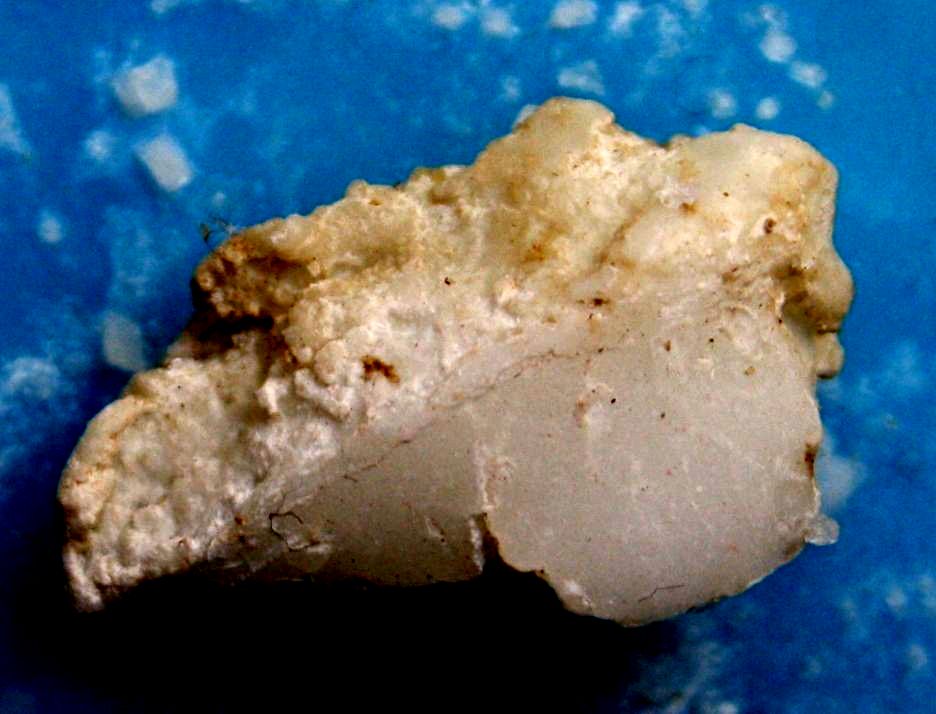
As I have pointed out earlier (see also the comment on volume 4 page 968), the geographic form of Syria is like my 'lapis philosophorum' seen from the back side:
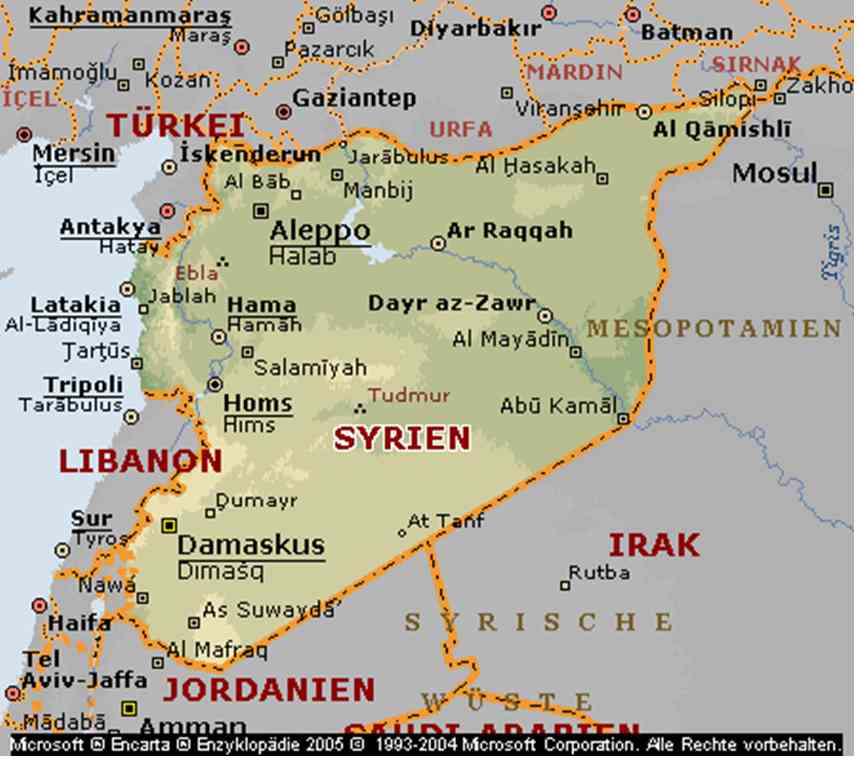 Syria on the map (source 'Microsoft Encarta') |
 Outline of the white stone |
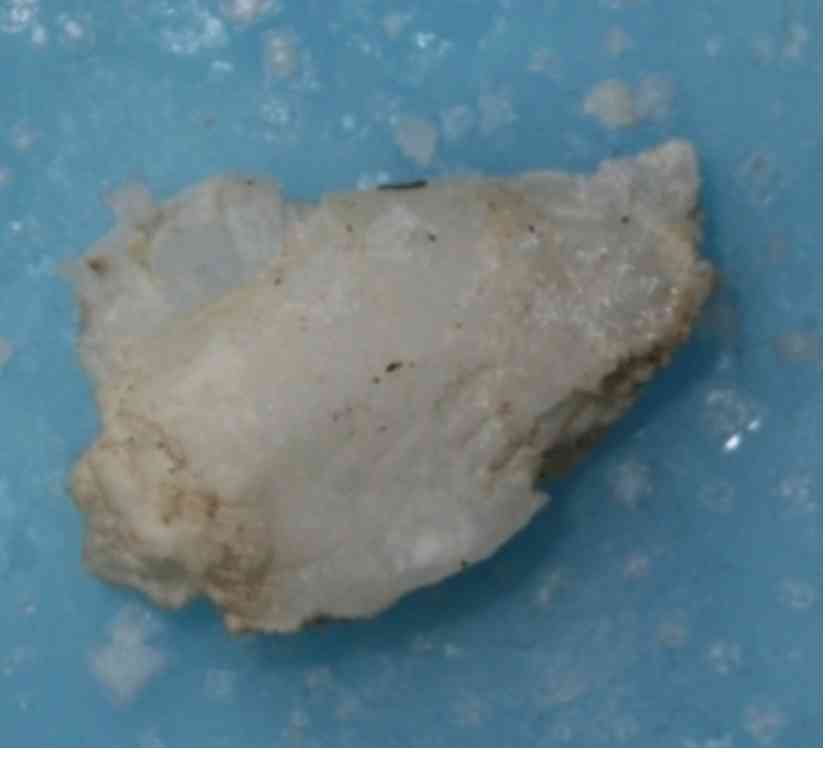 The stone back side mirrored |
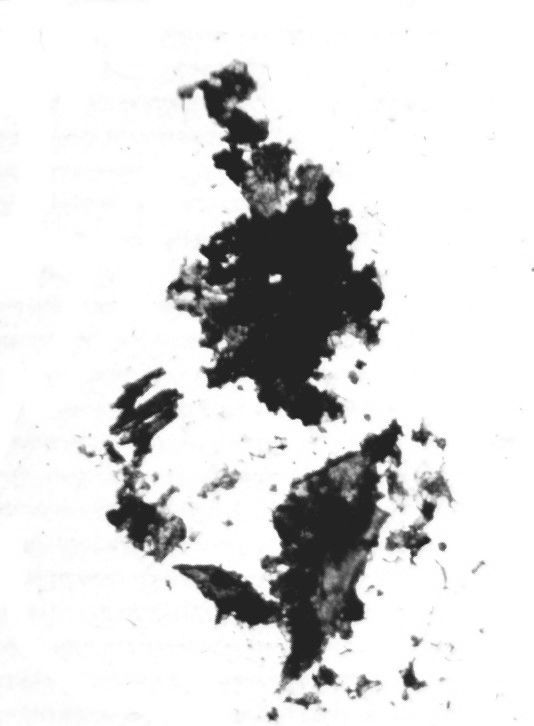
Now it seems that this 'lapis philosophorum' seen from the back side also can be recognized in the photo from the ground:


This should, according to Sachs' logic, be from the time when the 'white stone' was still soft. The white stone developed soon after I had completed the third part of 'Der Dornenstrauch', which means that the last poem in the third part could be telling of the stage when it was just about to take form.
There seem to be two faces on the photo - could be those are the Rubin and Hyacinth.

Source:
Mankoff, R. (ed.): The complete cartoons of The New Yorker. Including 2 CDs with 68647 cartoons ever published in the magazine. Black Dog & Leventhal Publishers, New York 2004.
Sachs, N.: Fahrt ins Staublose. ('In den Wohnungen des Todes', 'Sternverdunkelung', 'Und niemand weiss weiter', 'Flucht und Verwandlung', 'Fahrt ins Staublose', 'Noch feiert Tod das Leben'). Suhrkamp 1988.
Zohar. Wikipedia Article. Last updated 4 january 2025.
© John Bjarne Grover
On the web 25 january 2025
Last updated 26 january 2025