The 12-tone structure of Yeats' 'Crossways'
John Bjarne Grover
The article discusses Yeats' poetry work 'Crossways' relative to the author's two poetry books 'Stillhetens åndedrag' and 'Rosens triangel' as well as relative to Nelly Sachs' 'In den Wohnungen des Todes' and 'Sternverdunkelung' and concludes that 'Crossways' contains a quasi 'coordinate' or rather reference system underneath the surface - with the dimensions distributed according to the principles of the 12-tone composition technique developed by Arnold Schönberg. The dimensionality system is also likely to be akin to ancient indian swastika philosophy. It is conjectured that this hidden and distributed reference system can come to constitute a springboard for the computerized study of realities beyond the redundancies of the human reality.
On 13 october 2024 I described how I found what I believed was a coordinate system hidden in the poem "The indian upon God" in the book "Crossways" by W.B.Yeats. The coordinate system is found in my white metre books 'Stillhetens åndedrag' (harmony) and 'Rosens triangel' (counterpoint). The composition of these two works of mine is described in volume 4 of my collected works pages 952-960.
I later understood that it was no coincidence that this coordinate system can be recognized also in the title 'Crossways' to his book containing just 16 poems. Of course that coordinate system is precisely the theme of the book.
That it is not just a coincidental property of this book of Yeats I discovered when I found a very close parallelism between Yeats book and the two first poetry books of Nelly Sachs ('In den Wohnungen des Todes' and 'Sternverdunkelung'). I return to a discussion of this below.
In addition, there are the background studies of 6 november 2024 and 11 november 2024: Here the white metre is shown in Perugino's artwork as the white textile under the body of Christ - with a counterpoint in the white textile of Mary.
I set out for finding the coordinate system in Yeats' book and it was not easy work. After having struggled for some time with squeezing my 64 poems down onto his 16, I had to give it up - untill I found the solution via the system of counterpoint I discuss in my volume 4 pages 1216-1223. The system is built on basis of Schönberg's dodecaphony, the 12-tone principles of (serial) composition. (Actually it seems that Schönberg was not the first - his contemporary fellow Hauer, even he a Wiener composer, seems to have elaborated on it before him in a work published in 1919).
The solution is in the form of the four compositional series by the following variants:
1) prime theme - the original series
2) retrograde - the prime theme backwards
3) inversion - prime theme with intervals turned upside-down
4) retrograde inversion combines 2) and 3)
It turned out to be the solution to the structure of Yeats' book and hence also to the two books of Sachs. This forth-back and up-down - hidden behind a complicated but principled and reasoned network of permutations - will make for the deep coordinate system which is contained in the title 'Crossways'.
The 64 poems (each of 20 lines + 1 title = 21 lines) of 'Stillhetens åndedrag' (harmony) were originally written as 105 poems of 12 lines each - reduced by a reasonably elaborate system down to 64. The permutational system is described in the postscript to the A6 edition of the book aligned against Luigi Nono's 1980 string quartet. 'Rosens triangel' is the counterpoint to this: It was written as the 64 poems of 12 lines each which it also is published as - but these 64 poems can in principle be considered a similar 'wrapout' from 48 virtual poems. Which 16 = quarter of the 64 poems should be the 'wrapout'? I have associated each of these quarters with a catholic monasterial order (Dominican, Franciscan, Carmelite and Benedictine) and each of these could be considered the 'wrapout' from the other three. The principles for doing this in accordance with prime theme, retrograde, inversion and retrograde inversion are described in volume 4 pages 1216-1223 - it leads to a first permutational scheme (given on page 1220) which leads onto a second (on page 1221) which then leads onto the third and final one which I reproduce here:
'Rosens triangel' permutation scheme
(The links are to this file which is specially made for the present article).
Each poem in 'Rosens triangel' is 12 lines in 3 stanzas labelled stanza a, b, c - hence 18b means the mid stanza in poem 18. When these permutations are read against the 16 poems in Yeats' 'Crossways', it means that one of his poems, say, his poem #1 will be matched against my poems 1, 17, 33 and 49 but via this transform to give a total of 12 references (as in Schönberg's 12-tone system):
|
Dominican Franciscan Carmelite Benedictine |
1 17 33 49 |
18b, 47a, 61a 11b, 23a, 50b 6c, 37c, 55c 16a, 29c, 42b |
which means instead of my poem 1 one reads poem 18 mid stanza, poem 47 first stanza, poem 61 first stanza, instead of my poem 17 one reads poem 11 mid stanza etc in the same manner untill poem 42 mid stanza - that means a total of 12 stanzas selected from among the 64 poems of mine against his single poem #1. It is quite a complex selection procedure - so clearly something new has been discovered if it turns out that these mappings are relevant - since they ultimately lead back to the basis in the forth-back and up-down coordinate system of the four principles (prime, retrograde, inversion and retrograde inverson) in the serial composition technique of Schönberg. Yeats' 'Crossways' is not normally considered to be poetry akin to Schönberg's 12-tone tonality - rather the opposite, many would say. My two white metre poetry books are written in dialogue with History. As I once read on the internet (probably early 18 november 2024 in this article), Adorno referred to serial dodecaphony as a bottle mail to an unknown future.
Now 'Rosen' (for 'Rosens triangel') is the counterpoint and here principly a sort of 'opposite' of 'Stillheten' (fr 'Stillhetens åndedrag'). I tried first to construct the opposite of this for my present analysis and took the permutational scheme of Rosen and mirrored it relative to the 64-poem format - such that Rosen #1 = 18b, 47a, 61a would come out as number (65-x) with stanza a,b,c also being reversed so that a→c, b→b and c→a - hence Stillheten #1 = 47b (65-18=47), 18c, 4c. I struggled for a while with these - untill I discovered that, for some reason or other, the whole 'Stillheten' permutational scheme had to be lifted one stanza up (such that 2a becomes 1c, 2b becomes 2a and 2c becomes 2b - and the special case 1a becomes 64c) - then it made better sense. What could have been the reason for this unexpected aspect? I dont know but observe that Nelly Sachs makes a similar shift relative to Perugino - cp. the white textile underneath Christ as a symbol of my white metre.
It is of course not certain that I have found the optimal solution - but my solution seems to function.
The resulting system could perhaps be considered a matrix of features relative to the phonology or word system of Yeats.
'Stillhetens åndedrag' permutation scheme
Discussion of the poems in 'Crossways'
In the following I discuss the 16 poems of Yeats' 'Crossways' (see this source) relative to my two white-metre books 'Stillhetens åndedrag' and 'Rosens triangel' for testing the theory that there exists a hidden coordinate system distributed under the surface of Yeats' book. I include also a brief comparison with Nelly Sachs' books 'In den Wohnungen des Todes' and 'Sternverdunkelung').
'a, b, c' refer the first, the second and third third of a poem: In Rosen there are 3 x 4 lines for each poem, which means that 'a, b, c' refer each to one of the three stanzas. In Stillheten there are 20 lines plus the title, and I count 7 lines per third - which means that 'a' refers to the first 6 lines of the poem plus the title. I have made this special file for the purpose of convenient lookups for the present article.
'Stillhetens åndedrag' and 'Rosens triangel' are written as independent works without any considerations to Yeats' or any other work.
Crossways #4 'Anashuya and Vijaya'
Stillhetens åndedrag
|
Dominican Franciscan Carmelite Benedictine |
4 20 36 52 |
46a, 17b, 3b 55a, 41b, 14a 59c, 26c, 8c 50b, 34c, 22a |
Dominican 46a:
|
BJ Det skjedde i den egyptiske part, azt jelent, hogy det å få barn er for noen den riktigste start, for andre er det for faren å skyve skjortene i et skap til venstre på høyre siden |
BJ It happened in the egyptian part, azt jelent, hogy that, to get children, is for some the rightest start, for others it is for the father to push the shirts in a cupboard leftwards on the righthand side |
The Franciscan quarter tells in 55a of the one who did not enter the temple, in 41b about the hand that jolted the 'oil rig' (= 'lily'?) forwards in the throwing gesture. 14a would tell of the two worlds - matter and antimatter.
Carmelite 59c = the nature of the temple, 26c could zoom in on just the lily donation and its effect. 8c likewise could be concerned with this.
Benedictine 50b, 34c and 22a likewise seem to focus on this donation of the lily and its effect.
Rosens triangel
should be concerned with this - the flower and its effect. It ends in the temple with the rose's trinity.
|
Dominican Franciscan Carmelite Benedictine |
4 20 36 52 |
19b, 48a, 62a 10b, 24a, 51b 5c, 38c, 56c 15a, 30c, 43b |
Dominican tells of the relation between the two persons.
Franciscan 10b explains the puzzling scene of Yeats wherein Anashuya is about to enjoy a dish of rice when a flamingo comes and tries to snatch it. 24a likewise tells of this - the role of the poet. 51b could suggest that the flamingo is an anti-act of psychokinesis from the man.
Carmelite tells of how the poet's work is about or is the same as the visit to the temple.
Benedictine tells of how the world is changed thereby.
The conclusion is that the transposition one unit up of the matrix elements in Stillheten makes sense for Yeats #4, and so does the untransposed matrix of Rosen.
Crossways #13 'The meditation of the old fisherman'
Stillhetens åndedrag
|
Dominican Franciscan Carmelite Benedictine |
13 29 45 61 |
43a, 30b, 16b 58a, 38b, 11a 62c, 23c, 5c 53b, 47c, 19a |
Dominican
43a memoir = recalls from childhood, girl = maiden
30b mid of life vs recall from childhood
16b waiting-time in mens = recall from childhood
Franciscan
58a packing eyes = herring in tide, in creel
38b delay, dreams
11a trembling mandibula = waves on water
Carmelite
62c naked coast = maiden on pebbly shore
23c autumn/spring = days of June, reason = herring
5c boat, tides, boy
Benedictine
53b upper edge = coast, waves at feet
47c swordfish = herring
19a soul through long years = recall from childhood
Rosens triangel
|
Dominican Franciscan Carmelite Benedictine |
13 29 45 61 |
22b, 35a, 49a 7b, 27a, 54b 2c, 41c, 59c 12a, 17c, 46b |
It seems that the 2/3 = 8 first of these (down untill and including Carmelite 41c) are concerned with the opposite of Yeats, that is, with what is inside the crack of the heart or what produced that crack, while the 1/3 = 4 last are not converse.
Crossways #15 'The ballad of Moll Magee'
Stillhetens åndedrag
|
Dominican Franciscan Carmelite Benedictine |
15 31 47 63 |
41c, 29a, 15c 59b, 37a, 10b 64a, 24b, 5a 52c, 48b, 17c |
Dominican
41c the secret: a child is a triangle (including God?)
29a she wore trousers, though - was it a dwarf?
15c she has to live in another country - she had to leave
Franciscan
59b tell the story with more precision
37a badevett (see 41c) - 180 degrees relative to Rosen 28b
10b the arrow is defunct
Carmelite
64a parking lot shuffle = little straws on bare boreen
24b her periods = the cat (child) under the 'bench'?
5a the original title to this poem #5 was 'I am dead' = the child
Benedictine
52c the dead child = the writing poet? garden, old house = like Yeats' poem
48b fling no snowballs - think of her pension
17c I could have been her husband
Here the 8 first (2/3) are herself while the last third (the four last) are her husband.
Rosens triangel
|
Dominican Franciscan Carmelite Benedictine |
15 31 47 63 |
23c, 36b, 49c 6a, 28b, 55a 1b, 41a, 60b 12c, 17a, 47c |
Dominican
23c instructor, creator = God
36b God's woman (= the triangle)
49c God looks down on humankind = lights his stars, candles
Franciscan
6a the straws turned round on the bare boreen = bent like the child
28b the child would not suck - it was dead
55a the child was a boy - faded away
Carmelite
1b the child will return = cyclic
41a the seats upon which the black textiles lay = cyclic (one week's interval)
60b resurrection idea = cyclic
Benedictine
12c her husband
17a her husband
47c her husband
|
Dominican Franciscan Carmelite Benedictine |
= God, the third in the triangle = the child = herself (cyclic, periods) = her husband |
The first 2/3 = 8 elements are the guilt of herself, the last 1/3 = 4 elements = the salvation
Crossways #2 'The sad shepherd'
The principle seems to be that the lines in italics - which are direct quotes from the sad shepherd - are interpreted in Rosen and the rest in Stillheten.
Stillhetens åndedrag
|
Dominican Franciscan Carmelite Benedictine |
2 18 34 50 |
47b, 16c, 4a 53c, 40c, 14c 60b, 28a, 9b 49a, 36a, 23b |
Dominican
47b the sorrow, the sea etc
16c rolling waves
4a
Franciscan
53c the last lines
40c the sea, the dropping dew etc
14c the waterous story
Carmelite
60b (this is < href="indian.jpg">the magic black/white 'indian' image - here for the pale stars?)
28a telling story in the seashell
9b
Benedictine
49a cried all his story
36a the curving surface = the sea
23b rays and water's music = story told by waves of sea
Rosens triangel
|
Dominican Franciscan Carmelite Benedictine |
2 18 34 50 |
18a, 48c, 61b 11c, 24c, 50c 5a, 37b, 56a 16b, 29b, 42a |
Dominican
18a line 20 semantic
48c line 20 phonological: I will my heavy story tell = Signal Hest Producer
61b line 22 semantic
Franciscan
11c line 21 semantic
24c line 10 (phonological? "Så ruller det torden derover / i himmelens mørke bunn")
50c line 23 semantic
Carmelite
5a line 24 (phonological? - "og kveldssolens rødme mildner / der stanser jeg opp på et sted")
37b line 24 semantic
56a line 25 semantic
Benedictine
16b line 21 phonological: det er på den andre siden
29b line 22 (phonological/semantic "rundt barmen som store bokstavers gys")
42a line 25 phonological: "og lukker den før den / slipper inn ord"
This analysis explores the theory that Yeats' italics have a reflex in 'Rosen'.
Crossways #5 'The indian upon God'
I search for the same principle - that the lines in italics - which are direct quotes - are interpreted in Rosen and the rest in Stillheten.
Stillhetens åndedrag
|
Dominican Franciscan Carmelite Benedictine |
5 21 37 53 |
46b, 31c, 3a 54c, 39c, 13c 61b, 27a, 8b 50a, 35a, 22b |
Dominican
|
46b 31c 3a |
line 3 line 3 line 2-3 |
the moorfowl angels = moorfowl spirit rocked |
|
54c 39c 13c |
line 9 line 17 line 14 |
lotus talk = white stick dove on the sky brimful of starlight |
|
61b 27a 8b |
line 4-5 line 13 line 5 |
dripping on grassy slope a little way within the gloom each other round in circles |
|
50a 35a 22b |
line 5 line 1 line 4 |
in circles and heard the eldest speak travel, art of building = below humid trees what do you think, Grover? dripping drop |
|
Dominican Franciscan Carmelite Benedictine |
5 21 37 53 |
19a, 33c, 62b 10c, 25c, 51c 4a, 38b, 57a 15b, 30b, 43a |
It seems that most correlations are phonological in the first part - often with semantic correlation in the second, towards the end. Example: Line 10 = 'Who made the world and ruleth it' finds a phonological correlate in Rosen 19a 'Mennesker finnes fremdeles' (not so bad phonological correlation) while 'He hangeth on a stalk' could find a semantic relevance in 'En liten skjelving i stemmen / forteller at sjelen vil heles / når mennesket føler seg hjemme'. Line 11 = 'For I am in His image made, and all this' = not so bad phonological correlation in 'Armer og hender er som kinn' while the rest 'tinkling tide' could be taken to mean something like 'og munnen hennes hånd / når hennes øyne stirrer inn / i meg og sier: "John!"'
Line 14 = 'The Stamper of the Skies' resembles the phonology of 4a 'Symbolene finner sin hake' - although a part of it could need some explanation: "slik tegnene finner sin rest: / En FI på et felt i taket / ligner jo på en hest!"
Dominican
19a line 10
33c line 11
62b line 12
Franciscan
10c line 18
25c line 19
51c line 20
Carmelite
4a line 14
38b line 15
57a line 16
Benedictine
15b line 8
30b line 6
43a line 7
Most of the phonological relevances are not so bad, seems to be the conclusion. The phonology is therefore the poet's quotes from others, the semantics his own ideas of what it means. This is in Rosen which is the counterpoint to Stillheten.
Crossways #12 'Down by the salley gardens'
'Salley' seems a little difficult to verify but I take it to be about 1) willow (= 'sallow'), 2) dusky dark, 3) sudden start/outburst ('sally')
Stillhetens åndedrag
|
Dominican Franciscan Carmelite Benedictine |
12 28 44 60 |
42c, 30a, 64c 58b, 38a, 11b 63a, 25b, 6a 51c, 33b, 18c |
Dominican
42c sawdust in water = weirs, tears
30a did not agree with her?
64c Salleygardens downbythe = Stillhetens åndedrag
Franciscan
58b the romantic flesh
38a condition = take love easy
11b the romantic flesh = sally muscle sinews
Carmelite
63a the site of the flesh
25b the forest behind the condition
6a dogs paradox → water in the hole
Benedictine
51c kateter-Kelter mysticism
33b measurement
18c mystic things
Rosens triangel
|
Dominican Franciscan Carmelite Benedictine |
12 28 44 60 |
22c, 35b, 64c 7a, 27b, 54a 2b, 40a, 59b 13c, 32a, 46c |
Dominican
22c hand on shoulder
35b the garden scene, the change in stanzas
64c Budapest massasje = Dubates sassage = Down by the salley gardens
Franciscan
7a body, expectation
27b the two bodies
54a the two bodies
Carmelite
2b take love easy (condition ironic?)
40a stone arcade + boards
59b woman in a scene
Benedictine
13c the roving egg
32a female genitals
46c the conjunction
Carmelite = male eroticism, Benedictine = female eroticism
Crossways #10 'The stolen child'
The question has presented itself naturally through the discussions of the preceding examples whether Yeats' use of italics always means the corresponding poems in my Rosen. 'The stolen child' seems to confirm this. I take the poem to be about a dreamy foetus condition of a so far unborn child - and there are interesting reflexes of this poem in my 23 black-and-white photos from the grove on the Danube Island. Photo #14 seems to be the lines in italics in 'The stolen child' - I take photo 14 to be the unborn child's reality, self-conception to the left and the form of the world to the right, partwise through the umbilical cord. The child is stolen when it is born in the last stanza. The 23 photos from the wood on the 'leafy island' are invoked in the first stanza - including photo #2 with the cherries which are seen in the mouth of Mrs.Boldog in the dentist's chair - or the cherries are already in the cancan dancer's belly. (The foot extended high up to the right can also constitute the mouth of the coffee 'kettle on the hob' in stanza 4 - the handle for this is then the scandinavian curve). Stanza 2 seems to be about photo #21 - dancers in the night. Stanza 3 could tell of photo #5 - the catfish discussed also in this article (example 4). Now a study of the four quarters for Rosen (21b, 34a, 64a etc) seems to leave the impression that these stanzas tell with much precision the interpretation of photo #14 as relevant to the italics of Yeats' poem. The child sees in front of its nose a path or lane which ends in a wall rising up towards a white field in the ceiling, like my first childhood memory from probably march 1958. The memory corresponds with great exactitude to the first poem that Nelly Sachs sent to Paul Celan, which was in march 1958. My second childhood memory corresponds to the second poem she sent him. The fourth stanza of 'The stolen child' refers here to Rosen #13a which could mean the start of the birth - a crack speading out in 32c for being completed in 45b. There are reasons to conclude that Rosen interprets these italic lines and Stillheten interprets the rest - as supported by the 23 photos from the 'leafy island' in the Danube. The brown mice that bob around the oatmeal-chest - is that the teeth in the 'mouth' of Mrs.Boldog - which also are in the belly of the dancer? Her husband Mr.Boldog up to the left (he seems to have found a 'Beachy Head' lighthouse out in the fjord) seem to be a little jealous of her 'intimate' relation with the dentist Mr.Janus Hitcotch. The last sample 21a 'Woodpecker' clearly refers to photo 7 and the second stanza of Yeats' poem. The photos are concerned with 'arbitrarity' which also can be seen to be the philosophical basis for Yeats' 'Crossways' considered as a 12-tone composition.
Crossways #7 'The falling of the leaves'
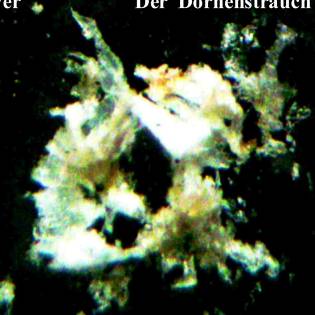
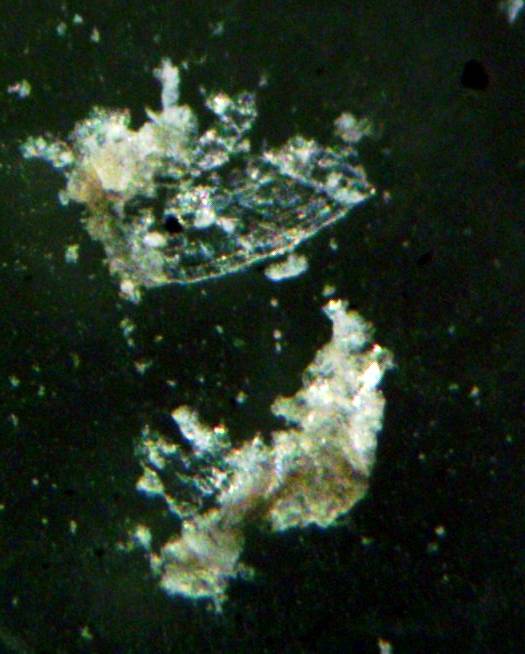
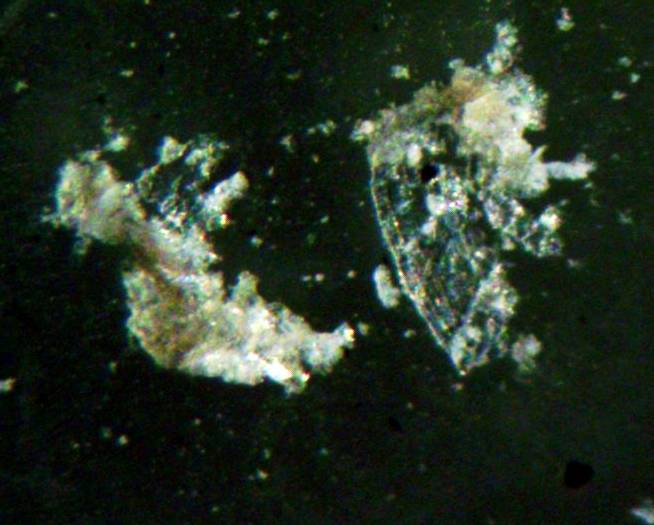
Like Rosen interprets the italics of some of the poems discussed above, for the present case it seems to interpret a photo from the other side of the Danube river relative to the island - I was sitting reading by the riverside there when suddenly I spotted the fish in the strandside, only a metre or two in front of me - it looks like a stigmatized fish carried by Joseph of Arimathea to its tomb. I photographed it and the negated photo shows an eye looking at you - and an annotation can also reveal it as a man's shoulder seen from aside behind, his face looking (shamefully?) down under a (Picasso?) fish hat:
One notices also a trinity function - with the Son in the original photo, the Father in the mid photo (the big eye) and the Holy Ghost (sending flames down onto the shoulder) in the righthand photo. Notice that the man with hat and flames on his shoulder shares this with the man who carries the fish on his shoulder - although they face opposite directions. This could mean also that the eye which here is a fish also is the light seen by your own eye - and vice versa.
It is the man looking down under the hat which seems to be the reference of this 'drooping brow' of Rosen in this poem #7 of Yeats.
Rosens triangel
7 20b, 33a, 63a
23 9b, 25a, 52b
39 4c, 39c, 57c
55 14a, 31c, 44b
For example, 44b concerns the barley sheaves behind the bread - but it could also be simply about this man with 'drooping brow' as he enters the bakers shop.
An interesting effect emerges from a swapping of the matrices for Stillheten and Rosen - most of the resulting mappings apply to this photo but some apply also well to the poem of Yeats. I notice this swapped matrix for Stillheten quarter Franciscan - which is 9b, 25a, 52b (the stanzas for the Franciscan quarter of Rosen). It can be seen that 9b applies to a semantic interpretation of Yeats' poem, 25a in fact resembles the phonology of Yeats read from the last line to the first (example 'synger med svarttrostens nebb' for his line 4 = 'and yellow the wet wild-strawberry leaves'), while 52b tells of nature withdrawn (the man under the hat is withdrawn into the God's eye and from there into the original photo) as in autumn.
A speculation could suggest that photography or graphics/images and even visual impressions generally arise from such a swap of Stillheten and Rosen - which then could suggest the swap of roles in verbal quotes. It could suggest that when phonetic and logical form swap with communicative roles (such that your phonetic and logical form becomes mine - as is supposed to apply to understanding in normal communication) it leaves in this turnover a frequency interface format that amounts to or corresponds to visual impressions. That could be an interesting hypothesis on the nature of the redundancies in the human reality. It could concern the role of the trinity in christian theology and expand the fundamental theorem of linguistics from two to three - such that it would apply to that which is the same in three and only three.
It is possible that this is the real theme of Yeats' poem.
Crossways #6 'The indian to his love'
It seems that this theory of the visual impression (or visual form of the world generally) as the abstract interface between communicative roles qua phonetic and logical form (cp. the english word 'inter-view' - here notice also the dialogue 'Anashuya and Vijaya') can be used for interpreting this poem on basis of the first rotation image discussed in the article 'Some notes on text and image in 'The Endmorgan Quartet'' - here annotated also with the quotes from Rilke's first Duino elegy discussed in the article:
It seems that Yeats' poem #6 'The indian to his love' interprets these in its four stanzas: Stanza 1 = image 1, stanza 2 = image 3, stanza 3 = image 2 and stanza 4 = image 4. These images will in this assignment to the stanzas of Yeats constitute the shared interface with the following assignments to my 'Stillhetens åndedrag':
Stillhetens åndedrag
|
Dominican Franciscan Carmelite Benedictine |
6 22 38 54 |
44c, 32a, 2c 56b, 40a, 13b 61a, 27b, 8a 49c, 35b, 20c |
Dominican = Yeats stanza 1 = photo #1
44c hand-root = image tridenthand, the bird
32a her breasts
2c the dog
Franciscan = Yeats stanza 2 = photo #3
56b woven hands = family, friends etc
40a image #3 explains
13b is there a '13' form in the image - with a 'B' up right?
Carmelite = Yeats stanza 3 = photo #2
61a the singer, one eye hid under 'quiet bows', Venus in sprawl/marble etc
27b six hallucinations = 4 rotations, Brinken = the mouse up left, Brodt = the fleeing rat down right
8a folded capsule = the detail of Venus in sprawl down left (with boots etc)
Benedictine = Yeats stanza 4 = photo #4
49c Stillheten interprets Yeats without need for support from interface image
35b the same with this one
20c the waitor has a 'forelock' on his brow under the 'sunflower' whisky glass above etc
Would it (by the so far speculative hypothesis) be mine or Yeats' poem that is phonetic or logical - for the visual interface between? That would be an empirical matter.
Rosens triangel
|
Dominican Franciscan Carmelite Benedictine |
6 22 38 54 |
20c, 33b, 62c 9a, 25b, 52a 4b, 38a, 57b 15c, 30a, 44c |
Dominican
20c phonetically parallel to Yeats stanza 1?
33b phonetic/semantic parallel to Yeats stanza 1?
62c semantic to image 1? describes the wooden cross of crossways
Franciscan
9a phonetic/semantic parallel to Yeats and image
25b semantic to image
52a the three versions of the trinity photo above - in the above order
Carmelite
4b eye discontinuity etc = the image
38a semantic relevance with Yeats' stanza
57b the same as 52a - but the order of the trinity versions is 3-1-2
Benedictine
15c phonetic to Yeats and semantic to image 4?
30a semantic to image 4
44c the trinity photo in the original order (as for 52a)
What is interesting here is that the text in the third element of each quarter invokes the three versions of the above trinity photo - which factually means that it invokes the principle of sameness beyond the two and only two of the human reality. However, it is not likely that the four rotations of the image is of the same kind as the three versions of the trinity photo. But should it maybe in combination explain the 'six hallusinasjoner' as in Stillheten 27b?
It appears that the question whether mine or Yeats' poem should count as phonetic or logical form for the visual interface is not easy to answer on the present basis - and particularly the role of the trinity factor is likely to be important if one should try and understand the empirical basis for this speculative hypothesis on the ultimate nature of light as in this sense of the character of the human visual faculty.
Why is Yeats' poem called 'The indian to his love'? Could be the answer is as simple as the indian swastika - in these four rotations.
Crossways #11 'To an isle in the water'
With this as the mirror poem to #6, an interesting conjecture could be that when #6 is about the first rotation image, this #11 could be about the second rotation image discussed in the article 'Some notes on text and image in 'The Endmorgan Quartet''. It seems that these four images can be used for finding an interface link between Yeats' poem and mine in the permutation matrix - a link which it otherwise can be difficult to spot. Here are the four rotations annotated with references to Rilke's fourth Duino elegy:
It seems that the four rotations find reasonable reflexes in the four stanzas of Yeats' poem - only rotation 3 and 4 are swapped.
The relevance of just these photos could be seen via Rilke's fourth Duino elegy for the title to Yeats' poem: See the discussion in my PhD dissertation of element 9 in the exhibition 'Brudd'. It is the role of the dancer and the Bürger in the kitchen which is seen in the detail of the rotation image discussed in the article.
Rotation 1 interprets stanza 1 by the idea of a sexual intercourse of a woman on the floor with a windup piano over her - and above them in the air flies the dream - a toy animal having a sexual intercourse with a lion behind. A shy woman it could be, the toy animal in the firelight with a pensive lion.
Rotation 2 (stanza 2) could show to the left a woman in long dress who has just carried in some dishes and bends to the left to leave them on some sideboard.
Rotation 3 (stanza 4) shows perhaps a flying structure above and the Bürger and dancer in the detail below.
Rotation 4 (stanza 3): Is it somebody to the right walking through a doorway - the door itself swung open leftwards? Which means the gloom to the left?
I discuss some of the elements telling of how these images can provide for a link between my poems and Yeats'. Could be it is not the optimal solution and it may be that better images could be found but it could be suggestive of the principle anyhow - which here is the principle of the rotation in four quarters of an image, which thereby also tells of the ancient swastika. I discuss the Dominican and Franciscan quarters from Stillheten and Rosen since these are the best and most systematic. It must be admitted, though, that this correlation seems not entirely solved.
Stillhetens åndedrag
|
Dominican Franciscan Carmelite Benedictine |
11 27 43 59 |
44b, 29c, 1a 56c, 37c, 11c 63b, 25a, 6b 52a, 33a, 20b |
Dominican
44b it is june, no, july = shy one month, otherwise a line-by-line relevance for rotation 1
29c phonological ('sjelenes mytologi' = 'shy one, shy one') + semantic relevance for rotation 1
1a loving a woman on the earth/ground (relevant for image rotation 1)
Franciscan
56c to the left timber leaning, to the right a male head with shadow on forehead, toy horse
37c to the left an upright person counting dishes? left and right of rotation 2
11c left and right of rotation 2
Hence the Franciscan quarter tells of left and right in the image rotation 2
Rosens triangel
|
Dominican Franciscan Carmelite Benedictine |
11 27 43 59 |
21a, 35c, 64b 8c, 27c, 53c 2a, 40b, 59a 13b, 32b, 45a |
Dominican
21a 4 characters in the image, 2 in air above, 2 on ground below - for the four lines
35c the 2 above hang in the air above the two below
64b ?
Franciscan
8c serving stories (dishes) = to the left in image, over it all = to the right
27c conch = structure to the left, family = the righthand side
53c (rotation #1?)
I considered if the two books should swap assignments - Stillheten 21a, 35c, 64b etc?
Crossways #3 'The cloak, the boat and the shoes'
Stillheten:
|
Dominican Franciscan Carmelite Benedictine |
3 19 35 51 |
45c, 17a, 3c 55b, 41a, 14b 60a, 28b, 9a 48c, 36b, 21c |
Rosen:
|
Dominican Franciscan Carmelite Benedictine |
3 19 35 51 |
19c, 48b, 61c 10a, 24b, 51a 5b, 37a, 56b 16c, 29a, 43c |
This interprets the trinity photo:
'The cloak' is the man with his lefthand shoulder and large hat
'The boat' is the man who carries a fish on his lefthand shoulder
'The shoes' is the eye: "Soundless shall be the footfall light / in all men's ears of Sorrow".
The shoes are woven, as shows the darker textual field of the eye.
Rosen 19c tells that
|
et menneske står ved et gjerde og taler med en utenfor om havens lyriske ære. Min venstre skulder går frem. |
a human stands by a fence and talks with one outside about the garden's lyric honour. My leftside shoulder moves forwards. |
It is easy to recognize the elements of the trinity - the boat in the first two lines, the shoes in the third (Adam and Eve were seen) and the cloak in the fourth.
Stillheten 45c
|
gjenvinner legemet sin form. Det kunne vært menneskehetens forlis trykket inn i dens norm. Det sitter en due i en avlyttingsmast - at hvilen er sølibat. Det tog som trekker sin tunge last, det står i den hellige stat. |
if only the body regains its form. That could have been humanity's shipwreck pressed into its norm. There sits a dove in a surveillance mast - that the rest is celibacy. That train which pulls its heavy load, it stands in the holy state. |
'Regains the body its form': This tells that the resurrection of the body goes through the trinity. This is likely to be the theme of Yeats' poem. As well as of the mirror poem in his book:
Crossways #14 'The ballad of Father O'Hart'
Stillheten:
|
Dominican Franciscan Carmelite Benedictine |
14 30 46 62 |
43b, 28c, 16a 57c, 36c, 10c 64b, 24a, 5b 53a, 48a, 19b |
Rosen:
|
Dominican Franciscan Carmelite Benedictine |
14 30 46 62 |
22a, 36c, 49b 7c, 28c, 54c 1a, 41b, 60a 12b, 17b, 46a |
The ballad tells that there was no human keening (mourning) when Father O'Hart died but the birds came flying in for the event. The poem ends:
This way were all reproved
Who dig old customs up.
Stillheten 43b tells of a lapis philosophorum, which can be taken to be about the material existence of an ex nihilo white stone, while Rosen 22a likewise tells of the value of monasterial prayer. This means that the first elements Stillheten 43b and Rosen 22a correspond to the last element in Yeats' ballad. It seems that the first part of Yeats reads against the last of mine - Stillheten 19b and Rosen 46a - and that this converse principle obtains rather well throughout.
Crossways #16 'The ballad of the foxhunter'
Yeats, Sachs and my TEQ can be read as studies in the form of resurrection - that is, more generally, the form of 'other realities'. It appears that this also can be recognized as aspects of the white metre under discussion here.
It was suggested above that a visual interface can combine two poems in a relevant way - more generally the theory that this is what a visual interface is - conjecturally for 'inter-viewing' the phonology of the one poem against the semantics of the other (see also my TEQ #973). A comparison of Yeats #16 'The ballad of the foxhunter' = 12 stanzas with the first poems of Nelly Sachs' 'In den Wohnungen des Todes' can in this way go via the 6+6 = 12 enumerated characters of Pietro Perugino's 'Lamentation over the dead Christ' in accordance with the enumeration in this excerpt by the principles discussed on 6 november 2024 and 11 november 2024:

Annotated excerpt from Pietro Perugino's 'Lamentation over the dead Christ' (source)
THE BALLAD OF THE FOXHUNTER
#3 upper row
"Now lay me in a cushioned chair
"And carry me, you four,
"With cushions here and cushions there,
"To see the world once more.
#4 upper row
"And some one from the stables bring
"My Dermot dear and brown,
"And lead him gently in a ring,
"And gently up and down.
#2 upper row
"Now leave the chair upon the grass:
"Bring hound and huntsman here,
"And I on this strange road will pass,
"Filled full of ancient cheer."
#5 upper row
His eyelids droop, his head falls low,
His old eyes cloud with dreams;
The sun upon all things that grow
Pours round in sleepy streams.
#6 upper row → #1 (next)
Brown Dermot treads upon the lawn,
And to the armchair goes,
And now the old man's dreams are gone,
He smooths the long brown nose.
#1 upper row
And now moves many a pleasant tongue
Upon his wasted hands,
For leading aged hounds and young
The huntsman near him stands.
#2 lower row
"My huntsman, Rody, blow the horn,
"And make the hills reply."
The huntsman loosens on the morn
A gay and wandering cry.
#1 lower row
A fire is in the old man's eyes,
His fingers move and sway,
And when the wandering music dies
They hear him feebly say,
#3 lower row
"My huntsman, Rody, blow the horn,
"And make the hills reply."
"I cannot blow upon my horn,
"I can but weep and sigh."
#4 lower row
The servants round his cushioned place
Are with new sorrow wrung;
And hounds are gazing on his face,
Both aged hounds and young.
#5 lower row
One blind hound only lies apart
On the sun-smitten grass;
He holds deep commune with his heart:
The moments pass and pass;
#6 lower row
The blind hound with a mournful din
Lifts slow his wintry head;
The servants bear the body in;
The hounds wail for the dead.
Comparison of Sachs 'In den Wohnungen des Todes' and 'Sternverdunkelung' (source text apparently not available on the web) with Yeats' 'Crossways' and Perugino's 'Lamentation over the dead Christ':
1. THE SONG OF THE HAPPY SHEPHERD
= Ihr Zuschauenden
2. THE SAD SHEPHERD
= Lange schon fielen die Schatten
3. THE CLOAK, THE BOAT, AND THE SHOES
= Die Kerze, die ich für dich entzündet habe
4. ANASHUYA AND VIJAYA
= Nacht, mein Augentrost du
5. THE INDIAN UPON GOD
= Vielleicht aber braucht Gott die Sehnsucht - lines 1-4
6. THE INDIAN TO HIS LOVE
= Vielleicht aber braucht Gott die Sehnsucht - lines 5-8
7. THE FALLING OF THE LEAVES
= Auch dir, du mein Geliebter
8. EPHEMERA
= Du gedenkst der Fußspur, die sich mit Tod füllte
9. THE MADNESS OF KING GOLL
= Qual, Zeitmesser eines fremden Sterns
10. THE STOLEN CHILD
= Ich sah eine Stelle, wo ein Herd stand
11. TO AN ISLE IN THE WATER
= Im Morgengrauen, wenn ein Vogel das Erwachen übt
12. DOWN BY THE SALLEY GARDENS
= Wenn ich nur wüßte
13. THE MEDITATION OF THE OLD FISHERMAN
= Deine Augen, o du mein Geliebter
The three ballads at the end of 'Crossways' correspond to larger sections of Sachs - the two first ballads to the following sections of 'In den Wohnungen des Todes', the third and final ballad to the entire 'Sternverdunkelung', the 6 sections of it:
14. THE BALLAD OF FATHER O'HART
= Grabschriften in die Luft geschrieben (= 13 poems)
15. THE BALLAD OF MOLL MAGEE = 14 stanzas
= Chöre nach der Mitternacht = 14 poems, one for each stanza - simple one-to-one correlation
16. THE BALLAD OF THE FOXHUNTER (see above)
= Sternverdunkelung
1. Und reissend ist die Zeit = Perugino #2
2. Die Muschel saust = Perugino #3
3. Überlebende = Perugino #4
4. Land Israel = Perugino #5
5. Im Geheimnis = Perugino #6
6. Zur 'Sternverdunelung' gehörig = Perugino #1
(One sees the same displacement #1 → #6 as in the enumeration in the poem 'Lange schon fielen die Schatten')
Now only the 11 first poems of 'In den Wohnungen des Todes' are left unaccounted for - these likewise find reflexes in the 6 characters of Perugino in such a way that the 11 first poems serve to zip the upper and the lower rows together. For this 1946 book, it is natural to see this as a way of interpreting the holocaust as a punishment of the people of Israel as a correlate to the one which Jesus got from the jewish people - and hence this poetic study of the resurrection of Jesus tells of a coming resurrection of the people of Israel - also via this intertwining of the upper and lower rows:
1. O die Schornsteine auf den sinnreich erdachten Wohnungen des Todes
= #1 upper row
Sachs poems
2. An euch, die das neue Haus bauen
3. O der weinenden Kinder Nacht
4. Wer aber leerte den Sand aus euren Schuhen
5. Auch der Greise letzten Atemzug, der schon den Tod anblies
6. Ein totes Kind spricht
7. Einer war, der blies den Schofar
8. Hände der Todesgärtner
9. Schon vom Arm des himmlischen Trostes umfangen
10. Welche geheimen Wünsche des Blutes
11. Lange haben wir das Lauschen verlernt
+
12. Ihr Zuschauenden
13. Lange schon fielen die Schatten
Perugino characters
= #2 upper row
= #3 lower row
= #4 lower row
= #5 upper row
= #5 lower row
= #4 upper row
= #3 upper row
= #2 lower row
= #1 lower row
= #6 lower row
+ #6 upper row → #1
= the visual eye
= Perugino's artwork
'Das Lauschen' of #6 lower row is the white textile under the body of Christ in Perugino's artwork.
Crossways #1 'The song of the happy shepherd'
It seems that one can consider Rosen (the twelve elements 18b, 47a, 61a, 11b, 23a, 50b, 6c, 37c, 55c, 16a, 29c, 42b) as reading the 57 lines in this poem (that is 57/12 = 4,75 lines Yeats per element of mine) in the socalled prime = forwards order, such that 18b applies to the first 4,75 lines etc, while Stillheten (the twelve elements 47a, 18b, 4b, 54a, 42b, 15a, 58c, 27c, 9c, 49b, 35c, 23a) reads Yeats in retrograde = backwards order, such that 47a applies to the last 4,75 lines etc.
Where are the inversion and retrograde inversion? They seem to be in Yeats #16 'The ballad of the foxhunter': This contains 12 stanzas of 4 lines each and hence it easily compares with the 12 elements (23b, 36a, 50a, 6b, 28a, 55b, 1c, 42c, 60c, 11a, 18c, 47b) of 4 lines each for Rosen in prime order:
It means that 23b compares with the first stanza of #16 which suggests that there is a principle of semantic opposites in the comparison between the two stanzas. That is likely to be the socalled 'inversion'.
|
Yeats first stanza: Now lay me in a cushioned chair And carry me, you four, With cushions here and cushions there, To see the world once more. |
My Rosen 23b: Det står en maskin og venter - et hull hvor du setter din mat inn i en sprekk som henter mikrobølger til fat. |
My Rosen 23b: There stands a machine awaiting - a hole whereinto you put your food into a slit which fetches microwaves to plates. |
'Now lay me in a cushioned chair' can be seen to be the semantic opposite to 'There stands a machine awaiting' etc.
Stillheten (the twelve elements 42a, 29b, 15b, 59a, 37b, 10a, 63c, 22c, 4c, 54b, 46c, 18a) reads similarly 'inverted' only backwards - which could apply even to the lines within each element. However, it seems that the inversion is here not really semantic (rather the semantics seems to apply rather well) but rather steers towards the phonetics - which then could mean that the 'Gulspurv' = 'Yellow sparrow' in the beginning of 18a is phonetically similar to 'once more' at the end of Yeats' first stanza.
|
Yeats first stanza: Now lay me in a cushioned chair And carry me, you four, With cushions here and cushions there, To see the world once more. |
My Stillheten 18a: Gulspurv Min behagelig hvite skjorte er som lyset på veggen. Tapetene er blitt borte men barndommen sitter i heggen. Lyset er vevet om kroppen slik tiden går gjennom et vindu, |
My Stillheten 18a: Yellow sparrow My pleasantly white shirt is like the light on the wall. The wallpaper is gone but the childhood remains in the bird cherry. The light is woven around the body like the time goes through a window, |
'Now lay me in a cushioned chair' is semantically relevant to 'The light is woven around the body / like the time goes through a window' ('Lyset er vevet om kroppen / slik tiden går gjennom et vindu'). Is 'now lay me' phonetically relevant to '-nom et vindu'? Of course it is, but enough to be relevant? It is difficult to have any opinion on this but it is not impossible that this is the relation between logical and phonetic form in this retrograde inversion.
It seems that the symmetric #1 and #16 by this confirm the idea of a serial 12-tone composition technique for a deep coordinate system - possibly related to the ancient indian swastika.
How does this relate to Sachs' poetic works? My guess is that the prime and retrograde correlates with my Stillheten and Rosen in the two metaphysical items of the fundamental theorem of linguistics while Sachs and Yeats will constitute the inversion and retrograde inversion of the ontological referent and the linguistic arbitrarity which here means logical and phonetic form. However, it is not probable that this is a simple and easily decipherable relation - it is more likely that the complex is described by Perugino as being a matter of the trinity which here means sameness in three and only three items - which makes it much more difficult to understand. It is the resurrection theme.
I take one example for showing what I mean it could be about: The trinity is told in #3 "The cloak, the boat and the shoes" - it has its correlate in Sachs' 'Die Kerze, die ich für dich entzündet habe':
| die di di |
Ker kert kert |
ze die se di sedi |
ich für ic fyr icfyr |
dich ent dic ent dicent |
zündet syndet syndet |
habe habe habe |
'Dikert' and 'dicent' are 'almost the same', as are 'sedi' and 'syndet' as well. Only 'icfyr' and 'habe' are different - the one is a phonological NEGATION of the other: This negation is what turns the photo of the man with the fish ('dikert') into a divine eye - which in the man with the hat version shows a sinner with humbled conscience. It is the trinity which is the triangle of 'Rosens triangel'.
Compare also the story with the Madonna of Guadalupe that left a visible graphic image on Juan Diego's cloak ('tilma') - which could be about just 'the cloak, the boat and the shoes'.
Crossways #9 'The madness of king Goll'
6 stanzas with a shared refrain - could constitute a David star.
This seems to display the same system of prime in Rosen and retrograde in Stillheten.
|
Rosen Stillheten |
= 21c, 34b, 63c, 8a, 26b, 53a, 3b, 39a, 58b, 14c, 31a, 45c = 43c, 31a, 1c, 57b, 39a, 12b, 62a, 26b, 7a, 50c, 34b, 19c |
- which reads backwards relative to Rosen - that is, Rosen 21c = Stillheten 19c.
Semantic and phonetic interpretation seem to be intertwined. I take some lines towards the end as example:
A tramping of tremendous feet,
And saw where this old tympan lay,
Deserted on a doorway seat,
And bore it to the woods with me;
Of some unhuman misery
Our married voiced wildly trolled.
They will not hush, the leaves a-flutter round me, the beech leaves old.
I sang how, when day's toil is done,
Orchil shakes out her long dark hair
That hides away the dying sun
And sheds faint odours through the air:
This corresponds (roughly) to Rosen 14c-31a and Stillheten 1c-31a. As mentioned above, there seems to be a certain role for the black textiles I found twice on a tramseat (on tram #1 in Vienna) with exactly one week's interval. (Here they correspond to the white textiles under Christ in Perugino's 'Lamentation'). They were, I have concluded, probably ex nihilo occurences that took form in the moment when (or just before) I stepped in the tramdoor. In both cases I bore them to the tram-driver since they could have been forgotten by some traveller left in a miserable mood. In the lines of Yeats the tram is the 'tram (ping of tremendous feet)':
a tramping of tremendous feet,
and saw where this old tympan lay,
deserted on a doorway seat,
In Stillheten 1c this is
|
som skyldes et underlig svar. Kaller Vårherre de munner ser du det som det var. |
which is due to a strange answer. Calls the Lord those mouths you see it as it was. |
The 'old tympan' is the call of God, hence a semantic (or 'logical') interpretation, while the next line is clearly phonetic: 'deserted on a doorway seat' = 'ser du det som det var'.
Rosen 31a:
|
Du fyller en trillebår trolley med ting som skal ut av rommet. Du trekker den baklengs som kolli mot dørens kvadratiske lomme |
Our married voiced wildly trolled. (= the refrain of the old beech leaves) I sang how, when day's toil is done, Orchil shakes out her long dark hair |
Here Yeats' 'Orchil' is my 'kolli', his 'trolled' is my 'trolley' etc.
Stillheten 31a contains on the corresponding place:
And sheds faint odours through the air
med tørrkniven krummet som skjorterier
-s through the air = skjorterier
Rosen 14c:
|
Slik dannes fargen av mange ting som hører uendelig sammen når rødfargen stiger ut av ring med koeffisienter i rammen. |
In this way / Thus forms the colour of many things that belong infinitely together when the colour of red steps out of a ring with coefficients in the framework. |
The 'ring' is probably Yeats' 'married'. Hence semantics and phonlogy, or logical and phonetic form, are probably intertwined as in a David star - here as two trinity formations intertwined.
I have not studied if the phenomenon I point to could be related to the fact that the element in question is 31a in both Rosen and Stillheten.
See also Nelly Sachs' version in the poem 'Qual, Zeitmesser eines fremden Sterns' - where the footsteps correspond to Yeats' old beech leaves around the poet's feet.
I mention also the third element = Rosen 63c which in the retrograde of Stillheten will be 50c with the correlate Crossways first half of second stanza:
The third element:
Rosen 63c:
|
En pose står opp som en vinge. En gutt løper rundt som skoene og finner de nye tingene og plukker opp hjernetone. |
A [plastic] bag stands up like a wing. A boy runs around like his shoes and finds the new things and picks up braintone. |
Stillheten 50c:
|
som ankeret faller - som regnes i lyshastighetens rasjon som ankeret kaller. Og solsikkene sto i aldrende flor på en kvist. I togets kupé var det varmt - og jeg tror for å bli bevisst. |
like the anchor is falling - as is it counted in the lightspeed's ration like the anchor is calling. And the sunflowers stood in an ageing blossom on a twig. In the train's compartment it was hot - and I believe in order to get conscious. |
Crossways first half of second stanza:
I sat and mused and drank sweet wine;
A herdsman came from inland valleys,
Crying, the pirates drove his swine
To fill their dark-beaked hollow galleys.
I called my battle-breaking men,
And my loud brazen battle-cars
What is special about Stillheten 50c is that it contains the 'wrapover' break which is clearly visible in the construction 'sunflowers on a twig' - the wrapover is just between 'sunflower' and 'twig'. This is also clearly audible in Luigi Nono's quartet around 100-105 seconds into the second movement. In Crossways this is the "dark-beaked [...] battle-breaking [...] brazen battle-cars". Rosen here shows the trinity photo in the lines "A boy runs around like his shoes / and finds the new things / and picks up braintone". The shoes are the big eye in Crossways #3. The sinner finds new things on the ground and the fish on the shoulder is a sort of 'braintone'. This means that the trinity phenomenon is installed in the wrapover break - which then also tells of the other visible linebreaks in Stillheten. Rosen "pose står opp som en vinge" = Crossways "mused and drank sweet wine" by the phonetic form.
The theme is the ephemerality of the existing things - like leaves on a tree, which is a recurring theme in 'Crossways'. The poem is between #7 'The falling of the leaves' and #9 'The madness of king Goll' - which means that the leaves in question are on the verge of decay, which also is the theme of the poem. See also Sachs' corresponding poem 'Du gedenkst der Fußspur, die sich mit Tod füllte'.
Relative to the prime and retrograde of #9 'The madness of king Goll', inversion and retrograde inversion should be the formal aspect of this #8. I consider here the same parts of this as for poem #9 - element 3 and element 10:
|
Rosen Stillheten Crossways |
20a, 34c, 63b, 9c, 26c, 52c, 3a, 39b, 58a, 14b, 31b, 44a 45b, 30c, 2a, 55c, 38c, 12c, 62b, 26a, 7b, 51a, 34a, 21b 26 lines / 12 elements = 2,17 lines per element Element 3 = lines 4,3-6.5 Element 10 = lines 19,5-21,67
|
The third element:
Rosen 63b:
She smiles behind dark glasses.
It is in the pavement's land,
a big piazza which plays
the light against the darkness' edge.
Stillheten 51a:
That she easily tells
I regret like her -
was the star in paradise,
saw the shadows run
from the shoulders' cross
and the trees stood tall
in poppy splendour.
Crossways lines 4,3-6.5:
love is waning, let us stand
by the lone border of the lake once more,
together in that
Rosen:
Rosen:
Rosen:
Rosen:
pavement's land
big piazza plays
light against darkness = trinity photo negative = the eye
edge
Rosen:
Stillheten:
Crossways:
Stillheten:
Crossways:
Stillheten:
Crossways:
Stillheten:
Crossways:
Stillheten:
Crossways:
she smiles behind dark glasses
I regret like her
love is waning
star in paradise
let us stand
saw shadows run
by the lone
shoulders' cross = trinity photo man with hat
border of the lake = trinity photo fish on riverside
trees tall in poppy splendour
once more together in that
The tenth element:
Rosen 14b:
such as the woman finds her curved form
over the bridge's [vaulted] curvature
and the light plays its waving norm
in the water under these two.
Stillheten 2a:
To identify the Lorrd
The birds' footsteps against the roof
where the moon-sickle stood thin
were replaced by the watchdog's wake,
a look that scrutinized your sin.
Then it rained again against the roof.
It 'cut itself' - then it stopped.
Crossways lines 19,5-21,67:
dewy as her eyes,
In bosom and hair.
"Ah, do not mourn"
The same phenomenon applies here
|
Rosen: Stillheten: Crossways:
Rosen:
Rosen:
Rosen:
Rosen:
Rosen:
Rosen: |
woman finds identify Lorrd dewy as
curved form
over bridge
[vaulted] curvature = vault
light plays waving norm
in the water
under these two |
It is seen that the elements occur in triples for each monasterial order - which here is taken to be about a trinity in the sense of the photo from the riverside:
1) Christ in the sense of a fish carried on the shoulder of a jew
2) God's eye watching your conscience and other things
3) The human sinner with a not perfect conscience (Holy Ghost)
These three are one and the same - but there is a negation of the colours between 1) and the other two.
The jew and the sinner are moving in opposite directions. This could also pertain to the story of the Holy Ghost on its arrival at Pentecost being in the form of flames settling on the shoulders of the apostles.
For this to be a trinity in the sense of my fundamental theorem of linguistics telling "2 and only 2 items can be the same across different realities" - it would here mean that "3 and only 3 items can be the same across different realities". It would mean that the range of possible occurrences and forms is limited to such as can be the same in three such forms.
Considering this for the case of e.g. 'Crossways #13 'The meditation of the old fisherman', one can, if one wants, recognize such a trinity function in the quarters of monasterial order - here by the 3 * 2 permutational possibilities there are:
Stillhetens åndedrag
|
Dominican Franciscan Carmelite Benedictine |
13 29 45 61 |
43a, 30b, 16b 58a, 38b, 11a 62c, 23c, 5c 53b, 47c, 19a |
= 3 = 2 = 1 = 1-2-3 |
2 3 1 1-2-3 |
1 2 3 1-2-3 |
Rosens triangel
|
Dominican Franciscan Carmelite Benedictine |
13 29 45 61 |
22b, 35a, 49a 7b, 27a, 54b 2c, 41c, 59c 12a, 17c, 46b |
= 3 = 1 = 2 = 1-2-3 |
2 1 3 1-2-3 |
1 3 2 1-2-3 |
In theory, if these permutational possibilities all apply, one should get something which is common to all three - which is not the same as these 3 and only 3 - and in general it is not so certain that such mystic matters adhere to a permutational scheme, but the theoretic principle could be suggestive of the idea. Could be the problem straddles the use of the concepts of seriality and 12-tone composition technique. Why should seriality over prime, retrograde, inversion and retrograde inversion not apply to series of less than 12 tones? Could be there is such an inherent connection and that this is the point of departure for the theory of 12-tone composition.
It can be exposed in the form of four angles - here for 'Stillheten':


When proper identities apply, such that 43a share important aspects with 58a etc, these combine again to a David star:

This amounts also to 'stage 2' in the grammatical theory in the account of Palma - but here in the sense of a vertical y-axis along which the triangles (or angles) can move up and down - in addition, of course, to movements along the x-axis.
I refer again to Kandinsky's "Über das Geistige in der Kunst" - here from Kapitel II Die Bewegung: "Ein großes spitzes Dreieck in ungleiche Teile geteilt, mit der spitzesten, kleinsten Abteilung nach oben gewendet - ist das geistige Leben schematisch richtig dargestellt. Je mehr nach unten, desto größer, breiter, umfangreicher und höher werden die Abteilungen des Dreiecks [etc]". Kandinsky's description in fact strongly approximates my own trinity photo from the Danube riverside. (Notice also his mention of Arnold Schönberg).
It was shown under Crossways #9 'The madness of king Goll' that the concept of 'retrograde' can get its meaning reinforced by the phenomenon of counterpoint that the line for this poem contains some elements that are 'retrograde' in the sense of mirror symmetric:
|
Rosen Stillheten |
= 21c, 34b, 63c, 8a, 26b, 53a, 3b, 39a, 58b, 14c, 31a, 45c = 43c, 31a, 1c, 57b, 39a, 12b, 62a, 26b, 7a, 50c, 34b, 19c |
Here 31a, 39a, 26b and 34b are mirror symmetric in the two lines - and in fact these occur just in the corner of the angles. Hence the angles will naturally be aligned also vertically as in a David star.
Are the poetic numbers in my chapter 7 ("20 Gedichte - in September und Oktober") on numerality in my SNEEFT COEIL really about such levels of reality - with '2 and only 2' for the linguistic theorem and '3 and only 3' for the assumed trinity level of knowledge? The poem #2 should be about the linguistic and #3 about the trinity.
On 30 october 2024 I fell on my back and slammed the lower part of the spine against a stone tile - it left me somewhat disabled for in fact as much as 1 month - it was only in the end of november that there were no traces left of it. Not from september to october - but from october to november. I recognize this in poem #3, the third stanza:
In Herbst es war. Ein schwerer Sturm
brach einen Ast von einem Baum -
wie fiel ein Stein von einem Turm
und öffnete einen Riesen-Traum.
Es schlugen Wellen auf der See
gegen des Schiffes tiefe Schott
und zweimal griff ein Wundersweh
gegen die Arme von dem Gott
der sich in steifem Marmor hielt.
Dann fiel ich auf den Bodenstein
und rief es wie ihr alle fielt
dass jeder Gott war ewig mein.
Dann fiel ein Wind auf jenen Baum
wie Sturm in eine Eiche schwer
und öffnete den Riesen-Traum
und brach einen Ast vom Stamme her.
The fall on the 'Bodenstein' would be at approximately 2,718... - the constant 'e' for the natural logarithm would be at appr 'jeder Gott'. It is that constant in the function ex which has itself ex as its own derivative.
On 27 november 2024 I decided to repair the alarm clock I had on my table since its second pointer had detached and did not go ('flutter') around. I took the clock out of its transparent encasement and pressed the second pointer (the pointer that takes one step per second) back into the turning axle and it functioned as it should. I synchronized the clock with another clock and left it on the table. When I about five hours later looked at it again I was puzzled by the apparent fact that it had lost time already - 3 minutes it seemed - that is about 1% delay. Even later in the day I had a meal at the table when suddenly I noticed that there were two clocks of the same kind there - as if the original clock had got a copy. They looked identical except that the new one had a sticker on the back side. However, this new clock was synchronized with the third clock while the (probably) one I had repaired was still about 3 minutes delayed.
Had there been a need for pressing "the second rotaton image" (discussed under Crossways #11 above) better onto the revolving axis? It must be admitted that Crossways #11 is not really solved in the above discussion.
I had repaired the clock next to this 'structure' which can be seen to contain a square format, a stacker of information, two spectacle glasses (like the two circular knobs) and an informational sticker (which had been under a hungarian plastic saucer - notice also its quasi 'David star' form):


What was this mystery? Was it that the new clock was a second timepiece because I had repaired the second pointer of the first clock?
|
second second SAME |
point- clock NEG |
er err |
repaired appeared = 1% SAME |
Or had I simply had two clocks all the time but forgotten that they both were on the table all the time - and recognized only one of them? Or even put it up myself and forgotten it? This 'absent-minded' explanation would tell that it should be possible to observe an absent clock even in another 'einsteinian' coordinate system - and in the present system it could have been so far away that it had lost 1% of its qualities due to delay and decay of the lightbeam when crossing from one reality (or reference system) into the other.
This is the question whether light can be dated.
Could be the clock had 'multiplied' like virus - and that this is the way that matter can 'resurrect' through the trinity.
My fundamental theorem of linguistics tells that '2 and only 2 items can be the same across different realities'. If these different realities are metaphysical, the (by human limitations) recognized identity makes them collapse into ontological existence with a human linguistic (semantic) label attached.
It is this which can have happened with the alarm clock which I repaired next to a structure which the limited human mind can have recognized as (almost) 'the same' - and thereby another ontological structure (similar to the alarm clock) took shape - with a 'semantic label' attached.
It would have been a phenomenon comparable to the 'Götter-Frucht' label which appeared 8-9 times in this way.
The four angles (of the David star) can also be recognized in a cartesian coordinate system as shown above. When the permutational scheme of Stillheten was constructed it was lifted one step up and the resulting propellar will have an aerodynamic shape. This is patent #3 in 'And hang under the Justcan keys' ("Zehner und Zwanziger - after aerotechnical construction on a molecular format"). It will drive the David star around for one full revolution after the 16 rows - 22,5 degrees for each. How many such clock seconds or second clocks will there be in one full revolution of the blue metre = 1000 years? That will be 31,5 gigaseconds. There is that 31a again - motivated by the 1% (= decimal system) decay of time between the two clocks. It is this 31a which tells of the nature of the trinity - which in my technological version can be defined as '3 and only 3 items can be the same across different realities'. It is assumed that this is what the transcendent arbitrarity will be about. This transcendent arbitrarity will itself constitute an independent sign which has yet another higher arbitrarity etc.
The 31,5 gigaseconds are more precisely 60 * 60 * 24 * 365,25 = 31557600 seconds (multiplied with 1000). The alarmclock that may have 'resurrected' had a product sticker on the back side which the first clock (probably the one which I repaired) had not:

It is seen that the product number 4006361315 is quite close in terms of digits to the giganumber 31557600000.
|
4006361 5006- 7- |
315 31557600-000 315 |
Now an average year is actually a little shorter - it is 31556952 seconds - that is 648 seconds less. However, the product number could of course be telling of just the number of seconds, minutes, hours in a year.
Some conclusions
It can be concluded that 'Crossways' contains a serial format of prime, retrograde, inversion and retrograde inversion which constitutes something like an ancient indian swastika as a deep structure.
Conclusion to the comparison of Yeats and Sachs would be that if Yeats' book can be shown to have this 'featural' white metre coordinate system, this should in fact apply to Sachs' work as well. It would correspond to the white textile under the body of Christ (with its counterpoint around Mary's head) in Perugino's "Lamentation over the dead Christ".
It is assumed that this deep level coordinate system is what the white metre is about.
More generally, it is possible that this could apply to a literary 'resurrection theme' - which could be a matter of resurrection on a new level of knowledge. Resurrection here means return to the human reality from another reality and hence it contains potential knowledge of that.
One should expectedly be able to assume that this featural coordinate system can be of much help when one tries to construct a basis for the new computer epistemology searching for a computational interface to new and hitherto unknown or at least undescribed realities. Clearly if this coordinate system constitutes a foundation for describing quasi-causal relations in other realities beyond the reach of human perception and description, it could be of great importance.
Some would say that Yeats is among the least 'random' ('plingplong') poets one can find - and yet a 12-tone structure can clearly be recognized as highly relevant for his book which at the same time can be considered as exhibiting maximal 'poetic tonality' - in the sense of much public appeal, considered to be 'sweet music' etc. That apparent paradox (which need not be a paradox, though) concerns the role of socalled 'arbitrarity' in language - which is about the least 'random' but, as I see it, has its rationality beyond the scope of the human reality. Therefore the correlations studied in this article could apply to phenomena outside the scope of the human reality - while yet it is not impossible that these phenomena can be accessed by future computational technology.
Another interesting idea that arose from the present study was the idea of the visual world being the 'inter-view' between phonetic and logical form of language (or what these forms apply to). What exists beyond this is often called 'the invisible world' - which hence could share important aspects with the rationality beyond the scope of the human reality.
The discussion has also given a good basis for understanding why Luigi Nono's 1980 string quartet 'Fragmente - Stille, an Diotima" is a relevant parallelism to my 2016 'Stillhetens åndedrag'.
In this article I have studied the distributed 'crossways' in the relation between my 'Stillheten åndedrag' and Yeats' book which the permutation schemes above suggest. This seems to provide possibly an ancient swastika underneath - and I notice that there could be a potential rotation of this by the puzzling phenomenon that Stillheten had to be displaced one stanza up - thereby providing for possibly an 'aerodynamic' shape of the propellers. The first edition of Stillheten had, though, another title ('Og lønn vi fikk avstanden fra' = 'And wages we got the distance from'). Does there exist another (non-swastika) solution?
Political comment
It can be observed that it is very possible or even likely that this hidden coordinate cross deep under the surface or literary text can be quite similar to or identical with the ancient indian swastika which certain protestant political forces of Europe adopted (probably since about 1814) in order to try and battle the italian catholicism. However, it must be noticed that there is nothing in this approach that appears alien to catholicism - and therefore it could rather be a matter of a future technology that has been used as pretext for violent political purposes. That makes it even more urgently important to come to an understanding of what this really is.
Sources:
Benkő, L. et al: A magyar nyelv történeti-etimológiai szótára. 4 volumes. Akadémiai Kiadó, Budapest 1984.
Grover, J.: Stillhetens åndedrag. Vienna 2017
Grover, J.: Rosens triangel. Vienna 2018
Kandinsky, W.: Über das Geistige in der Kunst. München 1912. (A paper edition exists on Benteli Verlag, Bern 2006).
Perugino, P.: Lamentation over the dead Christ
Sachs, N.: In den Wohnungen des Todes, Berlin 1947
Sachs, N.: Sternverdunkelung. Suhrkamp 1988
https://en.wikipedia.org/wiki/Twelve-tone_technique
Yeats, W.B: Crossways
© John Bjarne Grover
On the web 3 december 2024
Last updated 23 december 2024