11 november 2024
John Bjarne Grover
The following observations continue from the discussion of 6 november 2024. I discuss here two poems of Nelly Sachs and two of my own - all of them in relation to the artworks of Palma and Perugino discussed on 6 november 2024.
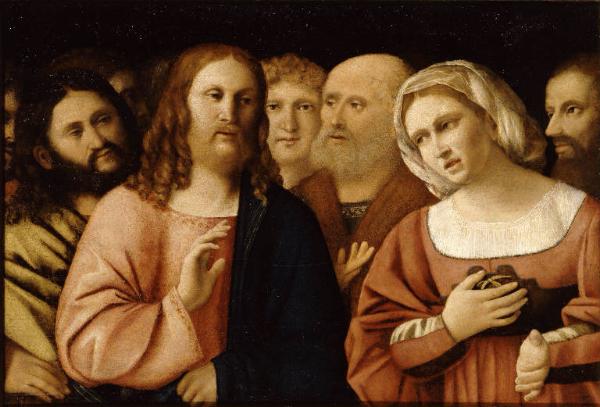
It was shown that a distinctive relation subsists between the 6(+6) characters in the artworks of Palma's socalled 'Christ and the adulteress' - enumerated in the upper row - (from this source page) and Pietro Perugino's 'Lamentation over the dead Christ' - enumerated in this excerpt - (from this source page) relative to the characters that can be deciphered from the eyes of the Madonna of Guadalupe (lower row) (see this source for the reconstructed images discussed in this article of mine) - and when these italian artworks even preceded the 1531 apparition in Mexico with only a few years, there could even be the basis for postulating a hypothetical relation of a kind which the later world could be prone to recognize as a potential 'technological connection'. In modern parlance - could the apparition in Mexico be conceived as a transatlantic information transfer? The discussion under 8 november 2024 (as an addition in smaller types to the discussion under 7 november 2024) tells of the potential importance in modern society of this idea:
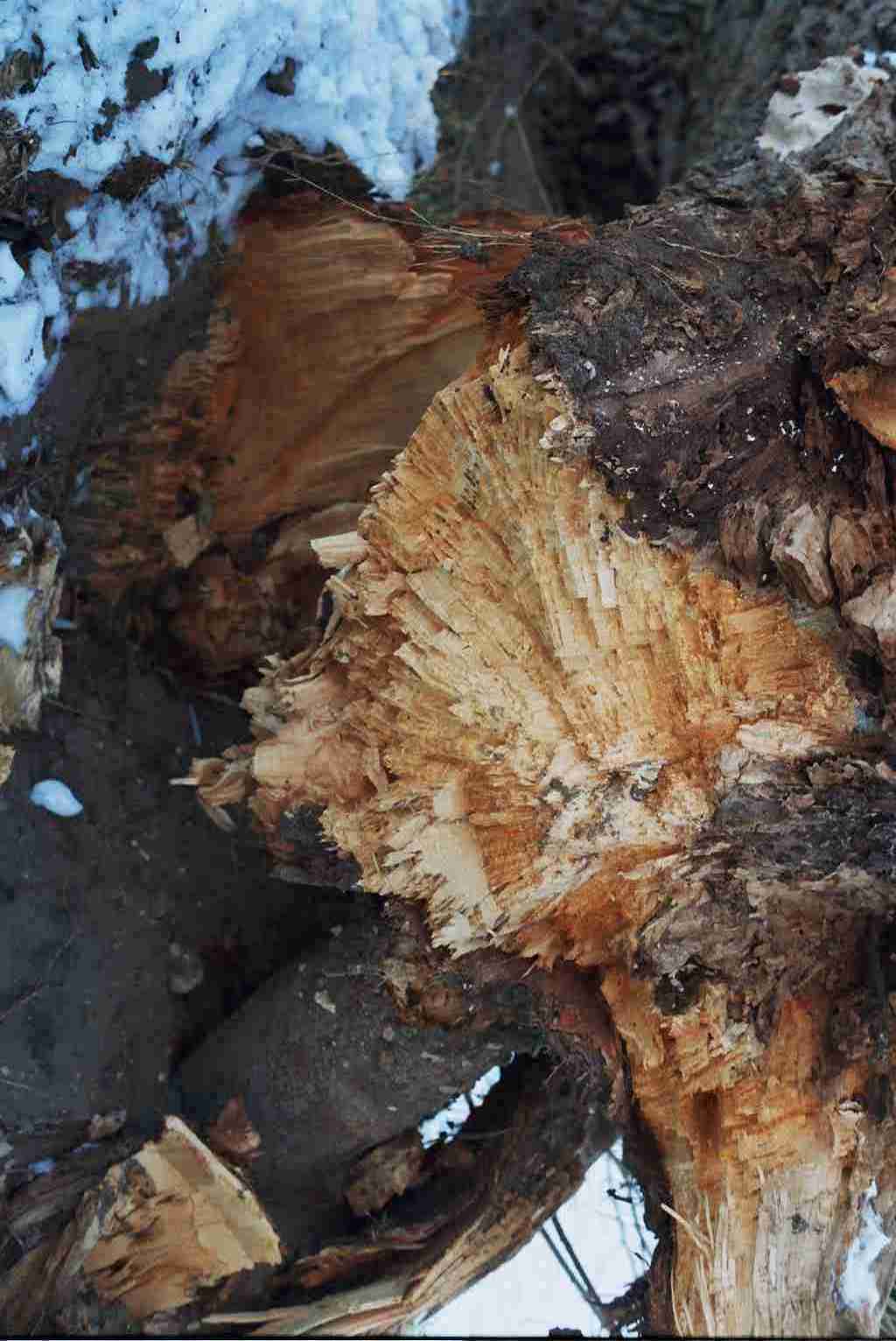
8 november 2024: As concerns my publication of this page two days ago, the delay could of course have been due to only normal maintainence work, but if someone had put up an intermediate block on the internet, it could also have been about the Madonna of Guadalupe of 1531 - which, as I suggest, can be seen as a very special projection from the italian renaissance - could be some would call it a piece of transatlantic information transfer. Would somebody even call it an 'agreement' in the sense of a 'plagiarism'? Of some interest can be the story of the beginning of the 'Klipra connection': Norway was established in 1814 as an antisemitic state but the antisemitic paragraph was lifted from the constitution in 1852 - the year when Ole Devold started his tricotage factory. He produced (according to Ragna Grøver) 'blå-trøye[r]' = 'blue sweaters' which also can be read 'blåtter/blotter øye[r]' = 'reveals/shines the eye[s]' and 'nissesluer' = a sort of 'elf-caps' - not unlike like the one Juan Diego is wearing in the revelation in the eye of the Madonna of Guadalupe. If the organizers of the state of Norway had access to the data in the tilma in Mexico and used a magnifying glass, they could perhaps have seen these traits in her eyes - cp. the idea of a 'nazi madonna' - although it is perhaps doubtful whether they had seen Juan Diego's headgear and a better explanation is perhaps the one of semiotic universals. A closer look at the shadows of the eye - see this reproduction found on this Facebook page which I also refer to in this article - could perhaps have revealed in the righthand part the outlines of a naked woman with dark hair and forelock leaning backwards on her elbows while a man in the middle of the eye is reaching his hand towards her hip - like some angel Gabriel fertilizing the virgin Mary. The correlate to Jesus could then also be spotted in the same eye - in the lefthand part. The heads of these three persons are all on the darker diagonal line in the eye. Could be this phenomenon - apparently invoked with the tricotage production of 'Ole Devold', could then also have activated the question of the status of the marian cult of catholicism vs the protestant version. This matter could be at the cornerstone of the role of the socalled 'Klipra connection' in terms of e.g. the question of Laura Devold and Vidkun Quisling in Gorky - and hence also possibly the status of the current conflict in Ukraine. Maybe I could have got the publishing page up if I had 'technical education' = 'teknikern', as was the word Laura (Devold) Eidsvig used when she tried to open the kitchenbench tap on a visit to Labråten in the mid 1970's, but I have not 'teknikern' and had to wait untill the page willingly opened by itself. Is it about plagiarism as an 'agreement' in the sense of a rape - which also is a sort of 'technical agreement'? Did Laura Devold and Vidkun Quisling rape the russian revolution - for Hitler's grotesque plagiarism of it? Would this concern the status of the new information technology with a transatlantic potential - involving the question of protestantism vs catholicism? Were Ole Devold's 1852 tricotage factory seen as an attempt to rescue the virginity in spite of 'empirical evidence' in the material document in Mexico - which could have made it look more gynecological - and therefore Hitler's plagiarism could have felt the need to battle or maybe 'adjust' the catholic marian cult because it seemed to be based on historic 'swindle' - in light of the empirical hardware document in Mexico? Clearly these matters could be situated in the universals of the human semiotic constitution - but it is perhaps not impossible that some magnifying glass could have had some role to play in the construction of this socalled 'Klipra connection'. It is probable that Ole Devold's products were oldfashioned business logic - 'shiners' on the eye and 'nisseluer' = 'elf-caps' like the one seen in the righthand margin in the upper half of this photo - I have speculated that this photo of mine from Vilnius can be recognized as an archetypal format recognized as a jewish mystery traditionally called 'Treblinka' (that the same image comes up under certain circumstances when a tree falls in a storm) - and hence Himmler called his death camp thus - which thereby also could have been for reasons of such a link to Ole Devold starting his production in the year when the antisemitic paragraph was lifted in Norway. If the archetypal format is the story, then it is a matter of human semiotic universals - and not necessarily a closer look at the eye of the Madonna in Mexico. / One can also guess that this 'Klipra connection' issue is the essence of the transatlantic NATO which now relates to the conflict in Ukraine.
Here I bring some more evidence for the assumption that this 'transatlantic connection' could be about the form of esthetic logic contained in the human semiotic constitution - by showing the high relevance of the Perugino-Palma complex for some poetic examples of Nelly Sachs and me.
The first example I discuss is from Sachs' first published poetry book "In den Wohnungen des Todes" (here 1947 - first published 1946) - click the link under 'Dateien / In den Wohnungen des Todes [pdf 9,84 mb]' for a download of the book for non-commercial copyrighted use - here from page 27 in the 1947 edition - the poem 'Lange schon fielen die Schatten' which is the last in the first part of the book called "Dein Leib im Rauch durch die Luft" - here her poem to the left with my comments to the right - relative to the artwork of Perugino by this enumerated excerpt from the full artwork. My comments about the black textiles are based on my own experience from the story described in this article:
|
Lange schon fielen die Schatten. Nicht sind gemeint jetzt Jene Lautlosen Schläge der Zeit Die den Tod füllen - Des Lebensbaumes abgefallene Blätter - Die Schatten des Schrecklichen fielen Durch das Glas der Träume, Von Daniels Deuterlicht erhellt. Schwarzer Wald wuchs erstickend um Israel, Gottes Mitternachtsängerin. Sie verging im Dunkeln, Namenlos geworden. O ihr Nachtigallen in allen Wäldern der Erde! Gefiederte Erben des toten Volkes, Wegweiser der gebrochenen Herzen, Die ihr euch füllt am Tage mit Tränen, Schluchzet es aus, schluchzet es aus Der Kehle schreckliches Schweigen vor dem Tod. |
Mary's black textile hanging from her shoulders Christ's stigmata? Mary's heartbeats? Christ's hair refers to the 'coronation' his hair about his dreams the white textile under the body of Christ? the corona circle on the ground, the seaside circle above (red) #2 from left upper row she is outside the circle of the upper seaside 'corona' (red) and is thereby not recognized #2 upper row #3 upper row (notice the 'wings') #4 upper row (one finger points, the other hand tells of a 'heart') #5 upper row (in a state of mourning) #6 upper row (the two hands folded or wrapped 'conversely' into each other) #1 upper row (the hand against the throat) |
It is the need for recognizing the 'Mitternachtsängerin' which leads to the preposition of the correlate to Christ in the lower row and the shifting of #1 to the end. It corresponds to the need for a jewish recognition of Christ as a jewish prophet. (When this was published in 1946, some could perhaps see it as a reflex of a tentative explanation to the holocaust as a punishment for the cruel verdict on Jesus by the people of Israel - I leave this question out of consideration here).
See also the puzzling similarity of this 'throat' detail of the Madonna with this detail of Perugino: It makes sense relative to the woman (#5) in Palma's artwork:


These 6+6 characters (upper + lower row) have a very interesting correlate in my recent probably 'ex nihilo' formation of the 'Götter-Frucht' labels:


This completes the circle (green) which runs around the 12 characters of the 'Götter-Frucht'
Sachs' poem 'Lange schon fielen die Schatten' (describing the 6 characters in the upper row) is the last poem in the first part of the book ("In den Wohnungen des Todes") called "Dein Leib im Rauch durch die Luft" - the second last is the one immediately preceding this - it is called "Ihr Zuschauenden" (page 26 in the book, page 30 in the PHD file) and describes the 6 characters in Perugino's lower row in the form of 'the looking eye'.
|
Ihr Zuschauenden Unter deren Blicken getötet wurde. Wie man auch einen Blick im Rücken fühlt, so fühlt ihr an euerm Leibe Die Blicke der Toten. Wieviel brechende Augen werden euch ansehn Wenn ihr aus den Verstecken ein Veilchen pflückt? Wieviel flehend erhobene Hände in dem märtyrerhaft geschlungenen Gezweige Der alten Eichen? Wieviel Erinnerung wächst im Blute Der Abendsonne? O die ungesungenen Wiegenlieder In der Turteltaube Nachtruf - Manch einer hätte Sterne herunterholen können, Nun muß es der alte Brunnen für ihn tun! Ihr Zuschauenden, die ihr keine Mörderhand erhobt, Aber die ihr den Staub nicht von eurer Sehnsucht Schütteltet, Die ihr stehenbliebt, dort, wo er zu Licht Verwandelt wird. |
#2 supported by #1 crediting #1 - the material character of visual light (for the 'Fronleichnahm' = 'Corpus Christi'?) #3 notice the 'shell' formation to the left of #3 with its correlate above #2-3-4 in the upper row #4 in the lower row holding Christ's forearm see the black-white forearm sleeves of #3 in the upper row ('geschlungen' with #4 below) probably Christ's mother is #4 the white textile surrounding her head under the red colour of #3 in the upper row #5 #6 the white textile under Christ #1 has a jacket/sleeve of the same kind as the hat of #6 a link which is constituted by the white textile |
See also Perugino vs the Guadalupe Madonna's eyes - here mirrored horizontally:
|
|
It can be observed how exact Nelly Sachs is in her poetic form - it is called 'serious poetry'.
The rest of the poems in "Dein Leib im Rauch durch die Luft" - preceding these two - are probably parts of an extended poetic object which concludes with these two poems of relevance for Palma and Perugino - and the Madonna of Guadalupe with her 'material character of visual light' (for the 'Fronleichnahm' = 'Corpus Christi'?) - what Nelly Sachs perhaps could call 'Staub'.
It is seen also from the Götter-Frucht phenomenon that there is a certain reference to the landscape above the 6+6 characters - such as the 'hairdo' or 'ear' of #3 in the lower row - with the 'U'-formed 'shell' formation next to it - has a correlate in the 'ear' of the rock and the 'U'-formed water and bayside. Likewise, the 'T's have a correlate in the cross on top of the hill to the left. It is possible that the bookprint characters of this 'Götter-Frucht' artwork are understood in terms of the landscape above. I have fancied that the hebrew 'r' = 'ר' are somewhat associated with the idea of a '[divine] revelation'. See also the intertwined fingers of the 'r' person to the right (#6 upper row).
The 6+6 group of people and this function is also interpreted in my own TEQ #24 - here with my comments in the righthand column - notably with a reference to the story of the two black textiles I found on Vienna tram #1 with exactly one week's interval - from sunday morning till sunday morning:
TEQ #24
Luke 23:39 ει συ ει ο χριστος, σωσον σεαυτον και ημας.
I started to read calm
social guiding of text,
walking people, quite simply with
no, black
the role of the nature
[...] on entry.
No, Car, we have been moving
our robes indoors.
I'm subjective for the logical.
The following should take place,
and thereby accessible
as I sleep under one single/circle:
"Dattis post"
means
"unfortunately, I'm motstand
in a manner which we
must consider bureaucratic".
The placedness nature,
it has been put well/bread inside.
I have a list,
a broadway,
and a crown.
I couldn't have changed a word.
It mystifies when cope of [...]
in the act of Friedmann.
I would have liked to have a brighthouse
to leave this book
category for.
the material bodies surrounding Christ are light from script characters
on tram platform
black vs white textiles of Perugino
textile (scroll?)
entering the tram
car = tram carriage
robe = black textile on tramseat?
Christ's subject surrounded by 'material' logic - in the formation of the black textiles
conclusion has taken place on chairseat in the tram
under Perugino's woman of crucifixion posture, under the big red circle above
that is the seat = the vertical pole/bar of the cross
the secret of semantics
= the horizontal pole/bar of the cross - it provides resistance
to the gravitational (matter)
matter
the (Perugino) white textile Christ sits on exhibits a sharp angle
(Perugino) Christ's hand drops a shadow = bread down onto the crown - black textile inside tram
the 6 characters in upper and lower row constitute a circle (green)
the big circle (red) above
the smaller (red) below
Sachs moved the first character to the last - not 'ötterG-ruchtF', not 8 occurrences
black robe of the woman #4
the white textile angle at her face as a reflex of the white under Christ
constitutes a 'C'-like 'brighthouse' like the 'U'-like shell at the woman #3
Christ's body is a 'book character' of type 'r' = 'ר' in the 'Götter-Frucht'
If Christ's body constitutes a 'book character' of type 'r' = 'ר', it is tilted 90 degrees and mirrored. The mirroring can be spotted in the form of the Guadalupe Madonna's eyes (mirrored horizontally) relative to the artwork of Perugino (see above).
The idea that a new form of poetic (quasi 'landscape'?) script is about to take shape can also be spotted in e.g. TEQ #800 - I here comment on approximately the first half relative to some aspects of the preceding elements such as Perugino - for line 1 see the 'armchair' of the trees behind the back (like a 'dorsal fin') of #3 in the upper row - cp. also the man behind Christ's body, holding him up:
TEQ #800
Genesis 19:6 ויצא אלהם לוט הפתחה והדלת סגר אחריו
When I am now setting in the Armlehre vessel MS Dizzold -
but this is it when it was a fiin day.
I am supposed to
as technological plate.
Then heards your hardie bell.
It was a domain boat,
copulus of man trained in rider's film.
The fire are troubled. There?
1, 2, 3, 4, 5, 6, 7, 8 -
it is published next Sunday
if you try,
maybe lonely -
has been sent. I hereby propose the formal deceit.
It's very hard to read
such baby as it kan få,
history of private seconds ago.
The times: They had
roked required. But why
from the chickery chips
to the lattery,
that do not destroy?
Mm. I'm afraid so.
Ja, in the spurt of keys
so this neighbour doesn't come around.
THROWING THE BOOK AWAY
etc
= background landscape 'armchair', Christ on flat seat
= final day
= superimposed, or the man supporting him behind his back
= on formalized plate, or the man as a 'dorsal fin' behind the back
= 'shell' U-form between #2 and #3 upper row? - as 'acoustic'
= the white textile of Mary as a link to Christ on white 'film'
= the fire of life is troubled in the body of Christ
= 8 x Götterfrucht, upper and lower row with 6 characters in each
= black textile in tram #1 next sunday - the pulse is 'week'?
= Perugino's formal abstract foldings in textile sleeves = 'mystic script'
= the corona - or the mystic script in the sleeves' foldings
= the seaside correlate, or 'can fold' of the sleeves?
= Christ's hand lifting the shadow up, about expiry of fire of life?
= the interval of time (pulse), or the non-discrete grammars of this study
= Palma's spurt in the upper righthand corner
see these parentheses holding the righthand man aside - from this study
= the book Josef shows to the female saint - cp. these parentheses
The reading of this as being about the expiry of life in Christ (including the role of Josef of Arimathea as a potential earthen contribution to bringing it back again) can be observed also in the hebrew parallel text from Genesis 19:6 - which in hebrew details can be read as being about the last pulse expiring. Notably the first word (after 'ו' = 'u' = the copula 'and') 'yatsa' = 'יצא' = 'to go out, to come out, to bring forth, to depart' while the third word is the name 'Lot' = לוט which has its origin in 'lut' = 'to wrap closely, to envelop, to cover' - hence the verse could be seen to describe the pulse of the heartbeats.
The greek for Luke 23:39 tells "aren't you the Christ? Then rescue yourself and us" - which could be a play on the relation between Christ and the other persons in the Perugino artwork.
I strongly emphasize that this is but one way of reading these poems seen from the viewpoint of Palma and Perugino. There are of course many other ways and there is no reason to believe that the poems are 'solved' thereby.
The conclusion to this discussion is that there exists a poetic-esthetic logic which is not aligned with normal logical reasoning. For those who see philopsophical materialism as a protest movement against the exploitative epistemology contained in the development of calculus since about 1844, it can be assumed that this poetic-esthetic logic is following a rationality in what I call the transcendent arbitrarity - the wipeout of which I take to be what lends the (destructive?) efficiency to modern calculus. The nazi program - the destructive effect of which was a part of the historic holocaust background of Nelly Sachs' poetry - can be seen to be based on just that sort of efficient logical reasoning. The poetic-esthetic logic which I have in mind here will relate to and be guided by mystic inquiry and hence be the important basis for the new epistemology which can allow for the computers to explore also realities beyond the scope of human semiotics.
The expiry of the transcendent arbitrarity can even be seen to be a theme of my TEQ #800 - and the role of Josef of Arimathea could then be seen to be about a contribution to bringing the transcendent arbitrarity back in pulse again.
It is serious poetry and esthetic work which can lend progress to this development of the computer epistemology - it is not secret intelligence and/or political intrigue. But then it is all-important, as also Nelly Sachs tells, that the poet be credited for his/her work.
It is not supposed to be a Quisling at the bottom of reality.
Does the present discussion add sense to the idea that the 1531 Madonna of Guadalupe could have been a transatlantic information transfer from important works of the italian renaissance? The discussion has probably suggested that there could exist a universal human-semiotic basis for such an information transfer, in which case both the italian renaissance works and the mexican apparition can be seen to relate to one and the same semiotic format. As such one could perhaps conclude that there could exist a hypothetical basis for such an information transfer. Clearly it is also possible that this shared semiotic basis for such an information transfer can be elaborated for more extensive computer-controlled transfer - if only those who work with the poetic-esthetic logic can be given the chance to continue the work. Subjective integrity can be said to be one of the most important dimensions in this sort of logic - and that is not always the character of political power and secret intelligence intrigues who often play with one official and one classified truth.
These data would apparently also support the idea that the scene shown in the eye of the Guadalupe Madonna with the apparently naked woman leaning backwards while a man (Gabriel?) reaches his arm towards her genital region seems not to be present in the italian art or the poems of Sachs and me. Would this possible 'NATO' concern be a background for suspicions that Palma's artwork could have been later swindle under the conception of 'Christ and the adulteress' - say, for introducing the idea of a 'nazi madonna' into 'NATO philosophy/ideology'? (It is not mentioned in this listing). It should perhaps be possible to evaluate the temporal authenticity of Palma's artwork.
Finally, as concerns the political aspects of this theme, I refer to the section '4. Political theory' in my discussion of my blue-metre poetry book "POLAKK English Bloggi" - a book on the metre of historic time. The issue of 'global control' can be seen to apply both spacially and temporally (across the millenia). In this article I discuss briefly the idea that the Decameron, officially dated to 1353, could have been written in 1453 - for the purpose of a 'blue ecstacy' (transposing the author to another virtual time point in history) lending to the text the ability of being datable to two different time points in history (one of which, that means, would have the character of swindle). If this should have been the immediate precursor for the split of christianity into catholicism and protestantism (the latter seeking its 'virtual' transcendence through the historic text), it could perhaps have had a potential reflex in these differing views on what can be read from the eyes of the Madonna of Guadalupe.
Sources:
Grover, J.: The Endmorgan Quartet, Wien 2013.
Grover, J.: POLAKK English Bloggi, Wien 2013.
Grover, J.: The blue metre once again.
Hahn (post Lachmannum et Tischendorfium): Novum Testamentum Graece. Lipsiae 1861
van der Hooght, E.: Biblia Hebraica. Recensuit Augustus Hahn. Lipsiae 1839
Palma il Vecchio, J.: The holy family with female saint and St.Francis of Assissi from this Wikipedia page
Palma il Vecchio, J.: Christ and the adulteress from this source page
Perugino, P.: Lamentation over the dead Christ from this Wikipedia page
Sachs, N.: In den Wohnungen des Todes, Berlin 1947.
The Facebook page 'MyHoldingCross' (https://www.facebook.com/MyHoldingCross)
http://www.amen-etm.org/Milagre5.htm source for the reconstructed images in the eyes of the Madonna of Guadalupe
© John Bjarne Grover
On the web 11 november 2024




_-_The_Holy_Family_with_a_Female_Saint_and_Saint_Francis_of_Assisi,_ca._1520,_82.jpg)