
5 december 2024
John Bjarne Grover
Adding to this file, I analyzed the name of Julius Friedrich Raab from the cartoons of The New Yorker 12 years 2 months and 3 weeks before he took office as Obmann in ÖVP in Austria. Those cartoons were in 1941 and included one with a sombrero on a wall - probably for the word 'sobreiro' in portuguese which is 'cork-oak' - it is the mid word in the text of the 3rd secret of Fatima (search for "J.M.J."). The scandal in this cartoon is that it was published in 1941 while the 3rd secret of Fatima - according to tradition - was written down for the first time in 1944. But how could they know the exact mid word in that text already in 1941? The cartoon is a proof that the secret had been written down much earlier. Of course it had - Lucia was only 10 years old when the revelation took place and thousands and millions of people were out for getting the words in the revelation - the three children had apparently told the first and second secret (which seems formally to have been written down in 1941) - and the two youngest children died very soon after the revelations - but not the third was kept secret by the third visionary. Of course, with that world media attention to these secrets, not to speak of its theme with its role of the pope, it is rather self-evident that Lucia got nervous that she could come to forget some detail in it and therefore probably wrote the text down at an early stage and kept it hidden somewhere in her monasterial cell - could be in a Bible or something like that. In 1944 she wrote it on a paper nevertheless and gave it to the bishop of Leira who (if I understood it right) promised to keep it locked in his safe - as she had asked - either untill 1960 or untill her death, whatever came first. The secret was kept secret (even if 'secret intelligence' seems to have got hold of it even before 1944) untill 2000 when pope John Paul published it with Lucia present. When she died in 2005 she was 97 years old. Could be it had been a paradox - if the monasterial rule demanded no secrets in the cell - but wasnt this a goodenough reason after all?
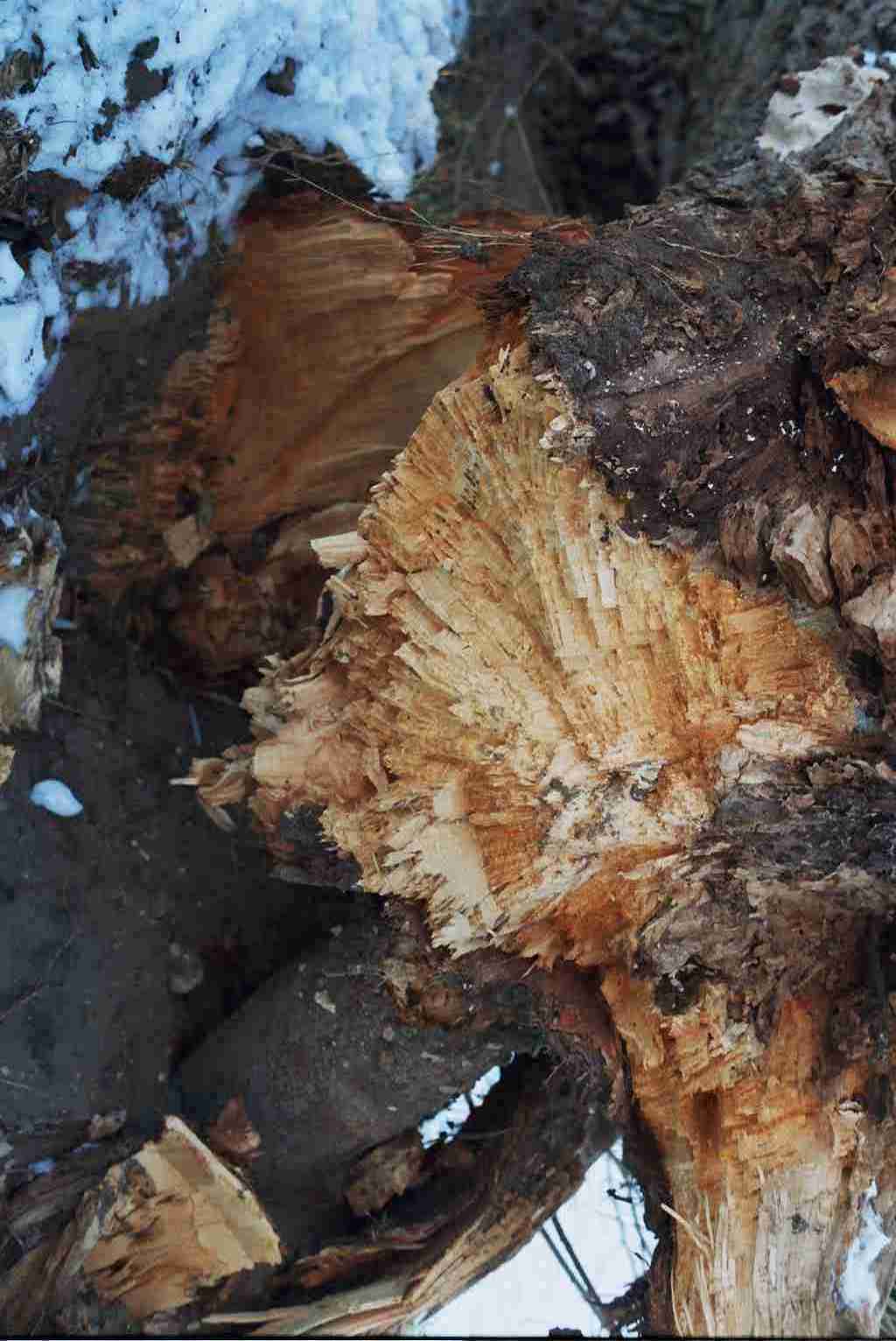
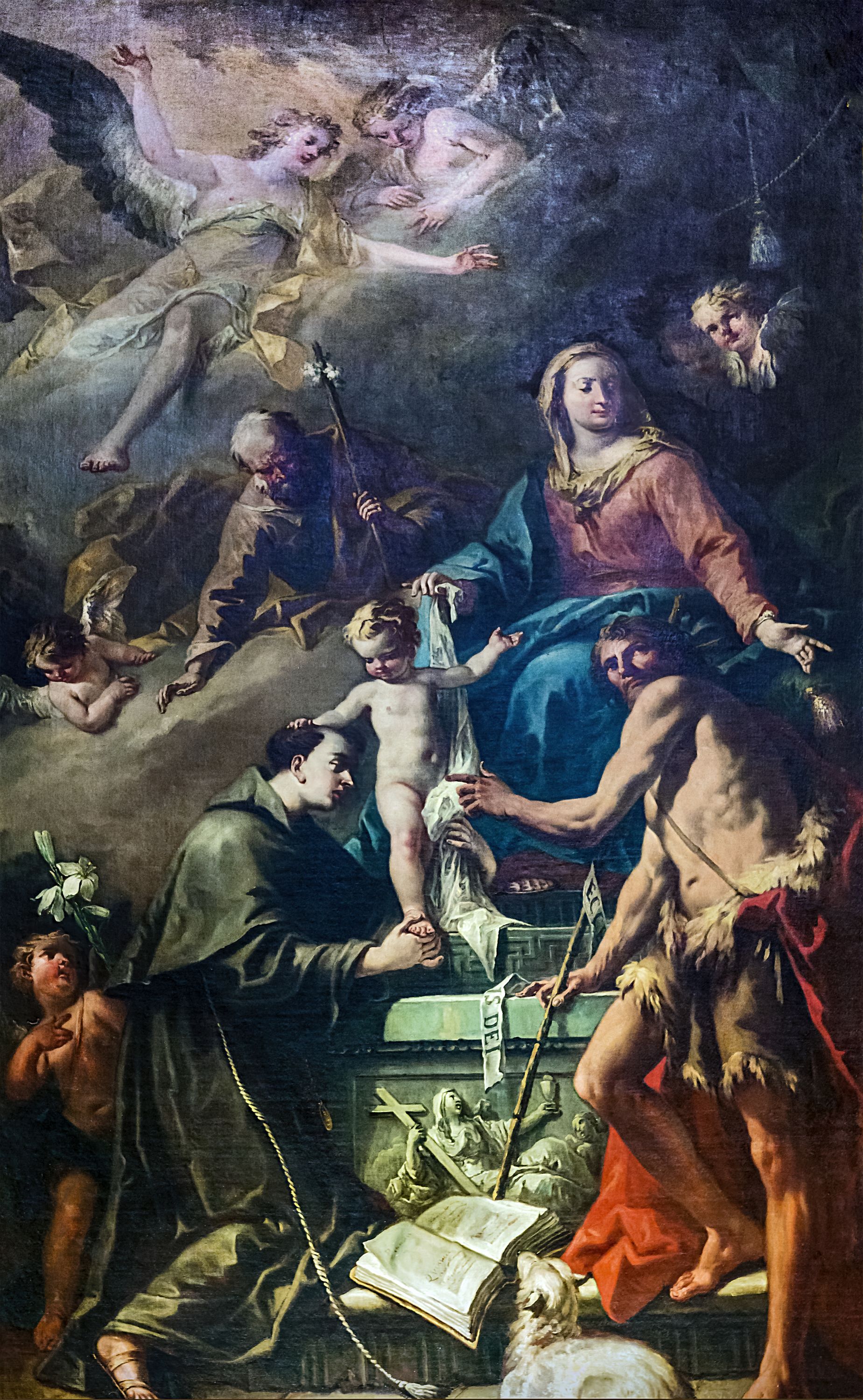
It is interesting to observe how closely the artwork of Gaspare Diziani in Chiesa dei SS.Apostoli in Venice resembles the text of this 3rd secret of Fatima. (See also this observation). Here is the english translation of the secret - search for "J.M.J." to find it. If it should be 'the same' - where is that 'sobreiro' - the cross made out of cork-oak? The 'cork' could probably be that 'joker' down left, in particular as seen in my own 'Treblinka' photo. The 'oak' could then be the monk inbetween - or the bending wood on my photo, with that mystic scroll inside - while the cross itself would probably be in Diziani's work around the place of the Jesus child with arms outstretched - if not simply that white cross underneath. What is interesting is the 'hidden text' at the foot of this Jesus child - it seems to contain a secret which is not available to us except for the beginning and the end. In my photo that would be approximately where the couple is seen on top of the bending 'oak' - where the possibly divine sunrise face blows its spirit into the scene. See these details with the comparison of the scene on top of the bending wood with Botticelli's 'Birth of Venus'. It seems that this is where the hidden text would be in Diziani's artwork.
Hence if she had written it down before 1944 and hidden it in a Bible, such as the one in the lower part of Diziani's work, a correlate to the scroll in my photo, it could have been read by the dog, it seems. See the pointing hand of the Madonna and the pointing hand of the saint, as well as the tassel in the lower end of the canvas and above the head of the 'Beethoven' up right. There is also what could be an animal head under the pointing finger of the saint - and another tassel under the pointing finger of the Madonna. In my photo the dog is a white field with some black strokes on it - like a paper with some words. Under the hands of the Madonna of Guadalupe there is also something resembling a tassel - but not entirely. There are not so many parts on the Guadalupe photo which are black.
With the official version being that sister Lucia wrote the 3rd secret down for the first time in 1944, the cartoon seems to provide quasi evidence that the secret intelligence (who could have got hold of this detail before 1944) was the 'divine authority' that breathed the inspiration into the visionary author. How? Could be by counting words forwards and backwards - in which case the count meets in the middle word 'sobreiro'. The word read upside-down gives something like 'oli[g]archos' and upside-down and backwards it gives something like 'soqjaijo' which in norwegian 'så'ke-jeg-og' = 'that I didnt see either'. Hence if the interpretations of the cartoons (for such political 1223 purposes) generally are based on the name forwards and backwards, upside-down and upside-down backwards, and if the purpose with this should have been to provide a reference to the school of Arnold Schönberg and his contemporaries in Vienna since the 1920's ('1223' before the foundation of ÖVP in 1945 would have been in 1933), it follows that the use of the data from the Fatima revelations in the cartoons of The New Yorker of 11 january 1941 could have had the general function of infusing a deep distrust into the cultural background which I have described in the article about Yeats and the 12-tone composition technique. Should one accept this idea that the secret intelligences are divine - and thereby breathe their inspiration into the esthetic logic of authors and composers and artists? Why have 'cartoons' received such a high cultural status in recent decades? I dont know the extent to which this example with the cartoons in their apparent pre-indexing of the name of Raab in Austria by way of this apparently borrowed mysticism are unique or if it is a general aspect of the indexation of the 1223 - that it borrows uncredited authority in this way. Clearly it is well possible that this 1223 could have inflicted damage on the development of the esthetic logic since the 1920-30's - shifting it over onto the logic of political intrigue and secret intelligence. That would have run in parallel with the development of Hitler's nazism - could be also the postwar development of what I have speculated could have been Hitler's zweite and dritte Reich.
© John Bjarne Grover
On the web 5 december 2024