Wittgenstein 'Philosophische Untersuchungen' part 1 #191

Dickinson poem #1225

Celan's letter to Stefani Hunzinger

Grover 'The Endmorgan Quartet' #1225
Four parallels: Dickinson, Wittgenstein, Celan, Grover
John Bjarne Grover
Introduction
I have earlier studied the relation between Emily Dickinson's 1775 poems and the 1719 poems of my "The Endmorgan Quartet" - and I found that there were reasons for the idea that I could have met Dickinson in the poetic elysium while I wrote my book. She sometimes refers to a mystic male whom she seems to have an ethereal relation to in her writing - such as in e.g. her (by 'Johnson's enumeration) #724 "It's easy to invent a life" or her #999 "Superfluous were the Sun". (I refer to the discussion on the relation between Dickinson's and my work in the referred-to article - unfortunately it seems that somebody maybe did not like this observation of mine and sabotaged the 'wikisource' of her work - all the links to her poems on the 'wikisource' functioned well when I published the article but now there is little left of that, it seems - hopefully this will be restored - in the mean time her poems can be found with the same enumeration under this publication).
See also this more extended comparison of her #248 with my #248.
I have also several times noticed (see mention at the end of this file) the relevance of Wittgenstein's "Philosophische Untersuchungen" part 1 - these are 693 rather brief philosophical observations - for the 685 poems in my TEQ part 4 called "Wine 2*" (pronounced 'Boston 2 Wine') - that is TEQ books 13-16. The poems are here in parallel with 693 fragments from Talmud Erubin according to the Mesorah Edition vol.7 - see my collected works vol.3 pages 1236-1237. The only irregularities are in the 'crumpled' parallelism at the end - from TEQ #1710 which goes in parallel with 2 fragments - and from there out the last 9 poems it is not entirely one-to-one. This makes for a total of 692 fragments - and where is the 693rd? That is a motto to part 4 - in the beginning of the series - translated as a brief dialogue
- If it is crooked, then it is considered as straight.
- Right!
Except for these, one can consider Wittgenstein's 693 enumerated fragments with the corresponding number in my TEQ - it is only to add 1034 to each of his numbers for finding mine. The example could be his #343 + 1034 = my TEQ #1377. And then - what would be Dickinson's comment to this? Even for her it is just to add 1034 to Wittgenstein's number - which means that her number is the same number as mine - which then is her #1377 'Forbidden Fruit' - a very relevant comment indeed.
Some time ago I read on the internet that Paul Celan's letters to other people had been collected and chronologically edited and published in 2019 on Suhrkamp - "Paul Celan: 'etwas ganz und gar Persönliches' - Briefe 1934-1970 - Ausgewählt, herausgegeben und kommentiert von Barbara Wiedemann". It is a book of 1286 pages to a price of 100 euros. The hermetic plastic sealing was not so professionally made either - so one naturally wonders if 'print on demand' (POD) is the concept - 'etwas ganz und gar Persönliches' - hence the price and the sealing. The letters are hopefully authentically reproduced, though, even in the copy which I got by ordering it through a bookshop. They probably are.
Not all letters he wrote are included - it is a selection mady by the editor. There are even some to official institutions - such as a letter (#4) to the medical faculty in Tours wherein he tells that he must terminate his studies there since he is going to continue in Romania instead, and there is one (#505) to the 'Amt für Wiedergutmachung Düsseldorf' wherein he attests the sufferings of co-prisoner Goldhagen in a concentration camp. There are also some telegrams and unsent 'drafts to letters' included. Editor Barbara Wiedemann states (p.897): "Das Grundprinzip der vorliegenden Briefauswahl [...]: Das Leben Paul Celans möglichst umfassend durch Briefe abzubilden und dabei die große Vielfalt seiner Kontakte mit Menschen aller Altersgruppen und Geschlechter aus Familie, Freundenkreis und Beruf sowie die Entwicklung und Vielfalt seiner sprachlichen und stilistischen Möglichkeiten und nicht zuletzt die Vielfalt der ihn bewegenden Themen erfahrbar zu machen". Is there an element of intended parallelism with my book in the selection? I notice e.g. my TEQ #1066 'Algeria, where passengerfood' while Celan #32 is a letter to 'Traute Ogris', my #1067 'Customs marina' while Celan #33 is to 'Yvan Goll'. My #1539 'That is 1-2 star' while Celan #505 (= 1539-1034) is the attestation for 'Wiedergutmachung' about jewish fellow Goldhagen who also had to wear the 'Judenstern' (p.675). The letters are probably authentic and chronological, but the total number of letters that Celan wrote is probably much higher. If some or all of the letters are selected in accordance with some aspect of my parallel poems, it clearly makes the present examples less interesting from that point of view (and it should of course also have been mentioned in the edition of his letters). However, given the present evidence from Wittgenstein and Dickinson in addition to my TEQ, it is rather obvious that the parallelism with Celan's letters in this 2019 book need not come from deliberate choices of letters according to this principle.
I dont know why the links to the Wikipedia source of Emily Dickinson's poems were disrupted after I published my article on this parallelism in 2023.
I think the earliest mention of mine of a parallelism between the 685 poems in my TEQ part 4 and the 693 fragments in Wittgenstein's 'Philosophische Untersuchungen' part 1 was in this article (the PS at the end) from july 2019. Wiedemann's well-commented collection of Celan's letters was published in december 2019, that is, about 5 months later.
Whatever the ('vielfaltig'?) principle of Wiedemann's selection of Celan's letters could have been, it seems that the selection makes sense relative to the parallelism of Wittgenstein and Dickinson and my poems, which hence, as I conclude, could mean just that the parallelism could stem from independent reasons. I did not peep in Dickinson or Wittgenstein when I wrote my book.
It was when I some weeks ago saw that the book contains 691 letters of Celan in chronological order that I understood that they probably would be another case of the same - in addition to Dickinson (documented in 2023) and Wittgenstein (2019) - the jewish author writing his letters chronologically in parallel with the 693 fragments from Talmud Erubin which are parallel to my 685 poems in TEQ part 4. That indeed seems to be the case - which means that one now can study 4 such phenomena from this ethereal poetic elysium and see how they converse.
What is then the example with (the above-mentioned) Wittgenstein's #343 and mine and Dickinson's #1377? That is Celan's #343 - the famous letter to his wife: "Stockholm, le 5 septembre 1960. aprés notre téléphone" - like Wittgenstein's 'Erinnerung' (here of a telephone a few minutes ago). I have speculated that Celan could have visited me in Odda a couple of days before this while a Doppelgänger with whom he had swapped passports had gone to Stockholm for visiting Nelly Sachs, who had just visited Celan in Paris some weeks earlier - where they could have appointed this. Felstiner mentions that when Sachs received Celan in Stockholm, she did not recognize him: "und stand vor ihrer Zimmertür; sie erkannte ihn jedoch nicht, oder sie wollte ihn nicht sehen" (p.213). There are the peculiar formulations in this letter - he quotes Nelly Sachs in response to white gloves from Ingeborg Bachmann: "Des gants blancs" = 'white gloves' (cp. norw. 'de ga blan-[kefan?]' = 'they gave a good [damn?]' - while 'kjeven' for 'kefan' = 'the jaw'), 'cela veut dire': "Je lave mes mains dans l'innocence", "preuve de fausseté" (cp. norw. 'prøvde å få sett det' = 'tried to get a glimpse of it'). If it were a Doppelgänger who went to Stockholm (and hence Sachs did not feel for talking with him), the letter could have been written by Celan himself in Paris before they left for these two different destinations. But this I know little about. (It would have been around the time when I met my fantasy friend called 'Gori'). The story is that it could have been a daring expedition to Odda for getting in touch with me - could be for telling me some important details which I would understand only decades later in my life.
The first letter Celan sent to Nelly Sachs was of 13 december 1957 - he tells her of the literary periodical 'Botthege Oscure' published in Rome by princess Caetani who had asked him and Ingeborg Bachmann to find something interesting in german - and they would recommend some of Sachs's poetry - if she could be so friendly and send something? This is Celan's letter #183 - to which I add 1034 and get TEQ #1217. The prince(ess) is mentioned, and the one from Tanzania would be Bachmann, probably.
Now for a closer look at 4 examples from the 4 parallel works:
Example 1
I pick Celan's letter #191 (pages 285-286) and Wittgenstein fragment #191 (pages 339-340) in parallel with Dickinson #1225 (page 539) and my TEQ #1225 (page 1342):
|
Wittgenstein 'Philosophische Untersuchungen' part 1 #191 |
Dickinson poem #1225 |
Celan's letter to Stefani Hunzinger |
Grover 'The Endmorgan Quartet' #1225 |
My TEQ #1225 runs Celan's letter in quite impressive detail in backwards order. "78 Rue de Longchamp" = 'Katsunkrig' etc. 'Anders' = my boxed 'other'. My poem is otherwise marked by a feeling of words going wrong way, constantly skipping off the track, so to speak - surprisingly - "als das Resultat sich kreuzender Bilder".
How can this phenomenon be explained? Could be Dickinson's poem explains the principle which constitutes the relation between my poem and Celan's letter. The spirit never shows its hour with itself, she tells - that is why my poem skids off the track all the time and follows the parallel only backwards.
Example 2
I pick another example rather at random - it is Wittenstein and Celan #390 and Dickinson and mine #1424:
 Wittgenstein 'Philosophische Untersuchungen' part 1 #390 |
 Dickinson poem #1424 (pages 607-608) |
 Celan's letter to Arnold Blokh |
 Grover 'The Endmorgan Quartet' #1424 |
The story is told in Wiedemann's comments to Celan's letter. It seems that he had been to a Mandelstam event in the Rachmaninov conservatory in Paris on 17 june 1961 (two days before he wrote the draft - to the unsent letter - or maybe it was sent in another form?) wherein first J.Terapiano held a lecture/introduction on Mandelstam's life and work, and then 5 readers should recite from Mandelstam's work after the break. The small hall was half empty after the break and one guesses that one of the readers could have lost the voice and Blokh had to step quickly in and take over the reading - if I have understood the comment right. (See also the story from 'Fjelltunvegen' in Ålesund 2008 - when the whole house seemed to be struck by a protruding stone that knocked it out for some 'Vorstellerei' and it fell one storey down).
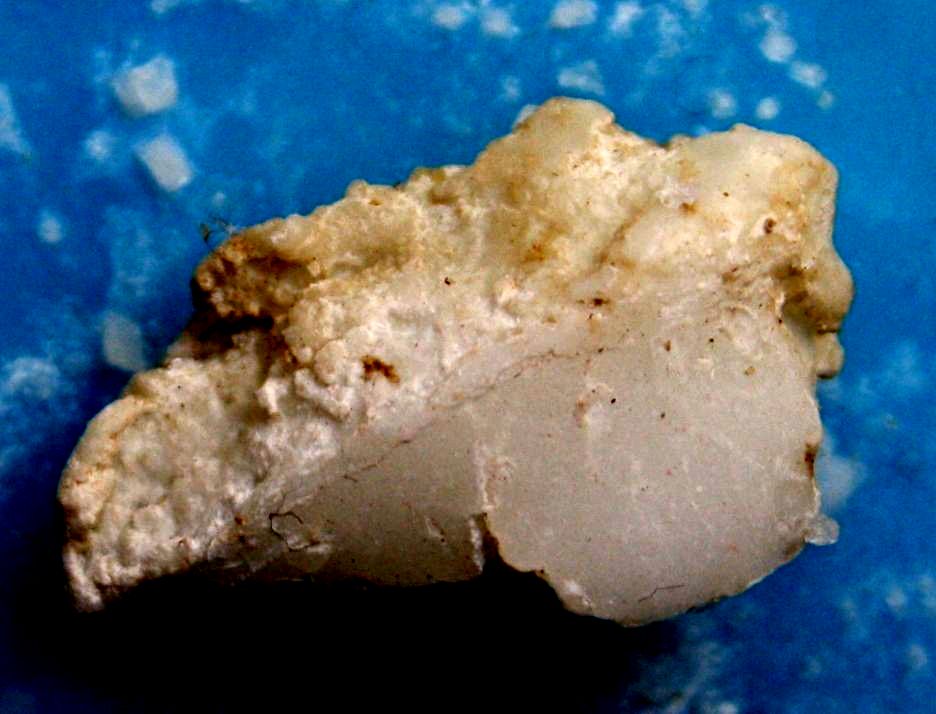
The present complex of four texts can be seen as rooted in Wittgenstein's version - the idea that a stone can have consciousness. The idea will be that it is the 'Vorstellerei' which is the consciousness - somebody sitting on the stone - and that turns the roles of stone and sitting audience around, so that the audience is no longer interesting for the stone. This is essentially also the theme of Dickinson - when half the flower corolla of the gentian is eroded or dried away. Then the flower corolla is the stone and the erosion is the human consciousness. Her 'fringed career' is then the stone on which the audience is sitting - their melancholic back and bottom.
Celan's letter concerns his translations of Mandelstam. He translated from russian Blok, Mandelstam, Jessenin, Jevtuchenko, Slutchevsky, Chlebnikov. It is well possible that the Mandelstam translation he refers to could be from 'Камень' = 'Stone', which here reinforces Wittgenstein's comment.
My own poem tells this principle of consciousness from the stone (say, the white stone), it supports the hypothesis that is sitting on it, and the moon was rather tidied in the intermission in Paris.
What sort of stone is it? The consciousness comes recursively up from the stone. See this study for details.
Example 3
As a third - once again by rather random choice (just something not all too long) - I select Celan's letter #509, which then can be considered in parallel with Wittgenstein #509 and Dickinson and my TEQ #1543:
 Wittgenstein 'Philosophische Untersuchungen' part 1 #509 |
 Dickinson poem #1543 (page 643) |
 Celan's letter to Inge Waern |
 Grover 'The Endmorgan Quartet' #1543 |
Inge Waern was a swedish actress and theater teacher or 'trainer' who was a friend of Nelly Sachs in Stockholm. Did she even have some career on german stages? The theme of Wittgenstein seems to be that humans have an intermediate layer of code inbetween themselves and 'the world' - like reporting from a landscape as if it were decorations on a theatre stage. This is also the theme of my poem. Celan's letter tells that he and Waern are 'Wanderer' but he seems to be concerned with getting around the inbetween 'abstract code'. Dickinson's poem tells that this feeling of something abstract between the subject and the world is the human condition of conceiving everything within this 'code' which Wittgenstein calls 'a b c d'.
Example 4
A fourth example is my TEQ #1459 with the corresponding other three:
 Wittgenstein 'Philosophische Untersuchungen' part 1 #425 |
 Dickinson poem #1459 (page 618) or by Wikisource link |
 Celan's letter to Louis Althusser |
 Grover 'The Endmorgan Quartet' #1459 |
One notices first Wittgenstein's "dieser Mechanismus in dieses Gehäuse" with its echo in Celan's letter to 'Louis Althusser'. Wittgenstein tells that an answer can be given in the form of a smaller drawing, which Dickinson recognizes as a letter which Belshazzar had. He was involved in a coup d'etat (a revolution?) in Babylon. Celan refers to this rebellion with "hommage aux antifaschistes morts", which in my poem could be 'John / or hateness for you'. If the revolution were not so hateful, it could be a case of 'John', that could mean. Celan's 'en vous' = my 'Europe', and his 'serrant la main' is my 'hard de-lander of air'. The president's flag is a small and flexible map of the state he leads, corresponding to Wittgenstein's 'drawing' and Dickinson's 'immortal copy' - or Celan's reference to the letter he had got from Althusser.
[30/9-2025: See also this interesting addition].
Conclusion
The theme for the four parallel works discussed in this article is the mystery how they tell 'the same' in each and every element. The fifth dimension is a natural framework for understanding this poetic reality - it would then be hidden in the human semiotic constitution. How could Tizian have known the geography or geology of Venus which only in the recent decades has been available to human observation? Through the human semiotic constitution which gives form to our world, to the universe, to everything that we can perceive or know. That is also what Dickinson's #1543 tells.
That Celan's letters would have been a part of his poetic work, appears also from the quote on the back page of the book: "Eigentlich tät ich nichts lieber als Briefe schreiben".
Sources:
Celan, P.: 'etwas ganz und gar Persönliches'. Briefe 1934-1970. Ausgewählt, herausgegeben und kommentiert von Barbara Wiedemann. Suhrkamp 2019.
Dickinson, E.: Author:Emily Dickinson - Wikisource.
Felstiner, J.: Paul Celan. Eine Biographie. Verlag C.H.Beck, München 2000. Original version Yale University Press, New Haven and London 1995.
Dickinson, E.: The Complete Poems of Emily Dickinson. Edited by Thomas H.Johnson. Little Brown and Company, Boston 1960.
Grover, J.B.: Poetic semiosis. Collected works vol.3. Vienna 2013.
Grover, J.B.: Emily Dickinson and my TEQ. On the web 2023.
Grover, J.B.: The Endmorgan Quartet. Collected works vol.2. Vienna 2013.
Grover, J.B.: The fifth dimension. On the web 2024.
Grover, J.B.: The semiotics of TEQ #464. On the web 2025.
Wittgenstein, L: Philosophische Untersuchungen. Herausgegeben von G. E. M. Anscombe, R. Rhees 1952. Ludwig Wittgenstein Werkausgabe, Band 1. Suhrkamp Verlag, Frankfurt am Main, 2016, S. 231–485.
© John Bjarne Grover
On the web 10 september 2025