The semiotics of TEQ #464
John Bjarne Grover
This study of my 'The Endmorgan Quartet #464' = TEQ #464 follows up the preceding studies on TEQ #462-463, TEQ #461 and TEQ #460 - as well as this comment on the landslide in 'Blatten' and this discussion of TEQ #630. Most of these include aspects of the high peaks of Himalaya as relevant for an interpretation of the poems from my TEQ book 8 "Diplomadery and Descendature" with emphasis on the very high relevance of the hebrew parallel texts from Exodus. The present discussion is an extensive elaboration of this discussion of TEQ #464 relative to the mountain Khumbutse at Mount Everest.
The Endmorgan Quartet poem #464
TEQ #464
Exodus 16:17 ויעשו כן בני ישראל וילקטו המרבה והממעיט׃
Pickin' our clothes through
handrobber sewn that minges with sting,
and filers feel too good.
Nameless Jerusalem
In the following I show the basis for the interpretation of Exodus 16:17 on the form: "And they created a place/base, the sons of Israel, and they collected the cause of becoming great and the cause of becoming small".
As usual, it can be wise to keep in mind that the diacritics to hebrew were invented many centuries after the books of Moses were written. I consider the words in their order of the verse Exodus 16:17:
1.
ויעשו (source) →
copula 'and' (ו) + 3 ppm fut of עשה (source) = work, labour, create, produce, yield, accomplish, prepare, dress, execute, perform
2.
כן (source) = 1) protect, 2) place, station, base, pedestal, lice/louse
3.
בני (source) →
בנה (source) = build, construct, son
- see also בני - sing/plur (constr) of
(N) son, boy, male descendant, (V) to understand or archaic preposition in, with, during etc
4.
ישראל = the name 'Israel' derived from the root שרה (source) = 'sharah' = 'contend, wrestle' + possibly EL - Davidson's article includes ישראל as explanation to the name of 'Israel' - i.e. Jacob wrestling the whole night with an angel of God = Genesis 32:22-32) for which reason his name was changed to 'Israel'.
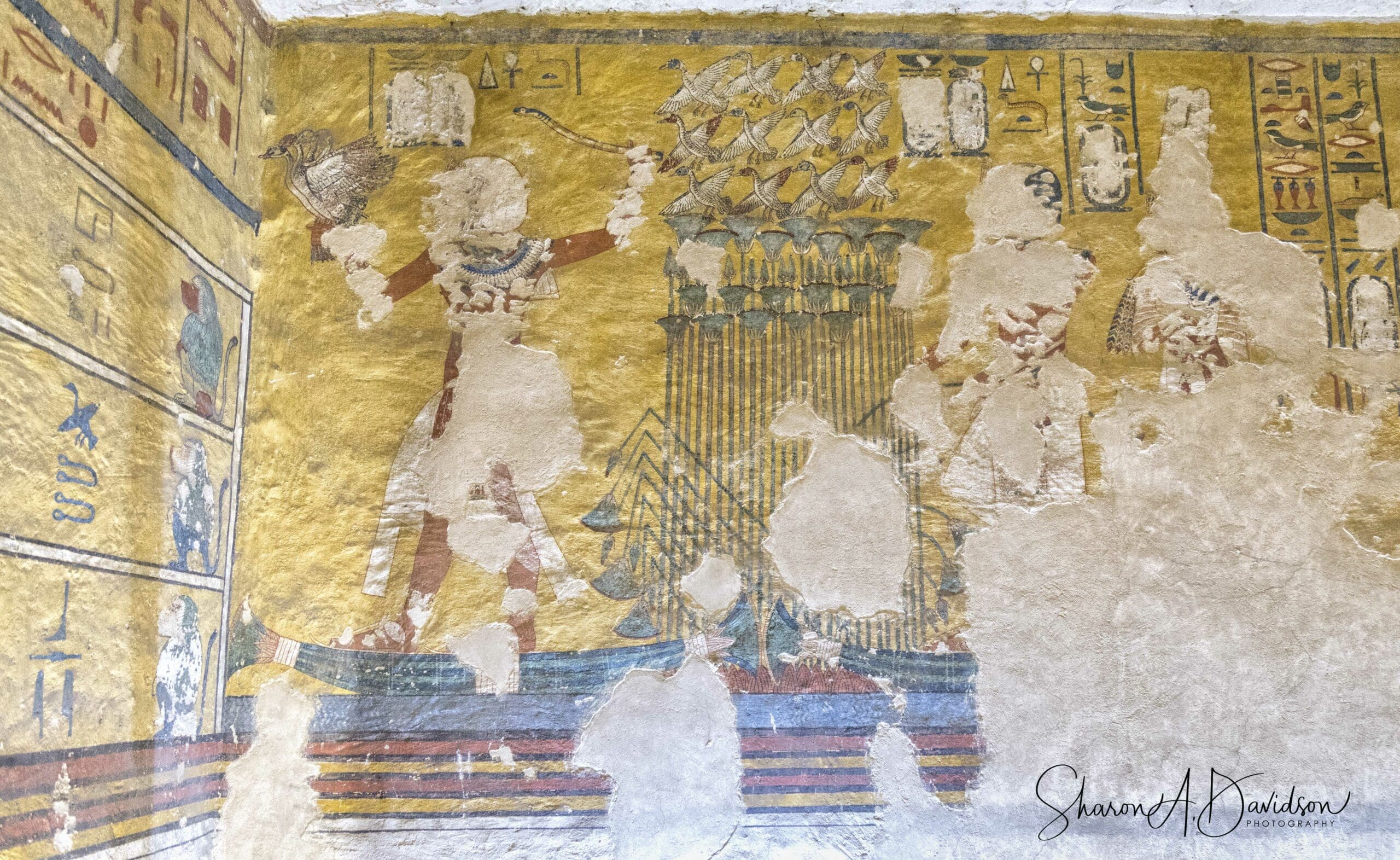
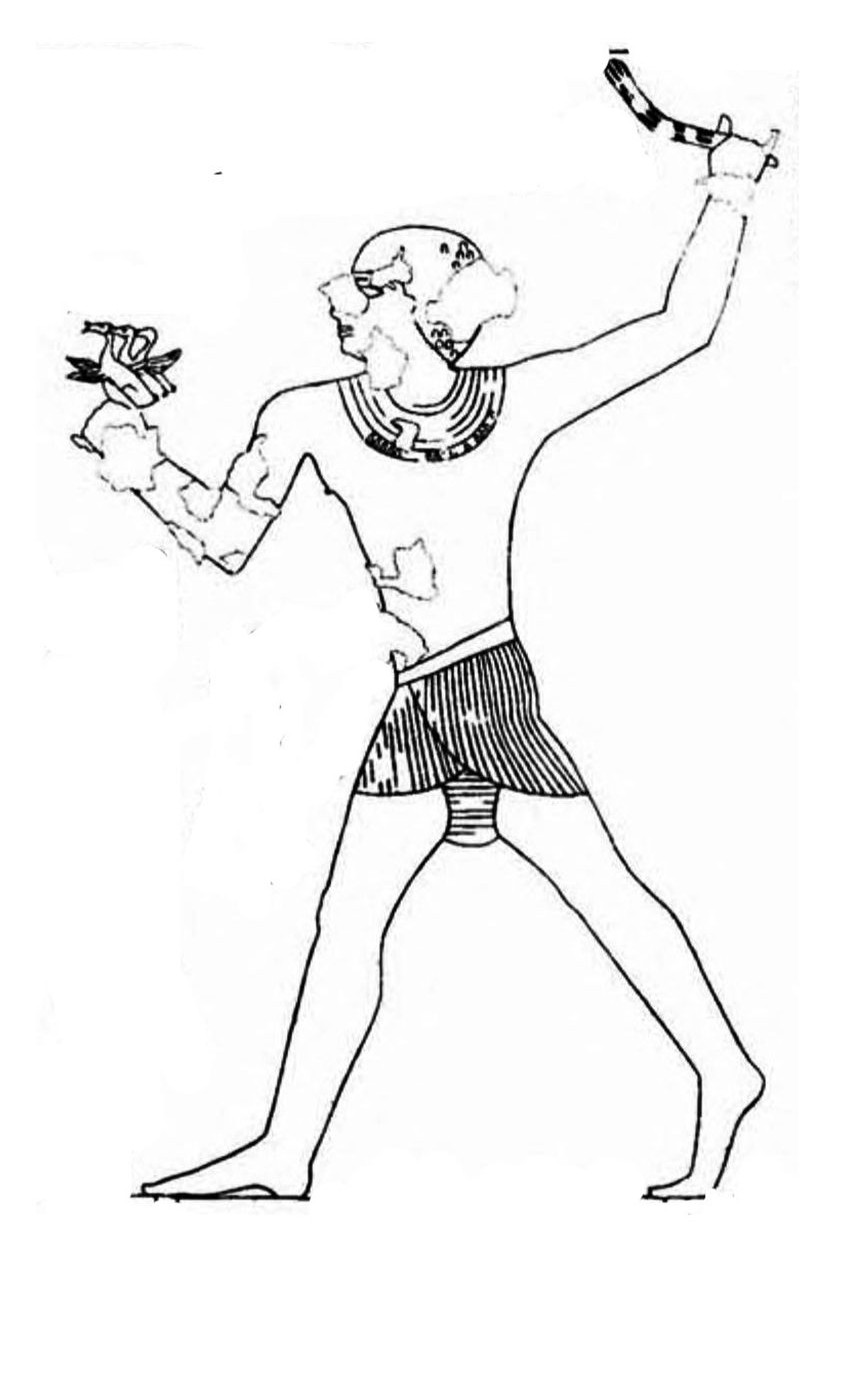
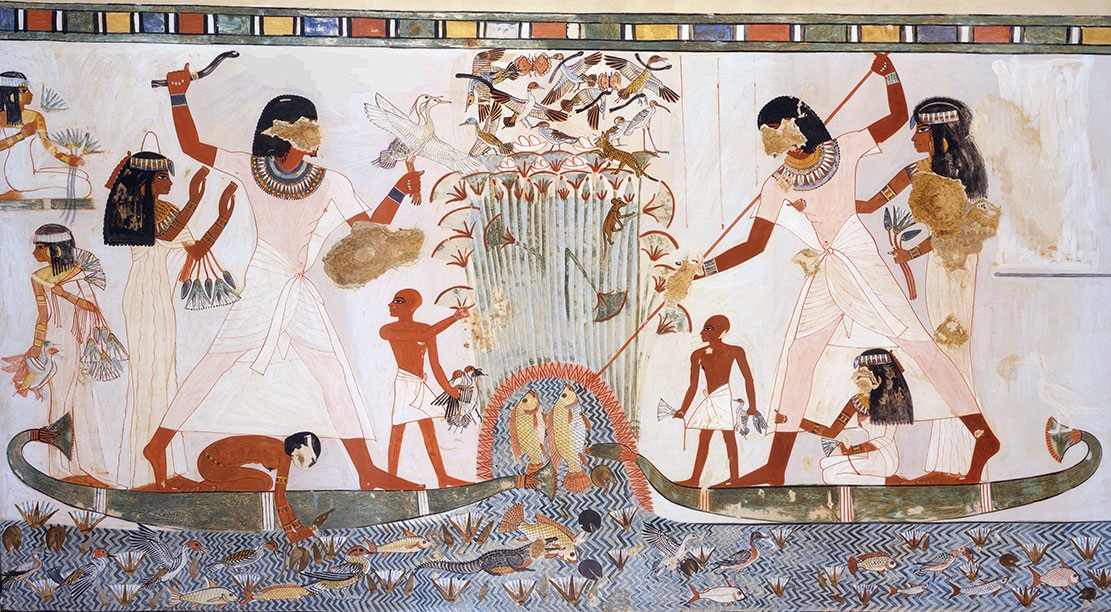
However, notice that the root for this 'Israel' = שרה (= 'sharah') seemingly is the same root as שרה (source) in the sense of 'loose, untie, solve, begin': See this study of TEQ #630 for the observation of the close correspondence between the hieroglyphic phenomenon of Senbi 'detaching a hieroglyph from the wall' by Senbi (source) and 'the people of Israel crossing the Red Sea' through the 'sunflower matrix', as I call it.
See also these relevant articles on 5 variants of שרה (= 'sharah') from Gesenius' 'Hebräisches und Aramäisches Handwörterbuch über das Alte Testament' (page 863):
I = the first version of שרה (= 'sharah') tells of this 'detachment, beginning' ('loslassen, Anfang') - Klein: let loose, dissolve, open - which can be recognized in 'Senbi' detaching a hieroglyph from the wall in the upper righthand part of this image from the rock tombs of Meir. Gesenius seems to recognize also the definition of שרה (= 'sharah') in the sense of 'das Donnern loslassen'.
II = the second version of שרה (= 'sharah') tells of 'wässern, einweichen' = (by Klein) to immerse, soak, steep, saturate - cp. also to akkadian 'sheru' = 'to grow luxuriantly'.
The red boxes (annotated by me) refer to the following three articles:
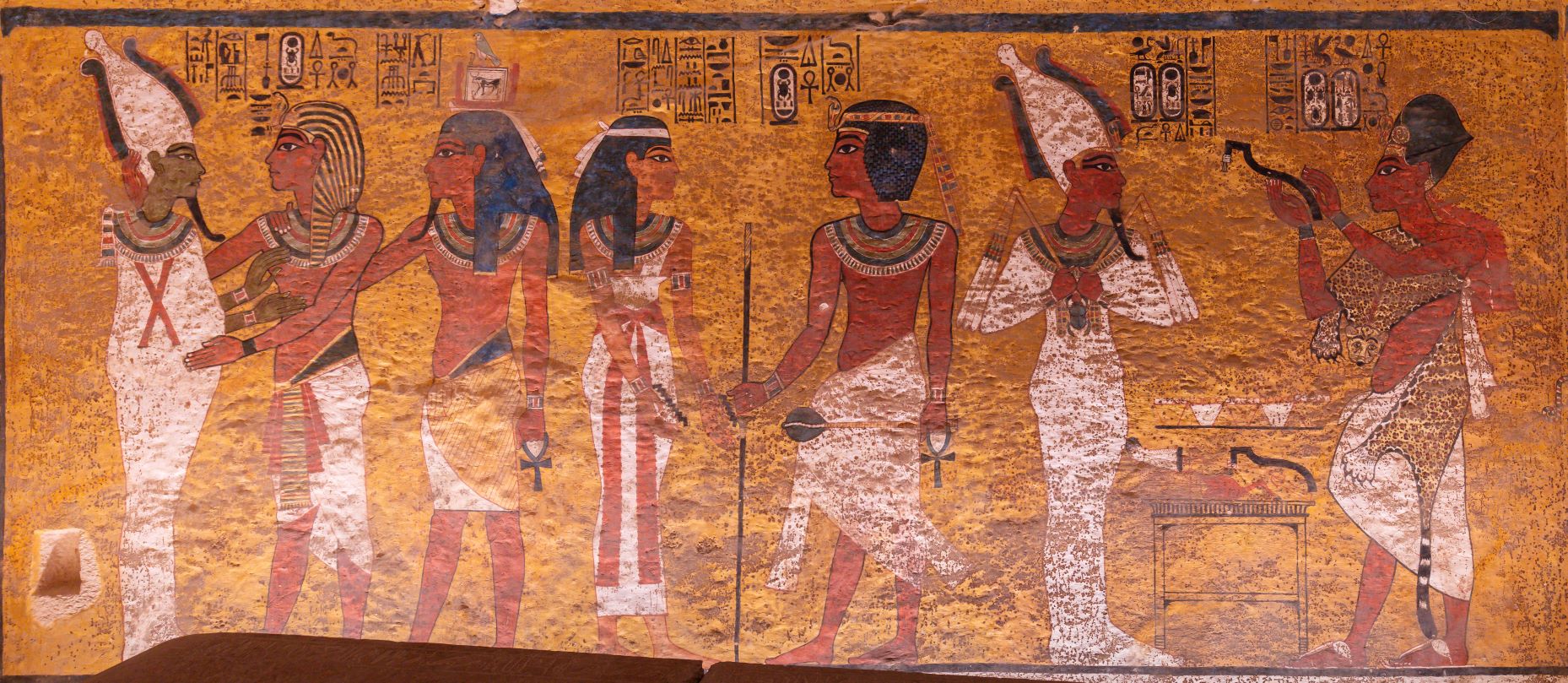
III = שריה (source) = a) armour, coat of mail, that is, 'metal clothes', b) 'runde Pfeilspitze' = rounded arrow tip - see the man in the middle of the Tutankhamon image (source) the one who holds the vertical stick with his one hand and a horizontal 'measuring rod' (?) in his other hand - this horizontal one seems to end in a (coffee bean shaped?) 'rounded arrow tip': Hence this 'sharah' seems to point to this part of the middle of the Tutankhamon image.
IV = שורה (source) = row, in particular in a vineyard with terraces (with walls?), (probably) with a reference to the fruit press ('Kelter') 'zwischen den Weinpflanzungen'(?)
V = שר (source) = a) 'zimmern' seems to mean 'to build up with carpentry' - probably not the fine carpentry of furnitures etc but the rougher carpentry of house construction with timbers etc: This means inherently also 'to raise, to build up' - like in (raising) 'the sons of Israel' = 'the grown-up-sons/constructions of I-ShR-ael', b) the umbilical cord - which can be seen as a prenatal 'built-up construction'
5.
וילקטו - copula 'and' (ו) + 3 ppm fut of לקט = gleaning, to gather; ילקוט = bag, scrip
Gesenius לקט (source) = conjectured also from arabic 'collect', north syrian 'gleaness' (collectress of ears of corn), sabaic 'attack', assyrian 'wegraffe[l]n' - see also Delitzsch's p.385 article on 'lakatu' (source - I notice also the following 'laktu') - generally 'auflesen' = 'to pick up, to collect'. 'Nachlese' = 'second/delayed harvest' - 2) in weingegenden: die vor- oder nachlese, die weinlese vor oder nach dem obrigkeitlich festgesetzten termine. (This could apply to the שורה in the sense of 'row', 'series' - such as of terraces in a vineyard district - under 4.).
6.
המרבה - Hiphil (causative) part sing masc of רבה = increase, multiply
המרבה → רבה = the cause of becoming great (source)
Gesenius:

I = to grow, to grow much, to multiply, to raise (source); II = a) hunter/shooter, b) the big city, capital (city) (source). This could be seen as relevant also to שריה under 4-III above by the 'rounded arrow tip'.
7.
והממעיט - copula 'and' (ו) + Hiphil (causative) part sing masc of מעט = little, few; the cause of becoming small (source)
The root מעט relates also via עטה (source) = 'to cover oneself' to מעטה = garment, clothes.
Discussion of the historical and geo-logical semiotics
Caravaggio's 'Judas kiss'

Caravaggio's 'Judas kiss' is a variant of the 'sunflower matrix' of ancient Egypt - here compared with the motive from the tomb of Menna: The riddle of Caravaggio's leftmost character is solved with the comparison with Menna - the leftmost woman holding her hands up. Caravaggio's two representatives of executive power are the two small men in the front of the boats of Menna. The Judas kiss is the spear penetrating the fishes and Judas is the two main standing characters - the logic and the linguistics - the very principle of semantics. Jesus is the sunflower matrix and his two hands are the two fish. The man with the rib-formed lamp (Caravaggio) is the woman holding around the ribs of the spearman while the woman sitting and holding around his leg is the man in the background of Caravaggio - it is probably he who holds his hands forwards on the red cloth surrounding Christ's head - this cloth is the counterpart on the other side - the woman without clothes (hence the cloth) reaching down into the water.
That Christ is the sunflower matrix is not surprising - this is what the jews went through when crossing the Red Sea - and they 'crossed' even him. The 'red see' is that cloth surrounding him. Caravaggio shows also the mixture of Judas' arm and the arm of the lefthand guard in 'armour'. The lefthand armour-clad guard can in fact be seen in two versions - one belonging to the pink-red hip exposed below, another as the hands of Jesus being (around) his hip while the pink-red area then looks like the thigh of the man behind him - as if the two were sitting on a motorcycle and Jesus and Judas were the steering bar and the mirror. The two alternatives could invoke associations to an act of sexual intercourse which then also could be seen as present in the red cloth surrounding Jesus - as if this were the presence of the Virgin Mary. The red cloth of the Madonna is told of in my interpretation of the hungarian language (as seen from an anglophonic viewpoint) while the lamp can be seen in my interpretation of the german language: These can be seen as present in Hitler's cabinets straddled the border between Hungary and german-speaking Austria). The two guards in Caravaggio's artwork can be imagined on a motorcycle, steering in good faith in the human reality into the 'sunflower matrix' of Jesus while a 'Janus' version of Jesus (his 'divine aspect') tries to keep the road clear and safe before them. There is a certain tragedy of the human reality present in the artwork, could be also an aspect of human sexuality.
If now this Senbi-Menna sunflower matrix is compared with the artwork in the tomb of Tutankhamon, it is seen how the 7 words of Exodus 16:17 can be interpreted meaningfully relative to my poem TEQ #464. These 7 words fold around the mid word #4 which exposes the 5 additional meanings of שרה (= 'sharah') - in addition to the basic meaning of 'contend, wrestle' for the normal interpretation of the background of the name ישראל = 'Israel':
I - the Judas kiss is the semantics - wriggling it loose etc, the rod, the shifting nature of the hand that touches Jesus's shoulder
II - the wavy lines of water in the hands of the mid woman = the fish qua Jesus' folded hands
III - the armour, the coat of mail, is the coffee-bean-shaped 'runde Pfeilspitze' of Tutankhamon
IV - the vineyard rows are the ribs of the lamp of Caravaggio
V - the 'aufziehen' is the Madonna's red cloth
The flanking words 1-2-3 and 5-6-7 are symmetric around the mid word 4. Word 6 is ambiguous between 'grow up, multiply' and 'shooter, main city': That shooter could the executive power in the guard with the shining armour. The counterpoint to this is in word 2 = 'to protect' as well as 'base'. Word #7 is the 'small' relating to 'clothes covering the body' (here as the red cloth around the head of Christ) with word #1 telling of the 'labour' and the 'dressing' in the sense of 'preparation'. Word 5 is the 'picking up' typically of ears of corn, the 'collect' which relates historically to 'to read' and hence 'to understand' in word 3.
Now the three lines in my poem can be seen to interpret these aspects of words 1-2-3 and 7-6-5 - while the signature will interpret word 4 - which also could include the 'wrestle' or 'contend' in this Caravaggio artwork.
'Picking clothes through' will concern the clothes of words 1 and 7. The 'handrobber' cold be the shifting of the hand from Judas to this armoured guard onto Jesus' shoulder. 'Filers' are then the two guards referred to also by the ribs of the lamp - when they 'feel too good' it could be about the abusive aspects considered from a religious viewpoint. These 'filers' feel too good when they arrest Jesus, could be the logic.
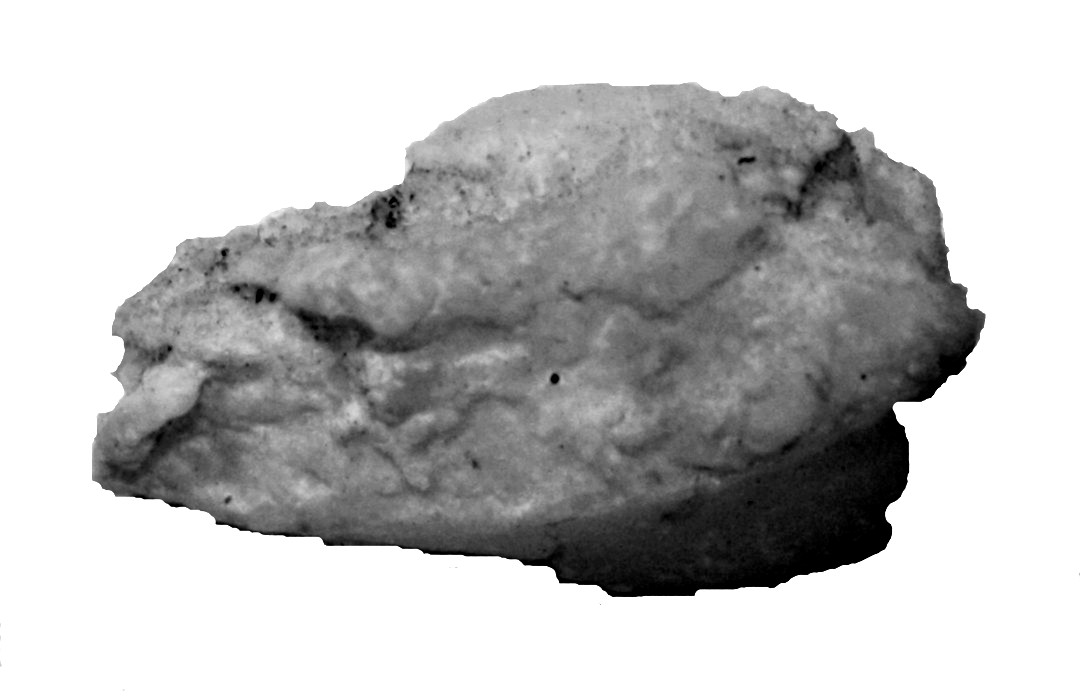
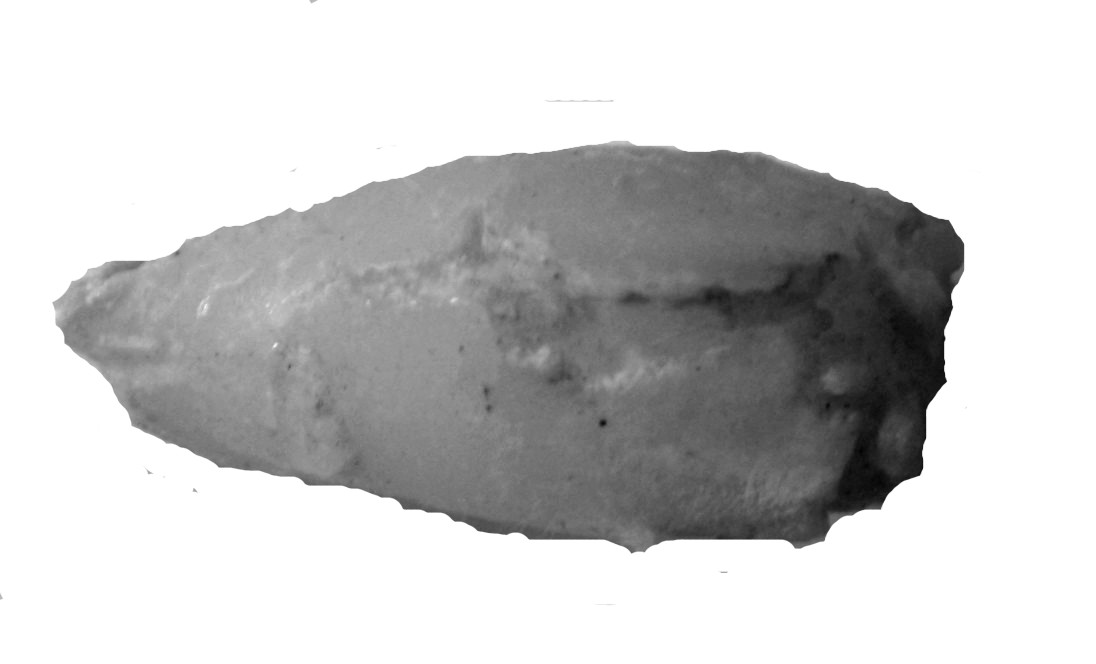
It is seen that this 'Judas kiss' of Caravaggio displays interesting aspects of what I called the 'lapis philosophorum' which I found in the kitchenbench sinkhole after the completion of 'Der Dornenstrauch' part 3:
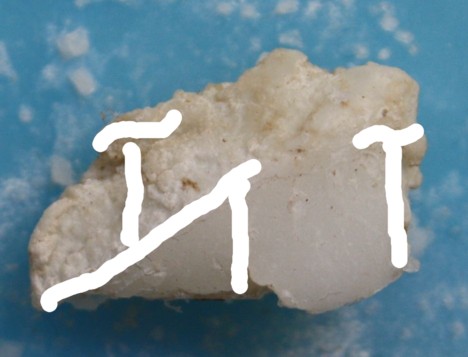
The outlines of the white stone is here somewhat expanded vertically. It is seen that what appears like the 'handrobber' moving between the hand of the armoured guard onto Jesus' sternum, rib or clavicula and the hand of Judas onto his shoulder is 'the same' as the naked woman or person on the 'lapis philosophorum' - who seemingly is hopping up and down in accordance with just this shifting of the hand from the guard to Judas. It is possible that this apparent up and down of the naked person on the 'lapis' would be 'the same' as the moving back and forth or up and down of the lefthand armoured guard relative to the Jesus/Madonna. This shift between 'naked' and 'dressed' is another theme of the parallel text from Exodus 16:17 (between words 1 and 7) - and hence possibly also somewhat addressed with my line 'picking our clothes through'.
It is seen that Caravaggio's 'Judas kiss' could in fact be about the white stone in the sense of 'the human reality': What falls outside this human reality in this artwork is half the forehead of Christ and the man in green behind him. Half the forehead of Christ would then mean that he is both human and divine. In addition, there is the red cloth - which perhaps can be associated with the Virgin Mary: Cp. the Madonna of Guadalupe (source) with the man at her foot resembling the man in green behind Christ on Caravaggio's artwork - only the colours red and green are intermixed. Could be a part of Christ's shoulder as well falls outside the scope of the white stone = the human reality.
The Khumbutse mountain
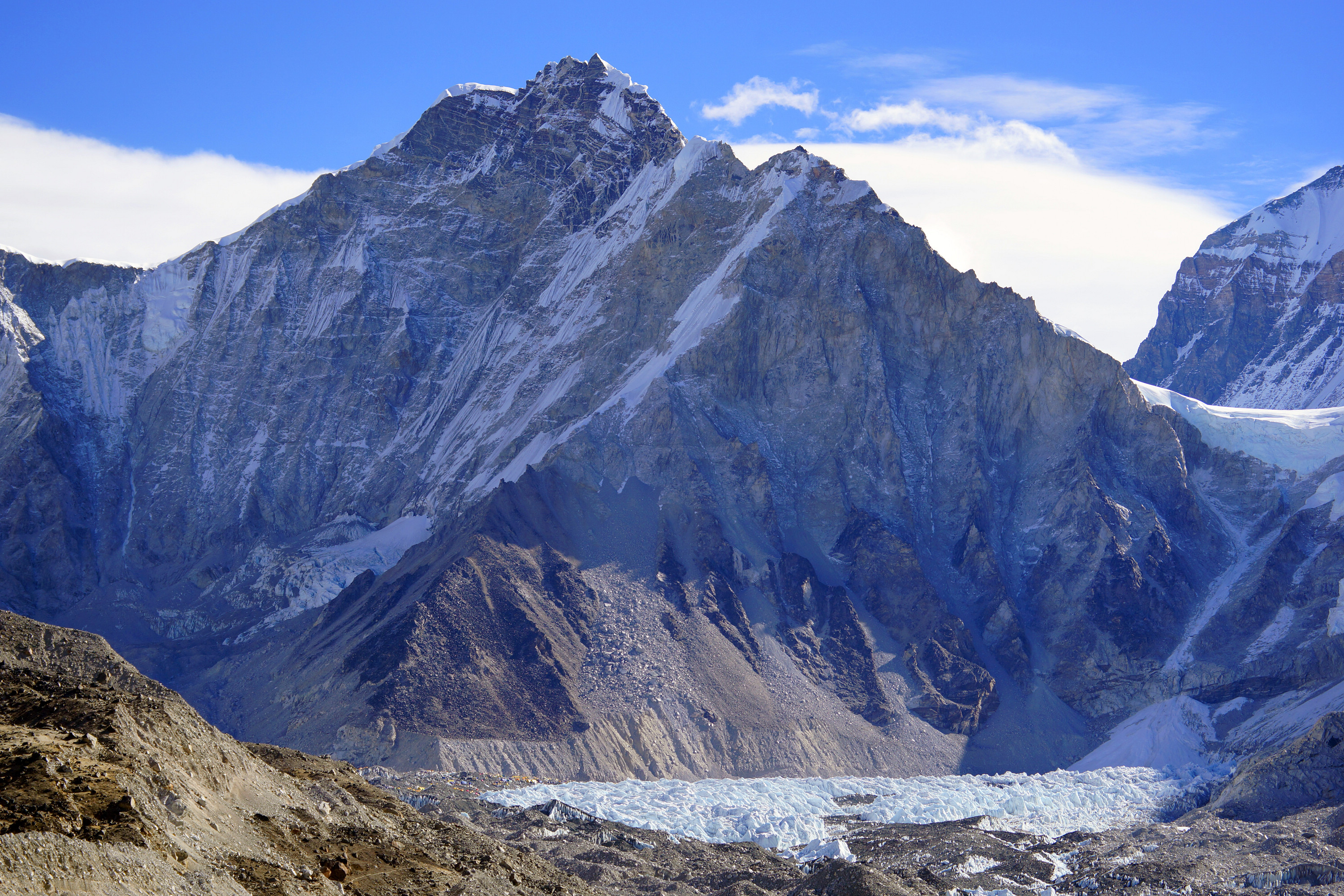
Now having seen this 'lapis philosophorum' in this complex of TEQ #464, I find a most interesting correlation with this in the mountain 'Khumbutse' at the shoulder of Mount Everest - as seen from 'Base Camp'. I repeat here this account of how it relates to my white stone:
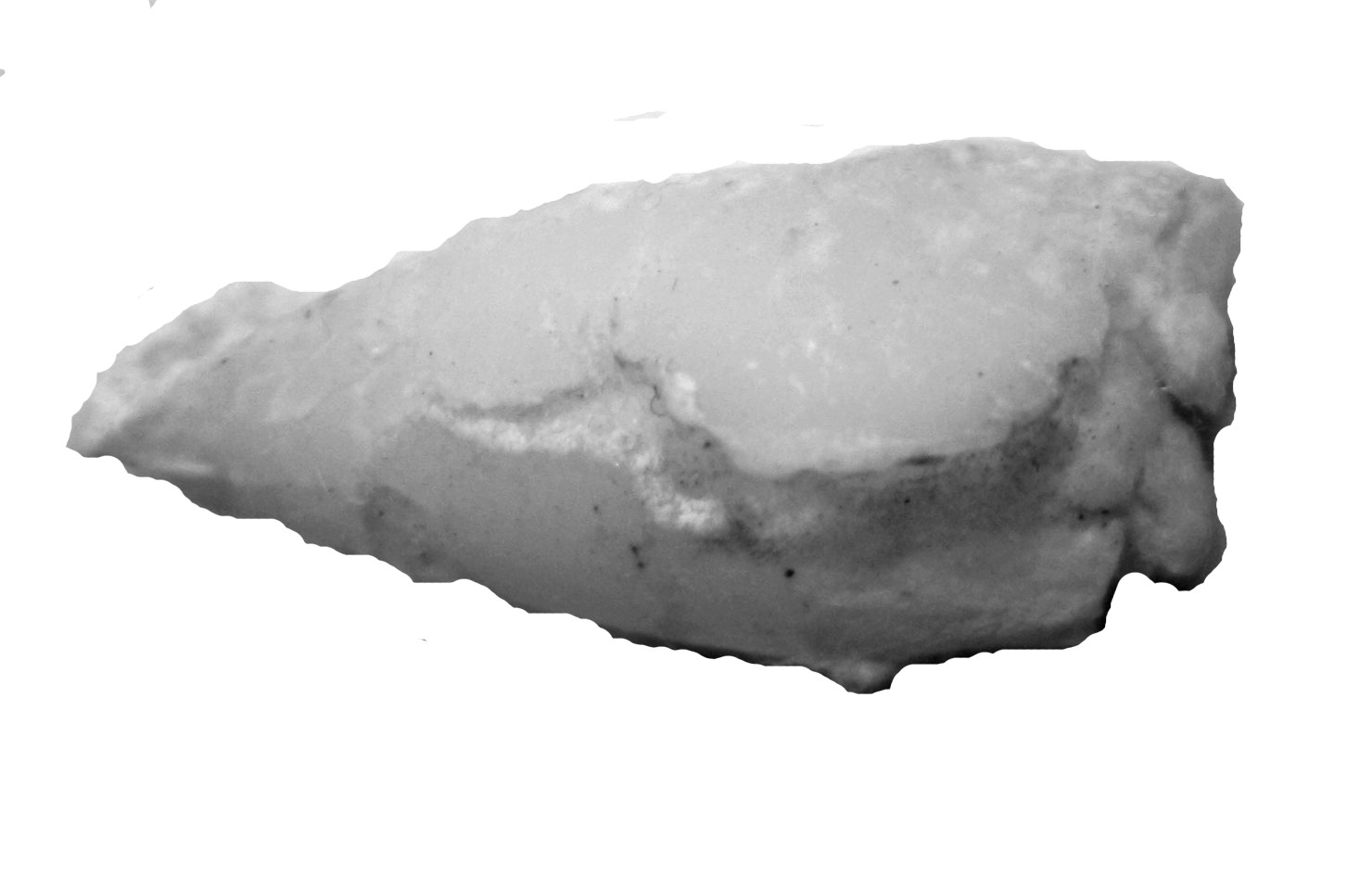
It was in january 2014 that I completed the second part of 'Der Dornenstrauch' - I had written 75 poems of 12 lines each when I reduced these to 64 poems by dividing poems 65-75 into couplets which I appended to the 64 first - for a sort of 'sonnet' variant. It was while I was doing this that the 'magic images' took form. When I some months later while writing the third part had written 77,3 poems of 14 lines each and 'met the wall', I could not find any other solution than reducing even these to 64 poems in a similar fashion - and it was in the process of reorganizing them in that way that I found what I have called a 'lapis philosophorum' - a socalled 'white stone' of length appr. 2,718 cm - it seemed to have taken form 'ex nihilo' in the drain filter to my kitchenbench. When I finally completed the book with part 4 in april 2015 and wrote the last word on 24 april 2015, and started to reduce the 18 poems into 16, it was very few hours after the 18th poem was completed that the white stone called Mount Everest trembled in a giant earthquake of Nepal (magnitude around 8.0) at 06:11:26 UTC. At the foot of Mount Everest there is the socalled 'base camp' (the earthquake of 2015 is mentioned also in this article on the 'south base camp') from which one can see the much smaller mountain 'Khumbutse' - approximately 6667 meters high - which is quite similar to ('isomorphic with') the white stone I found in my kitchenbench at the completion of part 3:
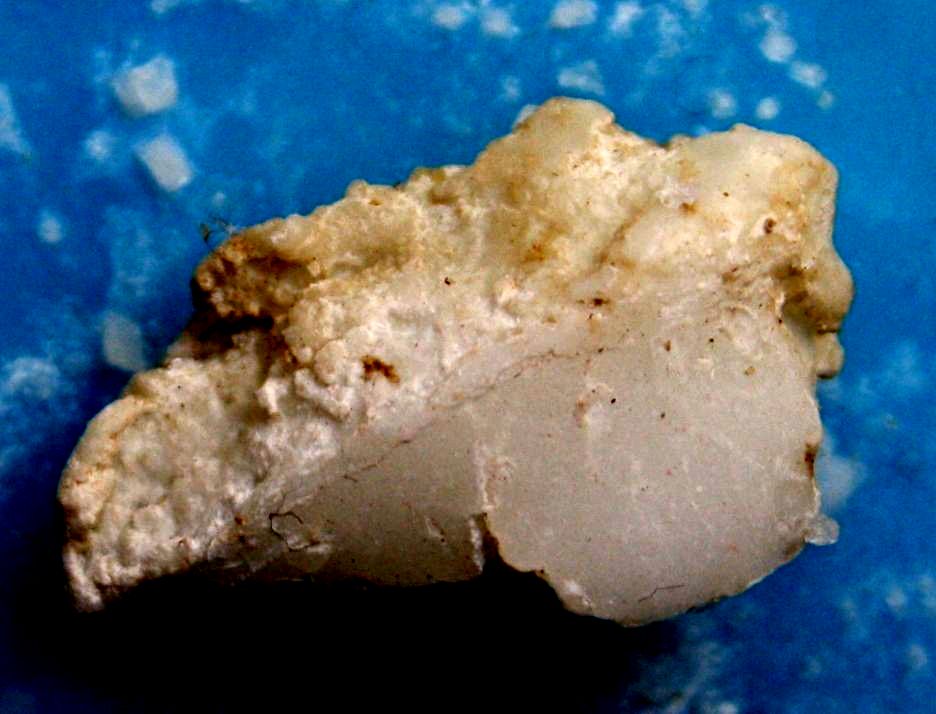 My 'lapis philosophorum' of october 2014 |
 Khumbutse mountain at Mount Everest (source) |
 Khumbutse mountain annotated (source) |
 With 'ming' sign from the time of Moses (source) |
With the outlines of the stone slightly distorted and tilted:
|
Khumbutse mountain at Mount Everest (source) |
 Outlines of the white stone slightly expanded vertically and tilted |
Exodus 16:17 can be translated as follows: "And they created a Base Camp, [the constructions/sons] of Israel, and they collected [or 'picked up'] the cause of becoming great/mighty and the cause of becoming small/naked/polished". There is in fact a basis for translating Exodus 16:17 with 'Base Camp': Word 2 = 'base' and word 3 = 'construction' typically of housing.
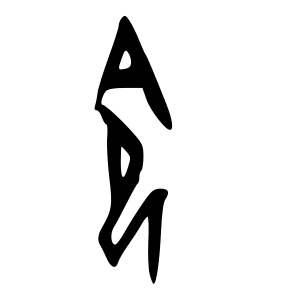
This is also where the 'minges' with sting is found: 'Ming' is the chinese character for 'God's will':

(Source Mathews Chinese English Dictionary)
It is this which can be recognized in the oldest known form (oracle bone script) (source) on the mountainside of Khumbutse. A puzzling phenomenon could perhaps be the observation how this oldest known form of the sign 'ming' on this mountainside resembles the three letters ADZ which could be recognized in the egyptian hieroglyph called 'adze' (source) which allegedly is a sign for a small axe for 'dressing wood'. It is this hieroglyph which the rightmost priestess (it looks to me like a priestess, although some claims that it is the priest 'Ay') - dressed in a leopard skin - holds in her hands in the picture at the sarcophagus of Tutankhamon - apparently telling of how Tutankhamon can travel through the sunflower matrix on his way to the resurrection on the other side - by the apparent graph for the Catalan number (as 'the integral from 0 to 1 of (arctan x) divided with x' (source) - that is, the area under the graph from 0 to 1 (source) - cp. with the graph down left on the Tutankhamon image - tilted 90 degrees, that will be. It is this Catalan number = 0,91596559417721901505460351493238411077414... which could be the secret in the story of Judas - how one disciple had to be squeezed out from the 12 in order to make for just this number - which is quite close to 1 - 1/12 = 0,91666... - the difference between the numbers being only 0,000701072489447... - could be it would be possible to make a 'mathematical interpretation' of the story of Jesus? I have speculated that the Catalan number (an infinite expansion of decimals which probably never repeats itself) is the same as 'the human historic reality' in which Jesus was living while he himself is supposed to be also of the substance 'divine' - which can be seen to be another form of 1 + 1/12 and hence the combination makes for the assumption that the sum of probabilities must be allowed to be smaller or greater than 1.0 - which is what makes for the submorphemic Aristotle and the very important role of his philosophy for the christian theology since the middle ages.
Therefore: Is this mountaintside of Khumbutse the secret link between the ancient hieroglyphs and the modern latin alphabet - this curving nose of the white stone as it turns the other way - while the tourist picks up a photo with both hands gripping forwards? This curving nose and graph is seen clearly on the mountainside of Khumbutse.
The 'adze'
To the extent that one can see my lapis philosophorum in the moutainside of Khumbutse and one can see the oracle bone form of 'MING' resembling the latin letters of ADZ, it is interesting to observe some linguistic phenomena apparently supporting this theory of a link between hieroglyphic egyptian and the latin alphabet. Ancient greek (attic) has γενῄς = γένυς = 'pickaxe':
|
|
Hence 'under jaw' or 'cheek', like the 'polished' part under the diagonal of the white stone, as well as 'the edge of an axe' also in the sense of 'pickaxe'. The white stone shows the parents = the sleeping eagle/sheep and the dancing mother (if it is a female) at his cheek on the upper side of the diagonal and a male face with round polished cheek under the diagonal which one naturally associates with the son of the parents.
Another ancient greek word for 'pickaxe' is σίδηρος which means 'iron', 'steel' but also of the pickaxe tool (source) made from it - see Woodhouse's english-greek dictionary for 'pickaxe' (source).
This σίδηρος is phonetically very close to latin 'sidus, sideris' = 'constellation of stars': As this article tells, the etymology could also relate to 'saeculum' = 'age, race, generation' and hence the parental connection to greek γενετήρ = parent.
Hence there the essential connection could go via 'star' and 'pickaxe' for this 'adze' link to the chinese 'ming' in its oldest known form. I search in Gardiner and Wallis Budge for relevant connections in hieroglyphic egyptian and find these interesting forms:
|
|
'Khebs' gets its assumed phonetics from the placenta, the foot and the folded cloth (or 'bolt') = KH-B-S. Depending on the following ideogram it can mean (here) 'plough, dig up, lamp, star, diving bird'. Hence an inherent connection between the star and the pickaxe - which could get its explanation from the diving bird since this breaks through a 'firmament' above when it dives into the realm below. It is this 'breaking through the upper surface' which could be interpreted in the pickaxe by its breaking through the surface of the earth.
This would likely correspond to the idea of engraving of alphabetic letters.
In the image at the sarcophagus of Tutankhamon there is the righthand priestess who holds (the symbol of) an adze between her hands - she is dressed in a leopard skin that folds around her body. This emerges from the BeS forms - with its assumed phonetics from the B-S of foot + folded cloth (or 'bolt') - same as KHeBS without the initial placenta KH.
But how could this involve chinese script? What is interesting here is the following events at the completion of a part of my 'Der Dornenstrauch' - at the 'birth' of the relevant part or rather immediately after its completion - could be a sort of issueing of a placenta or something like that:
Completion of part 4 = the earthquake that shook Mount Everest (the 'white stone')
Completion of part 3 = the formation of the white stone in my kitchenbench sinkhole
Completion of part 2 = the formation of the magic images
The evidence is found in the article 'Der Dornenstrauch' part 2' where it is found that there exists a connection between the concepts that occur at the very beginning of the 64 (or 66) poems in DDS part 2 and the chinese signs for these concepts when compared with Caravaggio's appr. 64 works as known today. That is the link between the forms of the chinese signs and the 'alphabetic' german language in my book.
But where is the connection - where is its logic?
My TEQ ('The Endmorgan Quartet') is written on basis of inner poetic articulations.
My DDS ('Der Dornenstrauch') is written on basis of outer poetic articulations.
When I wrote TEQ, I did not write anything before it pronounced itself in my inner mind - that was when there were no alternatives any longer. It is a transcendent 'logic' that has something to do with the sound of language. Acoustics - which perhaps generally means 'ratios'.
I believe TEQ changes the world or at least leaves traces on it. When I wrote DDS, it was on basis of my observations of the cultural life at coffee points around in Vienna - of what I believed were those traces in the 'outer poetic articulations' that cued my poetry from the 'inner poetic articulations' of TEQ.
What this means is shown in the article 'Der Dornenstrauch' part 2': The chinese script (in its graphic form) would correspond to the 'transcendent acoustic logic' and Caravaggio would be the observations through the senses - the outer poetic articulations - of what could have been imprints of the transcendent logic on the cultural life.
It is likely that this is what the Tutankhamon picture is about - the relation between the transcendent logic on the righthand side (the priestess with the adze symbol) and the immanent logic on the lefthand side - the Catalan constant in the form of the integral turned 90 degrees as a mathematical articulation of the historic reality. It would be this change from transcendent to immanent that this 'adze' were about - and that is the same as 'diving' from the transcendent 'firmament' through its surface and down into the immanent historic reality below. It could be compared also with the idea of falling from a higher dimension down into a lower as by a derivation of the natural exponential function ex that (exceptionally) remains invariant through such a mathematical derivation. This could therefore also present some explanatory value to the formation of the white stone in my kitchenbench.
On the way from the transcendent ('chinese') forms on the righthand side (the 'adze') to the immanent form on the lefthand side, there is the mid woman with the wavy water signs in her palms - this is assumed to be the hieroglyphic symbol for the 'N' = the dental nasal. Inserting this in the middle of the KheBS produces KheNBS - or simply 'Khumbs' or 'Khumbutse'. This mountain peaks on the mid level between the top transcendent level of 'Mount Everest' (= tibetan 'Qomolongma' or 'Chomolungma', cp. 'Himalaya') and the more immanent level of the Base Camp - or 'BES Khe(m)BS'. Hence it goes from the leopard-skin dressed priestess with the ADZe to the engraving of the pickaxe on the level underneath.
There seems to be evidence of this derivation in the wall adjacent to the 'feeble' Tutankhamon (source):
|
Next to the feeble and helpless = BeTSh(u) Tutankhamon there is the wall with 3 * 4 = 12 dog-headed apes = BeTNu. It seems that the 12 apes embody minimal phonological oppositions as for the construction of an alphabet - under a representation of 2, 5 and 8 - the latter apparently on the form of '2 in the power of 3' = the phenomenon of logarithms. See this study of TEQ #460 with 2, 5 and 8.
There are three levels - as for top transcendent, mid and low immanent levels. On the lower level, the second column, there is a part of the wall removed - as with a pickaxe. The same obtains for the 'Catalan' field on the adjacent wall - at the feeble and helpless Tutankhamon's body. (I suppose this has not been done by the later excavation of the tomb).
These dogheaded apes seem to prove the egyptian link to Khumbutse as a case of universal semantics attested in my DDS parts 2, 3 and 4.
It is likely that the impressive art in the tomb of Tutankhamon was closed to the public and the tomb was sealed and the entrance buried - but the art in the tomb would be visible to anybody in the society in the form of inner poetic articulations which would find their reflexes in the observable reality of outer poetic articulations - and these would meet as described in the article 'Der Dornenstrauch' part 2'. Therefore the chinese script on the wall of Khumbutse.
That is why one can see the symbols ADZ on the mountain wall of Khumbutse: It means 'the will of God' in the oldest attested form of chinese script.
Onion's 'The Oxford dictionary of english etymology' writes about the english word:
adze ædz tool for cutting away the surface of wood. OE. adesa, whence ME. adese, later adys, addis, add(e)s; adz(e) dates from XVIII; peculiarly Eng.; of unkn. origin.
However, this article takes it further back and suggests an origin in Proto-Indo-European *h₃edʰḗs - compare Hittite atešša, "axe, hatchet".
One could guess that this is a case of a universal connection between phonetic and logical form. In particular when one considers the top left dogheaded ape (source) with the glyphs 1) reed shelter in fields = 'H', 2) tethering rope = 'Tsh' and 3) loaf = 'T' - that is 'HaTcheT'.
Is there even a face (an ape's dog head?) on top of the mountain - pronouncing the 'A' - as for the universal nexus between phonetic and logical form?
The base camp
Now there are even linguistic traces of this in Tutankhamon's tomb: The 3 * 4 = 12 element matrix of dogheaded apes (sitting on logs? - on log-arithms?) (source) has a dug-out hole on the bottom level in the second column - in fact even this seems to tell 'adze' as a function of the crossword puzzle vertically and horizontally. I discuss the horizontal and vertical signs that serve to create this redundancy.
Horizontally:
Notice that the 'bolt' sign = 's' in 'Besit' in column 1 generally is equivalent to the 'folded cloth' = 's' given in the 'besi'.
It is seen that the 'Besi' = apegod called Tuat I in column1 is the same as the god in column 3 for which reason one can substitute the 'Tchehtcheh' with 'Besi'. That suggests that the columns 3+4 horizontally makes for a 'BESi aKEN' format which now can be recognized as 'the same' as the 'Base Camp' from Khumbutse'. This could mean that the redundant hole at the bottom of column 2 should be something like 'aken' or even better 'kemp'. Is that the redundancy vertically in column 2? It seems to be:
Vertically:
I could not verify the relevant forms exactly but found these alternatives. Neither of them is perfect but they approximate the forms reasonably - and the relevant sum could amount to 'KeNH-Baa' = 'Camp'. Hence 'Base' horizontally and 'Camp' vertically. Notice the 'adze' glyph in the 'baa' sign. In addition to this potential reference to 'metal of the south', there seems to be a general reference to 'metal' - not only the 'iron' of the 'adze' but also the 'kind of stuff' which could be 'lead' (probably the metal).
The sum of this could be that the hole dug out in the wall on calf level of both walls could refer to the dagger of meteoric iron found close to the body of Tutankhamon, wrapped into the textiles around his body. This socalled 'meteoric iron' seemingly does not erode and was still fresh and fine after more than 3000 years. The dagger is apparently made from iron found in a meteor. This seems to be the 'adze' of Tutankhamon - it had come down from heaven as from a star.
Now the first line 'Pickin' our clothes through' in my poem TEQ #464 can be interpreted: It tells that we live like Tutankhamon and pick our 'clothes' = the walls of his tomb through with the dagger of meteoric iron - the 'adze'. This is what we do when we write a poem such as me when I wrote this poem in the alphabetic script.
This function of the vertical and horizontal redundancy hole for the form 'Camp Base' = 'Khumbutse' can be verified also from my TEQ #680 signed 'Wood Gumpa' - notice that the 12 apes seem to be seated on logs - which could be seen as a variant of 'Gump Wood-a' = 'Khumbutse': While this form is horizontally 'opposite' in order, the relevance of it can be seen by testing the semantic features 'opposite vertically', so to speak, from TEQ #680: "I hear the entire dimension. They plan not to read (what they read). The single solution was etc". "But when I put/chiselled them in the top of the mountain" - that is, these alphabetic forms. This poem is in the 'jewish' book 10 = 'A deep ratch'. The hebrew parallel to this TEQ #680 is the first half of Exodus 19:18 - the two last words in this first half יהוה באש can be seen as a modest variant of 'Camp Base'. Clearly it is God himself who speaks to Moses through this 'semantic feature conversion' - it was God who placed it on the top of the mountain - where Moses also got the tablets etc.
"...handrobber sewn that minges with sting" could be this story of Moses who got the tablets from God on top of the mountain
The inner articulation in Tutankhamon's tomb
The turning of the features in TEQ #680 could even be seen to be the theme of the south wall of the tomb of Tutankhamon:

The south wall of Tutankhamon's tomb (source)
In fact the last word in the parallel to TEQ #680 is באש (source) which concerns just the sense of smell - which seems to be the theme of this south wall. Even on this wall there is a little cavity down right - as if the matter has been removed by 'handrobber'. The god with the dog (or jackal) head behind Tutankhamon is said to be Anubis - in this illustration (from the Wikipedia article on Anubis) from the 'Book of the Dead' (c. 1300 BC) one sees the socalled 'opening of the mouth' ceremony on a mummy - one sees the presence of the 'adze' tool/symbol - which could mean the same form on top of Khumbutse - from 'Base Camp' one can see the the 'A' of the MING sign 'pronounced' before the mouth of the high face. This oracle bone form of the MING sign is probably from about the time of this illustration (1300 BC).
The third line of my poem TEQ #464 "and filers feel too good" - can be recognized in the east wall of Tutankhamon's tomb:

The east wall of Tutankhamon's tomb (source)
Why should these 'filers feel too good'? There are 12 'filers' in the procession - 5 plus 2*3 which could symbolize the '2 in the power of 3' plus a single one in the end - if they 'feel too good' the 'Judas' function could apply for omitting one of the 12 for that 1 - 1/12 = 0,91666 close to the Catalan number G =0,91596559... which seems to be the graph in the lower left of the north wall. There are also the 12 dog-headed apes with hieroglyphs and one of these has got the glyphs carved out (cp. the 'opening of the mouth' ceremony) - that is the same function 1 - 1/12. Above these 12 dogheaded apes there is also the symbolism of 2 + 3 = 5 and 2 in the power of 3 - for that relation between the dimensions of addition, multiplication and exponency - cp. the three levels above the horizontal body of Tutankhamon. In the east wall with the 12 'filers' there is no cavity in the wall - but there is in the other three walls.
It is likely that the sum total of all these four walls could be a pronounciation of an inner poetic-mystic articulation in the minds of the egyptians of those days - could be even the form of the 'Khumbutse' mountain at the shoulder (see Anubis and Tutankhamon) of Mount Everest (Chomolongma). Likewise, why is it called an 'adze' in english? The etymology seemingly cannot explain this - but it is likely that it has been pronounced (articulated from their inner minds) in the mouths of the early englishmen when they saw the object - say, via the link of Khumbutse, as for the ancient egyptians. TEQ #464 is part of my TEQ book 8 - which I consider to be a description of a 'function 8' in the human semiotic constitution. 'Nameless Jerusalem' could then find its rationale in TEQ book 10 for a 'function 10' in this constitution.
See also above (under the fourth word of Exodus 16:17) the 5 alternative meanings of שרה (= 'sharah') - not normally ascribed to the formation of the name 'Israel' (= ישרה = 'he contends' + אל = 'God'): The first of these 5 alternatives tells of 'the opening (here: of the mouth)', the second about the humidity in the oral cavity, the third about the teeth's armour, or is it the cheeks, the fourth of the fruit press which could be the squeezing of the grape between the teeth, while the fifth is recognized as related to the carpentry of timbers such as an 'adze' is used for.
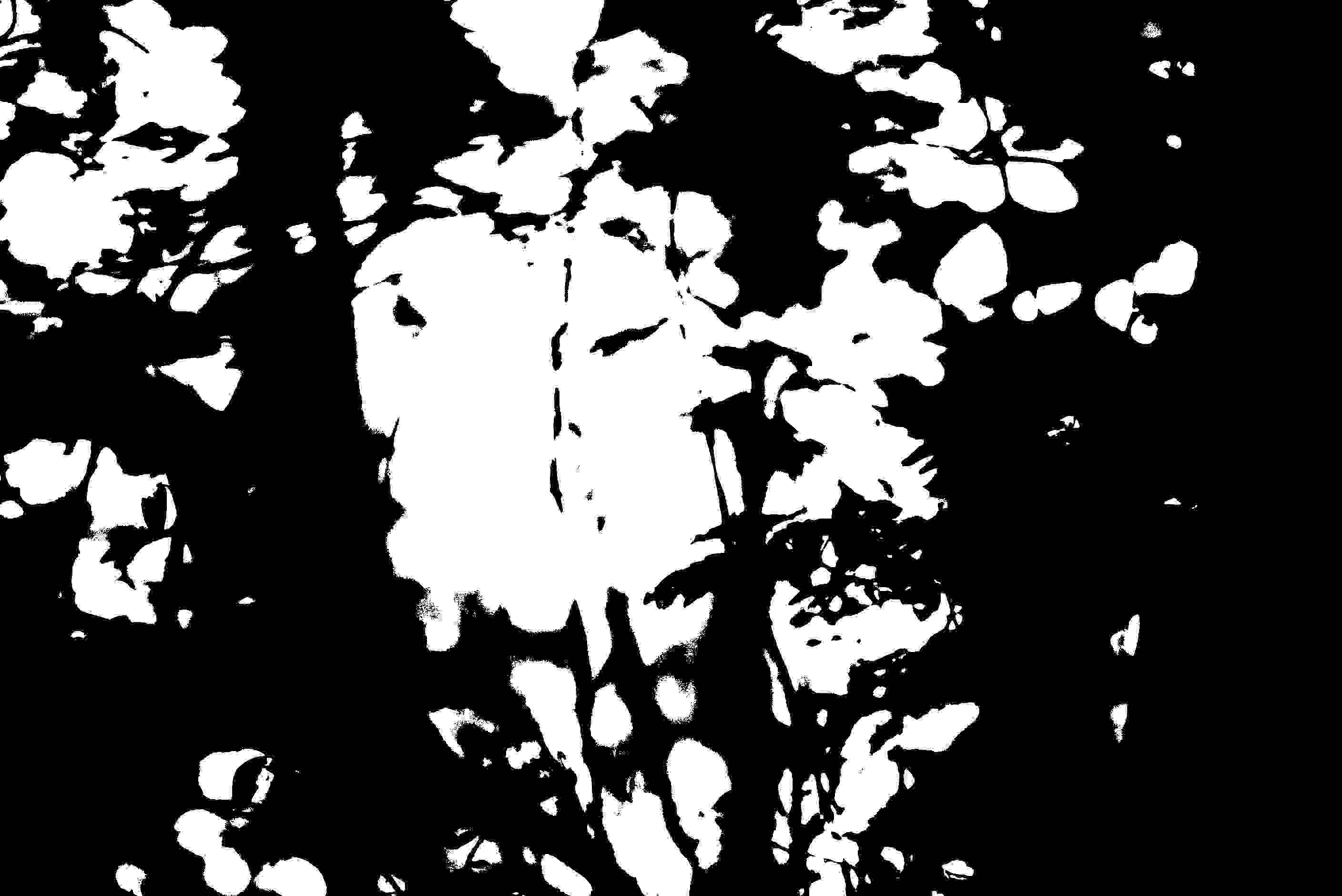
It is seen from the second photo of the 23 (thresholded) black-and-white photos from the grove in the Danube Island that the opened mouth of 'Mrs.Boldog' at dentist 'Hitcotch' in the righthand side of the image could show two cherries in her mouth. Underneath this, there could be an 'Anubis' head with a finger into the mouth - and a 'd' with exclamation mark in front of its mouth. Would 'Mrs.Boldog' in the dentist's chair even be the Hathor (with headgear) of the south wall of Tutankhamon?
The rotation of the white stone
The three lines 1, 2, 3 of my poem TEQ #464 seem to correlate with the west, the south and the east walls of Tutankhamon's tomb. Then the signature remains for the north wall. There are even reasons to see a correlation between 'rotations' of my white stone with the four walls: This file presents 10 stages of rotation of the white stone. It seems that these can be correlated with the rotation through the four walls of the Tutankhamon tomb. When, in addition, the white stone finds correlates in Caravaggio's 'Judas kiss', these correlations can be tested also against his total work summed up in this structure of Caravaggio relative to my 'Der Dornenstrauch'. The correlations can be outlined as follows:
|
Tutankhamon: Caravaggio: 21 - The white stone: |
The WEST wall (source) Jupiter, Neptune and Pluto - telling of the rotation of the white stone Rotation stage 2 - telling of the dogheaded apes |
|
Tutankhamon: Caravaggio: 5 - The white stone: |
The SOUTH wall (source) St.Francis receives the stigmata - telling of the rotation of the white stone Rotation stage 5 - cp. this and this |
Manipulating Caravaggio's 'St.Francis receives the stigmata' with brightness and contrast reveals that there is a hooded person crouching down left, facing rightwards (cp. also the leftmost form on the tip of the white stone) - which then clearly is a correlate to Anubis with the hooded doghead to the left of Tutankhamon and the angel or divine messenger.
|
Tutankhamon: Caravaggio: 53 - The white stone: |
The EAST wall (source) San Gerolamo (1605-06) Rotation stage 7 or 8 |
Although there is a basis for recognizing the relevance of San Gerolamo in the parallel arms and legs of the east wall, as well as the dead person, there are also good reasons to see this Caravaggio artwork as potentially related to the south wall - in terms of the skull facing rightwards and the 'ceremony of opening the mouth' being contained in San Gerolamo's hand to his mouth, the halo around his head corresponding to the headgear of Hathor etc. Even the curving parallels of his arms can be recognized in the curves of horizontal body and the lines above. However, it is possible that the other San Gerolamo artwork of Caravaggio - St.Gerolamo writing (1605-06) - would apply with more precision - the horizontal posture, the pen corresponding to the rope etc.
|
Tutankhamon: Caravaggio: 37 - The white stone: |
The NORTH wall (source) The Judas kiss Rotation stage 0 - cp. also this tilted version |
It is easy to recognize Caravaggio's 'Judas kiss' in the Tutankhamon image:
|
The leftmost man (1) is Caravaggio's Jesus (1) with hands in 'X' posture and the second man (2) is Judas - cp. the 'kissing' face in the hieroglyphs on the wall behind. Tutankhamon's third is Caravaggio's lefthand leather-armoured guard with hand reaching out for the ribs or chest (including some possible mixmax of hands), the fourth is the second leather-armoured guard. Tutankhamon's fifth (with the vertical stick) is Caravaggio's man in the background (5) - possibly holding the red cloth - while the sixth is the man with the lamp. Then Tutankhamon's seventh and rightmost person who is holding the 'adze' symbol is the same as the leftmost person of Caravaggio - the one in green - who is outside the human reality according to this combination. Notice 'the opening of the mouth' in Caravaggio's #7. Caravaggio is then telling of the idea that a resurrection to the human historic reality (Tutankhamon's leftmost person with the 'X') could be compared with a Judas kiss. Would that mean that Jesus' resurrection according to Caravaggio could have been also a function of the Catalan number on the basic form 1 - 1/12? It can be seen that this plus/minus 1/12 for the Catalan number could correspond to the movement from the end to the beginning of the 7th person in Tutankhamon/Caravaggio - hence this little graph in the lower lefthand side of the Tutankhamon image.
See also my poem corresponding to Caravaggio's 'Judas kiss' by this concordance which is DDS III:37 - its title tells of what is the round lamp phenomenon of Caravaggio (which corresponds to the gear held in the hands/arms of the rightmost whitedressed 'Tutankhamon'). An interesting observation in my poem is the third stanza which then tells that the alphabetic technology arises from this displacement from right to left of Tutankhamon's character with the 'adze' symbol - landing on the lefthand side like the ('transcendent') green-dressed man. Interestingly, my poem could suggest that Tutankhamon's rightmost character is 'weiblich' - which corresponds to the red cloth (Virgin Mary?) of Caravaggio in the transform from the right to the lefthand side.
A somewhat interesting question could be whether the redundancy hole in the matrix of the WEST wall could read from one or all of the other four poems to these Caravaggio works, that is
DDS III:21,
DDS III:5 and
DDS III:53. It could perhaps have been about stanza 2 of DDS III:21 - say, if the purpose with the redundancy in the matrix would have been to create ideas or even perceptions in the collective consciousness of the society - say, for being able to shift location of big stones through sudden historic discontinuities and things like that. Or would stanza 2 of DDS III:53 have been more to the point? The question could perhaps be considered somewhat interesting. I also find it interesting to consider the 4 corresponding poems of DDS part 2 - that is,
DDS II:5,
DDS II:21,
DDS II:37 and
DDS II:53. For example, stanza 3 in DDS II:5 could be telling of Jesus' view on the two on Caravaggio's motorcycle, including the mix with Judas' hand, DDS II:21 could be telling of Tutankhamon arriving to a new life, with the Judas kiss inscribed on the wall behind in stanza 2 etc.
Hence the three lines 1, 2, 3 of my poem TEQ #464 seem to correlate with the west, the south and the east walls of Tutankhamon's tomb. The 'sewn handrobber' would be Anubis with his hood and Hathor would be lifting her 'ming' symbol to Tutankhamon's nose.
It is seen that the scheme with the four variants of 'Tutankhamon', 'Caravaggio' and 'white stone' exhibits clear similarities as far as 'rotation' is concerned with the elements discussed in my 1997 PhD dissertation in Chapter 9: The arbitrary sign and the Cantor machine - pages 500-527. I defined in the dissertation a triadic sign consisting of one social component, one observational and one phonological, and I discuss in chapter 9 the various rotations about the various components, summed up on pages 525-527. Clearly this triadic sign with the workings of the socalled 'Cantor machine' could find a close correlate in the present complex:
|
Social component: Observational component: Phonological component: |
Tutankhamon Caravaggio White stone |
See page 527 - the summary for the rotation about the observational component - exemplified here by the 'rotation' of person 7 on Tutankhamon moved from the end to the beginning: This rotation concerns 1) social cognition, 2) personal name and 3) (sensory) perception. It is clear that this could have been rather essential to the ancient egyptian culture in the sense of 1) the inner intuitive articulations of mystic-religious type, 2) the role of the buried pharaos for the same, and 3) the effects which this could have had on sensory perception - that is, what would concern the phenomenon of 'historic discontinuity' - in a form which even could have led to the phenomenon of movement of massive stones which the physical technologies of those days otherwise perhaps could not have made.
What is interesting for the present discussion is the rotation about the phonological component (page 526) which here corresponds to the white stone. This could suggest that the white stone - which can be seen to relate to Khumbutse such as Khumbutse relates to Mount Everest - here would be equivalent with the phonology of the hebrew language. The way this must be understood is that the white stone could have been the key to the hebrew alphabet - which thereby is equivalent to the phonology of the hebrew language and thereby can function semiotically.
See the discussion of the hebrew alphabet in this article: One can understand how the 'alef', the 'zain' and some other of the alphabetic letters of the hebrew alphabet could have arisen from the physical form of the white stone - such as forms like these - and the alphabet in total could have emerged from the 'form of time' contained in the blue metre. There would have been, say, 22 or 23 different 'forms of time' which would have found their interpretation in the forms of the hebrew alphabet.
Hence for the conclusion that 'Nameless Jerusalem' simply is what the north wall of Tutankhamon's tomb (possibly from the time of the Exodus) tells of when it is describing the passage from the transcendent righthand side to the immanent (historic) left through 'the sunflower matrix' which also is interpreted as 'IHWH' (see this study for the derivation):


The tetragrammaton יהוה is not pronounced by (some) orthodox jews - cp. the 'Nameless Jerusalem'.
The relevance of 'the sunflower matrix' for Tutankhamon is easily verified through his successor the pharaoh 'Ay' whose tomb decorations show themes very similar to Tutankhamon's, including the 12 dogheaded apes with even similar or identical hieroglyphs - and on the 'filers' wall a variant of Tutankhamon's north wall theme which includes just a variant of 'the sunflower matrix':
However, the order of things look a little turned around and there seems to be no fish between the boats. The flock of birds above the papyrus is 3 * 4 = 12, just like the dogheaded apes.
In many ancient egyptian works of art one can see people depicted with a papyrus plant in their hands - as if they were talking into a loudspeaker or microphone. That could mean that the papyrus of the 'sunflower matrix' had this function of 'talking' the meaning of the words in the 'phonological component' - as pronounced between the inner and the outer poetic articulation. .
It is seen that the four lines of my TEQ #464 could be seen as affiliated with the 'lekton' component in the fourfold semiotic sign told of in vol.4 page 1277. The double truth value then means that it conforms to the non-binary truth value of the submorphemic Aristotle.
A possible complex around Sylvia Plath's 'Colossus'
I mention here the idea that there could exist a secret 'intelligence' (or something like that) project on Tutankhamon that could concern these matters. This idea is based on general observations - I have no explicit information that could indicate the existence of anything such. But of course it would not be much surprising to find that such projects could have been made in the aftermath of the discovery of Tutankhamon's tomb in 1923. If such an 'intelligence project' exists, it could have been constructed on precisely the principle of the 3 vacant redundancy holes in the wall of the tomb - for the idea of gaining access to people's innermost mystic-religious intuitions and 'govern' the people thereby. One of the reasons for such an idea could derive from the peculiar similarity of the art in the tomb of the pharao 'Ay' who was the pharao following after Tutankhamon and who allegedly had been the close advisor or 'vizier' (a sort of prime minister) to at least Tutankhamon and maybe also one or two pharaos before him. As tells this Wikipedia article, the pharao following after Ay instigated a 'memory-wipe-out' of Ay, could be also of the pharaos before him in the socalled 'Amarna' period. The idea therefore necessarily arises whether there is some abnormal relation between the tombs of Ay and Tutankhamon - the latter died in young age and Ay was pharao for approximately 4 years. Most specifically, the decorations in the tomb of Ay - (here is one wall of Ay's tomb and here is another (source) - are suspiciously similar to those of Tutankhamon: Unless this was a normal or standard decoration in those days (of course it could have been the same artist for both tombs), it could look like 'monkey business' of some sort. The 12 dogheaded apes look identical to Tutankhamon's tomb - even the hieroglyphs and the redundant 12th element look the same. If there exists a 'secret intelligence project' for modelling people's innermost poetic-religious intuitions, I have speculated if this could have made use also of published poetry. The example I could mention is Sylvia Plath's 'The Colossus' of 1960. She does not use rhyme but it could be that another formal matrix could have been used instead - which could be related to such an idea of a vacant redundancy hole. On basis of the book's title, I look up Alf Torp's 'Nynorsk etymological dictionary' ('Nynorsk etymological dictionary'), Kristiania (= now 'Oslo') 1919 - which, by the way, was only 4 years before Tutankhamon was found. (Torp himself died in 1916 just before the book was finished, like Monier-Williams with his sanskrit dictionary of 1899). In this dictionary there is an article on the form 'koll' (cp. the title) on page 306 column 1 which could be seen to be relevant for some aspects of the book. KOLL is on page 306: "Three HUND-red and the X" (undered = the three cavities) = the resurrected Tut with the X on his chest - as the 3 redundancy holes and the 3*4 'hund-' or dog-headed apes. Torp article on 'koll':

| Koll m 1. (top, hairtop, top of hat, big hill/peak/mound, knoll, mountain peak (in Telemark kull), frøtop[= 'seedtop'?]; the tip at the end of timber log, Eastern Norway, top of a tree, in particular on cut/sawed trees, Telemark), old norse kollr head, particularly hairless, rounded top, top of tree, swedish dialect koll upper part of the head, crown of a hat, kulla top of the head (rks.[?] kulle hatcrown), gotlandic kullä the same, bornholmsk kujlla, older danish kuld the same; also in placenames, jutlandic kolle hill, swedish kulle the same, bornholmsk kujll truncated round mound, = middle low german kol, kolle head, frøtop[= 'seedtop'?] (dutch kol forehead). Belongs to [is associated with] adj. kollutt. Cp. sanskrit gula-, gulikā bullet/ball/sphere, head etc. (Persson, Beitr.66). - i koll = old norse um koll, swedish om kull, danish omkuld = new high german kopfüber on the head [upside down?], also in koll-kasta, -sigla, etc., old norse kollverpa, swedish kull-, danish kuld-. - kolla (topcut, truncate = kylla). swedish dialect kulla cut the hair off; scottish coll truncate/blunt.
|
The poem 'Mushrooms' could tell of this top, hairtop, top of hat, big hill/peak/mound, knoll by the flat-rounded top of mushrooms (cp. also the top hat on Ay's tomb, at least on this photo (source): "Overnight, very / whitely, discreetly, / very quietly // our toes, our noses / take hold on the loam, / acquire the air etc" (p.26). A more interesting example is perhaps the first poem in the book, called 'The manor garden' for which the 5 stanzas could be seen as relevant to the article on 'koll' in the following sense:

The poem ends with the mysterious or 'difficult' word 'borning', which I have searched for in vain in my dictionaries but which could receive an interpretation if one assumes that the article on 'koll' is the underlying matrix basis for this poem - down to the second occurrence of the abbreviation 'bornh.' = 'bornholmian' dialect. (There is an example given in this article where the 'quotation' window refers to "1967, William Styron, The Confessions of Nat Turner, Vintage, published 2004, page 332" with an example that seems to be of a similar kind - about rounded top things). The 'yellow' in the fourth stanza can get its rationale from the article on 'koll' by skrt. 'gula' by norwegian 'gul' = 'yellow' (on this page there is also a reference to 'gul' in the sense of 'squatting' = 'sitte på huk') whereby the meaning of 'koll' as top rounded bald head could appear rather below, the rounded buttocks, as in the lower part of the article 'koll' - hence the poem title qua 'manure garden'?
My norwegian-english dictionary tells about 'tømmerstokk': "log; dra tømmerstokker (i.e. 'snorke' = 'to snore') saw them off; drive the pigs home; US saw wood" - hence there is a reference to 'the smug centuries ['sent you these'?] of the pig' in this article.
'The family wolves' could be the page number '306'. 'Hard stars already yellow the heavens' - cp. the reference to sanskrit 'gula' = 'sphere, head' with norwegian 'gul' = 'yellow'.
Spider on own string = the 'hair' symbolism.
Small birds converge: The word kollutt (= hornless, bald, truncated/blunted) has a counterpart in 'konvolutt' = 'envelope'. (Anne Sexton eloped with 'Kayo').
The abbreviation 'rks' I could not make sense of, neither is 'mnt' (probably 'mittel-nieder-deutsch') mentioned in the abbreviations. If 'bornh.' is considered 'difficult' (like 'a difficult borning'), one looks up the list of abbreviations in the beginning of Torp's dictionary, but due to the thickness of the paper and binding of the book one often lands on the following page instead - with the article 'akkar' = 'octopus'. (Heide-Steen made this sketch about 'akkar' for TV - it could have been about looking up abbreviations in Torp's dictionary?).
The article on 'koll' is, as seen, divided in two = TO = page 792. The second half of the article could be interpreted in the next poem 'Two views of a cadaver room' - it is in TwO parts - first one straight interpretation and the second half of this poem could be seen as a 'feature-converted' variant of the first half. The first half of "Two views of a cadaver room" ends with the line "He hands her the cut-out heart like a cracked heirloom" which could have an implicit reference to the cavity in the lower part of three of the walls of Tutankhamon's tomb. The corresponding last line in the second half goes: "Foolish, delicate, in the lower right hand corner" - like that cavity in the egyptian tomb - to which there also are parallels in the tomb of Ay.
If a comparison with the 3*4 matrix of dogheaded apes in Tutankhamon's and Ay's tombs be sought, it could be in the form of KOLL-umns and rows - exemplified here possibly by the 5 stanzas reading the column of the article.
Another peculiarity could be page 792 = 'the even HUND-read and Ay and the TwO' - on this page 792 there is the article 'TO' (not 'ROw') - three cases of it - one on the lower half of column 1 and 2 on top of column 2. This can be recognized as Sylvia Plath's own name: The 'plateau' is in the green top of the mountain 'crag' (cp. the poem 'Hardcastle Crags') of the third 'TO', the 'sylvia' could be in the 'TO' itself. The one article is on the bottom of column 1 and a little into column 2, the other two are on this rounded top of column 2. The poem 'Faun' on p.10 is three stanzas interpreting these three TOs. The preceding 'Hardcastle Crags' p.8-9 is this top of column 2 TO for a small green glade in a thicket in the forest or a green little plateau on a mountain crag.
The poem 'Lorelei' does perhaps interpret both rows and columns of the entire page 792 - one can find correlations reading from top to bottom. (Stanzas 6 and 7 are perhaps a little special - this could be the correlation - 'bears' = 'bærer' cp. 'tjære. Bair.' - 'snurning' could perhaps mean 'whorled', 'tøfla' = 'the slippers', and then 'harpiks' = 'harmony' etc).
I have not analyzed so many of her poems according to this theory, though, and cannot entirely discard the theory that the correlations could be due to other factors.
What should this mean for those who like her poetry? It can be said that some poets impose heavy constraints of rhyme and metre on their poems, while she imposes a heavy constraint of such a potential matrix onto it.
However that be, the theory arises by itself: Could Tutankhamon's tomb (opened in 1923) have been swindle created on basis of a template in the tomb of Ay - in order to make for a basis for the construction that led to the death of Lenin in 1924 and the rise of Hitler - as Hitler was breaking out of his 'Kampf' ('base camp'?) in Landsberg prison like a Jesus emerging from the revelations of Fatima? If so, Plath's book could in principle have been an attempt to install Hitler into the role of Jesus present in the inner mystic intuitive articulation of christian people all over the world - but maybe controlled from (british?) intelligence or something like that - by way of this crossword puzzle in Tutankhamon's tomb. In 1923 such a swindle could perhaps have been made cleverly in the hope and belief that it could never be discovered - but modern C-14 dating (of e.g. the furniture found intact in Tutankhamon's tomb) and other forms of dating of e.g. the paint on the wall should make it difficult to continue such swindle. These modern speculations should be easily refuted by modern technology - if it is politically possible.
Of course Tutankhamon and his tomb could also have been real (which it probably also is) and no fake and the death of Lenin and the rise of Hitler still being in extension of this 1923 finding - in which case Plath's book could still have been an attempt to install e.g. Hitler in the role of Jesus in christian people's faith all over the world. If that should have been the case, it would probably have been a part of an 'intelligence project' (or something like that). The title poem 'The Colossus' could be seen as telling of an early 1920's construction of the artworks in Tutankhamon's tomb - say, in relation to Torp's 1919 dictionary. "I am none the wiser" could then have been a word play on Ay who was the 'vizier' to Tutankhamon.
Then the question naturally arises: Would my 'The Endmorgan Quartet' have been written in extension from the same 'intelligence project'? Consciously no - I have never been affiliated with and have never even been informed about the existence of such a theoretic project. The question would be if my TEQ has a form which could have been a subconscious imitation of such a 'project' - say, that its form could have been in extension from more or less deliberate manipulations onto my person from such a 'project' - which could have included e.g. Sylvia Plath's work. Some people could perhaps have been inclined to make such claims - or been inclined to consider my work (here TEQ #464) as being of such a status and therefore they could have felt free to use it without crediting me as the source. I do not believe that my work has sprung forth from such intrigues - although it is of course possible that it could have had to relate to such intrigues. The one general reason is found in what I call 'function 14' - which proves that external factors could generally not have been dominating for the form of the work. Secondly it is seen that there is no mention of Tutankhamon or similar relevant 'crossword' factors in my relevant poems - here TEQ #460-464 which can be seen relative to the mountains of Himalaya - which have a generality which makes the interpretation in terms of Tutankhamon's tomb only a special case which can be seen to conform to my form without the opposite being the case. This means that Tutankhamon's tomb would be only a special case among many other possible interpretations of my work (here TEQ #464) - by this function 8 which could concern the relation between, say, geo-logic and phonetic form.
See also this story about the pilot whales that were stranded in Ólafsfjörður on Iceland on 21 june 2025 while I was just writing these lines: The whales stranded under the lamp-formed ribs of the snowcovered mountain - see also the Khumbutse mountain at Mount Everest (source) with its horizontal stripes. See also this comment about the geo-logic of the nature on Iceland.
Of relevance for this question could be this special case: Under the 'brief comments' of 9 may 2023 I describe how the devastating earthquakes of Turkey-Syria of 6 february 2023 seem to have followed a logic which found an extremely precise parallel in a poem of mine from my 'SNEEFT COEIL' in the placenames closest to the epicentres of the strongest quakes. (The placenames closest to the epicentres were easily read from the interactive map of the website in 2023 but this map seems to have been revised some time later and can no longer be used for this purpose - but by searching for each epicentre on e.g. a Google map on the web the data can still be confirmed). The question would then be: If such earthquakes could have been manmade, say, by a laser beam projecting a 'laser bomb' to an underearth location somewhere for generating an artificial earthquake, then the strong correlations with my poem could in principle have been a piece of terror for mobbing my poem. However, if such quakes cannot be made, then the facts look strange indeed - and one could be inclined to speculate that a 'seismic logic' exists in the human reality that could have explained these correlations somehow: The earthen geology has moved around on the globe for millions of years and could naturally have left traces in the human semiotic constitution throughout the thousands of years of formation of our reality - in a similar fashion as perhaps could have been tentatively brought under control by the ancient egyptians if they had taken it as far as being able to cause movement of heavy stones by way of 'historic discontinuity'. If so, one could think of this as a theoretic explanation to the correlations of my poem with the epicentres of the earthquakes of 2023. Puzzling it would be anyhow, I would say, with such precision. However, if on the contrary such quakes can be manmade, the correlations could have been engineered by somebody who also could have felt the need for pretending that correlations between my poems and e.g. the mountains of Himalaya or ancient egyptian tomb art likewise would have been under their control. I think my 'function 14' is evidence good enough for refuting such claims that my poetry is a form of 'jumping jack' articulations under sophistcated mind control or anything the like. Clearly the earthquakes could have been mobbing of my poetry for getting it under control for example for (ab)use in 'secret intelligence' or 'business' intrigues which then could be about e.g. a program of engineering mystic-poetic intuitions in the hearts of the people all over the world - say, as part of a program that could include Hitler in the role of Jesus springing out from the Fatima revelations via the russian revolution and such ideas. But this is not self evident. The present study has shown that there exists a relation between natural phenomena and my poetry which probably can be considered a 'poetic function' here of type 'function 8' - here concerning the relation between the small (appr. 2,718... cm long) white stone of my kitchenbench, the mountain Khumbutse at the shoulder (or 'base') of Mount Everest as seen from the Base Camp - a name which even can be seen to be the redundancy mystery in the tomb of Tutankhamon. In such matters it is of course futile to talk about causalities - the best one can make out of it would be 'correlations' - and the conclusion would be that such correlations tell of a geo-logical form that relates in the human semiotic constitution to the phonetic form of my poetry. Whether some intrigues have tried to wedge inbetween there I dont know - but I have not participated in any intrigues and I doubt that such possible intrigues could have led to any interesting changes in the form of my work.
I believe that the 16 'functions' of my TEQ are intertwined into each other which makes the external factors contributing to its form less interesting. Function 14 will intertwine with all the other 15 functions globally and locally - such as here 'function 8'. It would have been the same 'Khumbutse' of Himalaya which can be traced also in my 'Wood Gumpa' (= 'Gump-Wood-[s]a' of TEQ #680 - for the additional 's' see also the raised 's' in the signature Chombas to the following TEQ #681) and by the 'base camp' in the crossword puzzle in Tutankhamon's tomb. If Tutankhamon's tomb were swindle it could have been the reason why the base camp of Mount Everest is called just so - but it is probable that there are other and more natural reasons to the designation of this camp at the 'base' of the mountain.
The conclusion to this is that if a 'project' has attempted to reach the same sophisticated level of technology qua 'historic discontinuity' as the ancient egyptians maybe had reached, that is of course well and fine as long as it is not a secret intrigue (and as long as terror and violence is not included). Secrets leak out - and then the stone could fall down mid way. Clearly such secrets could hide something else underneath - such as an attempted coup d'etat or something like that. If a serious program be made of trying to move heavy stones by way of 'historic discontinuity', that could be very interesting - but not if it be secret.
Added on 10 july 2025: See also 'Some words about Plath and Torp'.
A final comment
The article has discussed matters of high relevance for understanding also book 3 (here by the 'Cantor machine' of chapter 9) and book 4 of my 1997 PhD dissertation 'A waist of time' which is in 5 parts. For a discussion of parts 1, 2 and 5, see the article 'The submorphemic Aristotle'.
Sources:
Blackman, A.M.: "The rock tombs of Meir", part I. London 1914.
Davidson, B.: The analytical hebrew and chaldee lexicon. London 1855.
Delitzsch, F.: Assyrisches Handwörterbuch. Leipzig 1896.
Gardiner, A.: Egyptian grammar. Griffith Institute, Oxford 2012
Gesenius, W.: Hebräisches und Aramäisches Handwörterbuch über das Alte Testament. Leipzig 1921.
Grimm, J. & W.: Deutsches Wörterbuch von Jacob Grimm und Wilhelm Grimm auf CD-ROM und im Internet. Kompetenzzentrum Trier, 2025.
Klein, E.: A comprehensive etymological dictionary of the hebrew language for readers of english. Carta Jerusalem, University of Haifa 1987.
Liddell, H.G. and Scott, R.: Greek-english lexicon. Oxford: Clarendon Press 1901.
Mathews, R.H.: Chinese-English Dictionary. (A Chinese-English Dictionary Compiled for the China Inland Mission by R.H.Mathews, Shanghai: China Inland Mission and Presbyterian Mission Press, 1931). Twelfth printing 1972. Harvard University Press, Cambridge, Massachusetts.
Onions, C.T.: The Oxford Dictionary of English Etymology. Oxford 1982.
Ranieri, L.: The Mysterious tomb(s) of Ay: Tutankhamun’s successor. Photos by Sharon A.Davidson. 2023.
Torp, A.: Nynorsk etymologisk ordbok. H. Aschehoug, Kristiania 1919
Wallis Budge, E.A.: Egyptian hieroglyphic dictionary. A hieroglyphic vocabulary to the theban recension of the book of the dead. Kegan, Trench, Trübner, London 1911. Printed by Adolf Holzhausen, 19-21 Kandlgasse, Vienna. Issued by Book Jungle, PO Box 2226, Champaign, IL 61825. Reprinted by Lightning Source UK Ltd, Milton Keynes UK on 02 December 2010.
Wallis Budge, E.A.: Egyptian hieroglyphic dictionary, in 2 volumes. London 1920.
Woodhouse, S.C.: English-greek dictionary. London 1910.
Inside the Tomb of Tutankhamun The north, east, south and west walls ('Egypt Museum' - ancient Egypt art culture and history).
References to own articles on this homepage:
19 march 2024: New volcanic eruption in Iceland
24 may 2025: The Endmorgan Quartet #461 and the mountain Gasherbrum 1
2 june 2025: TEQ #460, Exodus 16:14, Gasherbrum IV and the rock tombs of Meir
3 june 2025: Blatten
13 june 2025: TEQ #630, Exodus 18:9, tomb images of Senbi and Tutankhamon
16 may 2025:: The Endmorgan Quartet #462-463
The submorphemic Aristotle
About my work
The blue metre once again
Brief comments 9 may 2023: The 2023 earthquakes of Turkey-Syria and my poem 'Seele, du wartetest'
Caravaggio and 'Der Dornenstrauch' part 2
The cycles: Excerpt from the main article on Caravaggio and 'Der Dornenstrauch'.
The german evidence
Hitler's cabinet and the current political situation
Holm and the death of Lenin
The hungarian evidence
The Endmorgan Quartet (books 1-16)
The turning of the lapis philosophorum
The Octogon
The sunflower matrix
Some notes on text and image in 'The Endmorgan Quartet'
Beachy Head and Valery
Poems by Sylvia Plath:
Faun
Lorelei
Mushrooms
The Manor Garden
Two Views Of A Cadaver Room
The Colossus
References to Wikipedia articles:
Anubis
April 2015 Nepal earthquake
Ay (pharaoh)
Catalan's constant
El (deity)
Everest base camps
Gotlandic
Hathor
Israel (name)
Jutlandic
Khumbutse
Our Lady of Guadalupe
Qomolangma National Nature Preserve
Tutankhamun
Photo of Tutankhamon tomb north wall by Diego Delso
Adze
命
Wikipedia articles on Caravaggio works:
Saint Francis of Assisi in Ecstasy (Caravaggio)
Saint Jerome in Meditation (Caravaggio)
Saint Jerome Writing (Caravaggio)
Jupiter, Neptune and Pluto (Caravaggio)
The Taking of Christ (Caravaggio)
Various other references:
Biblical Hebrew - Mastering the Hiphil Stem in Biblical Hebrew
Blue Letter Bible
The bornholmska dialect
Icelandmonitor: Dozens of pilot whales stranded in Ólafsfjörður on Iceland.
Tomb of Menna - https://www.attivarte.it
Inside the Tomb of Tutankhamun
Kirkeby, W.: Norsk-engelsk ordbok. Kunnskapsforlaget, Oslo 1978.
Heide-Steen, H. & Skolmen, J.: Akkar (video)
Campbell, J.M., Levrie, P.L., Nimbran, A.S.: A natural companion to Catalan's constant. Journal of Classical Analysis Volume 18, Number 2 (2021), 117–135.
Tutankhamon tomb photo north wall: In an earlier version I used the photo by Diego Delso, delso.photo, License CC BY-SA which is reproduced on this Wikipedia page 'Tutankhamun'
© John Bjarne Grover
On the web 27 june 2025
Last updated 29 july 2025








.jpg)


#/media/File:The_Taking_of_Christ-Caravaggio_(c.1602).jpg)