The story of my scientific career
John Bjarne Grover
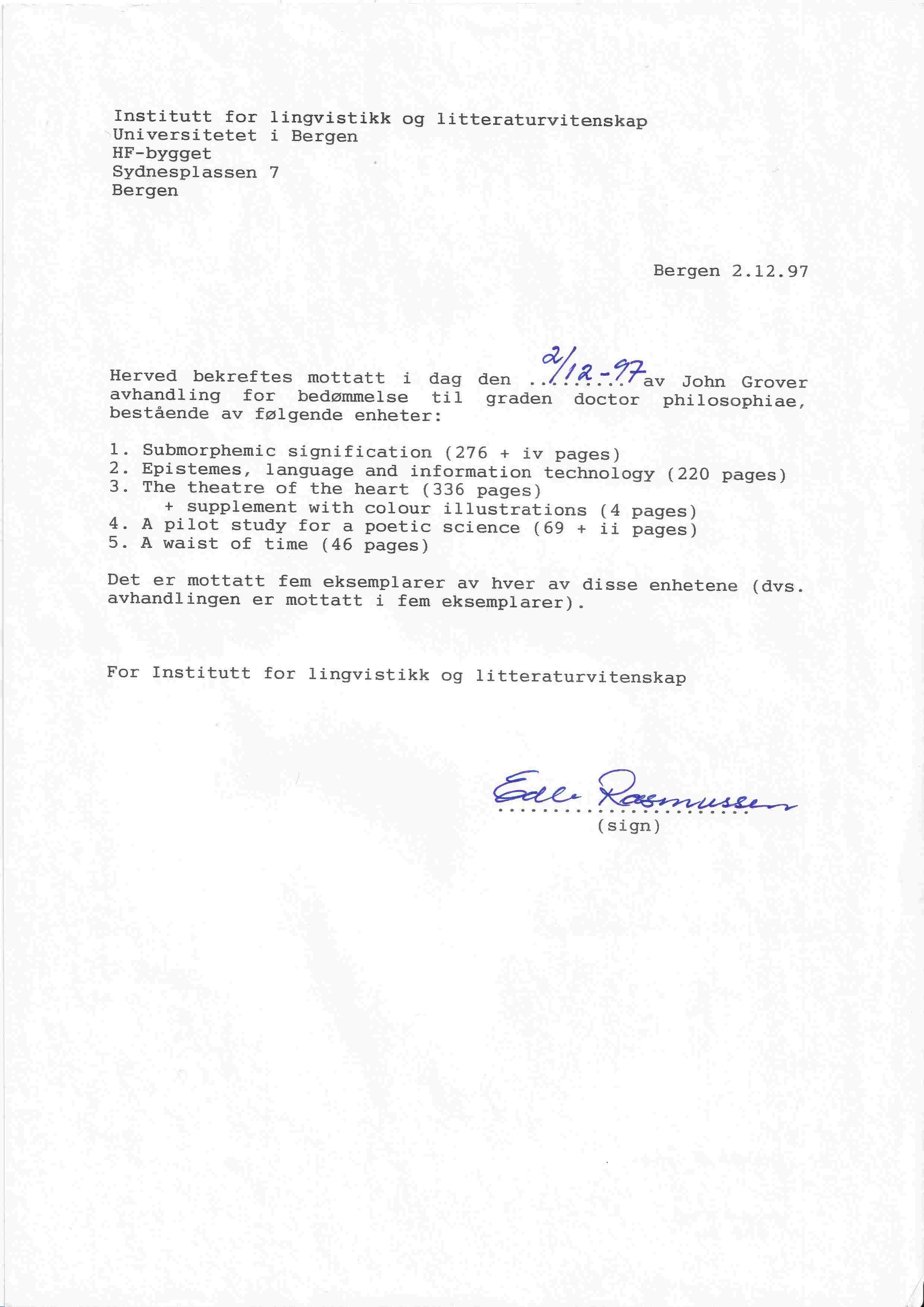
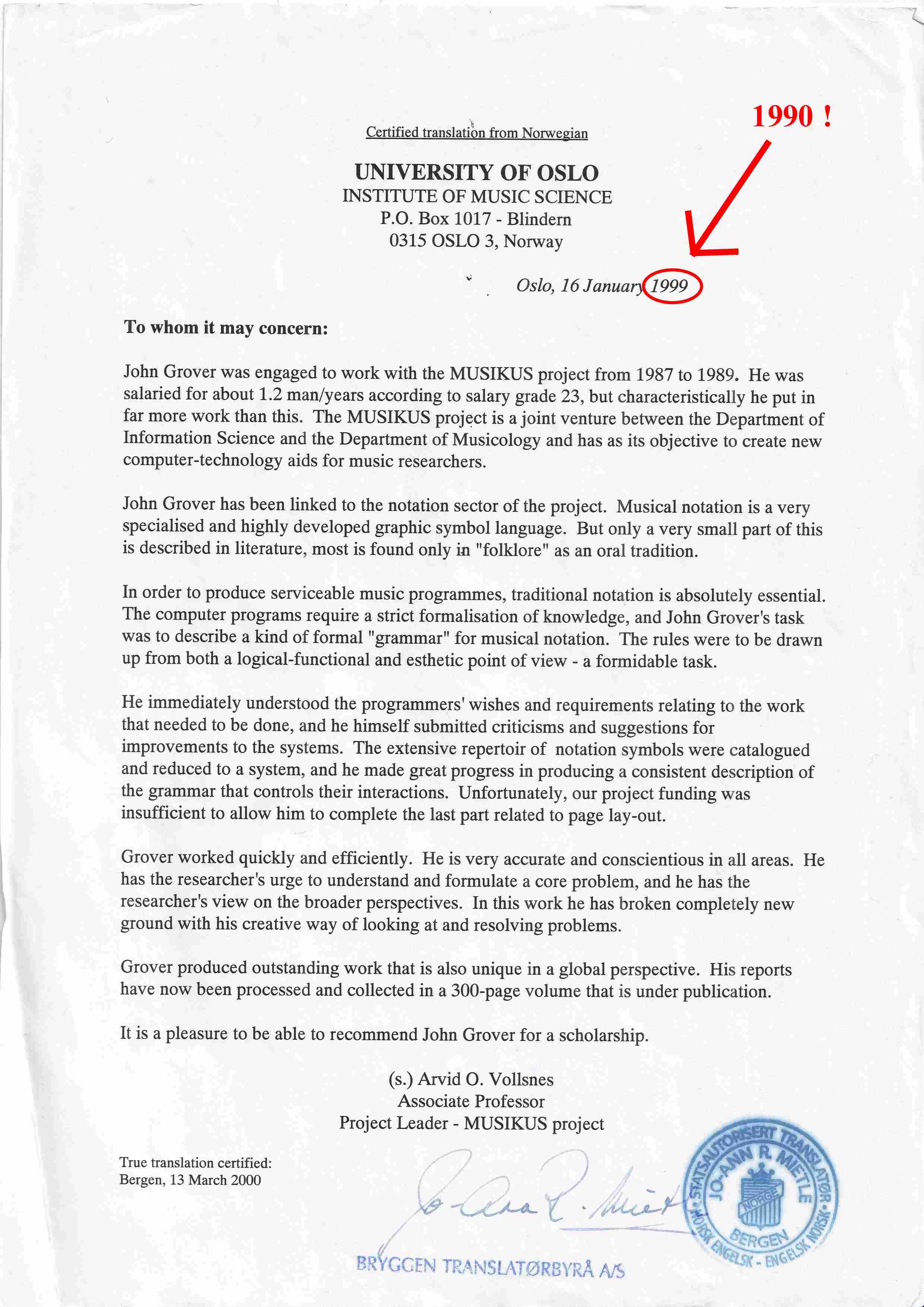
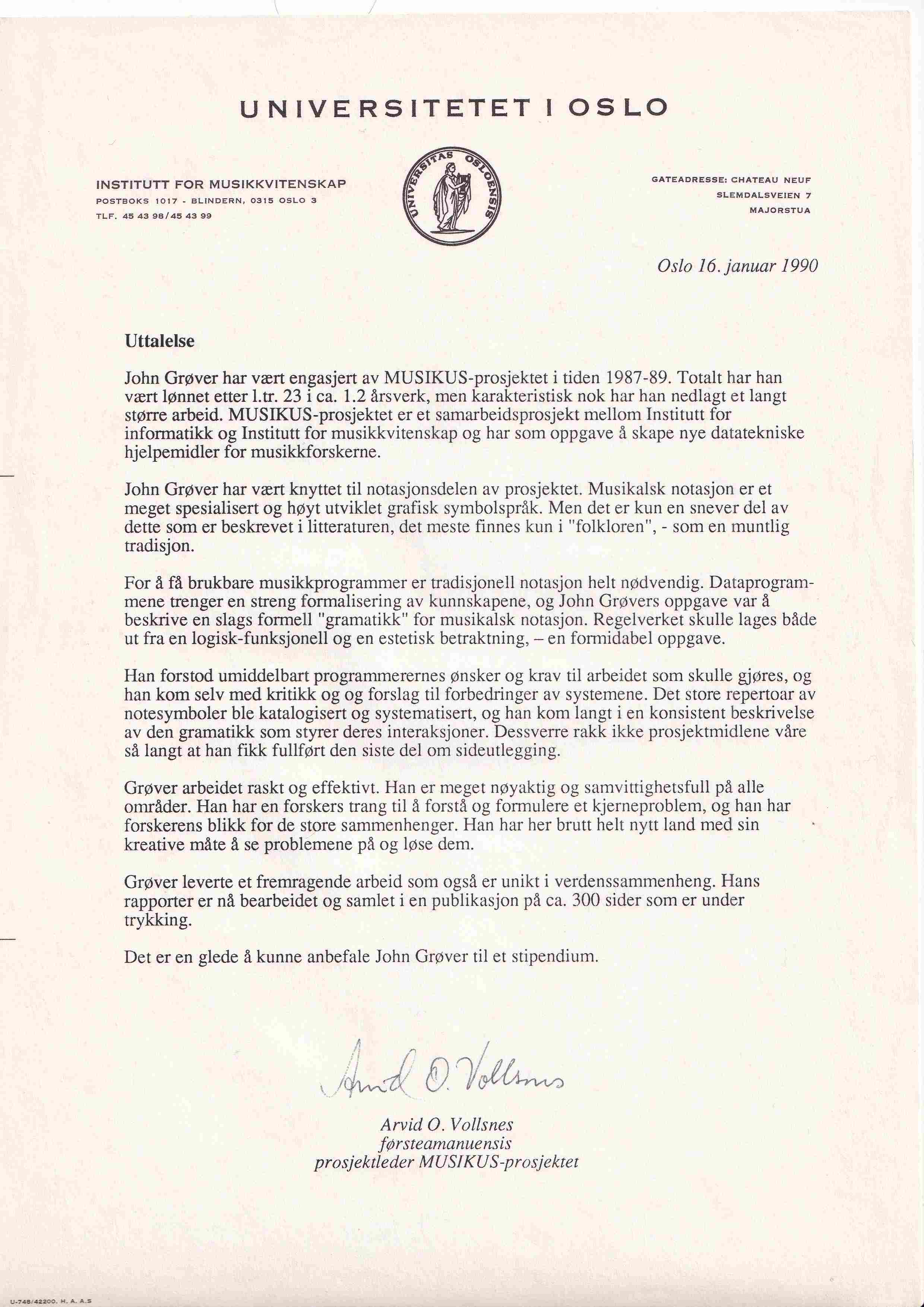
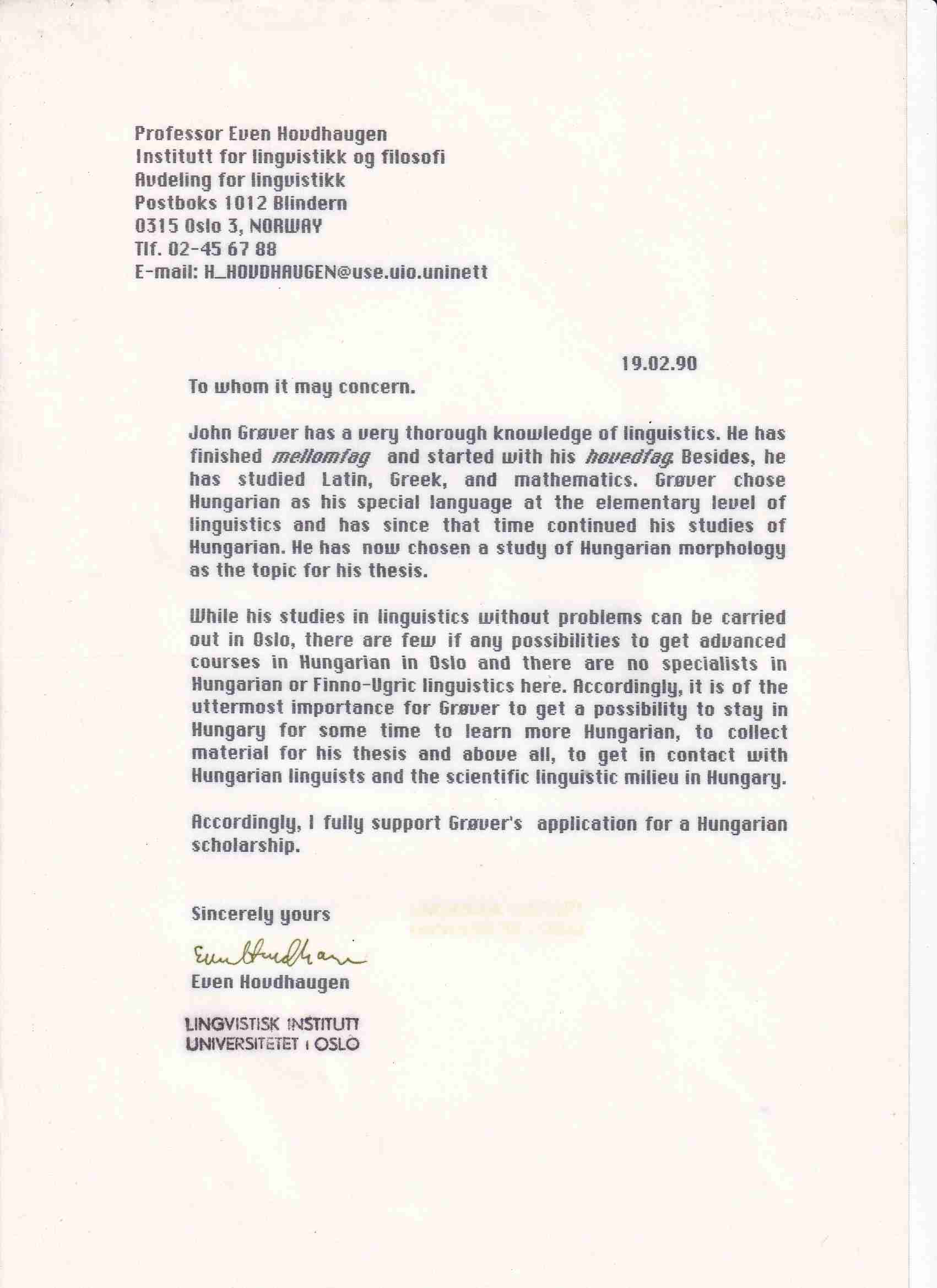
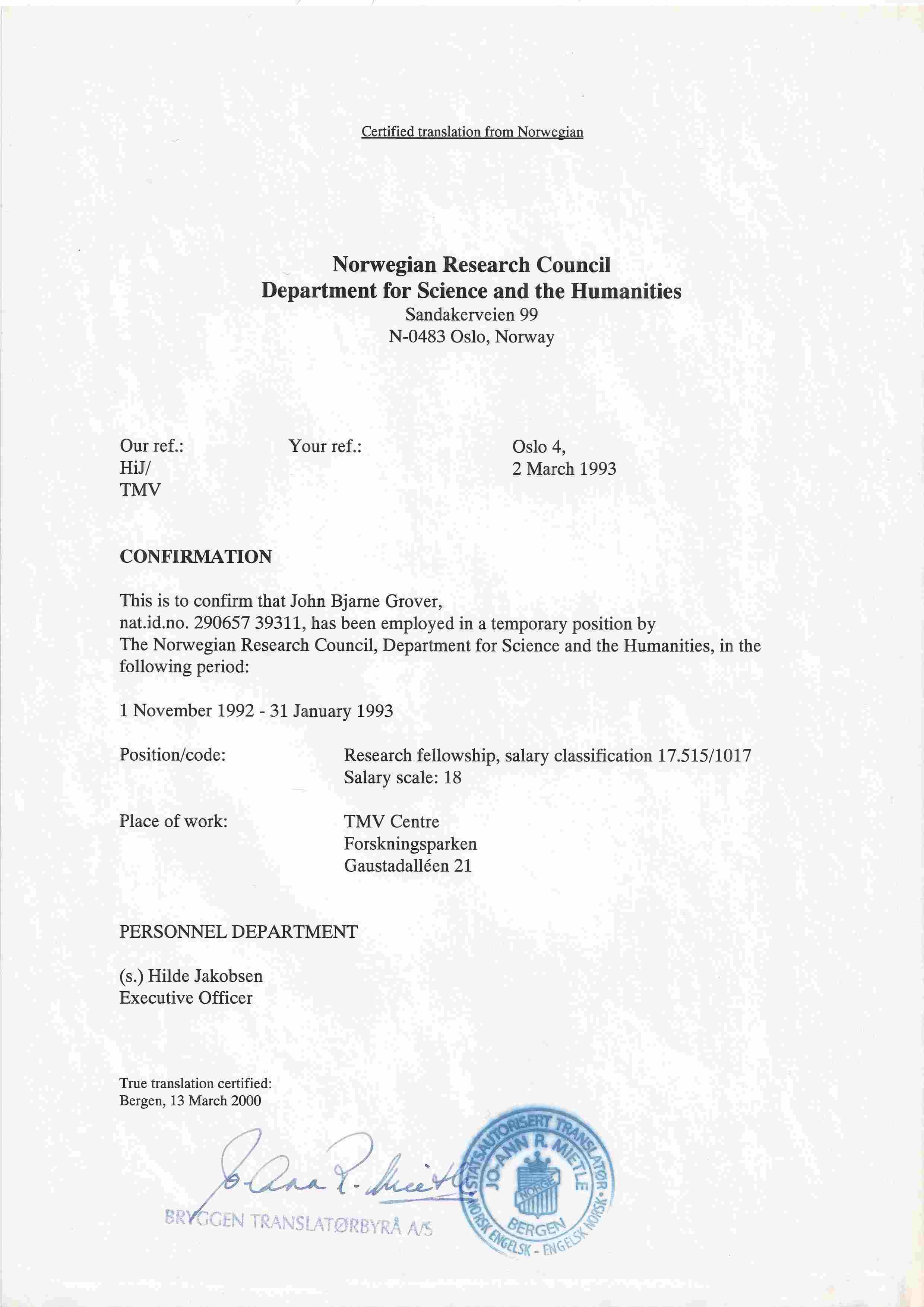
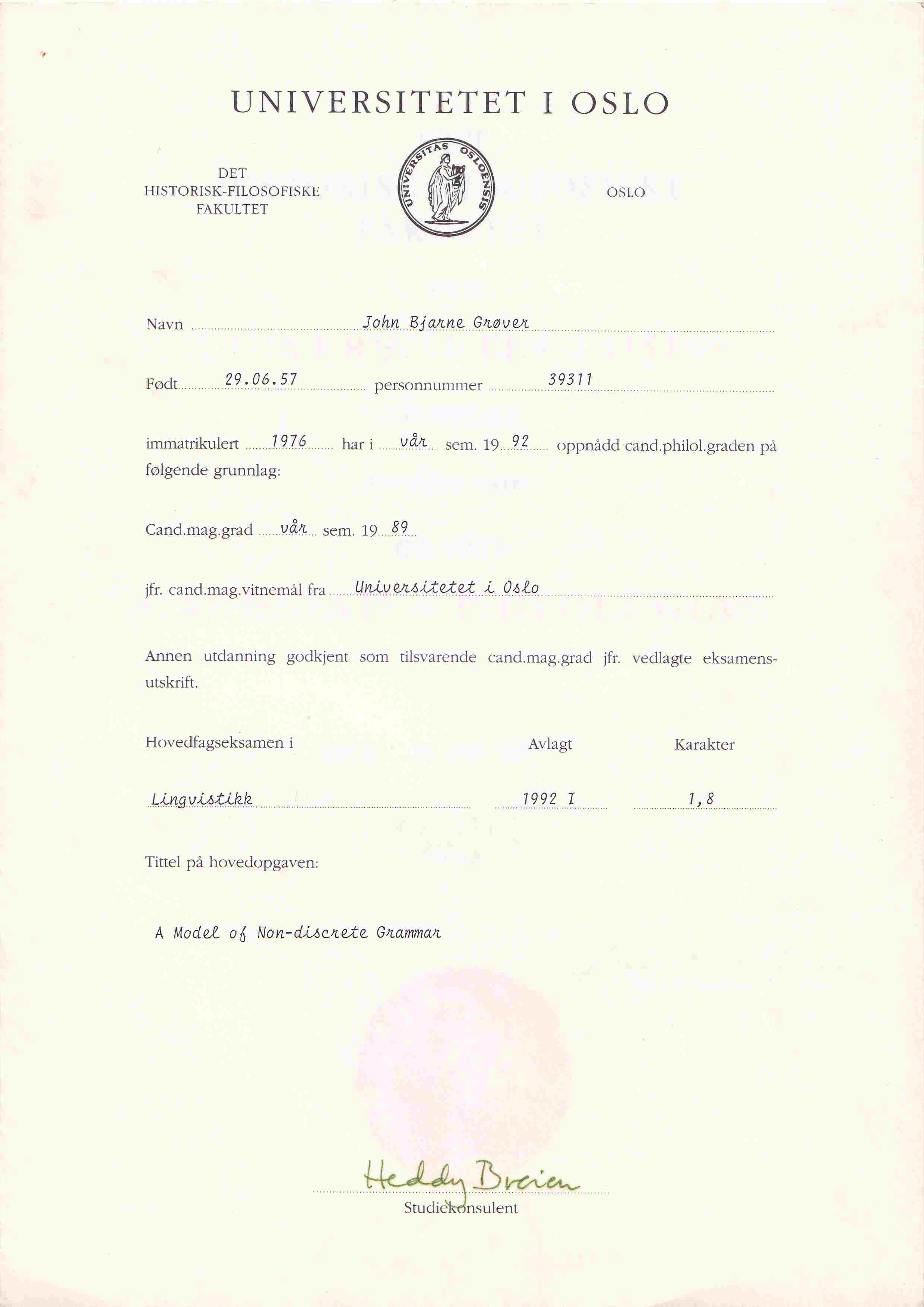
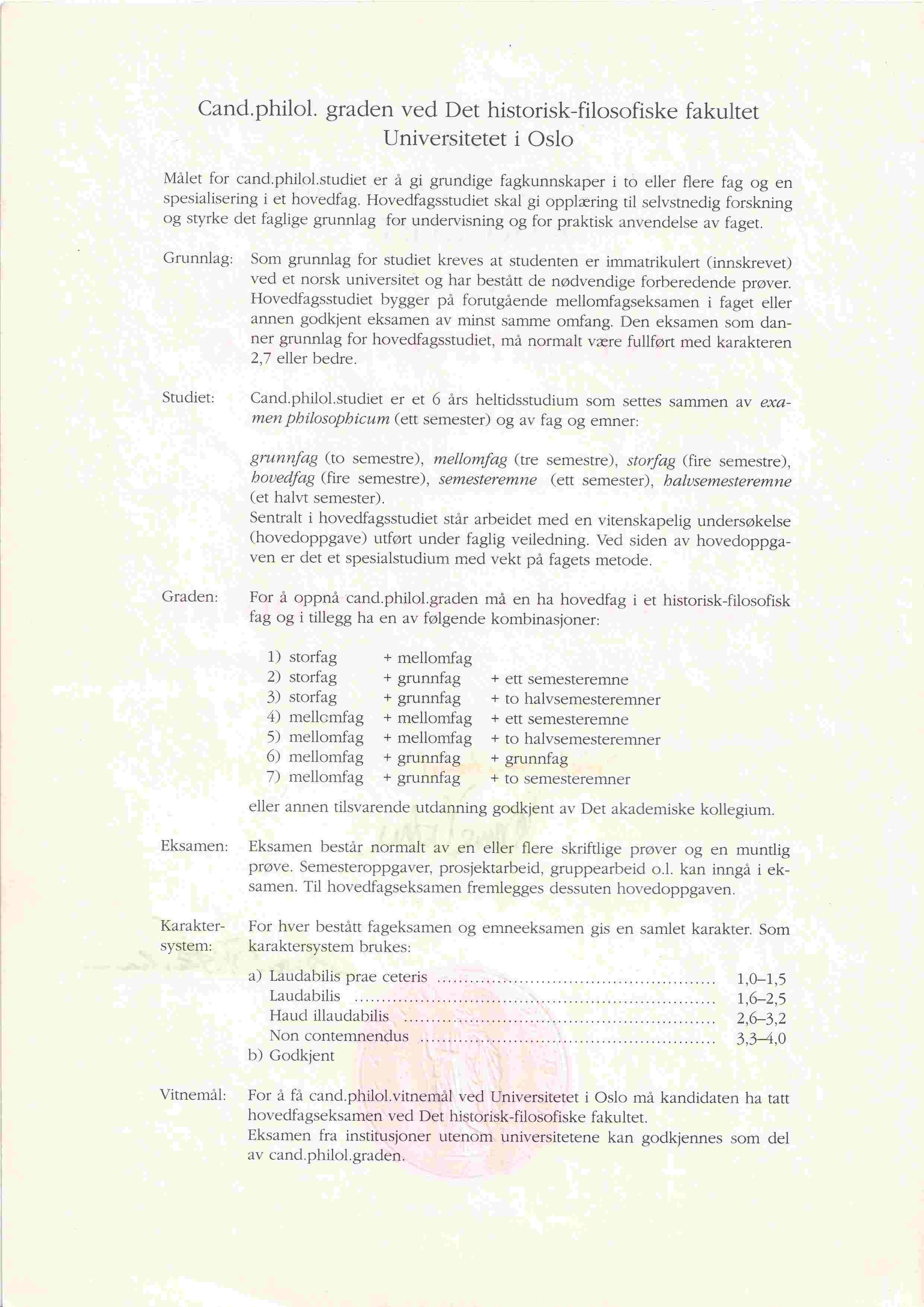
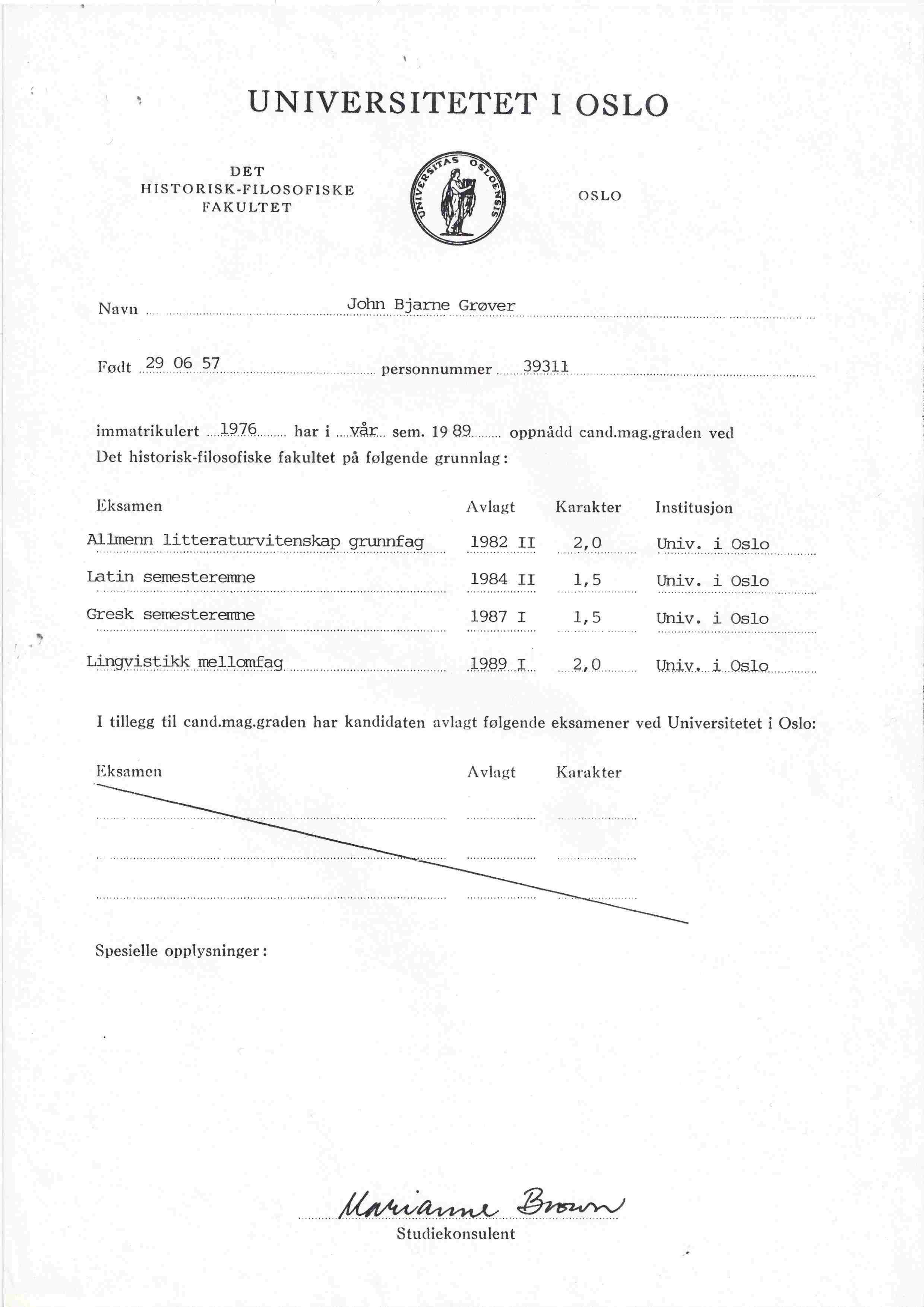
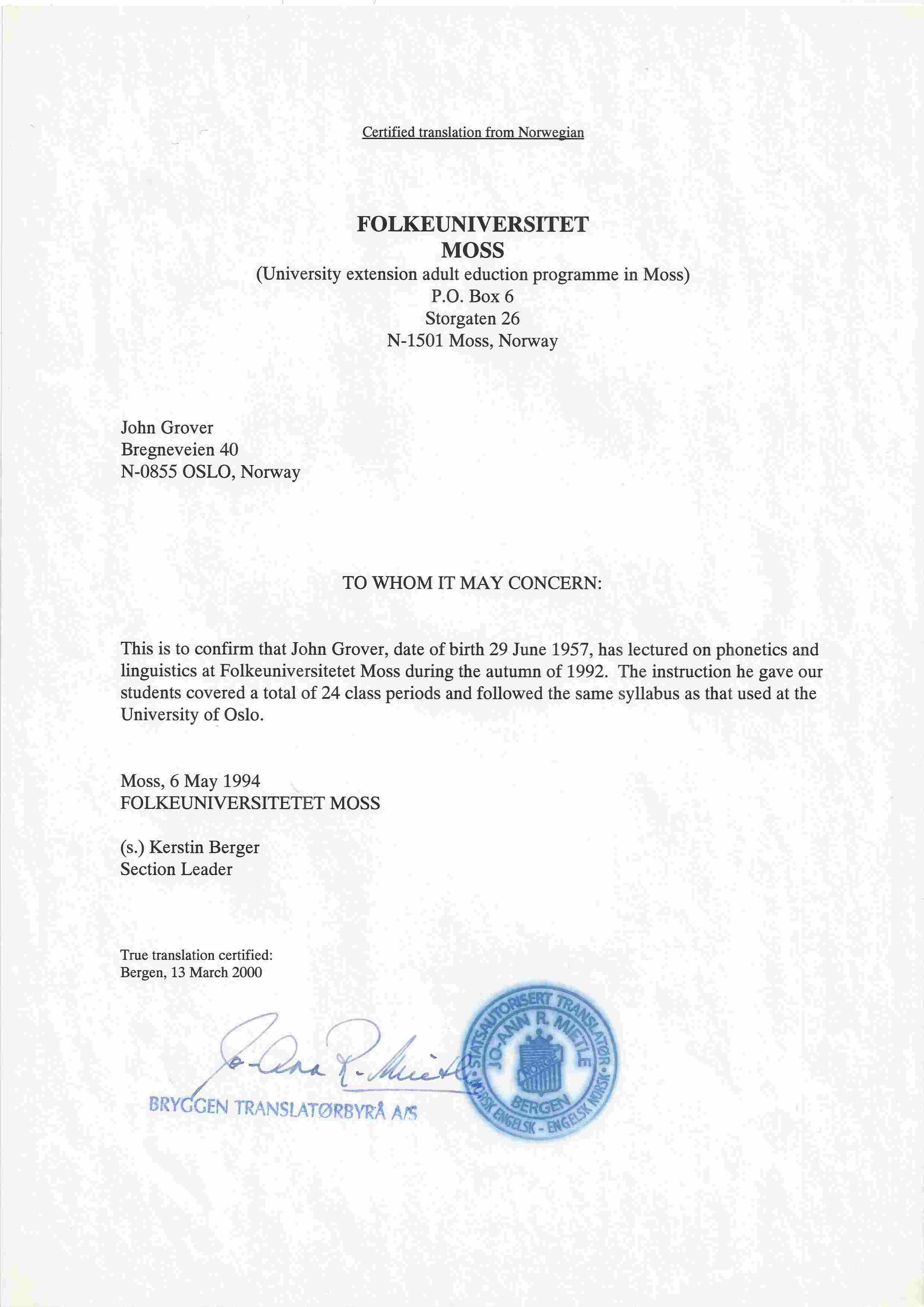
I would guess I that I could have been 'top of the pops' in many fields of activities also when my aspirations for a scientific career were derailed in the 1990's - not only in astronautics etc. I would guess that the state of Norway also could have been instrumental in creating this background. (The state of 'top of the pops' could go back to e.g. the Kennedy assassination, for all I know). If so, then the state of Norway could well have accepted my application for a doctorate stipend from the research council in 1992 - the application was fully okay. I had then also been salaried/paid for scientific work from the research concil since 1987 and done very well work - 1) three research reports (in total 300 pages) on the formalization of music notation published at the institute of informatics in Oslo, 2) one MA thesis for my degree in 1992 and I was then also in the process of completing 3) part 1 in book 2 'The history of linguistics and information technology' (pages 195-267) of my later (1997) PhD dissertation ('A waist of time') - the historic study of 1992-93 was published in the series of research reports at the 'Centre for studies in technology and human values' in probably february 1993. All these works (up to january 1993) were financed by the norwegian research council and the result of the first was the reason for the financing of the second, the result of the second the basis for the third. Here is the recommendation after the first financed work (the certified translation has given wrong date - here is the original), here is a recommendation for a stipend for the second, and here is a confirmation of employment at the third. Here is the result of the MA studies, which are good enough, (and here are the BA subjects - I took also an exam for a semester course in russian in 1990). In the autumn 1992 I had also been teaching linguistics at Folkeuniversitet in Moss and collaborated on a dictionary at the lexicographical institute in Oslo. Did they think in Oslo that I was not goodenough in hungarian for continued work in that language after having been in Budapest in the spring 1991? That may be true, but I had discovered the fundamental theorem of logic while in Budapest (out of 'the clamphold of Norway', that means) in the spring 1991 (on the web since 2007) and that is certainly going to be the big revolution in philosophy and linguistics, which is much more important than knowing some hungarian glosses. Hence there was no reason why the 1992 application to the research council should not have been accepted - on the contrary, my three working positions in the autumn 1992 (lexicography, teaching linguistics, the research fellow position at the research centre) after my MA exam in the spring told that there were all good reasons to believe that the application for a doctorate stipend from the research council would be accepted.
In particular, it could be said, also because I could have been 'top of the pops', 'in medias res', 'Mr.Ubiquitous' of business, finance, media, politics etc - and had not much chances otherwise. But that has nothing to do with science? That is very true - but the reason they presented for the rejection of the application was even more unscientific: It was because I had not also applied for a 'fakultetsstipend' - that means a doctorate stipend financed by the faculty - wherein one fourth of the time is reserved for teaching. But that was precisely the reason why I did not apply for it - that I believed that I was 'top of the pops' (a sort of clown) in norwegian media of public attention and hence it was uncomfortable to teach in front of a public of that sort and, as I had experienced at the otherwise nice students in Moss, it would take too much of my attention and working time to prepare the teaching.
This very unscientific reason for the rejection of my application was followed up by a probably equally unscientific composition of the work group for the 'Oslo Accords' in politics in the spring 1993 while I was going into a rather miserable state of unemployment through 2 years. The norwegian workgroup was Terje Rød-Larsen, Mona Juul, Jan Egeland, Johan Jørgen Holst which are names that make for quite a precise 'fak-juul-tete-stipend' - which means that they in so to speak 'twin-ta-over' style took over the promising 'pre-launch' of the expected financing and support for my continued work. Were it my 1991 discovery of the important logical theorem that was the reason why they could not let it be to hijack it? They probably had not understood it consciously (it was mentioned only marginally in a draft paper I gave to the scientific advisor Even Hovdhaugen to show what I was working with) but maybe they felt subconsciously (like my subconscious awareness of the media situation) that, "gee, this is going to be the big revolution - we must have it". And therefore the application was rejected in 'clamphold' style.
I personally believe that it was not the least because I had got the student stipend from the research council for my MA studies in linguistics that I made that discovery (while I tried to work out the formalities for a distibutional grammar). It was a stipend for general linguistics studies, not for hungarian language, even if it was given also for supporting my stay in Budapest since the main subject required also studies in a non-indo-european language, which was supposed to be a not so dominating part of the studies.
If I did not want to teach during the doctorate studies, not the least since I felt that I was 'top of the pops', should that mean that I did not have much chances in academics? That is not true - I hoped for a career at reseach centres around in Europe or elsewhere, preferrably out of Norway, and time has shown that many countries could have felt it comfortable with a relief for the conscience by financing my work at such centres - if my academic career had been allowed to continue. I did not touch the problem of the 'pops' before they rejected also my PhD in 1998 - then I had no other choice than to start digging in the dirt - in particular after the disastrous forced psychiatric detention through 1,5 month 1999-2000. Norway was going wrong way - they should have supported my work instead of hijacking my ideas. Labour politician 'Reiulf Steen' had a name which could be telling of their dream: 'Hele greia rundt' ('the whole thing around') could have been his name qua 'hele reia grundt'.
Was it that the logical theorem was mentioned very marginally in the draft paper I gave to the obligatory scientific advisor Even Hovdhaugen? That could be typical of the panic many students feel about doing anything sensible for real progress in the science - since that fate of mine is what one risks if one comes even close to something of real value in the studies: It is when the society is crammed with plagiarisms and indexical abuses in publishing and business (in particular if these are controlled by state intelligence services) that this happens and then students do not dare to come up with anything valuable in the work - most people keep it going safe instead and fill the requirements and can have a decent career with family life and things like that. But then not much happens in the field of science. Also therefore it should have high priority to stop the plagiarisms and limit the indexical abuses as much as possible.
It seems that the 1993 Oslo Accords eventually could have led to the Hamas government in Gaza and the 'big revolution' of 2023 - with a thorough firing and a massive hijacking which led to 'world wide attention'. Would that have been in a desperate norwegian hope of taking over my fundamental theorem of logic? For 'hele reia grundt'?
I have earlier discussed the theoretic possibility that the historic development after the apparent reference to my novel 'The Dreamer' in the name of the 2001 'Windows XP' of Microsoft could have a deeper reason - in the theoretic implications of my 1992-93 work at the 'Centre for studies in technology and human values' (= 'the TMV senter') - which could point forward to a technology for uncovering the historic past - on a typological basis. Microsoft has now - I think it was in 2025 - reached a stockmarket value of more than 4 trillion dollars.
It is true, though, that the disability pension which I got in 2002 - that was 10 years after 1992 - made it possible for me to continue my work (not the least in poetry) without advisors or inspections etc - and that was of course important - but the status is as low as can be for that kind of work and the dangers of a continued attempted hijack are very obvious.
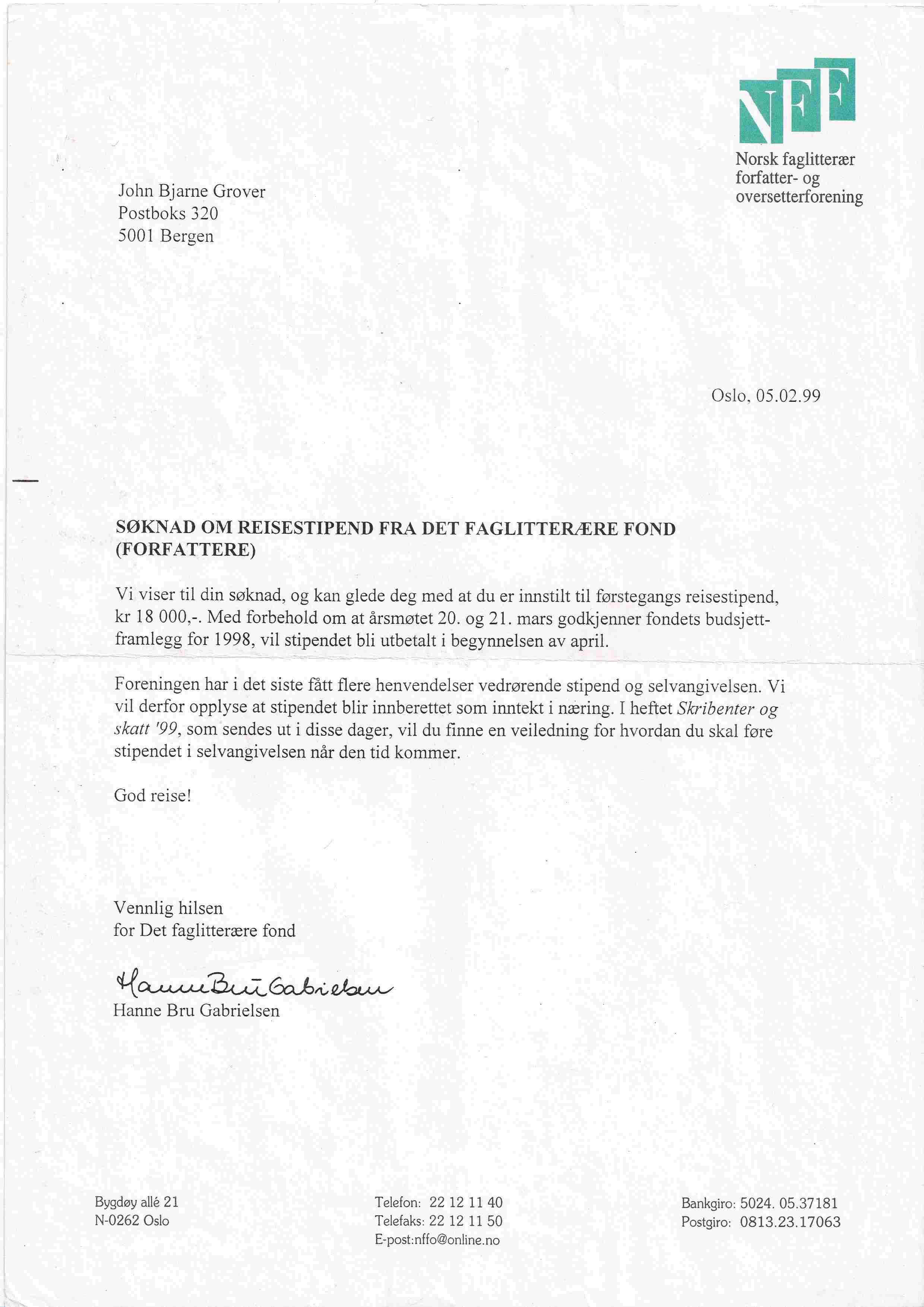
Neither did I get any support for my important poetic work - as mentioned earlier I applied for financial support to my work as poet in 1999 and included the four first books of my 'The Endmorgan Quartet' (in the 2013 collected works volume 2), but the application was not accepted. Had international plagiarisms of my novel 'The Dreamer' (the collected works volume 1) started to spread already then? It is true that I got a travel stipend of 18.000 NOK from the union of scientific authors in february 1999, which of course was encouraging.
Austria expels 3 russian diplomats.
© John Bjarne Grover
On the web 6 may 2026