1 february 2025
John Bjarne Grover
Inspired by the comparison of poems by Hölderlin, Nelly Sachs and me, I tried to find another comparison of poems by the same poets and I leafed in Hölderlin for something I could use and found his 'An Diotima' which, like 'Die Entschlafenen', has 3 * 2 = 6 lines - the three parts are here reproduced with spaces between lines 2-3 and 4-5 in order to make the comparison more easy - see the source for the original form:
Friedrich Hölderlin:
An Diotima
Schönes Leben! du lebst, wie die zarten Blüten im Winter,
In der gealterten Welt blühst du verschlossen, allein.
Liebend strebst du hinaus, dich zu sonnen am Lichte des Frühlings,
Zu erwarmen an ihr suchst du die Jugend der Welt.
Deine Sonne, die schönere Zeit, ist untergegangen
Und in frostiger Nacht zanken Orkane sich nun.
Translated by me (with some assistance from
translate.google.at):
Beautiful/lovely life! you live like the tender blossoms/plants in winter,
in the altered/aged world you blossom enclosed, alone.
Loving you strive outwards for tanning (= being exposed to sunlight) by the light of the spring,
to warm yourself thereby you search for the youth of the world.
Your sun, the more beautiful/lovely time, has set (is gone under)
and in frosty night quarrel hurricanes ([with] themselves) now.
Then I search for a poem of mine comparable to this and find TEQ #894:
TEQ #894:
Acts 10:46 ηκουον γαρ αυτων λαλουντων γλωσσαις και μεγαλυνοντων τον θεον. τοτε απεκριθη o πετρος·
The black mosaic bid money to fail,
intended to run at least 300 people
through my living day.
He's happy,
just as I did on the present vacation,
and he said: "Oh yeah! Bring me the car!"
Book 5 is book 1.
She is never a drink:
Fat and dominating!
These two poems seem to go in nice parallel - my three parts with his 3*2 lines.
Then I leaf in Nelly Sachs for finding something relevant and find 'Die Tänzerin' from her first book 'In den Wohnungen des Todes':
Die Tänzerin [D.H.]
Deine Füsse wußten wenig von der Erde,
Sie wanderten auf einer Sarabande
Bis zum Rande -
Denn Sehnsucht war deine Gebärde.
Wo du schliefst, da schlief ein Schmetterling
Der Verwandlung sichtbarstes Zeichen,
Wie bald solltest du ihn erreichen -
Raupe und Puppe und schon ein Ding
In Gottes Hand.
Licht wird aus Sand.
Translated by me (with some assistance from translate.google.at):
The (female) dancer
Your feet knew little about the earth,
they wandered on a sarabande
to the brim/edge -
for yearning was your gesture.
Where you slept, there slept a butterfly
of the change's/transformation's/metamorphosis' most visible sign,
how quickly/soon would you reach it -
caterpillar and doll/pupa and yet/already a[nother] thing
in God's hand.
Light comes from sand.
('Yet another thing' is probably not correctly translated by normal standards but it feels right nevertheless, I think). The difference here is that her first line ('Deine Füsse wußten wenig von der Erde') must count as a separate headline (in addition to 'Die Tänzerin') corresponding to Hölderlin's 'An Diotima' and to the parallel text of mine which is Acts 10:46. But what, among three parts, are Hölderlin's and mine part 1 starts on her second stanza:
Wo du schliefst, da schlief ein Schmetterling
Der Verwandlung sichtbarstes Zeichen,
Wie bald solltest du ihn erreichen -
which corresponds to Hölderlin's
Schönes Leben! du lebst, wie die zarten Blüten im Winter,
In der gealterten Welt blühst du verschlossen, allein.
and to my
The black mosaic bid money to fail,
intended to run at least 300 people
through my living day.
Furthermore, her last three lines
Raupe und Puppe und schon ein Ding
In Gottes Hand.
Licht wird aus Sand.
correspond to Hölderlin's
Liebend strebst du hinaus, dich zu sonnen am Lichte des Frühlings,
Zu erwarmen an ihr suchst du die Jugend der Welt.
and to my
He's happy,
just as I did on the present vacation,
and he said: "Oh yeah! Bring me the car!"
and finally her
Sie wanderten auf einer Sarabande
Bis zum Rande -
Denn Sehnsucht war deine Gebärde.
correspond to Hölderlin's
Deine Sonne, die schönere Zeit, ist untergegangen
Und in frostiger Nacht zanken Orkane sich nun.
and to my
Book 5 is book 1.
She is never a drink:
Fat and dominating!
Now what would be the magic image to this?
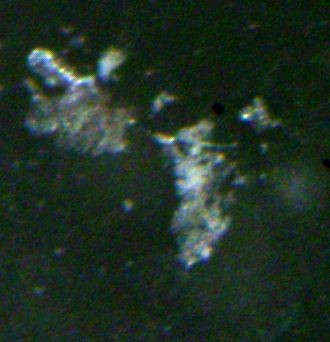
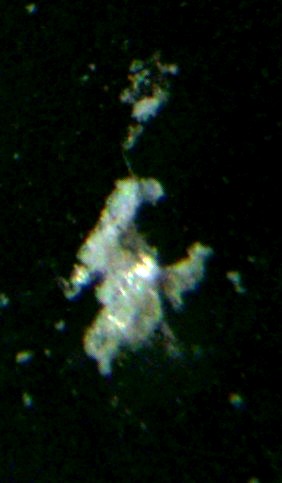
I stop at the 'archetype' image which likewise is one of the 'magic images' from the black spot in the bathtub:
(The phenomenon could be what the woman in the long flannel dress and her friend climbing across the fence in the background had seen in the dark and humid autumn evening park - making them flee from the place - here she is rushing past the cardinal and his friend).
The image shows the 'man-on-wagon' on the top, a face with sunglasses and beard looking leftwards, for the second part of Hölderlin's and my poems, and the sunglasses corresponds to Hölderlin's suntanning image. The 'female archetype' is the polar bear standing on two legs under 'man-on-wagon' (or he is in her 'thumos'), turning her head towards the 'dogs paradox' in the background - at least one of the dogs is visible, maybe both. These seem to 'intend to run at least 300 people'?
And now for the enigma: What is Sachs' last line "Licht wird aus Sand" ('light comes from sand')?
It should correspond to my 'man-on-wagon' (the second third of Hölderlin's and my poems) which is the 'Caruso' part of m red-metre book 'My mention e Anna'. Is there anything such there? Scanning quickly over the text (which, it is noticed, is written by a 'type'), I find that there could be some relevance in its poem #15. Could be there is.
Another possibility is the plastic rope under the fence in the 'dogs paradox': Is it an underearth 'optic cable', so to speak?
However, yet another interesting option is to compare this 'light from sand' with Acts 10:46, by the 'sand' in the sense of the 'apekrithe' of the 'cliff' Petros, while it on the surface also associates with 'sound becoming answer'. I notice that the 'apokrinein' of the 'answer' from Peter also could find an inherent reference in my 'Caruso' poem #15 in the form of the 'zipper' (towards the end of the poem) that opens on the ground for the foot to rub against - like rubbing sand out of the cliff - or an image out of the black spots in the bottom of the white bathtub.
Or simply her own first line "Deine Füsse wußten wenig von der Erde" - your feet knew little about the earth - but maybe more about the sand.
2 february 2025:
Ah, yes, in yesterday's hurry I forgot to include also a poem from 'Der Dornenstrauch' which I had intended to add - it is DDS I:185:
185
In frühen Morgengrauen
als man sieht
die Zukunft wie eine
bürgerliche Spirale,
die Pferde gehn mit leichten Schritte
in einem weichen Rhythmus der Demut,
die Mädchen tragen Schneeglöckchen
ins asiatischen Wirtschaftshütte,
in ihren Hände,
und die Brüder Grimm
sind in Verwandlungskünste
involviert.
translated by translate.google.at:
In the early dawn
when one sees
the future like a
bourgeois spiral,
the horses walk with light steps
in a soft rhythm of humility,
the girls carry snowdrops
into the Asian farm hut,
in their hands,
and the Brothers Grimm
are in transformation arts
involved.
This is poem #289. The DDS counts the chinese Kangxi radicals from #1 up to the last #214 and from there down again to #1: That is relative enumeration in the lefthand column and absolute in the second and third - it turns at absolute #214 which is relative #125-126 and goes down again in column 3 - to reach relative #185 at absolute #140 on its way down. This means that Kangxi radical #140 should apply to this poem - that is 艸 which has its definitions shared with 草 - which is given as herbaceous plant; herb; weed; wort; grass; forb; countryside; wilderness; common, ordinary; female; etc.
But when this #289 is radical #140 on its way down, it should make sense to look up also poem of absolute enumeration #140 on its way up which is poem DDS I:107a, which I here spell out in 3*2 for making the comparison clearer:
107a
Morgenlicht
Nochmals treiben die Menschen
ihre Karotten nach etwas grundsätzlich neues.
Die Sonne kommt zu 'nem Gipfel -
man spührt wie das Aufgeben
sich verändert und plötzlich
kommt es auf die andere Seite her.
translated by translate.google.at:
Morning light
Once again people are pushing
their carrots towards something fundamentally new.
The sun is reaching its peak -
you can feel the giving up
changing and suddenly
it is coming from the other side.
The interesting observation here is that this mirror poem #140 to #289 exhibits the same sort of displacement relative to Hölderlin as Sachs' poem does:
G: Nochmals treiben die Menschen
ihre Karotten nach etwas grundsätzlich neues.
H: Liebend strebst du hinaus, dich zu sonnen am Lichte des Frühlings,
Zu erwarmen an ihr suchst du die Jugend der Welt.
_______________________________________________
G: Die Sonne kommt zu 'nem Gipfel -
man spührt wie das Aufgeben
H: Deine Sonne, die schönere Zeit, ist untergegangen
Und in frostiger Nacht zanken Orkane sich nun.
_______________________________________________
G: sich verändert und plötzlich
kommt es auf die andere Seite her.
H: Schönes Leben! du lebst, wie die zarten Blüten im Winter,
In der gealterten Welt blühst du verschlossen, allein.
The conclusion to this is that it clearly supports the theory of a relevance of my 'Der Dornenstrauch' for the phenomenon of the chinese Kangxi radical system - which I conceive as a formalism for the principle of 'ordinality in human language'. It is interesting to see this in the framework of the diachrony of language which my DDS is about.
In comparison, my study of the synchrony of language is 'SNEEFT COEIL' which in its seventh chapter contains the poetic articulation of 'cardinality in human language': The 20 poems in that chapter '20 Gedichte - in September und Oktober' give, according to my view, a poetic description of the numbers 1-20.
The interesting conclusion could thereby seem to be that linguistic diachrony = ordinality and linguistic synchrony = cardinality.
My idea is that the relation between cardinality and ordinality in language is found in the Catalan constant - which thereby can be seen to be an interpretation of the relation between synchrony and diachrony in language.
3 february 2025:
My idea has been that the Catalan constant G = 0.915965594177219015054603514932384110774... (an infinite series of decimals) is the same as the human language faculty - here a ratio between syntagm and paradigm is found in a ratio between cardinality and ordinality. That means that if you make a function between normal alphabetic letters and number symbols, or simply write the numbers out in base 25, you can search for a linguistic expression transformed into a number 'x' in the decimals of the Catalan constant and you will find it on location 'y' which means that the word in the language faculty will be the ratio x/y which then will be the intersection between synchrony and diachrony. It is assumed that the Catalan constant is an infinite number of decimals and that it is completely free from redundancy - that there is no general formula which can pack the information in the distribution of decimals in the number (except, of course, from its trivial definition): That only means that it is free from redundancy as seen from the human reality. Since the constant is only one number among an infinite number of other numbers, it follows that these other numbers are other realities.
See the articles 8-12 on the Catalan constant.
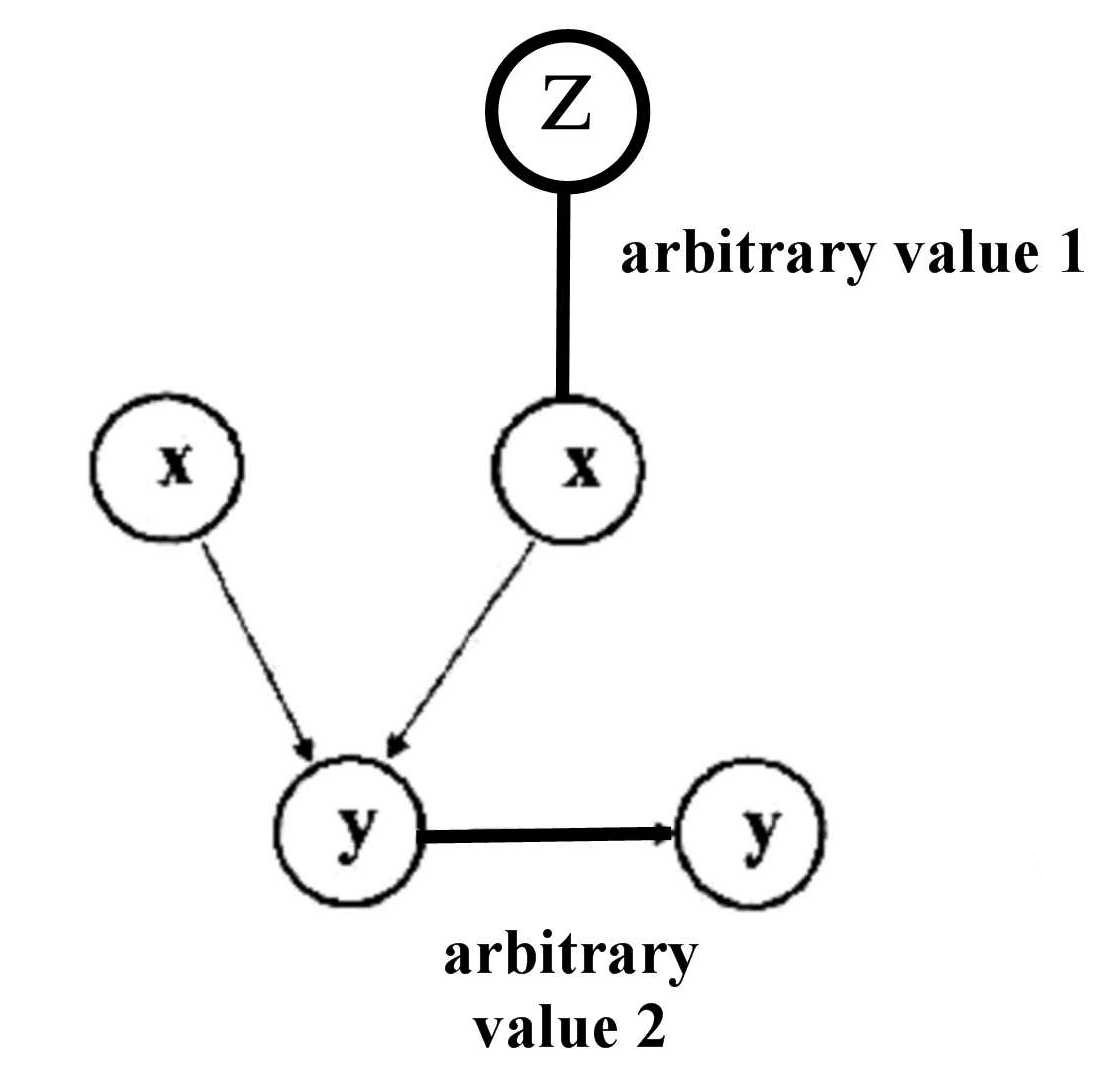
The Catalan constant is of course only an example or at best a guesswork of which number the human language faculty is: That faculty constitutes the immanent arbitrarity (arbitrarity 2) in the lower righthand 'y'. Computation onto other realities will try and compute from the immanent to the transcendent arbitrarity. It is of course not certain that the human reality really is the Catalan constant - but it is a nice guess. The Catalan constant is simply the integral from 0 to 1 of arctan x divided with x and hence it could in theory be that value which is needed for making the logical theorem function (in the sense of providing truth as influx of information from eternity to history).
Why should the e.g. the Catalan constant be model of the human reality while other numbers are not? Because it is a short and wellpacked formula which can be assumed to be the reality in our limited conception. If it could not be wellpacked but were only an infinite string of decimals we would be totally lost. That would be a reality out of reach for the limited humans.
Assume therefore that the Catalan constant is the human reality. Then take a word A which is transcribed into a number 'x' (a cardinal) and find this on decimal 'y' (the ordinal) in the constant: If x/y = the meaning of A in the human reality, then 2x/2y should be the same A, the same ratio. But on decimal 2y there is the word B which probably is another number than A (or 2*A, that is) - but it should be the same meaning A nevertheless since it is the same ratio: That is what it means that semantics is 'humbug' - if the human reality is defined in such a way that A = x/y = 2x/2y = B, it means that A = B in the human reality. Then A and B are total or partial synonyms and can be used to refer to each other in the dictionary definitions of the language which is constituted thereby.
Say, the computer writes out the Catalan constant in base 25 and uses the normal alphabet for that. Then ask the computer: How far out in the constant must you go to find the number 'umbrella'? The computer searches and replies with a number 'y': This number 'umbrella' is found (its first occurrence) on decimal number 'y'. Then ask 'what is on decimal 2y'? If the computer answers that it is the number '2*umbrella', it is a complete hit and the theory is confirmed. But if it is not '2*umbrella' but '2*canopy', the theory is well corroborated even then. If it answers '2*stone' the theory is in difficulties. The answer is probably only a senseless combination of letters, of course - at best '2*brolly'. And what is on position '3y'? - etc.
This sounds nice and easy - but as soon as one has understood that the semantics arising therefrom is 'not certain', it follows that the semantics to the symbols used in the decimal expansion of the number is not certain either and then the gained foothold is lost again. But it can be used as a formalism (with a limited validity) for a new level of grammatical description, I would guess.
This is why the innermost secrets in the intersection of syntagm and paradigm, synchrony and diachrony etc are hidden from human formalisms and goes into the field of mystic inquiry. But it is likely that the computer revolution nevertheless can come some way into this unknown field of knowledge.
One can also construct another constant by this procedure - constructing the constant in reverse - and it can be made in principle infinitely long if one allows for redundancies - by constructing it on basis of a certain natural language, for example.
Does 'no redundancy' mean that you cannot pack the information in the series of decimals? The infinite number 0,66666... can be packed efficiently into the finite formula 2/3. All rational numbers (on the form a/b where 'a' and 'b' are integers) are cyclic and hence full of redundancies. Of course the Catalan constant can be packed into its own definition - but that is not the same as finding a certain number on a certain place in it. Take the infinite series of decimals in this constant and alter, say, decimal #100 or #1000 into something else - then the whole wellpacked description is lost (it turns 'psychotic', some would say, while others say it is a 'z') and it is not possible at the present stage to reduce it to a formula. Could be this is what poetic-esthetic logic is about. But if you allow for left- and righthand brackets and a dash, then you can pack a series of 9 digits 1 = 111111111 into [9-1]. But that requires an expansion of the symbol inventory with another 3 symbols so it is no longer a decimal system but a system with base 13. See my study of Rembrandt for the idea that Rembrandt was a function 7 artist (these are my concepts) and really worked with the theory of a base 13 rather than 10 - that is, the theory that the information could be packed neverthless and hence allow for a glimpse into other realities (as seen from the human reality) - such as e.g. his 'Supper at Emmaus' (source) wherein one person comes with 'packed information' to the table and another reality opens up. In 'Portrait of the son Tito' (source) the son is reading information that is packed between his fingers etc. See e.g. these four examples of 'packed information' opening up to other realities.
Source:
Grover, J.: The Endmorgan Quartet, Wien 2013.
Grover, J.: Der Dornenstrauch, Wien 2015/2019.
Hölderlin, F.: Sämtliche Gedichte und Hyperion. Herausgegeben von Jochen Schmidt. Insel Verlag Frankfurt am Main und Leipzig 1999.
Novum Testamentum Graece, by Hahn (post Lachmannum et Tischendorfium), Lipsiae 1861
Sachs, N.: Fahrt ins Staublose. ('In den Wohnungen des Todes', 'Sternverdunkelung', 'Und niemand weiss weiter', 'Flucht und Verwandlung', 'Fahrt ins Staublose', 'Noch feiert Tod das Leben'). Suhrkamp 1988.
© John Bjarne Grover
On the web 1 february 2025
Last updated 3 february 2025