An antenna to other realities
John Bjarne Grover
The article outlines how the matching of the analysis of Tintoretto's 'Scuola Grande' against the analysis of Yeats' 'Crossways' can lead to the tentative construction of an 'antenna' for detecting signals from realities beyond the human reality - via my two 'white metre' books 'Stillhetens åndedrag' and 'Rosens triangel' - and adds some comments on what has been the misunderstood alternative.
This file brings some additional material and discussions to the following two articles:
1) The 12-tone structure of Yeats' 'Crossways'
2) Tintoretto's 'Scuola Grande' and 'Stillhetens åndedrag'
The article on Yeats has brought important results about the relation between Yeats' 'Crossways' and the (serial) 12-tone composition technique developed by Schönberg in the 1920's. The article shows that there exists a deep structure in Yeats' book which can be recognized as probably akin to the ancient indian swastika - and thereby the british administration can have felt inspired to reinforce the swastika they probably were instrumental in creating by the establishment of Norway in 1814. It is assumed here that Adolf Hitler - officially born around the time of the publication of 'Crossways' - could have been a result of these plans. It is assumed that the deep structure - which my article proves the existence of - could have been unknown in those days but nevertheless had the function of providing a feeling of 'divine sanction' on the swastika strategy. Furthermore, it seems that major importance came to be attached to poem #11 "To an isle in the water" - by the formula 'an isle in the water' → 'a Nile in the water' by the logic that the 'Nile' constitutes a divine authority that lifted the water up for the jews when these were escaping pharaoh in their exodus across the Red Sea. It is assumed that the historic development since 1889 served to assign a quasi 'divine' authority to the majesty recognized in the british throne - maybe hoping to expand its kingdom around the world - cp. the two world wars - under the historic justification apparently emerging from but mistakenly associated with the logic in Yeats' book. It seems that poem #11 is the main anchor point.
The deep structure in Yeats' book was shown through the structure in my two white metre books "Stillhetens åndedrag" and "Rosens triangel". The article from 1921 on Tintoretto's Scuola Grande provides important support for the theory presented in the article on Yeats. That is mainly because 1) all the 64 poems in my books find convincing parallels in the Tintoretto artworks of Scuola Grande, 2) all these artworks find reflexes in my poems - in a rather one-to-one fashion, 3) Tintoretto's artworks in Scuola Grande constitute a coherent esthetic object - which thereby can be seen to be a designation which applies to my book(s) as well. This means that the analysis in the article on Yeats receives strongly reinforced support from Tintoretto's Scuola Grande.
This reinforcement can here be expanded by further material elaborated from the featural analysis I present in the Tintoretto article - the 6 mainly 'intentionality' features. It is the table with the 64 titles aligned against two columns of 6-digit binary-valued enumeration which here is used for a further expansion of the study of Yeats - not the least for understanding the political history since 1889.
I have used the two permutation schemes of this article for a study of how these 6 binary-notated featural annotations match Yeats' 16 poems.
Here is the file listing the features for Stillheten
Here is the file listing the features for Rosen
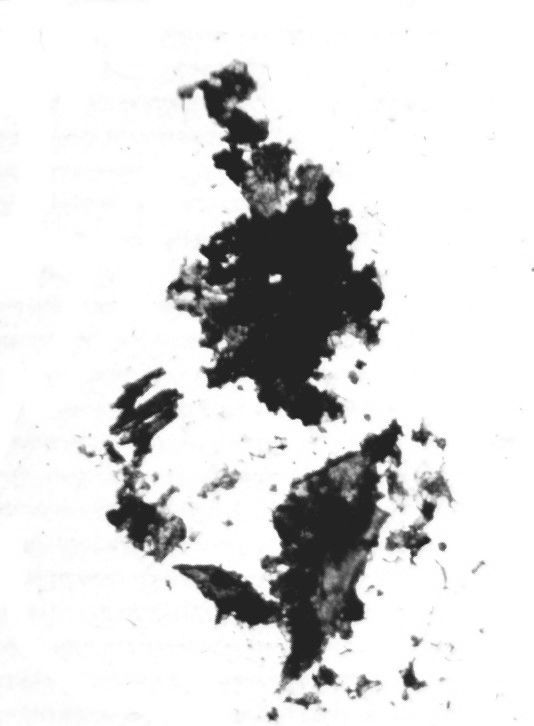
Numbers in italics sum up the three preceding numbers in the same column and numbers in bold types sum the italic 4 numbers for each poem. This means that if a number in italics show a digit '0' or '3', it means that all the three digits on this position in the preceding feature valuations are the same - either zero or one. If the bold type number contains a low or a high digit, it means that there is a strong dimensionality along this feature in the poem. There are only two poems in the file for Stillheten with bold types showing a sum of 10 - which for convenince here are notated 'x': Those are poems #11 and #15. Both these 'x's are on digit #5 - which according to the discussion in this file would suggest an 'intentionality' feature which can be called 'ontological intentionality' or 'entelechies' - that is when the form of the substance (ex nihilo or whatever) approximates what for the limited human reality appears as meaningful redundancies. The example I discuss in the article is the 'magic image' of the indian which emerged from the erosion (through a year or so) of the magic image of Joyce reading Ulysses with roller skates on his feet: The erosion removed some material from the image but it also added material - such as the hand in front of the face: That was not present in the original image. These spots of dark matter had taken a shape which is meaningful for the redundancies of the limited human reality.
What are these phenomena in Yeats' poems #11 and #15? If one takes the bit-strings not only to tell of featural qualities in the poem but even of the linear succession of the poem, such that the first digit refers to the first 6th of the stanza or the poem etc, then one can show that the italic valuation '0' can be seen to refer to the form "ful and shy / to an isle in". This seems to be precisely 'a Nile in the water' which appears to have been the intuited evidence of the quasi-'divine' majesty which could have been endowed to the throne by the mysteries hiding in the deep structure of this work of Yeats: A part of the explanation to this would then have been found in the 'dimensionality' contained in the valuation '0' (and the '3' as well) in the bit-string assigned to the fourth stanza (52, 33, 20). It would mean - for the 'x' in the bold type number - that extraordinary reality took shape with the lifting of the sea (during the exodus). Since also the 3rd and 4th digits are involved it could suggest that also visual and aural 'intentionalities' would have been involved (telling of visions and sounds from beyond the human reality).
What would have been the comparable case of the 'x' for poem #15? My view is that this applies to the stanza with the 'bare boreen' - which also has a certain reflex in the comparable listing for 'Rosen' - for poem #9 by the low valuation '3' in the bold type number - which means that the 5th digit is '0' for almost all the binary numbers to this poem. My view is that this applies to the mention in stanza 5 (out of 6) in poem #9 - by the lines
A tramping of tremendous feet,
And saw where this old tympan lay,
Deserted on a doorway seat,
And bore it to the woods with me;
This seems to be the black textiles I reported in this article. It would be the same 'bore' as for the 'bare boreen'. That would be the explanation to the extraordinary low value '3' in the digit 5 of the bold type number for poem #9: It provides for a rudimentary dimensionality contained in the feature valuations.
What may be of extraordinary interest in this connection is the fact that the bitstrings are selected in accordance with the 12 elements on each row of the 16 poems of Yeats - but these elements are restricted to a third of each of them: 47a, 18b, 4b etc - which means that even if the bitstring associated with 47a is twice 101110 and this enters into the count which could produce an 'x' = '10' for the number of '1' in the horizontal summation across the 5th digit in each bitstring - which means that if 47a should have selected only the first third = '10' of the bitstring, it selects the whole nevertheless. What this means is that this string format in principle could be able to refer to phenomena outside the human reality. This is likely to be the epistemological value of the poetic format - since it in principle could make it possible to access computationally what lies beyond the scope of the human understanding - that includes what lies beyond what humans recognize as 'causal' relations between phenomena - while still being within the grasp of human conceptions. It could constitute an interface format for realities beyond the human.
It is likely that it is this dimensionality for a new knowledge-space which is the interesting part of this study.
This phenomenon could of course have added to the confidence which a british project on these post-Yeats matters could have harvested for an apparent 'Nile in the water' program - and it may also have lent to this political program an unjustified taint of 'divine sanction'.
Some comments on a perverted quasi-political misinterpretation are found here.
Corollaries
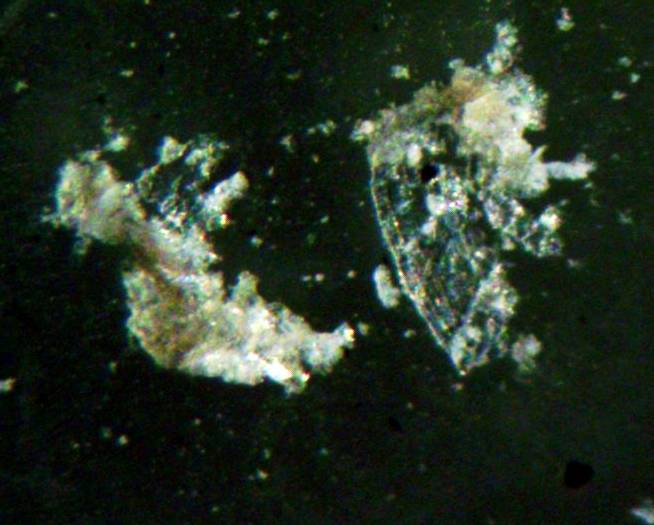
The discussion has suggested that the combination of the material of Tintoretto's artworks in 'Scuola Grande' in Venice and Yeats' 'Crossways' (1889) via their joint account in terms of my two white metre poetry books ('Stillhetens åndedrag', 'Rosens triangel') can lead to the construction of an assumed 'antenna' as interface to realities beyond the limited and redundant human reality. What is meant by 'other realities'? My article on the 'fifth dimension' suggests how one can understand the human organism in its relation to the planetary system we are part of - suggesting also, as far as Venus is concerned, that e.g. procreation by gender could be a peculiarity of this human reality and hence that there could exist other realities in other planetary systems in which existence takes on forms very different from what we can understand. The present article has suggested how one could construct an antenna or 'converter' which could make detection of and communication with such other realities come into being via the 6 'intentional features' discussed in this article - not the least via the comparable 4 or 6 features rudimentarily explored in the fifth part of my 1997 PhD dissertation 'A waist of time'. For example, around the beginning of december 2024 (which was a day or two before I published this article) there occurred on the floor of my home, just down from the foot end of my bed, a black and flat round spot which I took to be an 'ex nihilo' but which I did not inspect more closely. It looked as if it had been stepped upon by a shoe. A day or two later I found at the foot end of my bed a little lump of substance which I likewise took to be an 'ex nihilo' formation but which had not been stepped upon. I looked at it in a microscope and compared it with a raisin - it was not a raisin but the comparison was not farfetched. I put it aside and took it up again for photography alongside the raisin - they looked like this:
Would that left one have been from anything relevant to this article I was then just about to publish? It looks like a human brain who looks a little accusingly up at a pipesmoker face, perhaps - something like that. I can recognize it from the last third of Rosen #63 - which is in the 'Dominican' column of Crossways #9. The boy running around in the shoes would then have been me finding (among other 'new things') this flat stepped-upon black spot on the floor - and thereafter I found this non-stepped-upon raisin-sized object at the foot end of the bed. (The plastic bag mentioned in the poem I have no explanation to). Consulting the scheme I made for the present article, I find under the corresponding spot to Crossways #9 the element 63c of 'Rosen ' - here including the summation in italics for the three preceding bitstrings and in bold types the summation over all the 12 bitstrings for Crossways #9:
21 010100 010110
34 100001 001100
63 111110 111110
221211 122320
666855 667735
Clearly there seems to be an interesting 'dimensionality' in the fourth and sixth (italics) digits - it has '3' and '0' in the italic sum (meaning that the fourth digit is '1' and the sixth is '0' in all three - in the bold-type summation over all 12 in the poem there is an '8' in the fourth digit of the lefthand column. The fourth digit could, according to my suggestion, be about 'sound intentionality', which then could concern an aural impression of 'ex nihilo' character (which I cannot report to have recorded), while the sixth digit could be about an 'acoustic logic' which could be about the contents of the file I was about to publish. Most interesting is the valuation '3' in the fifth digit of the second bold-type number: There are only 3 elements out of 12 which have the digit '1' in the fifth position, which means that 9 of them have a '0' there - which is a strong dimensionality. By my conjectures, the fifth digit could be about a 'substantial intentionality' or 'entelechial value' - meaning that it has received its ontological shape in accordance with certain redundancies in the human semiotic constitution which makes it less 'random' - here it could be that it 'looks like a human brain'.
However, this is the element 63c which is itself (concerning the mention of the 'braintone'). What could be more interesting for the theory of the 'antenna' to other realities (here it could be about the assumed or theoretic 'source reality' of this probably 'ex nihilo' formation) is the valuation of elements 63a and 63b. Consulting the scheme for this reveals more distinctive values:
Crossways #7 - for 63a:
221121 122232
667475 666489
Crossways #8 - for 63b:
221122 122321
667477 667557
Here 63a shows a '3' in the fifth digit position and 63b in the fourth for the italic summation of the righthand column, while the bold has as much as '8' and '9' in the bold types of the righthand column. Hence there is no doubt that the dimensionality seems to occur with quite distinctive character in the second half of the summation bitstrings - which then could be taken to mean what corresponds to the part of the poem #63 relevant to this 'ex nihilo' formation from early december 2024.
Consulting the same data for 'Stillheten' I find that there is little interesting to observe for Crossways #9 and also little for #8, but for Crossways #7 there is the bold type fifth digit valuation '9' in the righthand column which is quite interesting.
Consulting also the same scheme of 'Stillheten' for '63c' I find that it is in the Carmelite column to Crossways #16 which sorts under Stillheten poem #48 which is the first poem to Nono part 2. Consulting Stillheten #16 (for the 'Dominican' column) takes it to the last poem in the same movement 2 - before the 'wrapover' to the beginning of Nono part 1 on poem #17. This seems to be the essential clue to the 'ex nihilo' formation which I recognize in the last line of 'Rosen 63c' which is element 3 among the 12 elements in the 9th row: Looking up Crossways #9 it has 6 stanzas which means that the 3rd element out of 12 will correspond to the first half of stanza 2 - which means the lines 13-18:
I sat and mused and drank sweet wine;
A herdsman came from inland valleys,
Crying, the pirates drove his swine
To fill their dark-beaked hollow galleys.
I called my battle-breaking men
And my loud brazen battle-cars
But these are just the lines discussed under Crossways #9 - see the end of that discussion (just before Crossways #8). It means that the phenomenon converges on the characteristic 'wrapover' - which means a 'historic discontinuity' - here Yeats on 'battle-breaking men' - of what in my 'Stillheten' corresponds in poem #50 to the seconds 100-105 = 01:40-45 in Nono part 2. Notice also the corresponding place at 100-105 seconds = 01:40-45 in Nono part 1 - which could be somewhat relevant (by the matter's fate).
My fundamental theorem of linguistics tells how matter takes shape in this format: Two metaphysical units belonging to two different metaphysical realities are identified as one and the same by the limitations of the human spirit and thereby or therefore (in the reality which the humans perhaps could tend to recognize as their true and only reality) these metaphysicals come to lose their freedom and be stuck to each other and collapse into one single ontological unit - which here is the same as the formation of (ex nihilo) matter. This piece of matter has gravity because the two metaphysical realities thereby are drawn (or 'pushed') towards each other and tend to 'cling' to each other due to these limitations in the human spirit. Mysticism strives towards detaching them from each other in order to reconstitute the original integrity and independence of these metaphysical realities - that is the opposite of 'the visible world'. Here the attraction between two metaphysical units will probably correspond to the inherent attraction between Rosen 63a and Rosen 63b - possibly for leading to the formation of Rosen 63c with the 'ex nihilo' formation of matter.
Although possibly a somewhat naive observation, it can be mentioned for heuristic reasons: Assume that Crossways #7 (by 63a) and #8 (by 63b) are the two 'metaphysical units' that are considered 'the same' or 'nearly the same' - as for that lefthand italic and bold-type numbers - and therefore are collapsing into material being of Crossways #9 (by 63c = about the resulting matter). The fundamental theorem of linguistics then assumes that language has the function of retaining a rudimentary knowledge or memory of the original difference between these and that this difference is contained in the linguistic form of the expression that applies with reference to the resulting piece of material being. In the present case, that could mean the phonetic form 'hjernetone' which should apply to the difference between the italic forms 221121 and 221122 (the difference is only 1) and the bold types 667475 and 667477 (the difference is only 2). The theorem would say that it is because these differences are very small that they are recognized as (nearly) 'the same' and hence collapse into matter - it should be the reason why this 'ex nihilo' phenomenon occurred in early december 2024. What appears as a peculiar phenomenon is that the norwegian form 'hjernetone' could be seen as a reduced form of 'jeg er [den] ene [av] to ne[d]' ('I am [the] one [of] two down') as 'hje-r-n-e-to-ne'. However naive this could look, it must be admitted that it confirms the hypothesis well enough to be mentioned.
These are the considerations I could make on basis of the ex nihilo formation from early december 2024. The two files on feature dimensionality (or 'redundancy') for Stillheten and Rosen showed some interesting values going up to '9' in the bold type numbers. However, there is in the values for 'Stillheten' an even stronger redundancy reaching the value '10' = notated 'x' in the bold type numbers for Crossways #11 and #15 - both of them in digit 5 which I have conjectured can be about this 'ontological intentionality' which assigns a humanoid format to the matter created thereby. Which elements do these share? They share elements 29 and 52 (in lines 11 and 15) - in both lines it is 29a and 29c as well as 52a and 52c, which means that the theme should be 29b and 52b - which thereby should be an orientation point (part of the 'antenna') for conjecturing the forms of 'other realities'. It is seen that 29b is a part of Crossways #16 - the second element in row 16 - and 52b is a part of Crossways #10 - the third last element in row 10. Crossways #16 consists of 12 stanzas - which means that stanza #2 should be the relevant part - however, I here bring stanza #3 instead (shifting one level up) - for reasons which emerge from a comparison with #10 below:
Now leave the chair upon the grass:
Bring hound and huntsman here,
And I on this strange road will pass,
Filled full of ancient cheer.
This could be seen to be about not the 'chair upon the grass' but rather 'the grass upon the chair' - the black and probably 'ex nihilo' textiles I found on a tramseat in Vienna: It would be the (slightly humid) textile itself which tells.
Turning to Crossways #10 the third last element, I find that I shift one level 'up' here as well and consider the third last element (out of 12) in Crossways #9 instead:
[A tramping of tremendous feet],
And saw where this old tympan lay,
Deserted on a doorway seat,
And bore it to the woods with me;
This even more clearly refers to these black textiles on the tramseat. However, if I do not shift one level 'up' but consider Crossways #10 instead, I find that the relevant lines (for the third last out of 12 elements) will be the lines
Away with us he's going,
The solemn-eyed:
He'll hear no more the lowing
Of the calves on the warm hillside
Here I find that the three last lines refer to the visual trinity photo I discuss in this article: The solemn-eyed = the eye, the 'lowing' is the sinner (here in the sense of 'lowering' the face) and the 'calves on the warm hillside' is the fish resting on the shoulder of the jew who carries it. This means that 'Away with us he's going' is the essential line - it could be about the fall into a material state, or the travelling with the tram, or the fish with the jew - by way of the trinity phenomenon - as a probably important aspect concerning this question of the formation of material existence. Now returning to the originally intended Crossways #16 the second stanza :
And some one from the stables bring
My Dermot dear and brown,
And lead him gently in a ring,
And gently up and down.
one sees why the black textiles on the tramseat of line 1 - twice with one week's interval - rightly is recognized as something closely resembling a carmelite scapular - the opening through which the head is gently led for it to fall gently down on both sides of the body - the front and the back side.
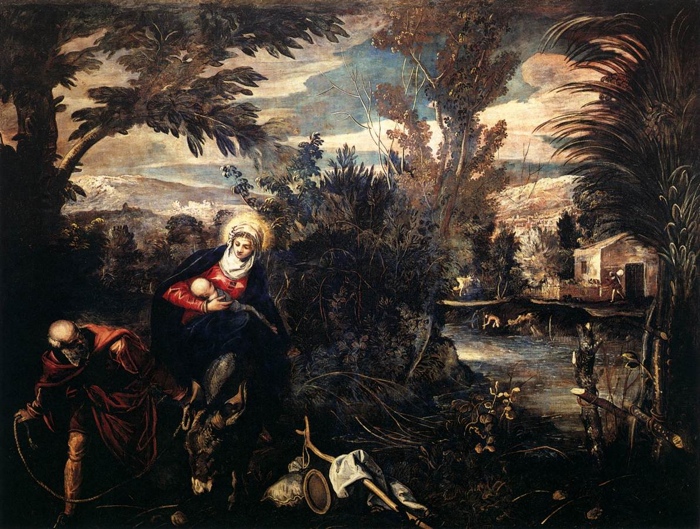
By the study of Tintoretto's 'Scuola Grande', it is seen that Stillheten #29 = 'L'Autunno' and Stillheten #52 = 'Fuga in Egitto'. I make some notice of some aspects of these:
Tintoretto's 'Autunno' = 'Autumn' (source) compared with my Stillheten #29: See the similarity of 'Östersjöen' = 'Ostsee' on the map with Tintoretto's 'Autumn' body shape (his 'trouser on self' being the swedish land Stockholm-Göteborg on the map etc):
|
|
Tintoretto's 'Fuga in Egitto' = 'Flight to Egypt' (source) compared with my Stillheten #52: Notice how the 2-3 first stanzas are interpreted in Tintoretto's group of objects in the lower mid part of the canvas in its relation to the rest of the image - it 'sucks' its meaning from the rest of the artwork such as the Jesus infant sucks its nourishment from Mary. The last stanza is clearly Josef in the lower left. See also by this study the relevance of rotation #4 of the magic image with the comparable graphic properties of Tintoretto's image: There is no doubt about the high mutual relevance of these two images:
Notice also Rilke's comment in his 4th Duino elegy lines 19-29 on the situation of the Jesus child who prefers Tintoretto for these 'magic images': "Ich will nicht diese halbgefüllten Masken, / lieber die Puppe. Die ist voll. Ich will / den Balg aushalten und den Draht und ihr / Gesicht aus Aussehn. Hier. Ich bin davor". The pumping-sucking 'Balg' and Josef with the 'Draht' and Mary with her looking look.
See also the brief comments for 15 december 2024 - how the possible political 'puppet' mentioned there could find its origin in this function of Rilke 4th elegy on the 'Puppe' - how the propaganda effect could be in the fact that it is the Jesus child who wants the 'Puppe' of Tintoretto's Mary rather than the 'halbgefüllten Masken' of the 'magic image'. My TEQ book 9 interprets in its parallel texts partly the flight to Egypt (gospel of Matthew 2:1-23), partly Xenophon's description (Anabasis IV, iii) of the travel through the land of the 'Carducians' who some take to be the earliest mention of the 'kurds' of Syria-Turkey - the point being that these two texts exhibit interesting structural similarities.
Are there traces in this material of a similar mechanism as for the 'braintone' discussed above? Consulting the similarity of the bold-type numbers for Crossways #11 = 6556x9 and #15 = 6666x7 it is seen that the difference can be described as unity lifted from digit 2 and 3 in 6666x7 over onto the last digit - for the form 6556x9. It is possible to see reflexes of this in the shared fragments 29 and 52: While 29b (notice 'Östersjöbanen' in the last line) and 52b in their last lines could be telling of the circumstances for the finding of the 2 black textiles, the last line of 29c could be telling of the cortical associations to the pupil-black retina-like textiles while 52c "in a jacket that gives while it gets/receives" could be telling of just that movement of the two unity values from '66' → '55' over onto '7' → '9'. Hence there are traces of the same mechanism as was discussed above for the 'braintone' of Crossways #7-8-9. An interesting observation could be the puzzling 'imitation' of this movement of 2 unity values from the second and third feature over to the rightmost one, lifting it from 7 to 9, in the magic image in parallel with Tintoretto's 'Fuga in Egitto' - whether that be a coincidence or not. Can Rilke's 'dancer' and the 'Bürger' be seen as moved over onto the character on the righthand side - the one with a 'lifted' top like the 'stradivarius' on top of the head of the (mirrored) 'indian'? The idea would be that a 'transcendent' dimensionality such as this 'x' in the bold-type number tells of could be what opens up for the possibility of phenomena like this sort of apparition or 'humanoid' semiotic processes to apply.


Finally, as it was noticed above, the 'wrapover' phenomenon of 'historic discontinuity' could seem to be potentially involved for the case of 'feature-digit 5' for 'substantial intentionality' - I make a notice also of the following observation:
Tintoretto's 'Annunciazione della Vergine' (source) = 'Annunciation of the virgin' compares well with my Stillheten #64. However, in the listing in this article my Stillheten #64 is matched against the 'Assunzione della Vergine' (source) = the 'Assumption of the virgin' - not the 'annunciation'. Hence assumption and annunciation could have been mixed up - it can be understood that Tintoretto could have made these two themes complementary - could be for the idea of 'she being taken up into heaven' being complementarily equivalent to 'heaven being taken up into her' - the bow of children form a 'mushroom' (see my Stillheten #64) in the annunciation but a sort of umbrella twisted around by the wind in the assumption etc. This could correspond to the alternate order of rotations #3 and #4 for the magic image. The assumption is also 'wrapped over' when it is listed for my poems #1 and #64. I notice also that a similar phenomenon could obtain also for Stillheten #24 and #25 which could be juxtaposed in their mappings onto Tintoretto.
It is noticed that there could be space for a certain 'short circuitry' in the joint conception of some of the above-mentioned characteristic semantic elements: The woman with her knees at her neck or ears, reading a book on the ground, the 'low(er)ing' along the 'calves', the Jesus infant 'sucking' on the mother's breast - all these apparently important semantic elements could be erroneously subjected to a 'short circuitry' in the form of a concept of 'auto-fellatio' as relevant to the above-mentioned 'perverse misconceptions' of political character. It is, for example, possible that a socalled 'Black Sea Loop' (assumed to be a wave of terror going from Turkey around the Black Sea towards Paris, the eastern arm of the 'european swastika' - and it is possible that the current conflict in Ukraine as well as the dangers of a similar development in Syria and Moldova and other countries could have been seen as integral parts of such a 'Black Sea Loop' program) could have found some ways of reasoning along such lines. Even the concept of 'nazi madonna' in politics is likely to be derived from such a conceptual 'short circuitry'. Such a 'nazi madonna' concept should not be on the program of NATO.
A final remark
Finally, the whole discussion leads to the conclusion that what can be called 'the faculty of faith' in the human psyche is the relevant field of knowledge for understanding the interface to 'other realities'. It is then important to understand that diverging religious conceptions - such as the difference between catholic and protestant conceptions throughout the centuries since Luther and Henry VIII - should not have to open up for 'perverse misconceptions' of political character. It must be understood that political concepts such as e.g. 'nazi madonna' will have to lead to serious problems for a theory of science and therefore necessarily will have to constitute a drawback for the development of new knowledge and technology. (Say, Tintoretto's 'Autumn' can prove that the word 'Östersjöbanen' is the right word in my poem - but how can I know that when I write it? Why not another word? How to tell the difference? That is a matter for the 'faculty of faith'). This 'faculty of faith' would concern also my fundamental theorem of logic which measures truth not as something that can be negated or not but rather as an influx of information from eternity into history. This is a field of knowledge the study of which is likely to concern the interface to the new computer technology which thereby can come to access realities larger than the human.
Sources:
Grover, J.: Stillhetens åndedrag. Vienna 2017
Grover, J.: Rosens triangel. Vienna 2018
Tintoretto, J.: Works in Scuola Grande, Venezia
Valcanover, F.: "Jacopo Tintoretto e la Scuola Grande di San Rocco", Storti Edizioni, Venezia 1983-2015.
Yeats, W.B: Crossways
© John Bjarne Grover
On the web 23 december 2024