

Is Sebastian Fitzek's 'Die Einladung' (2024) a plagiarism of my 'Der Dornenstrauch' (2015)?
John Bjarne Grover
Fitzek's novels are said to be the most-selling novels in Germany - apparently something like 19-20 million copies. On background of for example these data and a feeling I believe I recognized when I had bought Fitzek's novel (for checking it against my works), I came to assume that it could be a possible plagiarism of my 'Der Dornenstrauch' (2009-2015) - here abbreviated 'DDS'. I came to guess that if it were a plagiarism of my 'Der Dornenstrauch', it could have been based on part 3 (64 poems) with occasional 'feeds' from part 4 (16 poems).
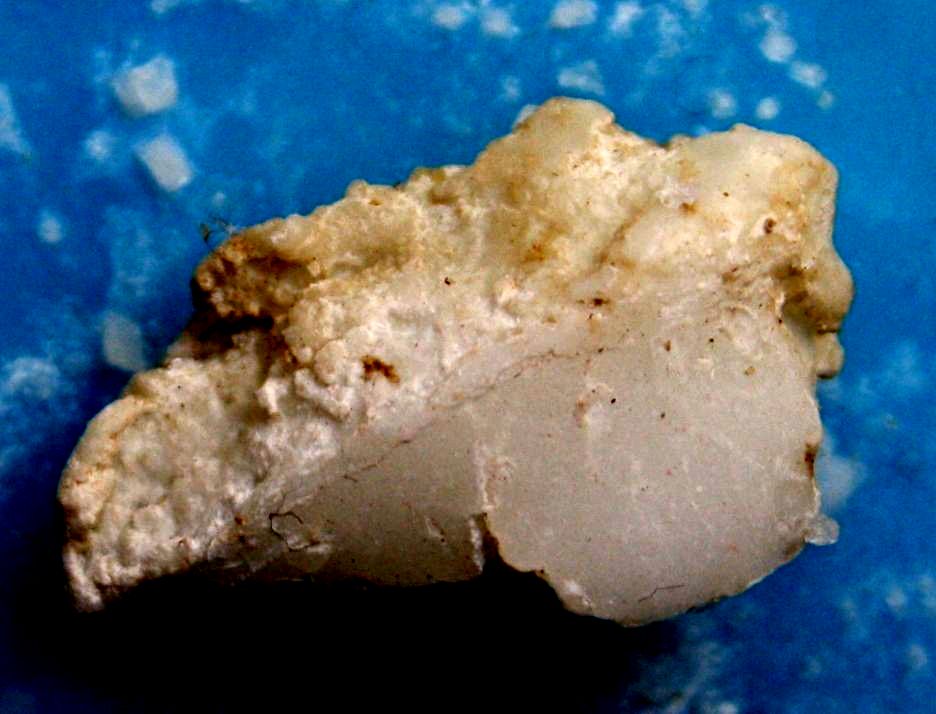
In my collected works vol.4 pages 940-942 I have described how I wrote parts 3 and 4. For the example of part 3 I wrote first appr. 77,3 poems of 14 lines each (3 verses of 4 lines each and then a couplet at the end) and then I stopped and reorganized the last 13,3 poems into couplets which I intertwined with the last two lines of the 64 first poems, making for a smooth 4 * 4 lines. The titles were made from the surplus material from the 13,3 poems after the 64 poems of 16 lines each were completed, which means that each poem with title is 17 lines. The white stone occurred at the end of this reorganization. (I do not believe that the stone can be generated by this simple algorithm - it depends of course essentially on the poetic work). This means that the principle looks like a 'feedback' of the end material into the preceding. The 16 poems of part 4 were written in a similar way - reorganized from originally 18 poems.
When I had bought Fitzek's book (Sebastian Fitzek: "Die Einladung. Psychothriller". Knaur 2024) - even before I had looked at the text - I believed that I recognized the resulting form of my DDS parts 3 and 4. Having studied the beginning and end of the narrative in Fitzek's book, I came to the hypothesis that it could have been constructed in a similar way as a parallel to my book. This means that his book would start in parallel with my poem #1 from my part 3, then follow some lines in his in parallel with some lines from poem #1 in my part 4 before continueing with my poem #2 in part 3 etc.
Fitzek's narrative is 366 pages of normally 32 lines. There are 84 chapters starting on a new page which means that on the average the last page of each chapter will be only half filled, which means one can subtract 42 pages. Each chapter headline is 4 lines or more, and there are numerous insertions of quoted letters etc which makes it a little more difficult how to count the lines, but a rough guess could be 366-42 pages = 324 pages of 32 lines each = 10368 lines from which is subtracted the 4 lines of each chapter headline which means 10368 - (84*4) = 10032 lines. Dividing with the 64 poems of part 3 gives 156,75 lines per poem each of which is 16 lines plus title = 17 lines = 9,22 lines Fitzek to 1 line of mine. I made the guess which I have followed in the analysis of 8 lines Fitzek against 1 line of mine through the 17 lines of a poem of mine from DDS part 3, then 21 lines Fitzek against 5 lines from DDS part 4. This would make for a conjectured 10048 lines of Fitzek, which could make sense. The following tentative analysis shows that this guess seems to be quite good.
This means that my part 4 would be 'appended' to the poems of part 3 when used as parallel to Fitzek's text. I dont know if this really is how the book is constructed, but there is also at the end an 8 pages 'Nachwort & Danksagung' which perhaps could be suggestive of something like this: It tells of 'feedback' from readers to earlier works of his - such as 50.000 emails among which he refers to a letter to which he had replied with a letter he quotes in full - in which the following line occurs well before the end: "Im Grunde (so endete meine Mail) ist es also egal, ob der Urheber des Werkes noch lebt oder nicht. Denn der Autor bzw. die Autorin ist völlig unwichtig". It could be typical for the literary genre to spread doubt about the reliability of the author. He claims to read all emails but cannot answer all of them. (Or should that mean that 'Fitzek' could be a sort of computer?) He thanks management chief Manuela Raschke: "(Danke für den dezenten Hinweis mit dem abgetrennten Pferdekopf in meinem Bett. Ich hatte unser 20-jähriges Raschke-Entertainment-Jubiläum im Februar 2023 vergessen...)". This could in principle have been a reference not primarily to this probably ex nihilo piece that occurred in my bed but maybe rather the cover illustration to my DDS - which can be seen to show a horse's head. "Jeder hat zwei Leben, und das zweite beginnt an dem Tag, an dem wir feststellen, dass wir nur eins haben". He hopes also that Viola Hansen is happy with the profit - "wenn nicht, dann wird es mit dem Umtausch des Gewinns etwas schwer, aber hey ... der Verlag schafft das schon".
If the principle should be in the form of frequent 'feedbacks' from 'another' (part of the) text, this could perhaps also be seen to be contained in the title - on the form 'Die ein la Dung' - the 'inlaid dung'. See e.g. Fitzek page 15 - how the text changes character when it comes to the 21 lines in parallel with my DDS IV:1.
There are reasons to believe that the pagination could be an integral part of the psycho-thriller. Example: On page 18 there is the message to the one who should deliver something: "Letzte Lieferung für heute. Zum Schilfhorn 18-24, Gebäude 14, Raum 012. Paket habe ich schon in den Kofferraum gelegt. Wichtig: Exakt um 19:49 Uhr übergeben. Nicht davor, nicht danach". I look up page 19:49 which is on page 20 just before the middle - that is 0,68 through line 16 - here are lines 14-18:
The 19:49 is at the end of 'Ausmaß des' - followed by the 'unvorstellbar tiefen Abgrunds'. On page 19 she looks at her watch - it is 19:34 o'clock. Computing 0:34 down page 20 takes it to the word 'Sensationsmeldung' - which thereby comes not long before this 'Abgrund'. The message tells of 'Gebäude 14, Raum 012'. I look up line 12 (title not counted) in my parallel poem which is 'wie Gold aus den Erzen entweiht', in the lower part of page 19:

This seems to pretell what happens with the reader when one comes to 'Gebäude 14' - that is the correlate to line 14 in my poem - that is, at 19:49 'Ausmaß des' followed by 'unvorstellbar tiefen Abgrunds' - like the newborn child who 'rechtzeitig' springs from the womb. But this is when counting my lines - here my lines 12 and 14 - not Fitzek's, and so the question could be whether my text would be integrated into the narrative to such an extent. (About the 'lindbergsche Anwesenheit' in the context of emergency 'gold'-coloured flashing lights, see also the Brief comments for 1 may 2025, the addition of 3 may 2025 - I dont know the extent to which this could be a recurring phenomenon in Fitzek's novel).
Pagination as part of the text could be typical of the genre - but it anyhow could suggest that 32 lines per page could mean 4 * 8 lines.
There is even a possible name-relation of 'Sebastian Fitzek': If one assumes 'Se bas' = 'Kennedy', 'Tian' = 'John', 'Fitz-sek' = 'Fitz-general', if it should be the case (as suggests a theory, whether that would be mythology or reality) that my puberty penis contents could have been transplanted over onto a rapist - here equivalent to my DDS part IV = "Die Schönheit der Welt" feedbacking into part III - while I could have got the penis remains after Kennedy, the theme inherent in such a structure of the book could be a rape of the puberty boy while the penis contents of the rapist could then be identified with me. (I notice also the Apenes story with the death of Aldo Moro in Italia).
Is 'se bas' is taken in the sense of the 'dung' that is 'inlaid', it could thereby perhaps look as if the 'dung' (here as 'Die Schönheit der Welt') comes from Kennedy, which it does not. But maybe injections of 'chemicals' (say, by e.g. a 'Black Sea Loop') could make it look as if it does? This would be only the name in the context of this particular book title, though - but clearly if an important literary effect is obtained via such a 'feedback' structure relative to my book, it could probably be seen as potentially efficient.
If, therefore, Fitzek's book should be a plagiarism = rape of my book, the roles could be seen as tentatively swapped via this mythological role assignment. My book is certainly not a 'psycho-thriller'.
Hitler couped Jesus (via his Beer Hall Putsch and the death of Lenin) and it may be that the west for the time being can understand Jesus only via a plagiarism of such a kind. That could be if the west has not come out with the story of Hitler.
It is probable that this whole story is rooted in the conception of Aristotle who provided the basis for christian theology - but via an episteme shift which created a breach in the reality conception. If this can be bridged, such as my study of Aristotle's theoretical abstractions suggests, the problem of nazism can be overcome and it will be possible to understand the reality again without going through plagiarisms.
In the following I test the hypothesis that Fitzek's book follows my DDS part 3 in ratio 8 lines against 1 line with insertions of 21 lines of his against 5 lines from my part 4 inserted inbetween the poems of part 3. The text is divided by lines into segments and I have appended the relevant lines of my poems next to them, for easy comparison. I analyze some pages from the beginning and end - and the reader can evaluate this by own judgement. My view is that there is a notable relevance for most of the fragments.
The beginning of the book:
Fitzek page 11 aligned against DDS III:1
Fitzek pages 12-13 aligned against DDS III:1
Fitzek pages 14-15 aligned against DDS III:1, DDS IV:1
Fitzek pages 16-17 aligned against DDS III:2
Fitzek pages 18-19 aligned against DDS III:2
Fitzek pages 20-21 aligned against DDS III:2, DDS IV:1, DDS III:3
Fitzek pages 22-23 aligned against DDS III:3
The end of the book:
Fitzek pages 358-359 aligned against DDS III:61
Fitzek pages 360-361 aligned against
DDS IV:16,
DDS III:62
Fitzek pages 362-363 aligned against DDS III:62
Fitzek pages 364-365 aligned against DDS III:62, DDS IV:16,
DDS III:63
Fitzek pages 366-367 aligned against DDS III:63
Fitzek pages 368-369 aligned against DDS III:63
Fitzek pages 370-371 aligned against DDS III:63, DDS IV:16,
DDS III:64
Fitzek pages 372-373 aligned against DDS III:64
Fitzek pages 374-375 aligned against DDS III:64
Fitzek page 376 aligned against DDS IV:16
Added 5 may 2025:
(Written yesterday but added only today): I believe I have done something valuable for the german language and culture (it is not about a sharp crease in the trousers, though) but the reception history has been so bad that it is not much inspiring. Were it possible to tell if earthquakes can be generated artificially - or do my 'synchronic' poems in SNEEFT COEIL tell of a strange seismic logic in the placenames? (A folk-name on such 'man-made' earthquakes could be that they are made by a 'knorr' - not to be confused with the soup brand - Fitzek's novel is published on 'Knaur').
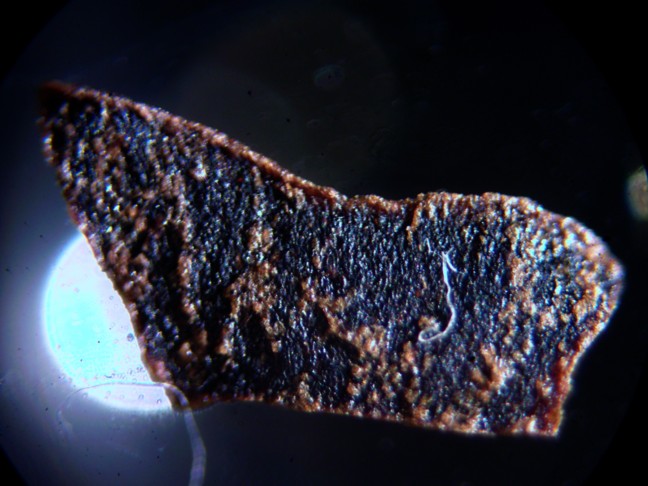
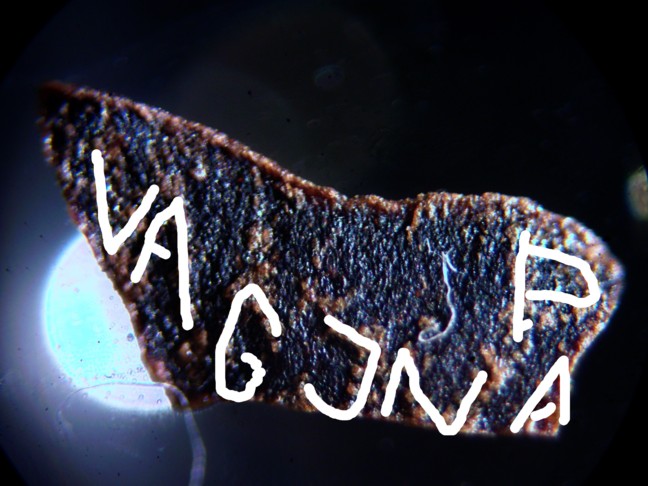
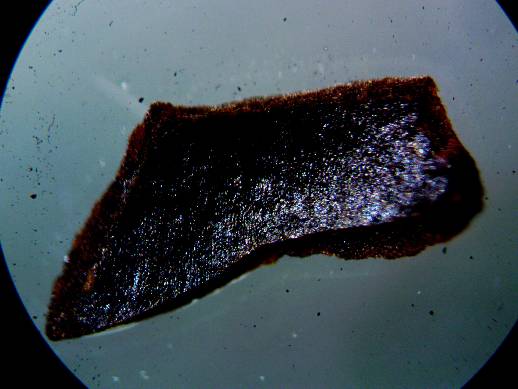
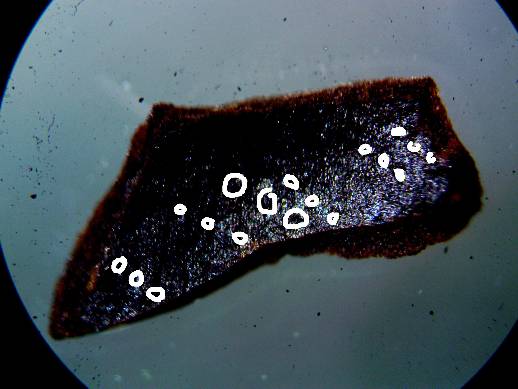
Written today: There are a few indications that could allow for some speculations whether Fitzek - if his book should have contained references to mine - even could have consulted an unpublished manuscript of mine from 2014 - something which I wrote around the time of the completion of DDS part 2: I was into a quite 'magic' period with much ex nihilos (and an eczema which was developing) and studied reflexes of my poetry in 'ex nihilo' matter - see this article for the concept of 'substances' - and these comments of today for some examples of what I was working with in 2014. My manuscript from 11 years ago was 106 pages - about my socalled 'quadrantic' studies - and I now observed that one could spot some potential references to this in Fitzek's book. Three examples: On page 45 in my manuscript there are the four images under 14. The Evlyn shoe: The shoe, the shoe annotated, the back side of the shoe, the back side of the shoe annotated. These are depicted in my manuscript page 45 with annotation "(49 + let)" which perhaps could be recognized in that time point 19:49 in Fitzek's book on page 18. The ratio 0,68 - for line 16 on Fitzek page 20 - is mentioned on my page 79, where I refer to two possibly spontaneous water drops on a green rubber mat at 17 cm horizontally and 25 cm vertically, the other at 19,3 cm horizontally and 13 cm vertically - these shared the ratio 0,68, as I wrote in my manuscript. It was a part of the socalled 'milk miracle'. Finally there is a 'Schilfrohr' (as egyptian hieroglyph) mentioned on my page 31 - the 'scroll' - this can be recognized on the same Fitzek page 18 - the message 'Zum Schilfhorn'. These are three examples from my manuscript which apply to this little message on Fitzek page 18 - for a rather airy correpondence, that is true. I have not searched for more of the same, but if the example should be representative, it is possible that the analysis could include a potentially intended identification with the authority - here the way of thinking about these 'ex nihilo' phenomena - in my authorship. Since it also is about an unpublished manuscript, it would count as more serious than an ordinary plagiarism - but clearly these three examples are not enough - even if it is possible that the point at 0,68 through line 16 on page 20 - just before the 'unvorstellbar tiefen Abgrunds' - could be an essential point in the novel. Since Fitzek's 'unvorstellbar tiefen Abgrunds' also seems to receive some interpretation in terms of the 'offspring' of a child in birth, the shoe annotated could in principle be not a coincidence.
The manuscript of mine was written in 2014 for later use. Bad it would be if it has been handed out by somebody for abusive purposes, but it is true that I do not so far have much reason to believe that it has.
If the book should be a plagiarism of mine, or even more if it should be based also on other elements from my authorship intervowen for an imitation of my authority in my authorship, it is clear that a social accept of this must be considered extremely dangerous and should - like all similar phenomena - of course be stopped by the police. It is noticed that e.g. the potential relevance of the elements in the 'milk miracle' could make it relevant to pose the question whether it could be about a construction of Hitler's 'dritte Reich'. But all this depends on whether it be about a real plagiarism. It should not be me who should have to do all the work - a good police computer should have been able to find that much faster than all this tedious work of mine.
My general impression is that if it should be about a plagiarism, and if this be accepted generally for publications in Europe, the idea of this continent as a sinkhole of nazism would have to be considered seriously. Very dangerous nazism that would have to be called. Would all this potential plagiarism have been tentatively 'repaired' and 'paid for' by way of the warfare in Ukraine? But that would not suffice for more than a fraction of what it could be about if this should be a general phenomenon on the cultural stage of Europe.
But I have so far not enough data for such ideas.
© John Bjarne Grover
On the web 4 may 2025
Last updated 5 may 2025