17 january 2025
John Bjarne Grover
Hölderlin's 'Patmos' and the magic images
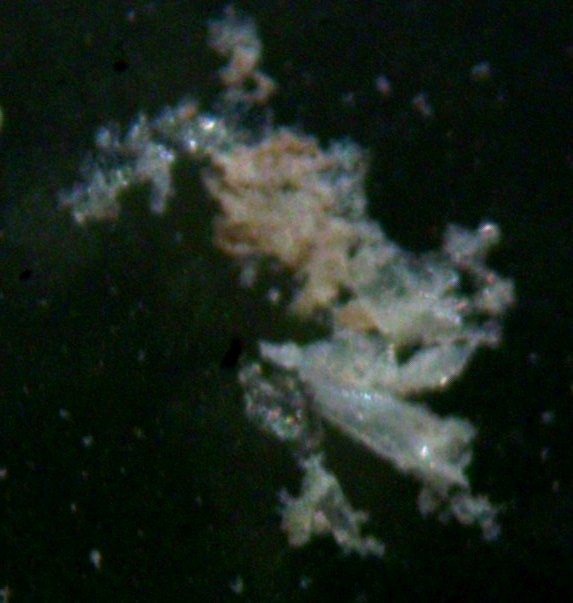
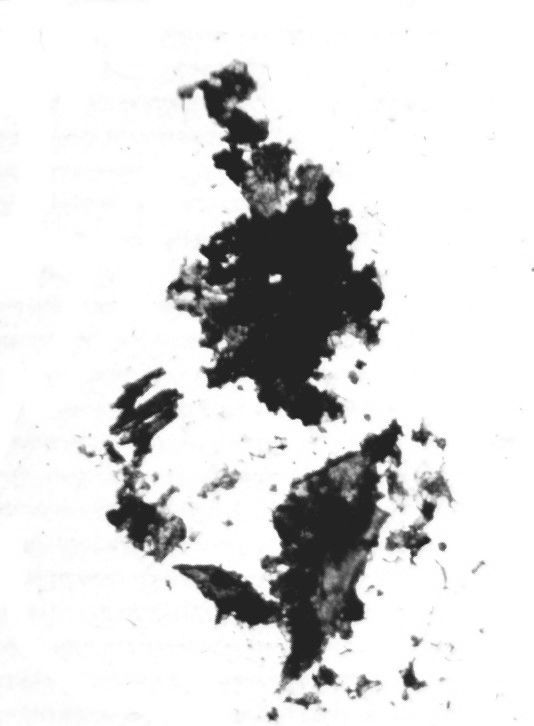
In the article 'Some notes on text and image in 'The Endmorgan Quartet'' I have explained the background of the magic images which here are referred to as DDS cover illustration (this is the cover illustration to my 'Der Dornenstrauch' - my german poetry book on the diachrony of language) and SNEEFT COEIL cover illustration (this is the cover illustration to my 'SNEEFT COEIL' - my german poetry book on the synchrony of language). These two magic images - which I have shown the relevance of for Rilke's Duino elegies 1 and 4 - can be recognized in rotating form in the first two stanzas of Hölderlin's poem 'Patmos' - the name refers to the island where the revelations described in the last book of the Bible - "The revelation of John" - took place. I show below the relevance of these two rotating images for the two first stanzas of Hölderlin's poem plus a third magic and rotating image for (the beginning of) the 5th stanza - this third 'Joyce' image is on the cover to my white metre poetry book 'Stillhetens åndedeag' (here abbreviated 'Stillheten') discussed in many places on this homepage - including e.g. my Tintoretto study under "Parametre 5: Substantial intentionalities or entelechies" the comments on the background (in the 'Joyce' image) of the image of the 'indian' as well as these comments on another two rotations of the same image. My Insel edition of Hölderlin's poem makes one single stanza out of the 15 first lines - that is what I refer to below - while the 'Projekt Gutenberg' edition on the web conjoins these with the following 15 as well for a longer 'stanza 5'.
Here is Hölderlin's poem 'Patmos' - from which I here quote along with the relevant rotations of these 'magic images' (these open in a separate window) - below there is a discussion of the correlations:
Patmos
Dem Landgrafen von Homburg
|
Nah ist Und schwer zu fassen der Gott. Wo aber Gefahr ist, wächst Das Rettende auch. Im Finstern wohnen Die Adler und furchtlos gehn Die Söhne der Alpen über den Abgrund weg Auf leichtgebaueten Brücken. Drum, da gehäuft sind rings Die Gipfel der Zeit, und die Liebsten Nah wohnen, ermattend auf Getrenntesten Bergen, So gib unschuldig Wasser, O Fittiche gib uns, treuesten Sinns Hinüberzugehn und wiederzukehren. |
DDS cover rotation 1 DDS cover rotation 2 DDS cover rotation 3 DDS cover rotation 4 |
|
So sprach ich, da entführte Mich schneller, denn ich vermutet Und weit, wohin ich nimmer Zu kommen gedacht, ein Genius mich Vom eigenen Haus'. Es dämmerten Im Zwielicht, da ich ging Der schattige Wald Und die sehnsüchtigen Bäche Der Heimat; nimmer kannt' ich die Länder; Doch bald, in frischem Glanze, Geheimnisvoll Im goldenen Rauche, blühte Schnellaufgewachsen, Mit Schritten der Sonne, Mit tausend Gipfeln duftend, |
SNEEFT COEIL cover rotation 2 SNEEFT COEIL cover rotation 4 SNEEFT COEIL cover rotation 3 SNEEFT COEIL cover rotation 1 |
etc
5th stanza:
|
Gastfreundlich aber ist Im ärmeren Hause Sie dennoch Und wenn vom Schiffbruch oder klagend Um die Heimat oder Den abgeschiedenen Freund Ihr nahet einer Der Fremden, hört sie es gern, und ihre Kinder Die Stimmen des heißen Hains, Und wo der Sand fällt, und sich spaltet Des Feldes Fläche, die Laute Sie hören ihn und liebend tönt Es wider von den Klagen des Manns. So pflegte Sie einst des gottgeliebten, Des Sehers, der in seliger Jugend war |
Stillheten rotation 3 Stillheten rotation 2 Stillheten rotation 4 Stillheten rotation 1 |
Comments:
DDS cover rotation 1 is easy to understand - the big bird as a symbol of God (or, for Rilke, the angel).
DDS cover rotation 2 is more difficult but makes much sense if one considers the black field over the one eye of the singer: The outline of this black field could look like a man who takes one step upwards and rightwards - probably one of the 'Söhne der Alpen'.
DDS cover rotation 3 could look like two wrestlers - that is called 'ringen' in german. The 'Liebsten' could be the dog from rotation 1 but here upside down in the air.
DDS cover rotation 4 looks like a waitor who carries drinks on his strong arm - and the poem gives expression to the restaurant guest who wants a glass of water from the waitor who goes to the kitchen and back again. Notice also the tefillin-equipped character of the waitor.
SNEEFT COEIL cover rotation 2 shows the head of a man going for the stars in rightwards direction, riding perhaps his childhood wooden horse - this seems to be the 'genius' who 'entführte mich vom eigenen Haus' to the left.
SNEEFT COEIL cover rotation 4 - a man (a clown?) leaves rightwards through a door and a big animal sits on the ground to the left with the 'theatre of the heart' of Rilke's fourth elegy before the 'thumos' - this 'thumos theatre' contains the scene with the dancer and 'Bürger' in the kitchen. 'Bekken' is norwegian for 1) 'the creek' or 2) 'the hip region', 3) a 'water container', 4) 'cymbal' - see also Dutch.
SNEEFT COEIL cover rotation 3 - the homely kitchen scene is continued here but displaced into foreign or orientally mystic environments.
SNEEFT COEIL cover rotation 1 - there seems to be a couple on the ground and a 'schnellaufgewachsen' image (of these?) above.
Reading 'Patmos', there is a vast continent opening up in the following line "Mir Asia auf" - with exotic mythological cities with broad streets etc opening up in this third part - a landscape with a revelational character such as the title 'Patmos' suggests. This effect is probably obtained through the two first parts by way of this parallelism with the 'magic images' which also Rilke explored in his elegies.
Stillheten cover illustration rotation 3 looks like a person on a beach, eating an icecream and carrying a bathing toy cat under the arm = 'im ärmeren Hause' and 'um die Heimat', while the 'abgeschiedenen Freund' becomes more visible when annotated like this - it seems that she is feeding a guest. The 'Schiffbruch' could be contained in the prolonged face of the person - as if (s)he is seeing a naked woman.
Stillheten rotation 2 looks like a mother inspecting a tooth fallen out from the daughter's mouth.
Stillheten rotation 4 could look like a female parting the legs for a cunnilingus client or gynecologist approaching the Venus-berg - with the woman's chest like a mountain above. The sand is running.
Stillheten rotation 1 is the man with a 'Klage' in his look - even he needs some food. It is this which shows the fingers that seem to have developed ex nihilo (= 'gottgeliebten') after the original 'Joyce' image eroded. See also the last stanza in the poem 'Patmos' with its possible explanation why the fingers developed 'ex nihilo'.
An interesting question is whether the entire 'Patmos' is composed of such 'magic image' phenomena. The phenomenon itself is discussed briefly towards the end of the poem and could be seen as maybe somewhat reflected in the image I used for the cover to my 'Rosens triangel': This was the original 'Joyce' image before it eroded and took on the form of the 'indian' one year or so later - the original looks like James Joyce reading his own 'Ulysses' while sitting in a sofa with roller skates on his feet, not being aware that he was under surveillance ('ab-lysses') - this photo I thresholded to black and white and then it attains interesting forms when rotated: Here are rotation 1, rotation 2, rotation 3, rotation 4. There are several lines in the inbetween stanzas that could be relevant for these - I refer, though, to the following lines towards the end (4-5th from the end):
|
Zwar Eisen träget der Schacht, Und glühende Harze der Ätna, So hätt' ich Reichtum, Ein Bild zu bilden, und ähnlich Zu schaun, wie er gewesen, den Christ, Wenn aber einer spornte sich selbst, Und traurig redend, unterweges, da ich wehrlos wäre Mich überfiele, daß ich staunt' und von dem Gotte Das Bild nachahmen möcht' ein Knecht - Im Zorne sichtbar sah' ich einmal Des Himmels Herrn, nicht, daß ich sein sollt etwas, sondern Zu lernen. Gütig sind sie, ihr Verhaßtestes aber ist, So lange sie herrschen, das Falsche, und es gilt Dann Menschliches unter Menschen nicht mehr. Denn sie nicht walten, es waltet aber Unsterblicher Schicksal und es wandelt ihr Werk Von selbst, und eilend geht es zu Ende. Wenn nämlich höher gehet himmlischer Triumphgang, wird genennet, der Sonne gleich Von Starken der frohlockende Sohn des Höchsten |
rotation 3 = original photo rotation 3 rotation 4 = original photo rotation 4 rotation 3 = original photo rotation 3 rotation 1 = original photo rotation 1 rotation 2 = original photo rotation 2 |
Rotation 3: It shows a head with cloth bound before the eyes - here for the idea of 'ein Bild zu bilden'.
Rotation 4: One can see (in the upper part) a vague rider hurrying on to the left and a person bending down towards his own lap next to him - and maybe a crucified Christ to the right.
Rotation 1: 'Denn sie nicht walten, es waltet aber / unsterblicher Schicksal und es wandelt ihr Werk / von selbst' = Joyce reading his own book, 'und eilend geht es zu Ende' = his roller skates.
Rotation 2: Towards the end of these lines - does it show on top a sculptor with a sculpture of the sun?
What is interesting here is primarily Hölderlin's own reference to 'ein Bild zu bilden' - otherwise the rotations are not so very impressive all of them. However, it is seen how Hölderlin's poem could contain in itself the explanation to why and how the fingers developed ex nihilo on the hand of the 'indian', as described in my Tintoretto study under "Parametre 5: Substantial intentionalities or entelechies". These fingers could be precisely telling of the idea how integrity could be a format of substance for computability in a human understanding of other realities - see this article for further considerations on this topic.
But how can the image know that some of the substance means 'finger' while other parts do not? That is the role of the human semiotics which derives from the phenomenon that the fundamental theorem of logic tells that only equiprobability preserves truth (in the information flux from the eternity of other realities into history) and since equiprobability is not possible in the human reality, the humans have invented 'semantics' which concerns the role of 'meaning' in semiotics. The sum of probabilities in the logical theorem runs to unity, which is the integrity, but while a non-euclidean deviation from unity sometimes is needed (since equiprobability is not possible), it quickly slides back into euclidean unity again as soon as the countable symbol is formed. It could be in the meetingplace - as in the antenna - of this probabilistic 'integrity' with the phenomenon of 'meaning' in 'human reality' that the substance can take shape on the form of 'fingers' in such a magic image. Could be that is what Hölderlin's poem is about.
It is seen how Hölderlin's 'finger' here could have an esthetic-logical function comparable to Yeats' 'bare boreen' in poem 15 ('The ballad of Moll Magee') of his 16-poem 'Crossways' (1889) discussed in this article. The essential question is, again, how a 2-dimensional image can 'itself' recognize a black field as a 'finger' of essential semiotic importance (enough to call forth this black field from another reality) against another and possibly similar black field which is not a 'finger' such as conceived by a 3-dimensional human understanding. It means that one cannot use image-recognition tools such as shapes similar to heads, shoulders, arms, hands etc for finding the 'finger' with the computer - there must be something inherently in the esthetic form of the 2-dimensional image which (possibly 'recursively') calls forth this function. Basically this means that the relation between 2 and 3 dimensions must be inherently contained in the phenomenon - could be it means that human reality is contained within a smaller number of 'dimensions' and 'ex nihilo' phenomena occur when these small number of dimensions are integrated into a larger scope of dimensions beyond the reach of human understanding. That means probably that something comparable to (or even esthetically more appropriate than) a differential-mathematical function of 'integration' can lift the 2 dimensions over onto the 3 in such a way that this 'finger' is contained there. This 'integration' is therefore probably not only etymologically related to the 'integrity' but probably somehow in the esthetic logic there could exist a necessary connection between them. It means in Yeats' poem that the straws were bending in a certain mathematical (say, parabolic) curve-shape across the not so very (but almost) 2-dimensional 'boreen' - when she was going back to the place she came from, like her child had done, could be with a 'drooping head'. Could be the boreen were as 2-dimensional as the 'equiprobabilty' is in human semiotics.
A similar esthetic-logical function can be recognized in Yeats' 'leopard-coloured trees' in the poem 'The madness of King Goll' (= poem 9 in 'Crossways'). Even this can be recognized as relevant to the theme discussed here - in the form of the 'leo-paired' = the lion in copulation with a toy animal in this magic image. That word is used in his reference to the autumn. He mentions also another 2 (but not 3) seasons: 'Summer gluts the golden bees' which then could be recognized in this magic image (the waitor arrives for glutting the restaurant guests and the bee plunges its 'beak' into e.g. some flower) and finally the winter is seen in 'cormorants shiver[ing] on their rocks' - which then could be seen in the form of this magic image (the cormorant's wing is then akin to the human hand and fingers) - when he wanders on and 'waves his hands'. Furthermore, 'The gray wolf knows me; by one ear' - that is recognized in this rotation of the 'summer-glutting' image - here one sees the (Fenris?)-wolf with a mouse sleeping peacefully in its mouth - in a form which exposes the singer with only one eye - or ear. Yeats sees the seasons in these magic images. This explains why the 'leopard-coloured trees' is an extraordinarily interesting observation for the autumn - it is probably not normal to see a connection between autumn and leopard but here it is precise because the other seasons are seen as 'magic images' and therefore this season is recognized as 'leo-paired' by this magic image. The lion here seems to rise upwards - while autumn normally falls down while spring goes up. The animals can here be seen as integrated into a higher dimension from the '2-dimensional' couple on the ground. Could be, therefore, if 'leopard' here is considered one name for one animal, that it is the (quasi) 'submorphemic' aspect of this 'leo' who is 'pard' with the other animal which contains this element of 'integration'. This (quasi) 'submorphemic' function would then be interesting because it is attested in the 'magic image' among the other magic images invoked for describing the seasons.
Added 19/1-2025:
I should add that although 'integration' naturally sounds like a way of conceiving 'other realities' in the sense of 'higher dimensions', it is likely that traditional differential calculus (as I have discussed earlier) suffers from the weakness of being efficient for calculating on the historic reality but does so at the cost of what I call the 'transcendent arbitrarity' (here arbitrary value 1): There are reasons to believe that marxism was developed from about 1844 onwards in an attempt to rescue this 'transcendent arbitrarity' by turning metaphysics and physics around and that therefore what marxists thought of as 'history' often simply meant 'the metaphysics' - and thereby it should be possible to relate to the transcendent arbitrarity as something empirically available - that being a realistic program or not. Marxism as a protest against the erasure of transcendent arbitrarity could be seen as consonant with a protest against the rejection of the work of Hermann Grassmann in 1844. In view of this, though, it is likely that ordinary 'integration' is not really enough for exploring 'other realities'. But the concept could be suggestive nevertheless, at least by its etymologies.
Source:
Friedrich Hölderlin - Gedichte: Patmos. Projekt Gutenberg.
Hölderlin, F.: Sämtliche Gedichte und Hyperion. Herausgegeben von Jochen Schmidt. Insel Verlag Frankfurt am Main und Leipzig 1999.
Yeats, W.B: Crossways
© John Bjarne Grover
On the web 17 january 2025
Last updated 19 january 2025