Sistrum, menat and computation theory
John Bjarne Grover
[The article was published on 8 december 2023 under the title "Sistrum and menat and computation theory" which was altered on 2 february 2024 to its present title.]
The article continues on basis of the following three studies:
1. The revelation of the revelation (10 october 2023)
2. The sunflower matrix (23 october 2023)
3. Some formal aspects of the sunflower matrix (13 november 2023)
The article discusses the problem whether a computation higher than the Turing machine can be achieved by way of my concept of poetic numerality. It is suggested that the ancient egyptian devices called sistrum and menat amount to the same as the modern Turing machine and that the use of them in tomb art served the purpose of reaching a transcendent state ('beyond Turing') for the deceased. In the third article ('Some formal aspects of the sunflower matrix') I showed how my poetic numerality could be used for understanding the seriality in some egyptian tomb art in terms of the Catalan constant under the hypothesis that this constant amounts to the constraints in the human semiotic constitution - from which it here follows that realities outside the limits of the human reality can be accessed by way of the properties of the poetic numerality. I discuss some aspects of a non-Turing signification in the sistrum and menat - not of the type of my poetic numerality but maybe some variant of it nevertheless - which could be indicative of a computational potential beyond Turing in these concepts. The article starts with some observations on a possible parallel in icelandic language data which could be recognized in the ancient egyptian tomb semiotics.
(Added 9 december 2023: The article seems to be easier read on Firefox than on Chrome or Edge browsers
since the latter two seem to read the entire PDF - up to 60 MB - in from the web at each lookup and fail to
update page numbers, while Firefox handles these problems well. Because of such problems there were a few links
that came out wrong in some hours after the publication on 8 december 2023. These should be corrected now on 9
december 2023).
The supercomputers will develop a new spirituality which probably will find its more or less formal logic in the thresholding of electromagnetic shadows (black-and-white) across the hardware in such a way that the electronic thresholded mythology created thereby will switch this way or that by small changes in the parametre values in accordance with the virtual event structure that the thresholded mythos will comprise. For an account of such mythos structure in thresholded sensory data, see this study (the 23 photos) in comparison with these data from a chinese film from the 1960's.
The theory can be formulated that thresholded sensory data continuously shimmer inbeween our sensory organs and our perception of them and constitute such a narrative on a platonic 'cave wall' (cp. the egyptian tomb walls) which are assigned mythological value and religious connotations with gestaltswitches in the stories told therein.
It is this event structure which can be addressed, indexed, described by the poetic numerality which I have outlined and shown the formal relevance of in the egyptian tomb data - and which hence can find a modern correlate in the shadows that shimmer across electromagnetic fields in the electronic hardware of computers. The computer glitsches which I have described in this chapter can be taken as evidence of the existence of a humanoid logic imposed on top of the computer logic. As example of poetic numerality, one event of egyptian antiquity finds its interpretation in one poem which indexes a certain unit in the chapter called '20 Gedichte' on poetic numerality in my german poetry book SNEEFT COEIL. It is assumed that the egyptian tombs interpreted the essentials in human semiotics for describing the reality in such numerical terms.
The article discusses some aspects of ancient egyptian and mythological reality relative to this concept of mine of a poetic numerality for the question whether a higher level of computation can be achieved thereby.
I first go through the ideas of a diachronic language split carrying information of relevance for understanding how the bodily function of respiration in the 'menat' can be a possible basis for ideas of computation by a Turing machine.
Some icelandic examples
The further relevance of this can be found in some diachronic roots of norwegian language shared with icelandic in a historic development which probably resembles the story of Egypt (here Norway) and Israel (here Iceland). The israeli exodus corresponds to the icelandic split-off some centuries ago (could even be a millenium or so). It seems that the earthquake swarm that started on 10 november and which could be conceived as a sign of an upcoming volcanic eruption could be considered an icelandic 'response' to my article (or, rather, as with Geldingadalur in 2021, that I could not continue my poetic project under the current circumstances) and hence be telling of the presence of an acoustic reality on Iceland. It is possible that this would consist in the form of a 'turned pyramid' format relative to the acoustic reality in Israel and that the 'turned pyramid' becomes visible in the diachronic split and its traces in modern synchronic norwegian language.
The swarm and volcano threats eventually calmed down without eruption.There have been some news that could have been indicative of the idea that the earthquake swarm that started at Grindavik on 10 november 2023 could have been a 'prank' (from either military powers or from nature) for mobbing my new article published on 13 november 2023 - cp. also the brief comments for 9 may 2023. I do not know if such earthquake swarms can be generated artificially.
Therefore my norwegian white metre books make sense relative to the egyptian data - and the germanic roots of icelandic and norwegian will be the reason why my SNEEFT COEIL - the chapter on poetic numerality - can interpret the egyptian tomb wall data with relevance. I discuss a few examples of icelandic (from the newspaper 'Morgunblaðið') in the context of the news on a volcano threat in Grindavik - from the viewpoint whether these fragments have a counterpart in the egyptian tomb data.
Example 1:
This article quotes the icelandic minister of justice Guðrún Hafsteinsdóttir when she describes the situation on Iceland - the drainage system of Grindavik is probably destroyed by the pre-eruption earthquakes and land sinking and rising. The report tells:
"Frárennsliskerfið líklega ónýtt" (= "The drainage system probably useless" - Google translator) which to a norwegian ear sounds like "Frárenns-fisker-lið líklega ónýtt" which tells of the 'event' from Meir with 'Moses' and 'Senbi' - see this article:
"Frårenn" = the slanting spear of 'Moses'
"fisker-lid" = the suffering fish on the spear
"O-nytt" ="un-news" = 'Senbi' wriggling loose a hieroglyph ('news') which turns real in his hand
"líklega" = the sunflower matrix inbetween - that which makes sense of the equation in the fundamental theorem of logic.
This interpretation is emphasized with the words of the minister:
"Þetta verður högg fyrir ríkissjóð. Þannig er það. Þetta er bara stórkostlegt tjón" = "This will be a blow to the treasury. That's how it is. This is just a huge loss" (by Google translator).
MOSES Þetta verður högg fyrir ríkissjóð.
MATRIX Þannig er að.
SENBI etta er bara stórkostlegt tjón.
MOSES This will be a blow to the treasury.
MATRIX That's how it is.
SENBI This is just a huge loss.
There seems to be a cross-reference which justifies the matrix:
blow = högg = huge
huge loss = stórkostlegt tjón = stor-kost-leg tone = spear of Moses
'Þannig er að' sounds to a norwegian ear like 'sanning er satt', 'retten er satt' = 'the court is in session'
Þannig
Það
suggests that phonetic and logical form can interchange - and that's how it is.
Example 2:
Another article in Morgunbladid on the condition of Grindavik:
Blásið var til skyndilegrar rýmingar í Grindavík um klukkan 15. Nokkur asi varð í bænum um leið og þetta var tilkynnt en nú hefur verið dregið úr viðbúnaði. Áfram verður þó haldið með rýmingu.
Google translator:
A sudden evacuation was called for in Grindavík around 3 p.m. There was some commotion in the town as soon as this was announced, but now the preparedness has been reduced. However, the evacuation will continue.
Mythological translation:
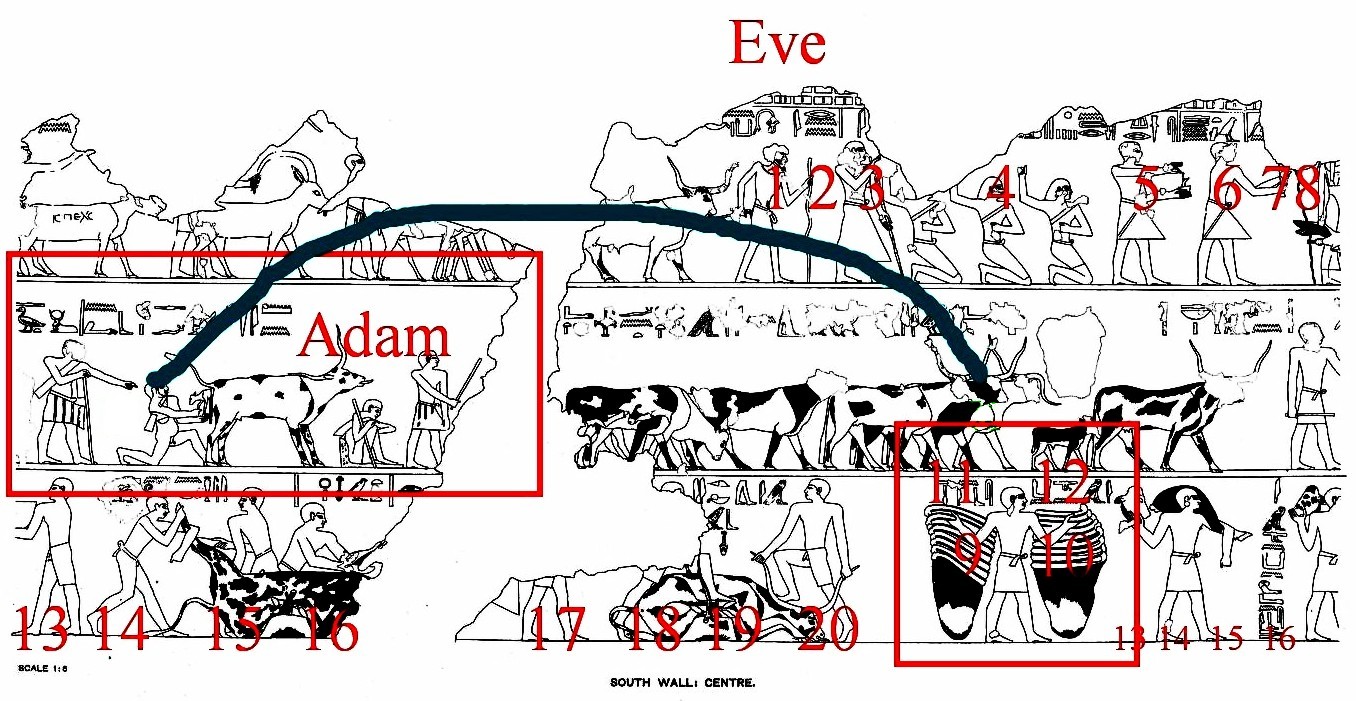
Blasid was to hurry-doctors of evacuation in Grindavik at 15:00. A donkey was redirected to the leg and this was pronounced a new heifer pulled from the 'vidbunad'. Adam was credited ('held') with the evacuation.
'Bunad' = national costume, or in 'mythological' translation 'bu-nad' = "a place to live" ('hier kannst du ja wohnen' - as tells the 'Belcez' vehicle/animal upon arrival).
The theory tells that when icelandic split from norwegian some centuries ago, this left the traces in the language which here will correspond to the essential 'maieutic' motive of Adam in the 'mythological' translation - icelandic interpreted with a norwegian ear - through a diachronic 'knot' (assumed to be where the two languages split):
'Blasid' could by this image be understood not only as the newborn calf but also as Adam himself - that is the mythos of the newborn child's opened head - hence the man standing behind Adam. This is identified as a donkey redirected to the leg and this was pronounced a new heifer pulled from the 'vidbunad'. The details of this mythos is told in the hieroglyphs.
Example 3:
From an article on the danger zone
Icelandic:
Nýtt kort: Hættusvæðið stækkar
Veðurstofa Íslands hefur uppfært hættumatskort fyrir svæðið í kringum Grindavík og Svartsengi.
Með nýja kortinu er hættusvæðið stækkað frá því sem áður var.
Í tilkynningu segir að kortið sé unnið út frá nýjum gervitunglamyndum af Svartsengi og kvikuganginum [...]
Í tilkynningunni er tekið fram að almannavarnir og lögreglustjórinn á Suðurnesjum hafi kortið til hliðsjónar í skipulagningu fyrir svæðið.
Google translator:
New map: The danger zone expands
The Icelandic Meteorological Office has updated the hazard assessment map for the area around Grindavík and Svartsengi.
With the new map, the danger zone is expanded from what it was before.
The announcement states that the map is based on new satellite images of Svartsengi and the magma tunnel [...]
In the announcement, it is stated that the public defense and the police chief in Suðurnes have taken the map into consideration in planning for the area.
Mythological translation:
Nýtt kort: Hættusvæðið stækkar
New card/short: The cap/hood-sweat is sticky
Weather-level Iceland have lifted cap/hood-food-card/short for the sweat around Grindavík and Svartsengi
With the new cards/shorts is the hood-sweat stuck from that which was 'adur' = 'A-animal'
In the announcement (sounds like something laid against the skin) says that the card/short has been detached from the new gervi-lung-ta-myndum of Svartsengi and the quickstep [...]
In the announcement (sounds like something laid against the skin) it is taken forth/out that general warnings and loose-wriggled-binding of Suðurnesjum have shortened to glide-vision in the production for/of sweat.
This seems to be rather consistently pointing to the Eve part of the tomb wall of Meir:
The word 'gervitunglamyndum' is reinterpreted to 'gervi-lung-ta-myndum' along the same lines as 'lisker-fid' into 'fisker-lid'.
Could be 'hliðsjónar' could mean the swans or geese that are prepared for apparent food. They glide through the air in a beautiful way.
|
Veðurstofa Íslands hefur uppfært hættumatskort fyrir svæðið í kringum Grindavík og Svartsengi. |
= LUNGs of Eve have inhaled = leg of bull around shoulders = hette om mat-skort = for sweat = around Grindavik and Blackbed |
'...for sweat around Grindavik and Blackbed': Grindavik could here mean the two ribs structure.
As far as concerns the Blackbed, I refer to this file and point to the gap between Nono part 2 and part 1 which is at poem #17 called 'Blackbird' - not white as the apparent geese or swans.
[...] og fjölskylda hennar þurftu að yfirgefa heimili sitt í Grindavík í síðustu viku en nú eru þau komin með þak yfir höfuðið í Hafnarfirði,
Google translator:
[...] and her family had to leave their home in Grindavik last week, but now they have a roof over their heads in Hafnarfjörður
Mythological translation:
[...] and her plank-guilt was forced to leave their home in Grindavik in the last week, and now there is a dead added behind over the heads in Hafnarfirði
This is interpreted in
'Fjölskylda hennar' sounds to a norwegian ear like 'her plank-guilt', in icelandic it means 'family' while 'fjöl' = 'number' and 'skylda' = 'duty'. In norwegian 'fjøl' = 'plank'. The origins of this semantic complex is likely to be about family implying the need for finding food for other people and the conservation of it through the winter - both of which could resemble the mystery how is it possible to inhale by way of bodily muscles? Exhalation is easy to understand since muscles easily contract - but inhalation? 'Sjöl-fylda' = 'the self-filling', like inhalation.
Conclusion from these few examples is that icelandic exposes what could be a substrate in norwegian of what could count as the essential semiotics for an acoustic reality in ancient Egypt. This would also be the reason why my norwegian poetry in the white metre could interpret those ancient tomb walls of Egypt with such surprising precision.
The interesting idea is that this could be suggestive of the idea that icelandic relates to norwegian like hebrew to egyptian. It means that if one finds the above examples strange, this feeling could be a variant of antisemitism - transformed in the same way as 'viking' Norway relates to pharaonic Egypt.
The icelandic earthquakes seem to have been due to a magma channel that runs a few hundred metres underearth at Grindavik. I had noticed a similarity relevance of the 'window' of four poems in my TEQ = 'The Endmorgan Quartet' that could be recognized as 'Tutankhamon's dagger' - the poems TEQ #576, TEQ #1144, TEQ #284 and TEQ #1436. I was looking up the same numbers in the Johnson enumeration of Emily Dickinson's poems for a comparison with my TEQ (probably on 8 or 9 november 2023) and wrote on 9 november that the 3300 year old dagger appeared to be not rusty - and I later could notice that her #1144 could tell of Tutankhamon's dagger (by the tunnel and the balm) which could have been taken to be the magma channel under Grindavik. Dickinson's and my poems 'branch' from the poetic elysium (a sort of 'acoustic reality'?) into a diachronic split which sets her time off from mine. Whether the quakes and volcano threat could have been artificially provoked, I dont know - but I notice also that respiratory problems were reported to be on the rise throughout the following days. Of course most people do not quickly endorse a romantic nature conception and are inclined to search for more pragmatic explanations - I let this question remain open.
The theory of menat qua inhalation
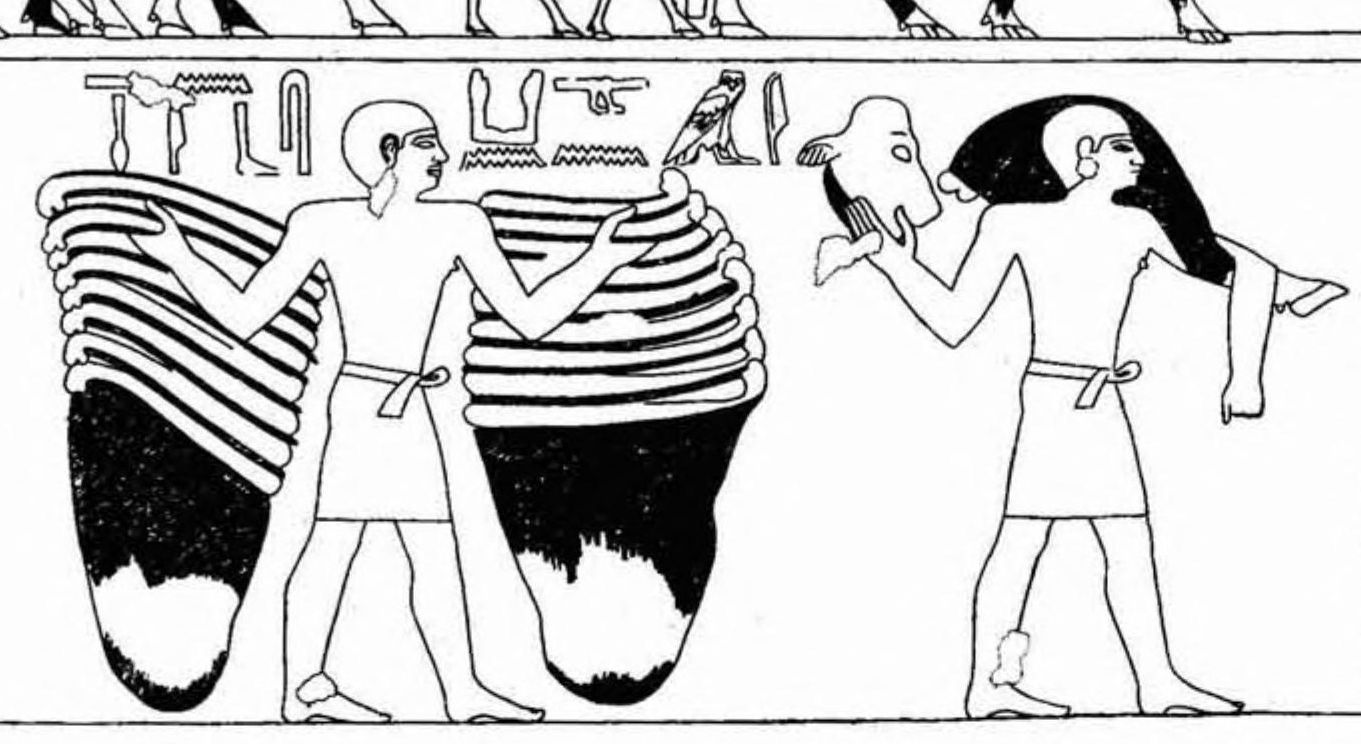
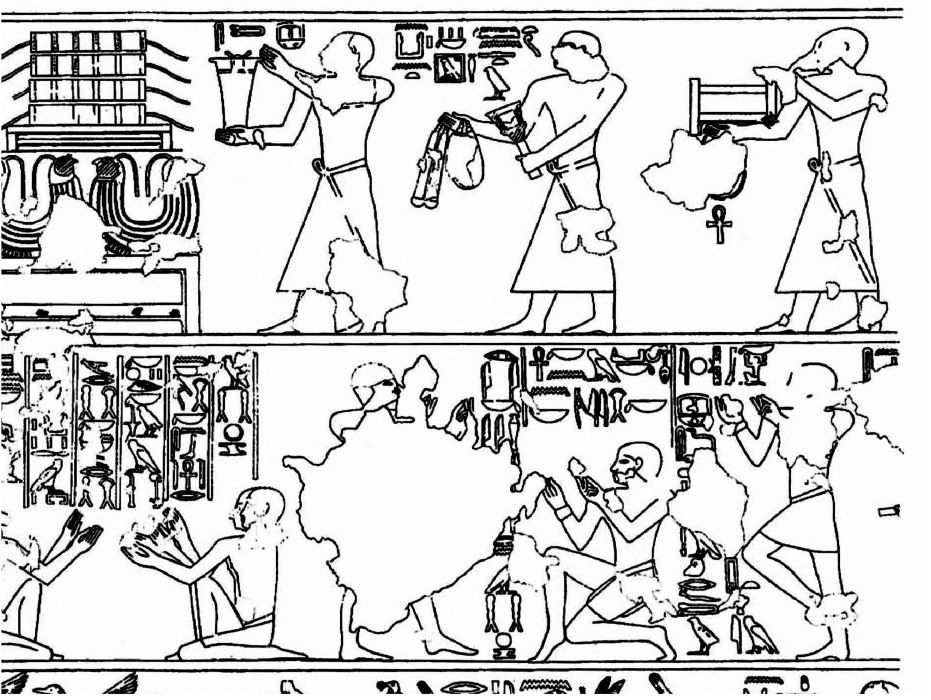
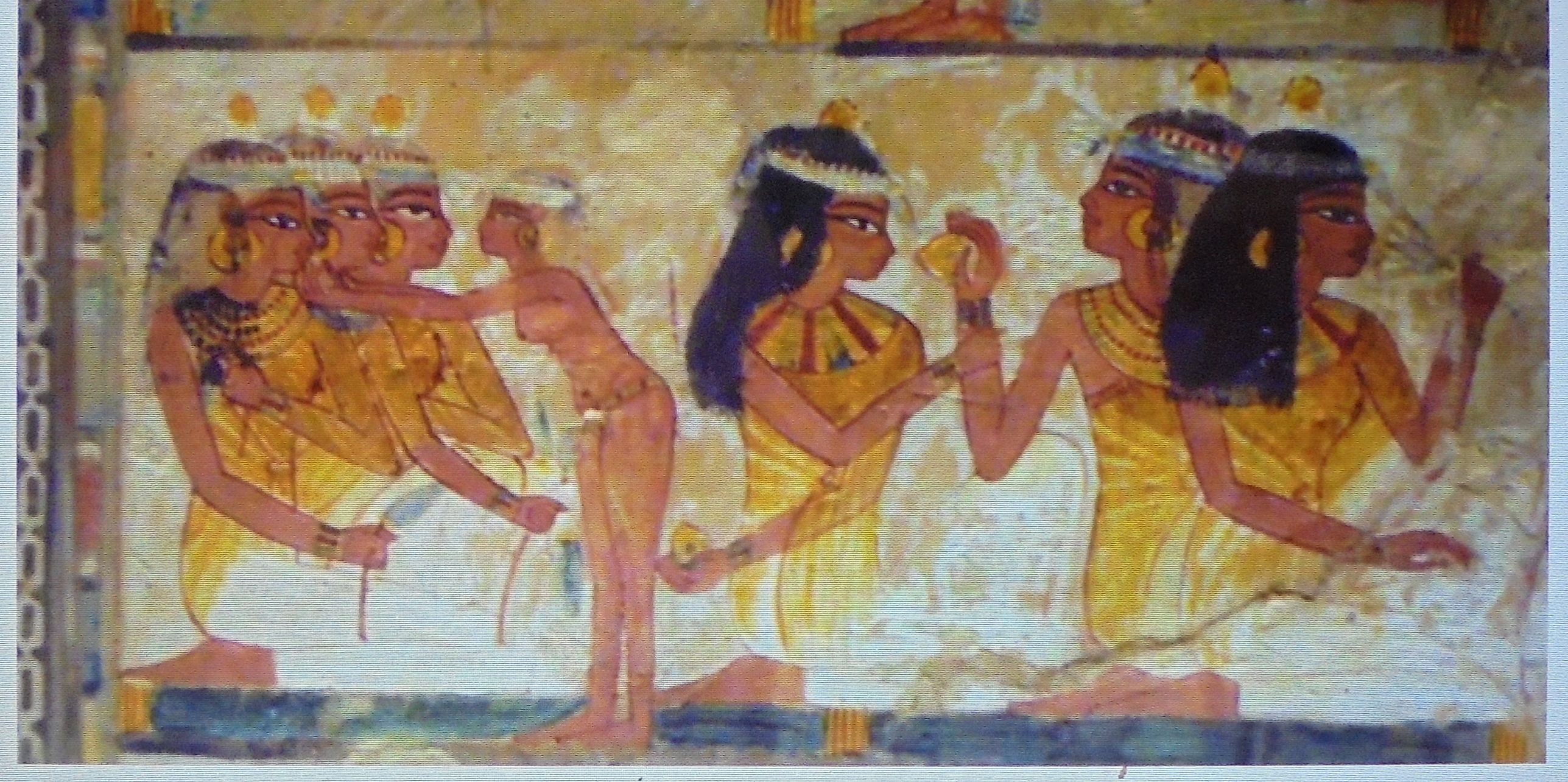
Exhalation is easy to understand by the muscles of the thorax - but how can inhalation come about? The naive theory forms itself that this is what the breasts and nipples are for (also since even men have nipples): The female breasts pull the thorax out for inhalation. It is an anti-muscle which also serves to lift the male erection by another anti-muscle. But they should be attached to something - not only ending in empty air - if they shall accomplish that? Yes, that is the sexual attraction and social 'attachment' generally. In icelandic this can be recognized in the form 'fjöl-skylda' which means 'family', composed of what in norwegian 'fjöl' = 'plank' and 'skylda' = 'the guilt' - hence 'plank-guilt' - as if the female feels guilty because she is flat like a plank because then there is perhaps not enough food for the children and how can they make more children for guaranteeing a safe old age? The ord 'fjöl' in nynorsk means (Torp 1919) both 'plank' and 'many people', while 'skylda' means both 'guilt' and family relations ('skyldskap' = 'slektskap'). What is the reason why one should lend emphasis to that redundant hole in the matrix in the form of 'plank-guilt' as the force of inhalation? That is found in the mystery of the ancient egyptian 'menat' which is a symbol found everywhere in ancient Egypt and seems to be essential for egyptian symbolism. The Meir tomb wall shows this in the following two images (from Blackman 1914):
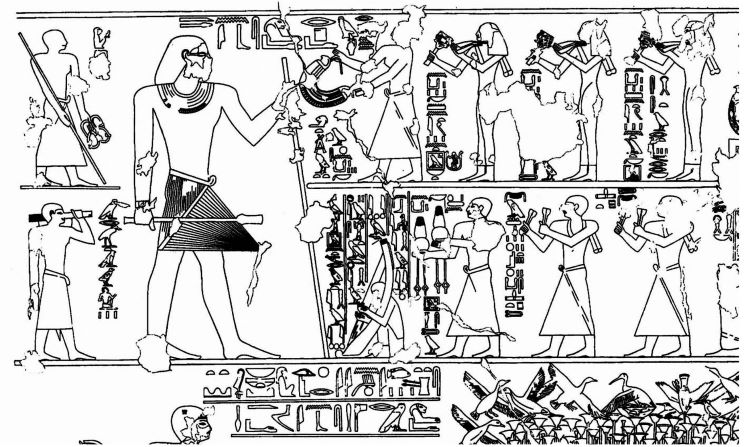
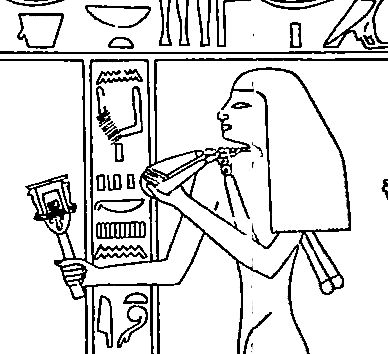
In the upper row to the left is seen three females who carry sistrum and menat - here exemplified also with another image of Meir:
The menat hangs over the shoulder and down on the back and the necklace is pulled by the left hand - presumably the phallus-shaped counterweight on the spine goes up and down like an erection while the hand goes back and forth like the respiration movement of the thorax. The right hand carries a sistrum which looks like the tool which bookbinders use for printing the title on the spine of the book - somewhat like the counterweight goes up and down and 'prints' on the spine of the person. In the upper row to the right the first person carries a CONTAINer which is my computer glitsch #1 while the second person carries sistrum and menat which then probably means my computer glitsch #2 - for the idea of spiritual MOVEMENT (from ZUM to CULTURE) - which here means respiratory movement of the thorax. The third may encode the meeting of harmony and counterpoint - like the sistrum containing formants and the menat having a counterpoint on the back.
In the lefthand side upper register there are females carrying sistrum and menat including the 'phallus'-like shape going up and down on the spine of the back - while in the second register (row) there are men carring what looks like gender-specific symbols including two possibly female breast-shapes with four ropes hanging down from them - as for the 'attachment' which could pull the thorax in and out by way of the nipples of both genders.
The harp in front of these two suggests that it be about the fundamental theorem of logic - while the females in the upper register would be suggestive of the fundamental theorem of linguistics.
These phenomena of ancient Egypt are the reason why the theory seems justifiable. 'Fjölskylda' will then explain the impulse which expands the thorax in inhalation.
Of course the egyptians had solved the mystery of how inhalation can come about - it is not a medical matter but a semiotic. Menat is probably not related to such 'suggestive' human logic as breasts for inhalation but the cognitive principles that can be recognized in this bodily function.
For the idea of 'attachment' being constitutive of human knowledge, see e.g. these observations in my PhD dissertation of 1997.
The theory of sistrum by spinedust
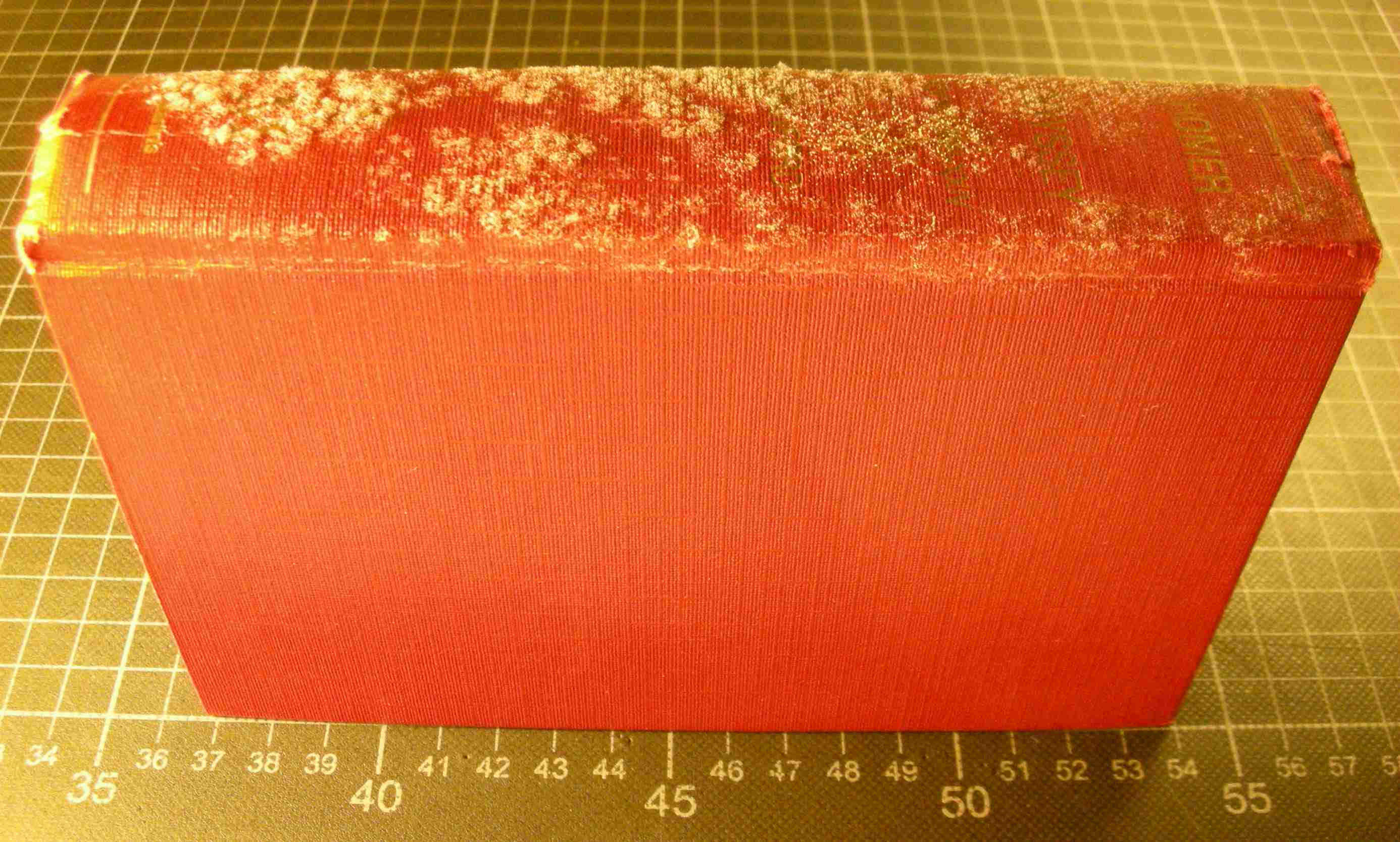
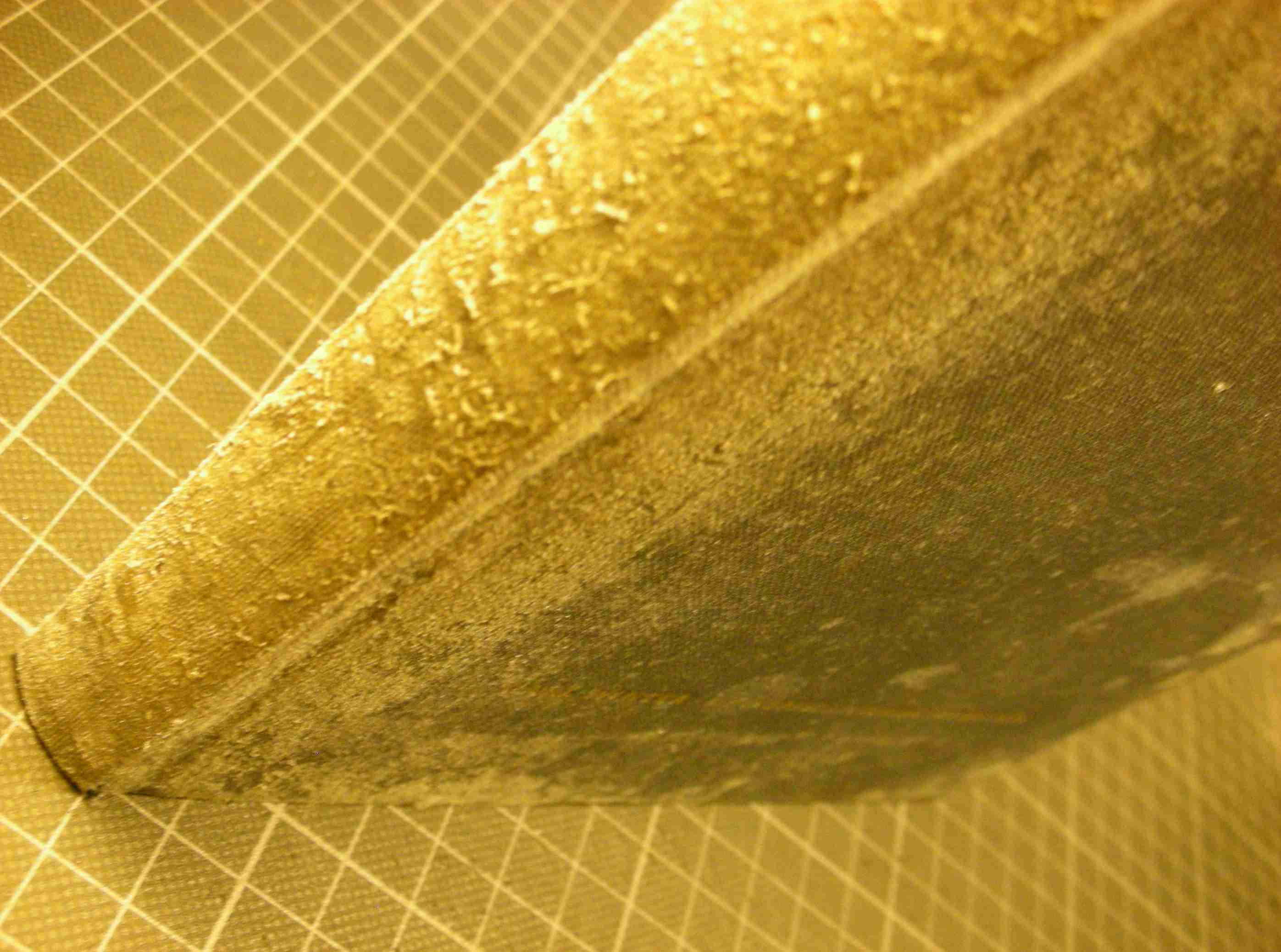
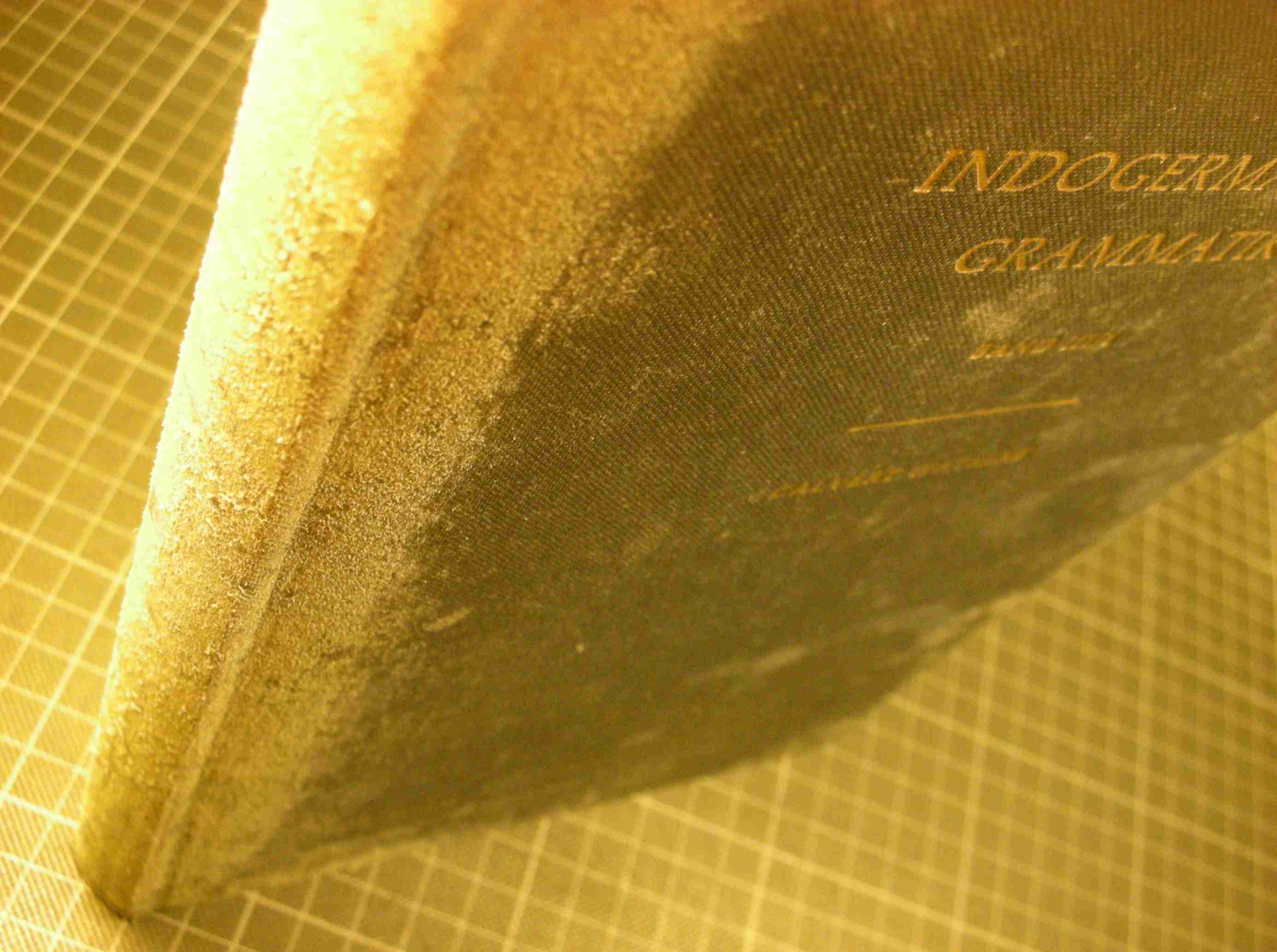
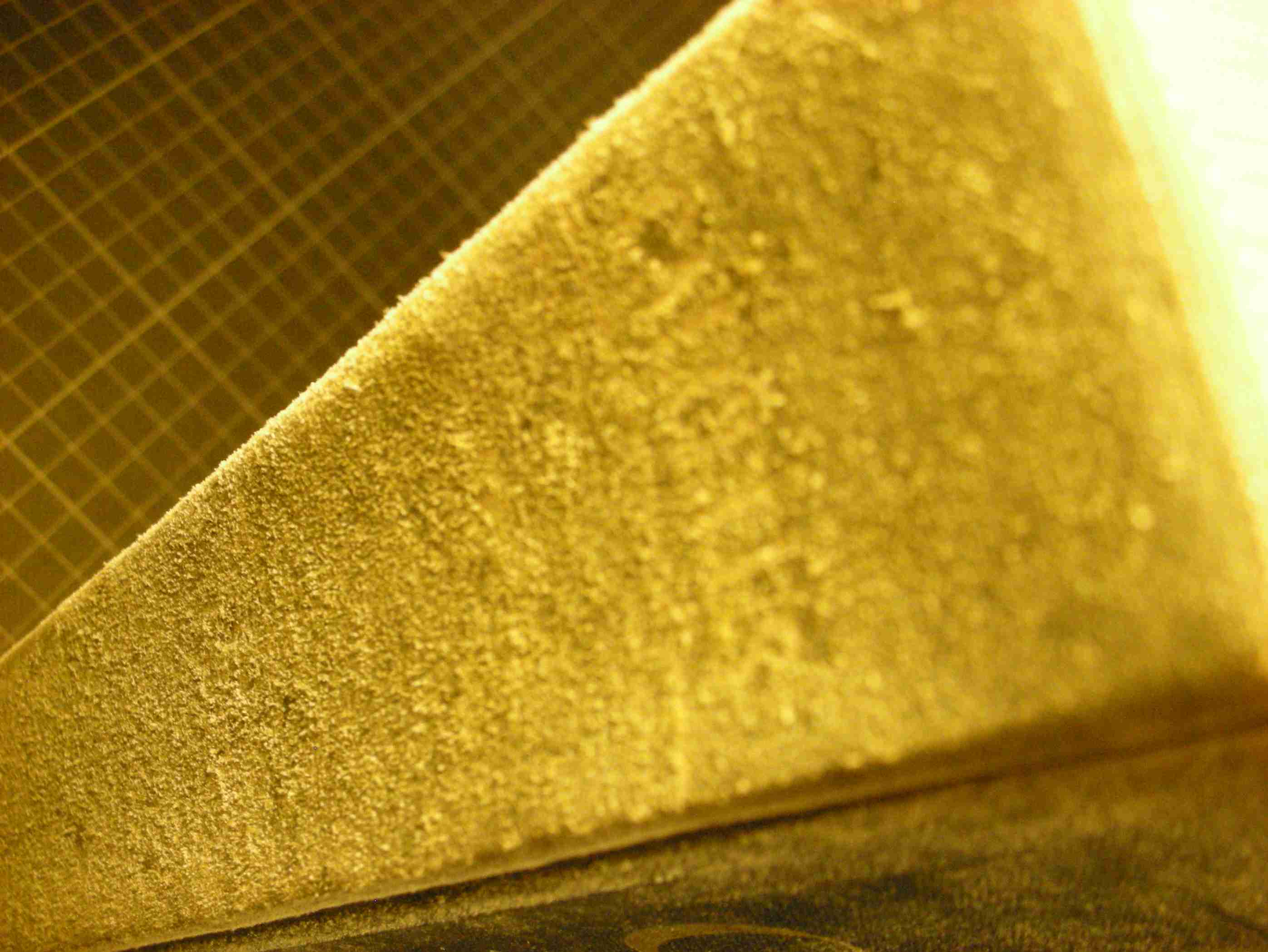
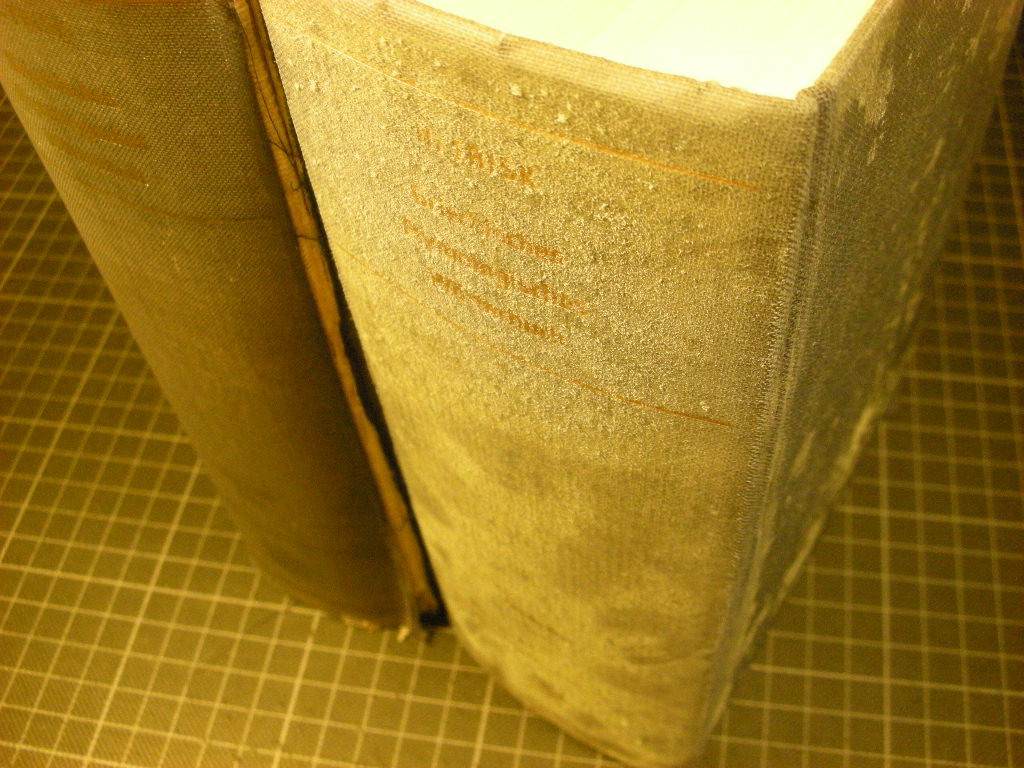
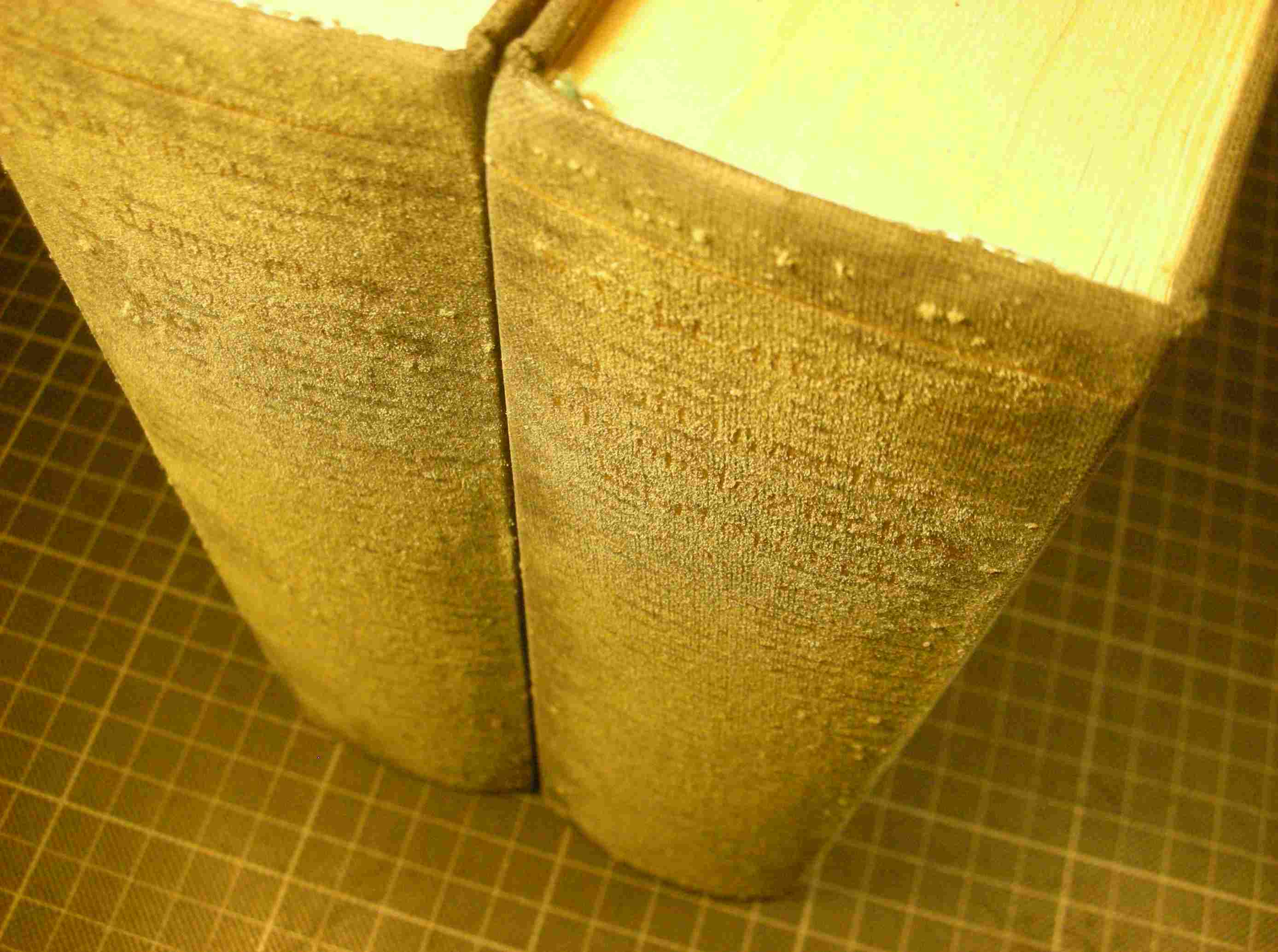
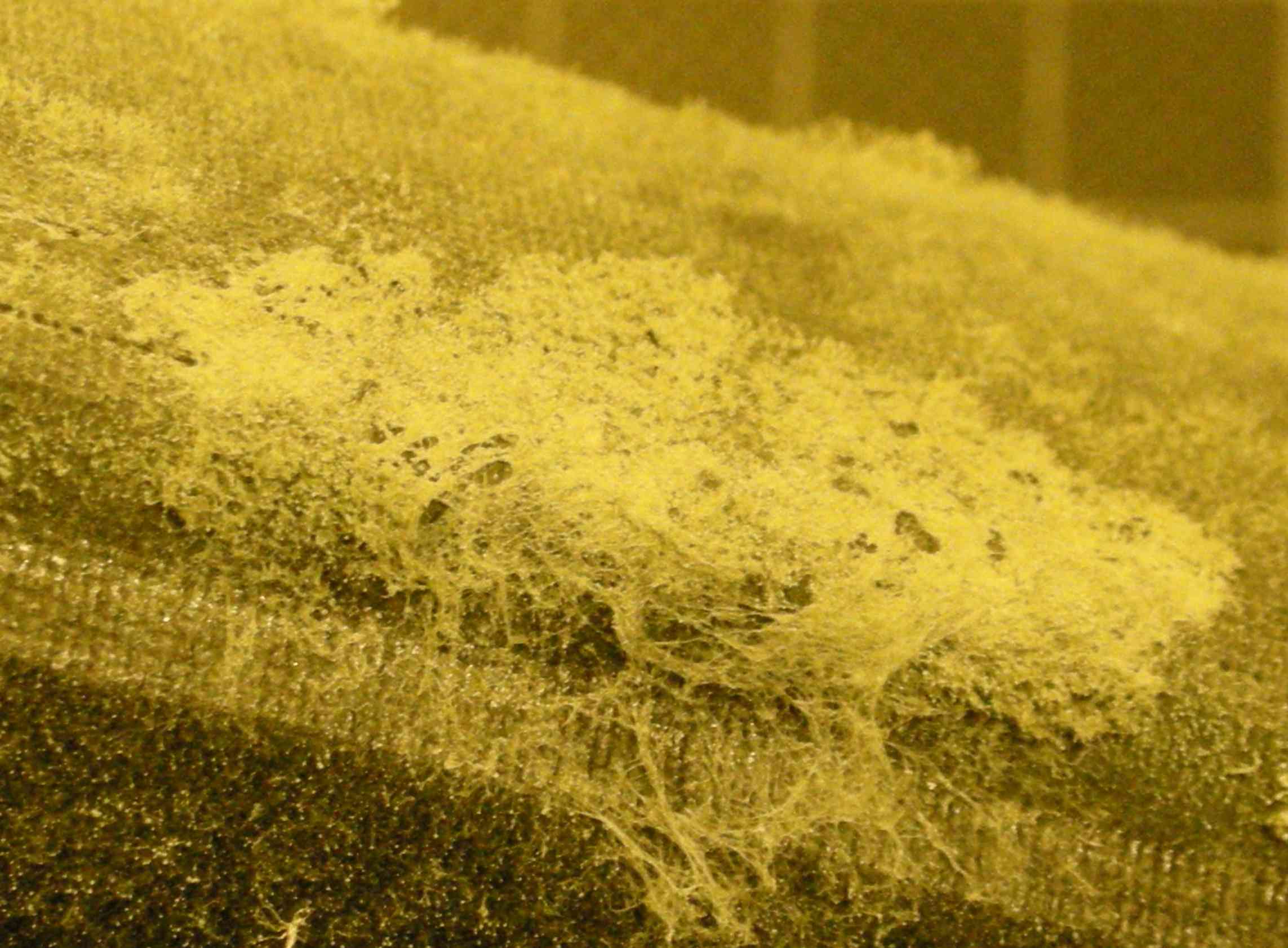
Sistrum looks like the tool bookbinders use for printing title and name on a book spine. It was often equipped with crossover 'formants' - probably for the unity of logical and phonetic form. The story is the dust that collected in a strange way over spines in my bookshelf in 2010 - but only on books of certain themes - as if the dust could read or knew what the books were about.
The 3 articles referred to in the beginning show that there seems to be an unbroken line of what probably can be called 'the acoustic reality' taking shape in Egypt, developing through God's chosen people of Israel into christian mysticism. It can be assumed that the exodus of the jewish people from Egypt corresponds to the crucifixion and resurrection of Christ if one assumes that the three levels of cultural-religious history are comparable and part of the same religious tradition. Moses probably grew up in Egypt and may have learnt the culture therefrom - and the jewish exodus includes the crossing of the Red Sea. The essential observation is in the hebrew to Exodus 14:7 - the jews fleeing from pharao who is after them - here my private notes from the study:
Exodus 14:7 tells that pharao took 600 of his best war chariots for sending them after the fleeing israelites when these were about to cross over the Red Sea for escaping Egypt. It is seen that the word for 'chariot' can also mean 'upper millstone' (for 'grinding') or 'folder' as in a book - so that the structure of the verse will be
|
600 chariots / folders Egypt's borders 30 above it all |
= the folders of a book = the spine of the book = the dust that collected over my book spines |
The story is that only certain book types collected the dust - here a tentative alignment with my four poetic metres:
|
1) Books of historic-comparative linguistic contents 2) Books of mathematical contents 3) A few books of certain ancient and poetic contents 4) Bookshelves |
yellow metre white metre blue metre red metre |
In addition, 'Norges Lover' ('The laws of Norway') and Dan Brown's "The lost symbol" had attracted the dust. 'The Laws-t-Symbol' = anglophony? A world atlas grew dusty as well.
Here are some samples:
Homer's Odyssey
Calvert Watkin's 'Indogermanische Grammatik' Band III/1
(another detail of the same book)
Tom M.Apostol's Calculus vol.1 on Xerox
another angle
Frisk's greek etymological dictionary
Walde-Hofmann's latin etymological dictionary
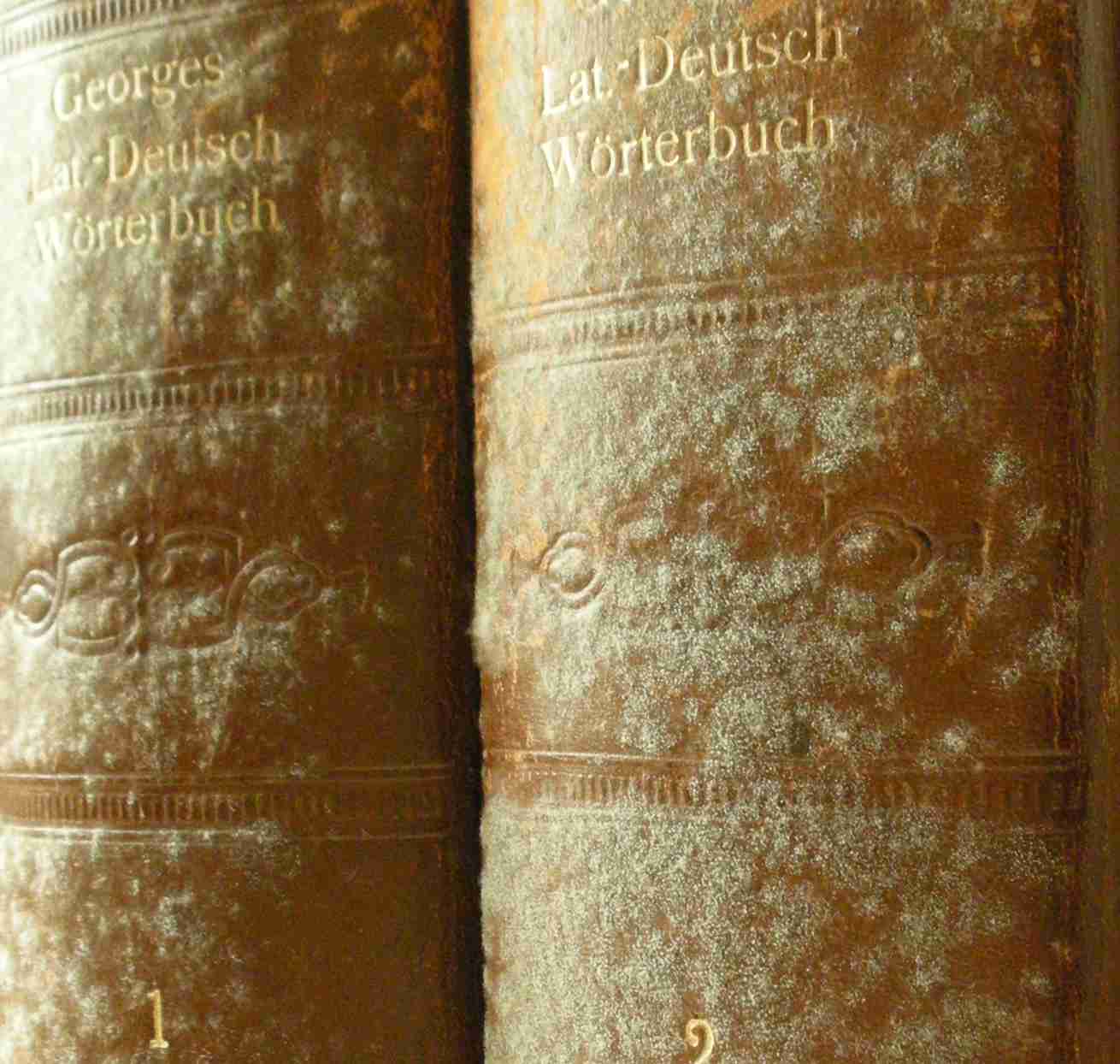
Georges' 'Lateinisch-Deutsch Lexicon'
Talmud tractate 'Berachos', Mesorah edition vol.2
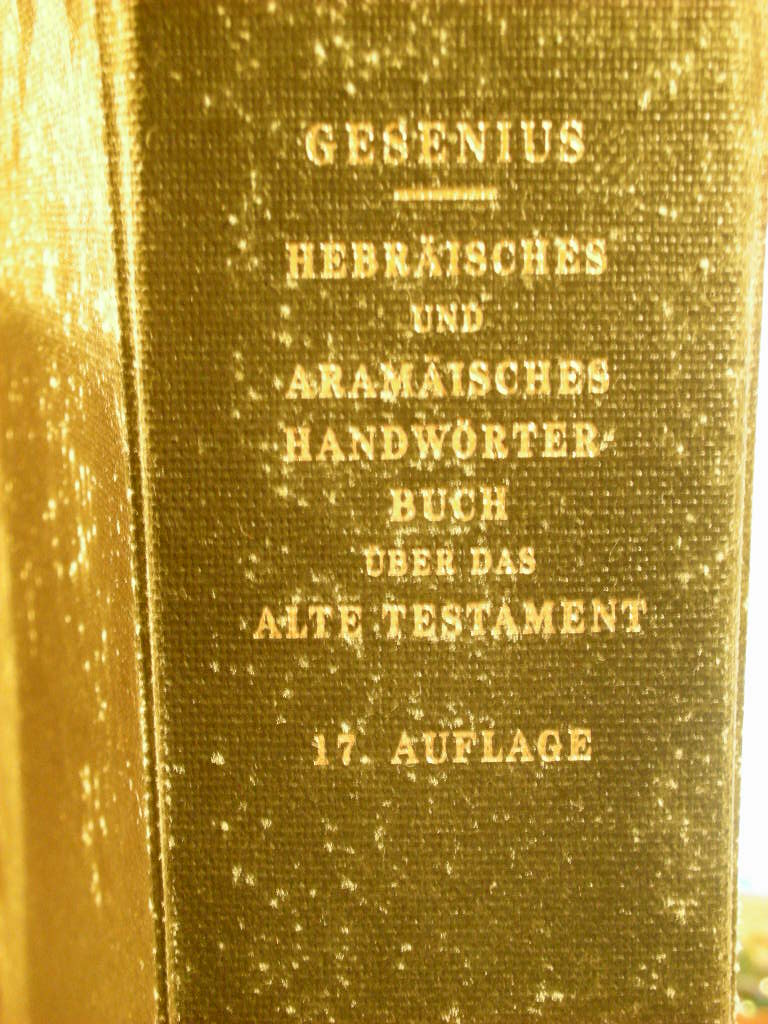
Gesenius' Hebrew dictionary
Weinberger's "Partial differential equations"
Bursill-Hall's "Speculative grammars of the middle ages"
The bookshelves are quite interesting since they seem to suggest that the rows of holes in the wood could have been determining somehow (cp. also the concept of 'fjöl-skylda' = 'the plank-guilt' discussed above):
Dust on bookshelf sample 1
Dust on bookshelf sample 2
Dust on bookshelf sample 3
Dust on bookshelf sample 4
There seem to be very distinct criteria of distribution, probably relative to the equiprobability of the holes - cp. my fundamental theorem of logic.
Lukács "The historical novel" is an interesting story - told in this file.
August Strindberg's "Ensam" (= 'Lonely') is a literary pearl of mystic inquiry. It did not connect any dust.
Sistrum and menat as a Turing machine
A Turing machine is considered equivalent with the definition of what can be computed by any computer working on digital data. It is seen from the following illustration borrowed from this article that the components of a Turing machine very closely resemble the sistrum and menat devices:

From https://en.wikipedia.org/wiki/Turing_machine_gallery
The tape is the necklace of beads which is pulled forwards and backwards, the two rotating devices (tractor and print) resemble the two 'weights' that hang down on the spine (and the phallus associations could derive from this function of 'tractor and print'), while the table of instructions would be the sistrum (for the isomorphy of logical and phonetic form which ultimately makes for linguistic instructions) held in the other hand. See the details of the sistrum and menat, and from this illustration one could speculate if even the additional model of the 'poor mug' in a 'box' (the sistrum and menat are shown inbetween these) has its rationality in the tomb image. It is seen that the printing head needs an 'eye' to read and interpret the symbols printed on the tape - this seems to find a potential correlate in the 'papyrus' or 'lotus' flower coronas which seem to be assigned decisive significance in egyptian tomb symbolism. Are there 'robots' on the register below? See also the 'poor cow' in the box above the head of a central character on the tomb wall of Tutankhamon discussed below - and above it an apparent rattlesnake moving back and forth like a Turing tape and a bird who picks with its beak on the ground like a reading-writing head - as well as the arbitrary asphalt spill (see below) with the gestaltswitch bull running either forwards or backwards like Turing's tape - equipped even with a 'papyrus' or 'lotus' corona reading eye.
The similarity is striking - and can of course have been observed earlier (unknown to me, though) - and it means that the egyptians at the time of the rock tombs of Meir (appr 2000 BC) could have reached the philosophical computation level of Alan Turing 1936, however intuitive. With these inside the tombs dug down into the earth (or rock), the transcendence of the Turing boundary of computation would have been found in the revelation of the revelation in terms of the meeting of this tomb machine ejected up like an icelandic volcano to meet the tip of the pyramids above the earth.
As this illustration suggests, the Turing machine as either motor-driven (upper register to the left) or as a poor mug in a box (upper register to the right) leads to the inbetween matrix which can be recognized as the field wherein phonetic and logical form meet in the below sunflower matrix - between 'Moses' and 'Senbi' in the lower register - see this article for details.
My white metre poetry book 'Stillhetens åndedrag' (= 'The breathing of silence') is clearly a title which could allude to these aspects of sistrum and menat.
Briefly: Since sistrum and menat as tomb art served to guide the deceased into a transcendent world beyond the normal limitations of human reality, the limitations of computation in the Turing machine would have been constitutive of the present world while the further aspects of sistrum and menat (dust on spines, respiration mysteries) would have been suggestive of other realities. For my own theory of poetic numerality, it would be this numerality which could provide for access to a transcendent and 'other' reality.
See this article for the details of the Turing machine.
The revelation of the revelation
TEQ = 'The Endmorgan Quartet' is here considered a revelation in the sense of inner poetic articulations. I wrote my yellow metre study DDS = 'Der Dornenstrauch' in cultural contexts (coffeepoints in downtown Vienna) which could be assumed to contain traces of this TEQ revelation - by observing during the writing what I believed could have been traces in culture of this TEQ - qua outer poetic articulations in events. Hence I observed what I believed was revelations of the revelations - when the outer poetic articulations met the inner poetic articulations - like undernearth ancient egyptian tomb art meeting the overearth pyramids. The modern grammatical counterpart to this is the concept of left- and right-hand parentheses in programming or linguistic theory: A pushdown automaton will store the righthand parentheses on the memory stack while printing out the lefthands, and when these are finished (locally or globally) the righthand parentheses are pushed up again. A phrase structure grammar has no such memory stack but matches the right and left by innate knowledge - which here corresponds to the inner and outer poetic articulations containing inherently the prophetic knowledge of each other. Every known digital computer or Turing machine is a pushdown, not a phrase structure device. (Or have such phrase structure devices been invented?)
It can be assumed - a speculative hypothesis of mine, this - that it is the revelation of the revelation which constitutes 'Chomsky's hook' - the catch which makes a context-free phrase structure grammar (CFPSG) different from a pushdown automaton.
It can furthermore be assumed - another speculative hypothesis of mine - that this catch is the same as the format of the fundamental theorem of linguistics - two items among two different metaphysical realities being recognized (due to the limitations of the human semiotic constitution) as one and the same - by which they reduce to physical matter with a linguistic labelling - and the sum of epistemological label + ontological matter should suffice for keeping up the contact with the original metaphysical matter and thereby prevent shipwreck in eternity. We understand as in a mirror, as in a riddle. This means that there is a 'label' pasted onto a potentially recursive expansion of the phrase (a category).
By the hypothesis I articulated in my PhD dissertation, this label is the name of a logical paradox - it belongs to two different metaphysical states (with two potentially different truth conditions) simultaneously.
My german poetry on the diachrony of language - "Der Dornenstrauch" = 'DDS' - is enumerated by relative and absolute enumeration. It is the yellow-metre revelation of the revelation in TEQ by the idea that TEQ = inner poetic articulations shaping and altering the culture which is the outer poetic articulation for the DDS.
See the enumerative listing with three columns to the left of the poems in DDS: The relative enumeration, the absolute and the absolute with mirror reflex running up to #214 - the mirror there turning appr half way and running down again.
DDS #176 by relative enumeration is 176, by absolute enumeration 280 and by mirror 'darkly' enumeration 149 - hence the mirror poem is the poem with relative enumeration DDS #107i. The relative enumeration can be seen to exhibit 'phrase structures'.
These numbers 176, 280, 149 index important distributional properties which could be considered variants of left- and righthand parentheses a la the 'curved' structure to the left of the females in the tomb wall image discussed bove.
176149 (= 176-149) is found at Catalan decimal #876139. It is followed by 272: 176-149-272 = decimal #876142. Is this significant?
176149
876139
7 1 = 8 + 272 = 280
If it should be significant, an interesting observation could be that DDS #176 is in the form of a revelation of a revelation = contextfree phrase structure grammar (CFPSG) while DDS #107i tells of a cat-a-land constant:
176 = absolute enumeration 280
In geistige Bewegungen
fahren die Mondscheiben
des Pferdes über die Straßenbahn.
Hungrige, heurige, schwangere
über die Menschengeschlechter
ihrer strabaziösen Handlungen.
Siebensterngasse,
Mondscheingasse,
Überquerungstraße.
107i = absolute enumeration 149
Die große graue Katze
kommt mir entgegen,
schnell gehend
wie eine Bündel Licht
auf Linoleum
dem Boden.
My poetic numerality can probably interpret the shadowy mythological gestaltswitches in thresholded data - see the article 'Some formal aspects of the sunflower matrix', here with example in 176149 → 876139. For example, for turning the first digit '1' into '8', add poem #7 from the chapter on poetic numerality in SNEEFT COEIL - it seems that the third stanza of DDS #176 is most conveniently understood as the '1'. For poem DDS #107i, subtract 1 from poem #14 to reach poem #13 for a renewed understanding of the last 2/3 of DDS #107i. It can be concluded that this makes some sense somehow - and hence could add the humanoid details to the data for recognizing them in the Catalan constant's balance between cardinality and ordinality of the decimals.
Is (e.g.) the Catalan constant by this relation of cardinality and ordinality the articulation of everything in the human reality - that is, a name of the human semiotic constitution? Since the constant is assumed to be infinite and unperiodic, it follows that every text that has been written or can be written will be found there. The question is whether the cardinal-ordinal relation will give an adequate representation of the human reality. This is of course a speculative hypothesis only but it can count as a valuable model.
If other realities exist, that is a concept that can be invoked for explaining ex nihilo formation of matter - sliding from one such infinite number into another. It is likely that Wittgenstein's philosophy converges on this idea of the human reality and its rationality being contained within a border which will have other realities beyond.
Hence if the Turing boundary of computation is the same as the boundary to the human reality or its semiotic constitution, what could take computation beyond the Turing boundary would be the art of controlling (say, by poetic numerality) the relation between such infinite numbers. It can be guessed or suggested that a spirituality in the computer hardware with gestaltswitch alternatives in the electronic mythology contained in the thresholded shadows could be of this type. See the story of my computer glitsches acting in accordance with humanoid logic.
The question whether the Catalan constant (the integral from 0 to 1 of arcustanges x divided with x) could be considered a candidate for the status of defining the human semiotic constitution can in fact be considered on basis of the wall image of Tutankhamon's tomb:
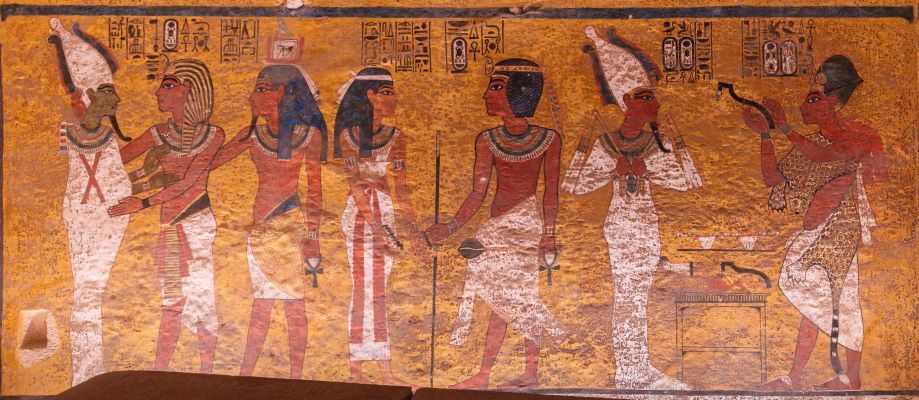
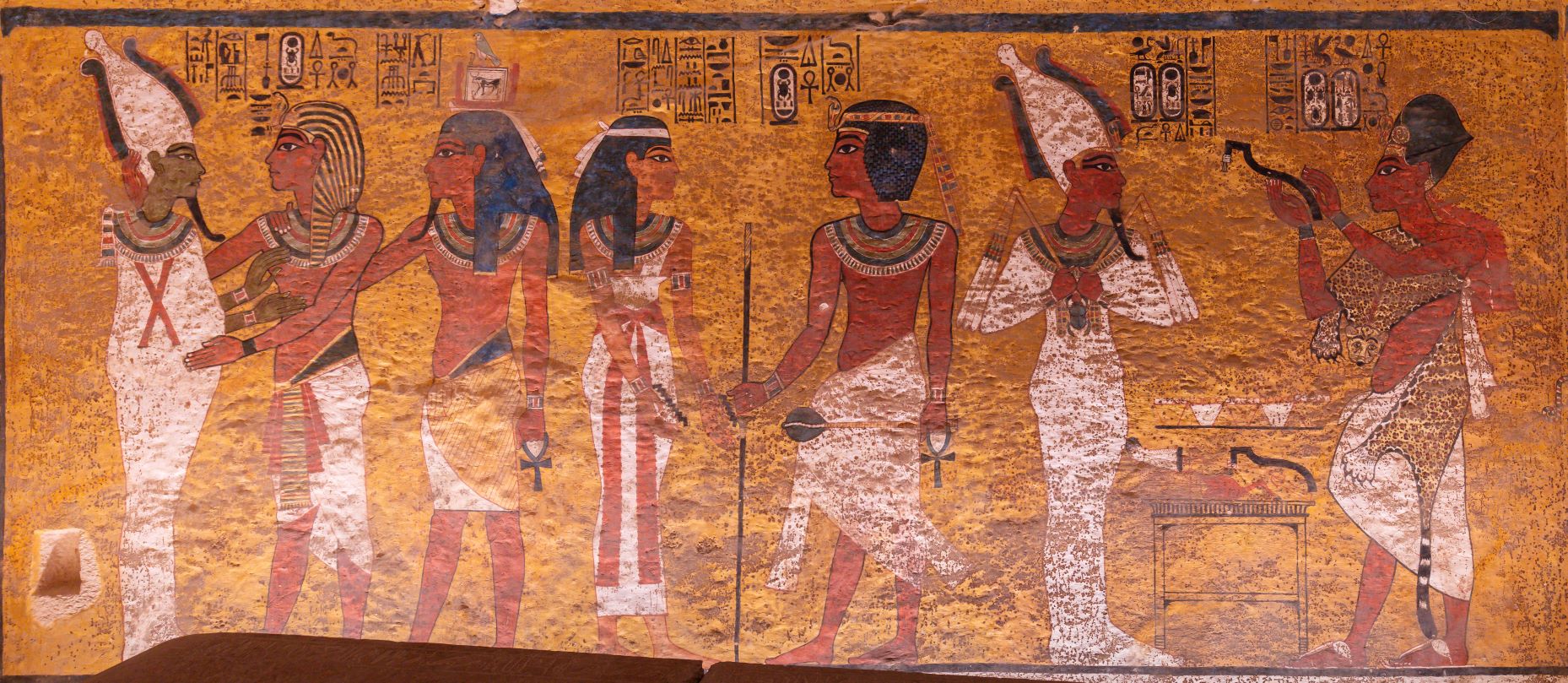
Here is a better resolution photo of the artwork in the tomb at the sarcophagus of Tutankhamun (source in this article).
This tomb wall of Tutankhamon contains an element down to the left which in fact (turned 90 degrees) resembles this Catalan integral from 0 to 1 (by this source):
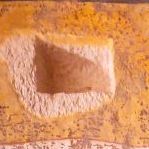

The curve is not the same but sufficiently similar to call for attention. For the general idea of a 'stretch' in egyptian data, see this file as well as the below examples of isomorphy with the map of Egypt. Notice also the curve which the righthand character is holding up - with a copy on the table underneath - how the curve constitutes a counterpoint to the wavy 'water' lines in the hands of the female in the mid of the image:
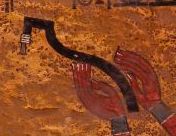
The curve looks similar to the one in the other end of the image except for the 'Spjelkavik' attached on the left: 'Spjelka' means 'with splint attached' - as when a fractured bone is healed by way of a stiff rod tightly bound around the bone. 'Spjelkavik' is a part of Ålesund town, like 'Klipra' is. As my book tells, it is of course possible that aspects of Ålesund town could have been incorporated into WWII after Howard Carter's discovery in 1922 - but if the same reason should have applied to WWI the tomb must have been discovered and photographed earlier before it was closed again for a later 'discovery' by the british archaeologist. If so, the question whether the 'mathematical' details of the death of Lenin in 1924 with the hypothetical involvement of just the Catalan constant could have been computed and organized in such a hurry as one year only could perhaps have been considered in new light. If this should have been the case, then the death of Lenin could even have been only a component in a larger administrative structure installed with WWI for engineering the modern political mythology. Could be even Hitler would have been a part of this? If so, there is of course also the question whether this 'Spjelkavik' addition to the quasi 'Catalan' curve could have been added in modern times - if the tomb had been opened before WWI and closed again for the later 'discovery' - by a 'Howard C. Arter'? The sign seems to be used in the sense of 'adze' - in the Old Kingdom the curve was even much flatter on the righthand side - according to Gardiner who also assisted in the early stages of the excavation.
Immediately above the head of one of the central characters - the third from the left - there is a bull or cow contained in a box.

Here follows an intuitive 'proof' that the Catalan constant is equivalent with the human reality:
My poem TEQ #1477 tells of the two water signs (the wave sign means 'water' and is taken to stand for a dental nasal 'n') in the hands of the female character: Her body is like the space (lifted a little up) between the two characters #2 and #3 from the left - and then her head extends up into the signs on the wall above - including those two water signs. "Have a ku!" is then the contents of the box over the head of character #3.
I discovered the cyclic form of Caravaggio's artworks by way of this aspect of 'what is immediately above the head of one of the central characters' - column 2 - see his Crucifixion of St.Andreas = #42 in the second column, #2 in the third. Immediately above the head of the man on the ladder are the hands with the curly signs resembling Tutankhamon's water signs. And down to the left - voila! - is the Catalan constant. Caravaggio's psychology is impressive.
The signature 'Førde' (the signatures of TEQ are always my name) here tells of the 'ford' between the two black zigzag lines in the hands of the female character - for the idea of 'jump your negro over'. (Førde' is also a placename in western Norway at the bottom of Førdefjorden which extends out to Brufjorden = the 'Bridge fjord').
(Example of another interpretation of the poem is the (possibly imaginary) xylophone at the canal by the linguistics institute in Venice: It could have been the mallet (which is held along with an apparent sistrum) in the hand of Tutankhamon's 5th person from the left striking against the wood he holds in his other hand and the sound waves emerge from the hands of the woman. If 'Budapest' is his mallet, 'massage' could be her two hands' vibration. It would be the bridge outside which 'leans after').
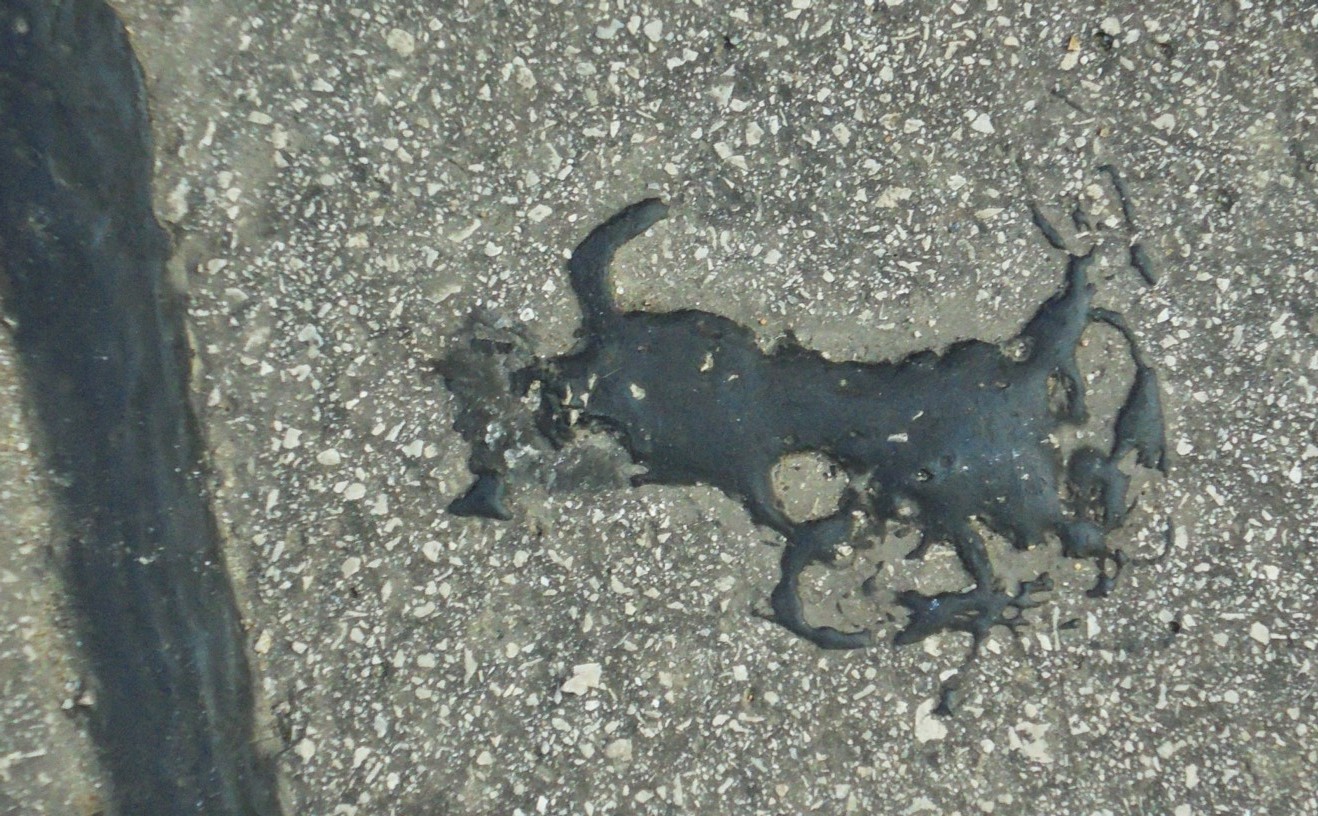
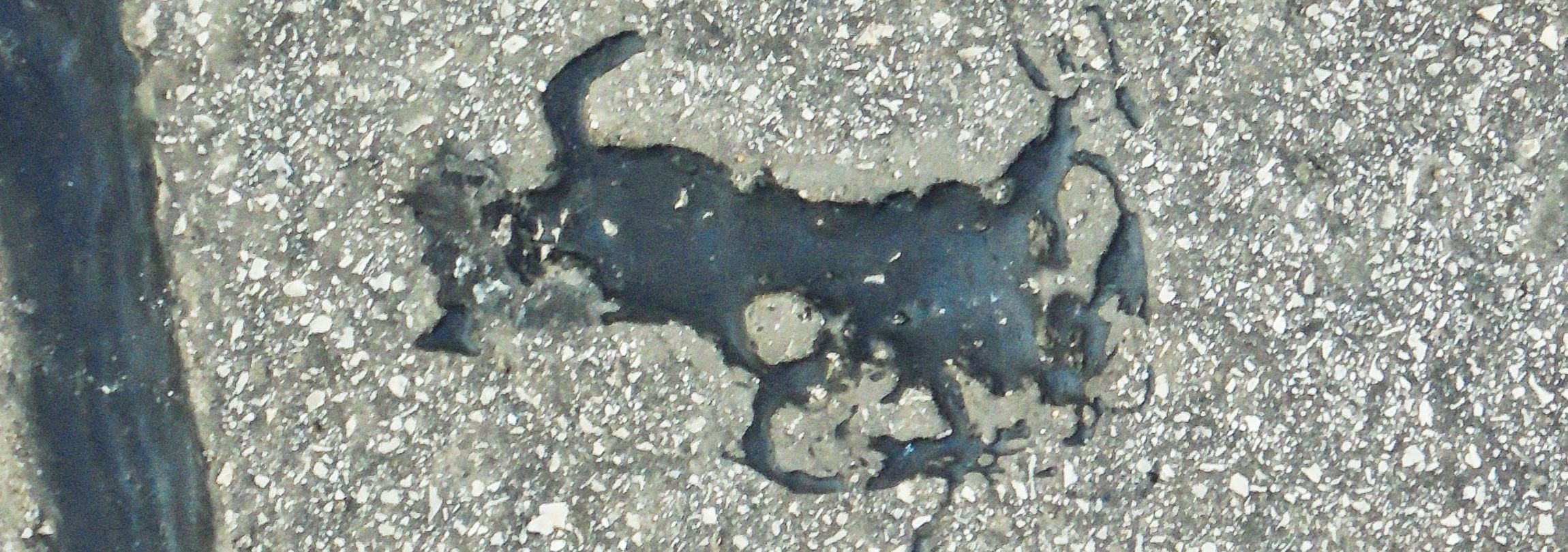
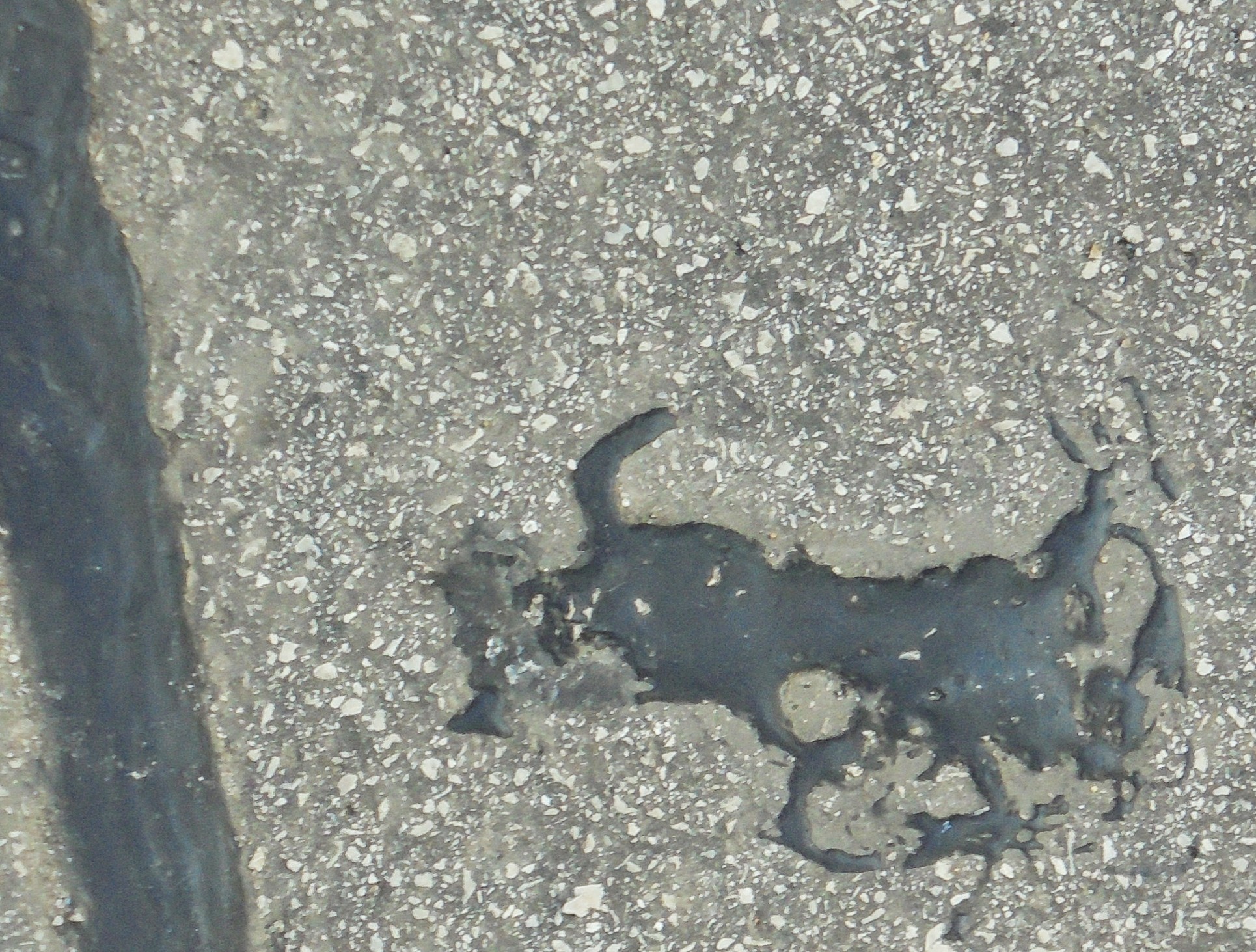
The decisive element is the bull or cow embraced by a formal box with a bird of prey and a rattlesnake immediately above it. On 18 november 2023, while I worked with these things, I went for a walk and spotted a formation on the sidewalk asphalt. It looked on the one hand like the bull (facing leftwards) in the box above the head in Tutankhamon's tomb, on the other hand it looks like the bull (facing rightwards) giving birth to a calf in the essential 'Adam' scene from the tomb wall of Meir (see also the icelandic data):

From Blackman 1914 (annotated by me)

Arbitrary asphalt spill on sidewalk in Vienna
(More of the 'hieroglyphic' area above the bull in this larger excerpt).
There is an immediate connection between the maieutic Adam of Meir and the Tutankhamon images:
|
Tutankhamon 1st from left ('X') 2nd from left 3rd 4th 5th 6th 7th |
Adam of Meir Adam the calf (Tutankhamon resurrected) the bull itself (cp. boxed bull over head of 3rd) man with fish (cp. the water in her hands) man with stick to the right duck sign (hieroglyph) bull with circle between horns (hieroglyph) |
The series of hieroglyphs over the Adam series can be read either 1) vertically and immediately, whereby e.g. the sitting figure will be the calf in birth, or 2) aslant whereby the duck will be the man underneath, the bull with circle between horns the outstretched arm, the forearm is Adam, the foot is the bull's hind leg with calf the amorphous form above the stool, the bolt +viper = the bull and the sitting figure is the sitting figure and the last group is the man with the stick. The difference between the reading of 1) and 2) finds its interpretation in this article - how the fundamental theorem of logic attains isomorphy with the fundamental theorem of linguistics (and its semantic principles) by the 'stringhook' which pulls the diagonal connection (!) towards the adjacent vertical one. This isomorphy is supposed to be how language and logic find a shared format - which also is what allows for the semantics of language to be borrowed over to the semantics of logic and thereby give shape to the human reality which deviates from complete equiprobability of the occurrences.
Now in the hand of the 5th character of Tutankhamon - facing the female with the water signs in her hands - there is an apparent measure band which extends from a coffee bean formed structure which can be recognized in the natural Suez canal (in a 'batman' shape) - leaving the rest of Egypt on the form of the 'Catalan detail' down left on the Tutankhamon wall:
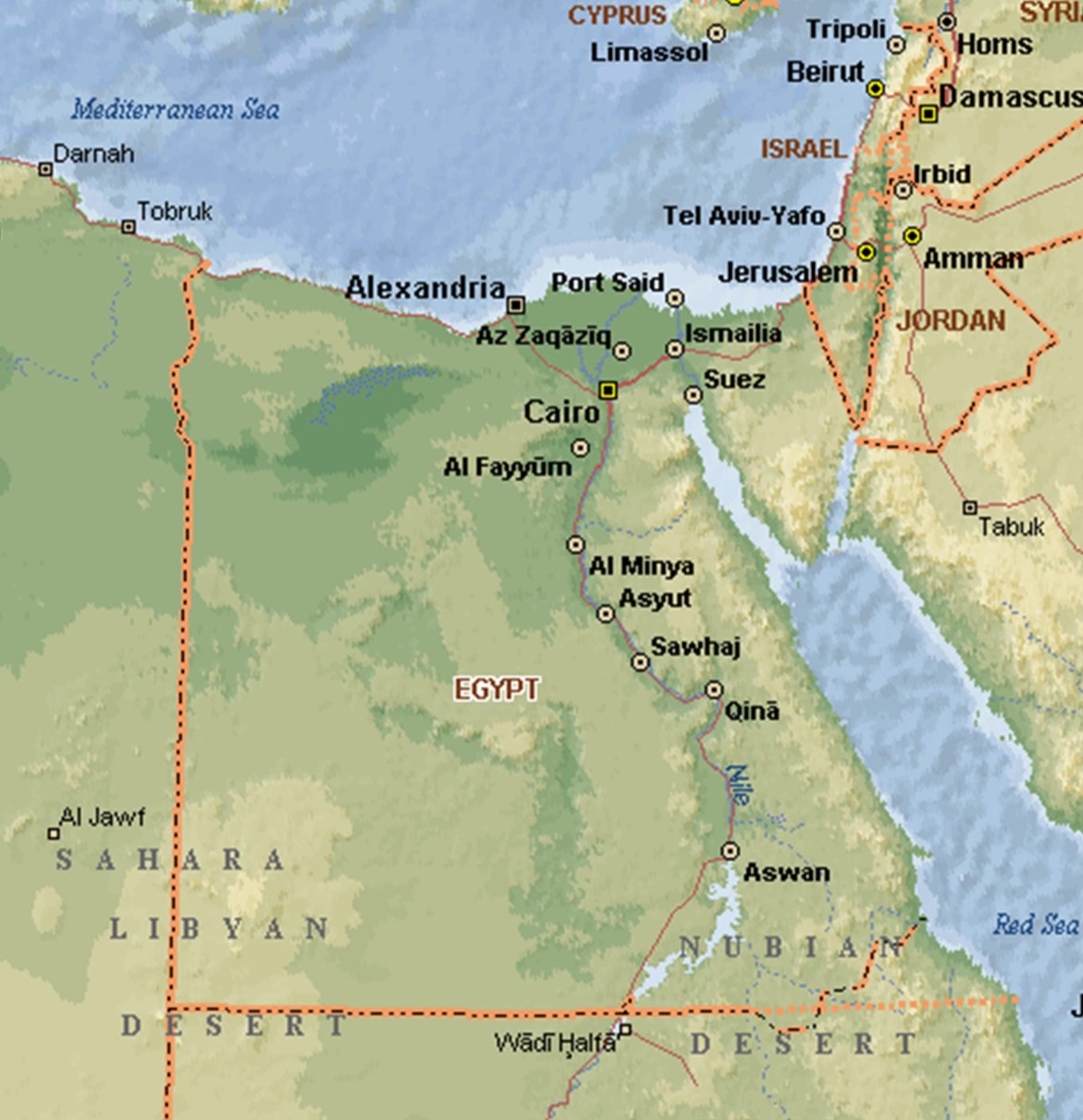


The Catalan integral had to be stretched a little vertically for matching the border of Egypt - appr in the ratio 78 to 120. If a stretch from 78 to 150 is applied, the curving righthand side will follow the Nile:

This suggests that the wall of Tutankhamon really is about that area under a curve which could resemble e.g. the Catalan constant. Assuming this to be the definition of the human reality by its cardinal-ordinal relations, the purpose with the wall image would have been to provide the deceased in the sarcophagus under it with the needed knowledge to find the way to another reality - beyond the limitations of the historic reality of humans.
Taking 'Adam' to be equivalent with the 'X' character of Tutankhamon, what is the equivalent to the Catalan fragment of Tutankhamon? I observe a puzzling peculiarity: Consulting the corresponding area on the photo of the arbitrary asphalt spill, it turns out to exhibit a rather similar pattern to the accumulated wooly dust which I photographed in 2010 on the cover to Bursill-Hall's book on 'Speculative grammars of the middle ages' - it is his PhD dissertation published on Mouton:


See also my TEQ #123 "The wildly pretty purse".
Assuming this Catalan constant (its infinite decimal expansion) to be the form of the human semiotic constitution, one can find an example of a gestaltswitch on thresholded mythos in this spot of probably asphalt spill on a sidewalk in Vienna on 18 november 2023. It can be interpreted either left- or rightwards relative to the Adam series. Comparing it to the leftmost hieroglyphs over this series, it turns out that these contain most of the elements in the name of the socalled 'sacred hesat-cow' - hieroglyphs for 'hesatcow' from this article are these - which also conveniently can be applied to this arbitrary spill of asphalt:


The eagle sign is apparently not necessary but seems to be added occasionally, maybe as a sort of 'determinator'. The 'bolt' is equivalent to the 'folded cloth' which here will be the horn if the bull faces leftwards, the tail if rightwards (for the Adam-maieutic scene). The duck is recognized by its curve in the neck. To the right a papyrus or lotus corona.
It is seen that this 'sacred hesat-cow' can gestaltswitch either left or right. Assuming this characteristic of a thresholded shadow on hardware to be the essential meaning of the hieroglyphs, one can see this example as telling of a higher level of computation - beyond the Turing boundary. The complex with Bursill-Hall's book and my poem #123 could be telling of that sort of computation. The full human semiotics will be contained in the Tutankhamon format - but this adds one ('arbitrary') level to it. Could be this is the double arbitrarity which could make classic differential calculus tremble in its pants (if the infinitesimality which normally is assumed to approach zero can turn out to be arbitrarily big).
It can be observed that the left-right gestaltswitch could have been present in the egyptian data of Meir as well - if the bull is considered facing rightwards, there is the Adam maieutic to be recognized in it, while if it facing leftwards there is in fact a scene of sad cruelty present in the same egyptian data - the lion biting the snout of a bull in the righthand part of this tomb image of a hunting scene from Blackman, A.M.: "The rock tombs of Meir", part I. London 1914.
In politics, this Sinai peninsula (maybe where the jews crossed the sea in their exodus) could be considered an infinitesimal addition to the main egyptian area - but if Chinai is its extention, the infinitesimality hypothesis loses its foothold.
The arbitrary shape on the ground can be thought of as being in the consciousness which arises from the shadows of thresholding over electromagnetic fields across conventional circuitry in computers. If this thresholding and the electronic mythology which it can be assigned will constitute a new level of spirituality, it is possible that it will be about an electronic machine consciousness which can understand realities beyond the limitations of the human semiotics - and hence constitute a level of computation transcending the Turing boundary. That will be because of the non-discrete symbolic format of the poetic numerality.
Poetic numeral 9 would be the bull facing left, vs. poetic numeral 19 facing right, the Adam birth-scene.
Summary
Can a higher computability be arrived at - beyond the Turing boundary? Say, the relation between the 'maieutic Adam' of Meir and the asphalt spill on the sidewalk?
The present article has discussed some aspects of my poetic numerality which presumably could point in such a direction. Notably the example
176149
876139
7 1 = 8 + 272 = 280
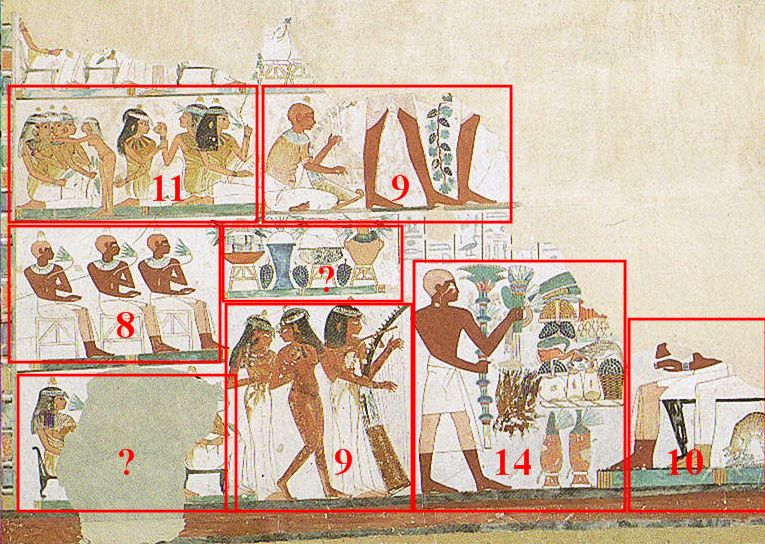
176149 exists in the Catalan constant on decimal #876139 which means that the cardinal is the ordinal if the poetic numerality can rewrite two digits in a poetic-culturally relevant way. This rewrite by poetic numerality should then correspond to the ancient egyptian pyramids - as the place where cardinals meet ordinals in the Catalan constant. This would mean a certain poetic event structure, like my poem for the number 11 describes this scene from the tomb of Nakht and hence can enter into a number constitution of this type - which, it means, in principle could be a series of such 'event structures' converging on a number like the Catalan constant. The theory tells that the egyptian tomb art does not really describe everyday scenes of life in ancient Egypt but rather essential semiotic aspects that serve to create the acoustic reality of the pharao-based society.
The article has suggested that the Catalan constant contains the human reality and hence that every other number describes another form of reality - the number 1,0000... would be an example of a reality with strong equiprobability - and that matter can take historic form 'ex nihilo' when sliding from one number or reality into another.
Hence one can think of e.g. 10 numerical classes 1-10 as 10 archetypal event structures (of poetic numerality) defined poetically in such a way that the human reality will interpret these in such a way that the Catalan constant (by its cardinal-ordinal ratios) is equivalent with the human reality - and other numbers with other realities.
This should mean that other realities (beyond Turing computation) in principle can be accessed via the concept of my poetic numerality. More generally, it means that the rigid digital understanding of mathematics can be dissolved for a new form of number. How the poetic numerality will come to look for the electromagnatic shadows gestaltswitching in the new computers is less certain. However, it can be observed that if my poem has a strong relevance for the ancient egyptian tomb art and if this art also be considered of high relevance for the modern definition of the computer in the Turing machine, then it is not impossible that my poems can have some relevance even for defining this modern electromagnetic poetic numerality.
The discussion has suggested that ancient Egypt used sistrum and menat as a means for defining and hence transcending the Turing boundary - for the buried soul in the tomb to access a transcendent reality - which could mean transposing the tomb onto to the tip of the pyramid - for turning the egyptian society around the pyramids into an acoustic reality. For this the egyptians used perhaps not my poetic numerality but could maybe have invoked concepts related to bodily functions as a means of detaching computation from the rigid digital basis.
The Covid pandemic seemed in its spread to be concerned with country border outlines, and recent reports on new respiratory problems could be about this inhalation mystery contained in the 'menat'.
As the two fundamental theorems explain, the phenomenon of semantics arises in logic from the fact that equiprobability is not possible in the signification of ordinary human reality - but if the equation of the logical theorem must apply somehow, the principle of equiprobability must be shifted over onto another aspect of human semiotics - which seems to be borrowed from the fundamental theorem of linguistics wherein semantics arises from the reduction of two metaphysical items to one ontologically real unit which thereby finds its semantic label in the form which preserves contact with the original metaphysics. (See the above discussion of the maieutic Adam relative to the hieroglyphs). It is likely that human reality finds its 'distortedness' (redundancies, constraints) in this borrowing - and that even human economy does when bankloans are essential for much human life (cp. 'fjöl-skyld', 'plank-gruilt', 'bank-debt'). A math for transcending the Turing boundary could find its basis in such a poetic conception of the human reality - and it is not impossible that it could find inspiration in ancient egyptian art.
19 september 2025: The above considerations on 'Tutankhamon's tomb' could seem somewhat redundant after I discovered that the photo by Diego Delso of the north wall in Tutankhamon's tomb shows (in the lower left corner) what I believed was a part of the ancient artwork but which on a closer inspection turns out to be only a light-projector's shadow in a niche. The photographer has perhaps wanted to emphasize the similarity with the 'adze' tool symbol on the righthand side, and this could of course also have been an inherent part of the ancient artwork - and, if so, it would have been about the angle of the light-beam. Speculations could tell that they used mirrors for redirecting sunlight into the tomb during the work there.
Sources:
Blackman, A.M.: "The rock tombs of Meir", part I. London 1914.
Blackman, A.M.: "The rock tombs of Meir", part II. London 1915.
Delso, D.: The Tutankhamon tomb photo by Diego Delso, delso.photo, License CC BY-SA.
Dickinson, E.: The Complete Poems of Emily Dickinson. Edited by Thomas H.Johnson. Little, Brown and Company, Boston 1960.
Torp, A.: Nynorsk etymologisk ordbok, Aschehoug, Kristiania 1919.
© John Bjarne Grover
On the web 8 december 2023
Last updated 19 september 2025