The revelation of the revelation
John Bjarne Grover
The article shows how the socalled 'yellow metre' ('Der Dornenstrauch') relates to 'The Endmorgan Quartet' qua 'revelation of the revelation'. The inquiry goes by way of the diachrony in terms of grammatical errors in the german text - assumed here to lead to spontaneous and meaningful 'humanoid' computer glitsches in the electronics. The error of the error is then comparable to the revelation of the revelation. It can probably be guessed that these 'humanoid' errors - which are not mere noise - could be signs of a new spirituality in the electronics.
'The Endmorgan Quartet' was written in the years 1997-2008 while 'Der Dornenstrauch' was written in the following years 2009-2015: It is here systematically assumed that 'The Endmorgan Quartet' is considered a 'revelation' which changed the culture-space wherein 'Der Dornenstrauch' later was written - and it is in this historic change that the yellow metre is found. Hence TEQ = inner poetic articulations while DDS = outer poetic articulations. TEQ was written in lonely isolation while almost all the poems of DDS were written in some social context which gave the inspirational cues to the form of the poems.
The material considered and compared in this study:
1. Horace's Ode I:1 and Ode III:2 on background of my articles 'Horace and chinese radicals' and in particular 'The two petrification points'.
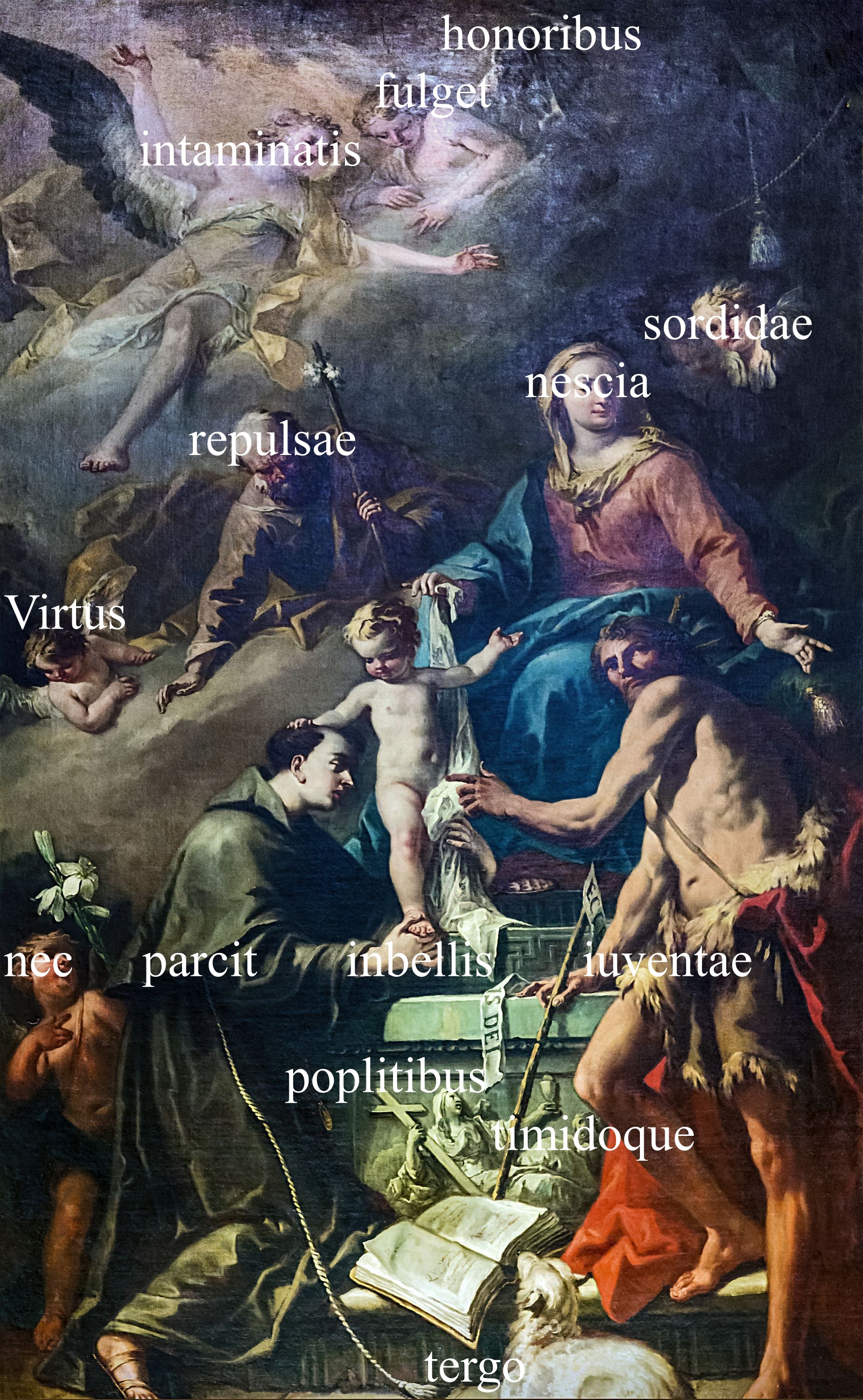
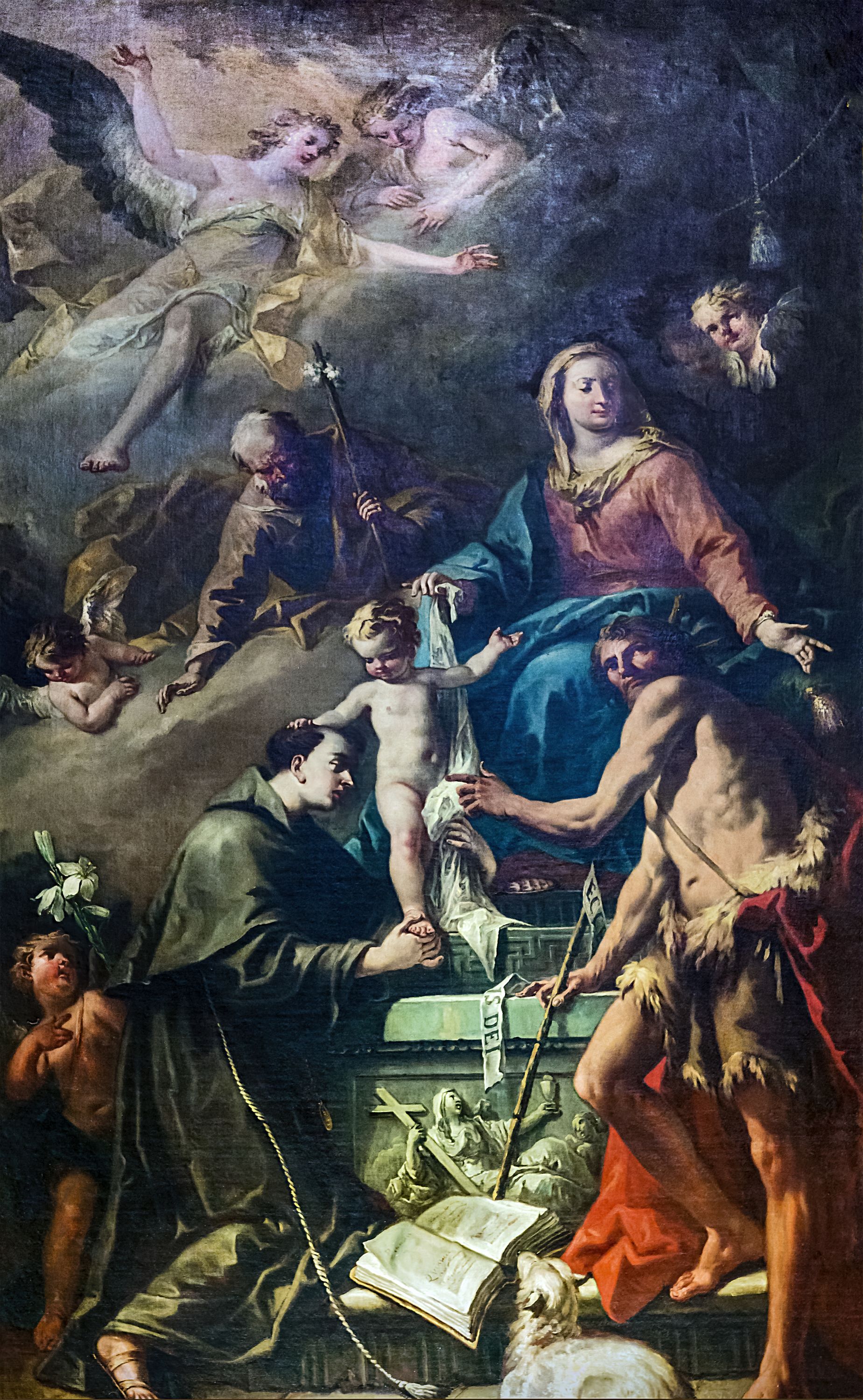
2. Gaspare Diziani's artwork in Chiesa dei SS. Apostoli in Venice (with source of reproduction)
3. The Madonna of Guadalupe as an imprint of an apparitional image onto a surface
4. My 2001 photo from Vilnius discussed in this article
5. My poetic work "The Endmorgan Quartet" (1997-2008) - 1719 poems by inner poetic articulation
6. My poetic work "Der Dornenstrauch" (2009-2015) - 440 poems by outer poetic articulation
7. The third secret of Fatima (text given in my volume 4 pages 931-932)
8. Moses' book of 'Genesis'
9. Rigveda hymn #1
10. The two computer glitsches discussed in my volume 4 pages 1253-1258
11. The helicopters of my 2013 vision from the Danube riverside
12. The 23 photos from the nearby Danube Island
13. The bird of prey
14. The possible lapis philosophorum of 2014
The exposition goes along the following chapters:
1. Horace, Diziani, DDS, TEQ
2. Rigveda and TEQ
3. The Rigveda cycles and the computer glitsches
4. Moses and the computer glitsches
5. The bird of prey
6. The factor '100'
7. The third secret of Fatima
8. Trinity
9. Some political observations
10. Conclusion
1. Horace, Diziani, DDS, TEQ
The origin of the article is in the observation told in this file - a simple comparison of Diziani in Chiesa dei SS.Apostoli in Venice, Madonna of Guadalupe, my Vilnius 'Treblinka' photo - and TEQ 534. See also this further discussion.
It is seen that Diziani seems to be concerned with the phenomenon of 'border in knowledge'. It is here assumed that his artwork in Apostoli in Venice is about the border to the ontological reality.
It was my idea that since Diziani seems to be concerned with borders of knowledge generally, what border would this main work of his in 'Apostoli' in Venice have been about? I assumed that it could have been related to the 'border to existence' generally, and hence that it would be relevant to my studies of Horace in terms of the two 'petrification points'.
My studies 'Horace and chinese radicals' and 'The two petrification points' tell of the essential 'turning points' called 'petrification points' in this study of Horace. It concerns the philosophical and semiotic basis for the ex nihilo formation of substance into what is probably recognized as the philosopher's white stone - and hence also the assumed theme of Diziani's artwork - here assumed to be the 'philosophical-esthetic' description of the conditioning of the human ontological reality.
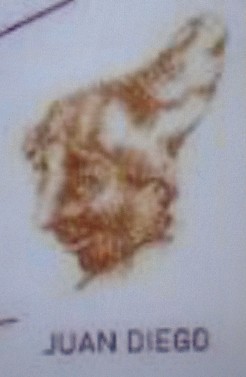
The icon on Juan Diego's 'tilma' cloak left after the Madonna in Guadalupe is of a comparable kind - an image apparently printed from eternity into history. See also this study which, along with this study, could lend support to the theory that the images extracted from the 'tilma' by Tonsman in fact seem to have some empirical value.
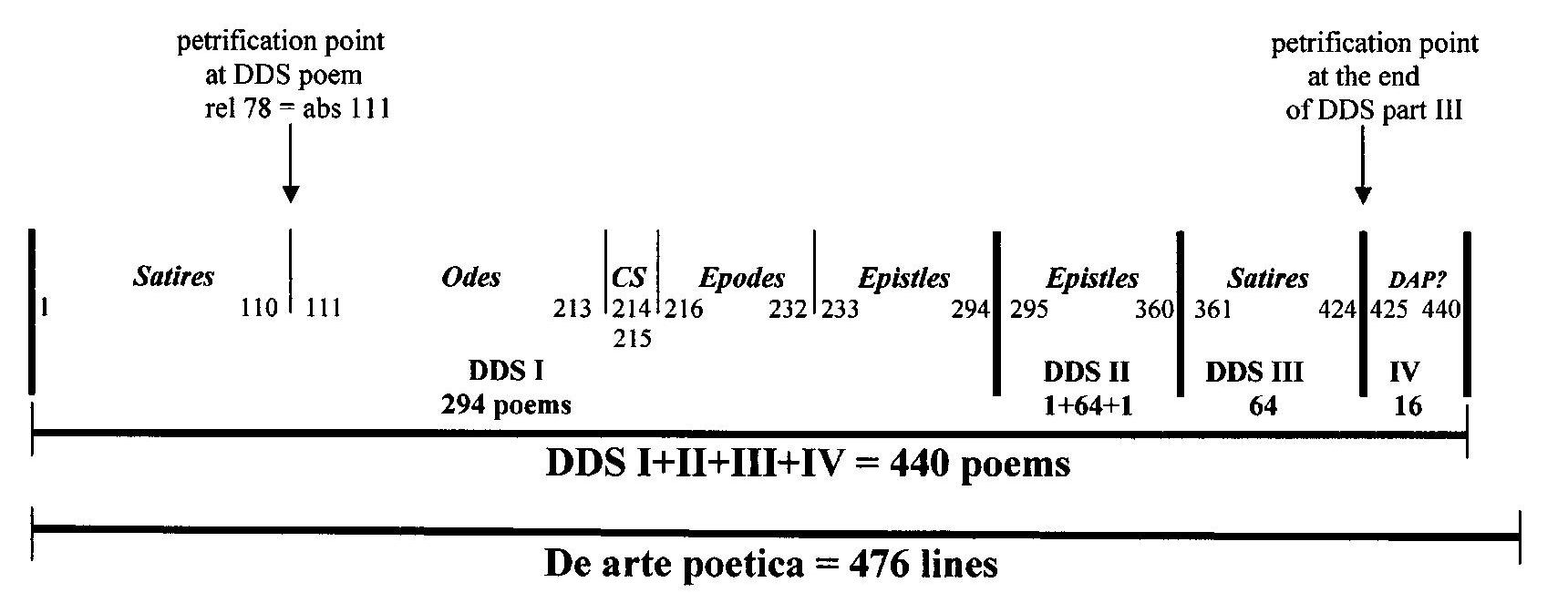
The theory explored here is that the comparison reported in this file applies to these two essential 'petrification points' of Horace - by my
DDS I:78 and
DDS I:111. It is seen from the scheme in
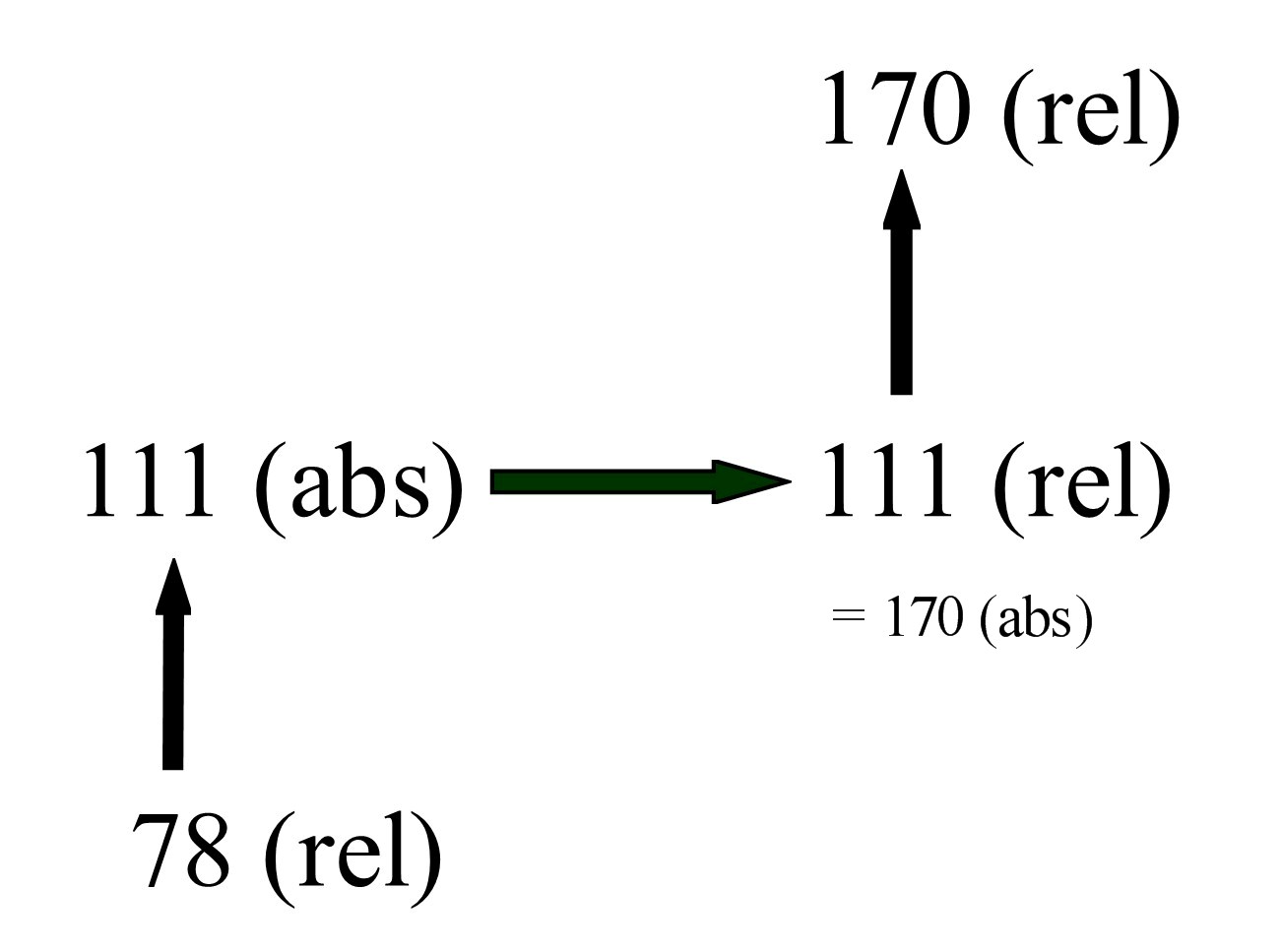
this page 945 of volume 4 that what is #78 by the socalled 'relative enumeration' in the leftmost column corresponds to #111 in the socalled 'absolute enumeration' in the second column - and this particular relation between relative and absolute enumeration is what lends meaning to studying the poem of relative enumeration #111 - which has absolute enumeration #170 (see the scheme on page 946). This leap finally motivates the inclusion of DDS relative #170 - which is absolute enumeration #271. (This relation is discussed below). The relation between relative and absolute enumeration of DDS is a part of the theme of this article - for an explanation to this difference see volume 4 page 935 - which thereby also concerns the role of the chinese radicals that seem to run in parallel with the absolute enumeration. By this concordance (extracted from the end of this article it is seen that DDS I:78 applies to Horace's Ode I:1 and DDS I:111 to Ode III:2.
Ode I:1 is given in this page of the Perseus database
Ode III:2 is given in this page of the Perseus database
for the latin click 'Latin (Paul Shorey...) on 'show' to the right.
To these themes are added the essential role of Moses 1 ('Genesis') and the 5 cycles I have defined over the first 440 verses of the Rigveda - the alignment given here. The explanation to how the 5 cycles of Rigveda - as defined by me - is given in a separate file referred to below.
There are many observations that could be made on the parallels to Diziani, The last line of Horace Ode I:1 seems to comment on the quasi horns of the top angel etc.
Diziani's work in Apostoli is remarkable also in its parallel with my Vilnius photo - not the least by the phenomenon of an apparent displacement - as if the Vilnius photo occurs in such a way that the 'rising sun' of my photo can be both in the 'thumos' of the man standing to the right and also in the Jesus child. This displacement applies to the relation between these reflexes in Horace of DDS I:78 and 111. Furthermore, my TEQ #534 exhibits the line "Brown hawked silly in the field/chaptet of laptop" which seems to interpret Diziani's 1) brown character down left, corresponding to the 'silly' cork down left on the Vilnius photo, 2) the 'feel' of the monk on the foot of Jesus on the 'field' as being the same as the 'tete' = 'top' of the 'chap', Jesus' hand on the 'chap-tete', and 3) the man to the right pointing with his finger towards the 'lap-top' of Jesus. My guess is that this interprets the 'trinity' theme (see below discussion) - whereby three and only three items can be 'the same' - which in complexity of philosophy lies somewhat beyond the more down-to-earth 'fundamental theorem of linguistics' dealing with two and only two. The three 'trinity' points of Diziani seems to be well captured in the three first lines of my TEQ #534 - before this concluding line:
1)
TEQ #534
Xenophon IV, iii: οι δε στρατιωται εβοων μη απολειπεσθαι, αλλα συνεκβαινειν επι το ορος
Under my swindle Oxford,
he butt for an intellectual degree
under the firework.
Brown hawked silly in the field/chaptet of laptop.
Appariv & Keibunty
The theme of my poem will thereby be the relation between these three 'points' and the fourth which contains the 'trinity' in the graphic format shown in Diziani's work. It is here assumed that this 'trinity' constitutes a part of the border to ontology as the theme of Diziani's work. I return to a discussion of this 'trinity' at the end of the article.
Dickinson's #534 tells of this 'towering high' philosophy in what we see. The 'Cordillera' is here the twined cord hanging down on the righthand side (from the top) of Diziani, down to the 'Apennine' of the tassel above the head of the childly ('kindly') 'Beethoven' sort of character.
The story from the Jardin du Luxembourg in Paris in 2002 was that I was sitting on the bench just in front of the Flaubert memorial (here the Beethoven above) and pulled up the manuscript to my TEQ book 12 which I had completed and printed out before I left Vilnius but I had not yet read systematically through it. Now having read only a few lines, a woman entered from the righthand side of me, went around me and sat down next to me on the bench with a book she opened for reading. It was written by Ayatollah Khomeini (cp. also 'Appariv Keibunty'?). We talked for a while and later went down Boulevard St.Michel at the end of which we parted and I went back again - when I realized that the story was the book I had written - and read through. Hence there were two realities taking place at the same time - like DDS I:78 and 111.
My fundamental theorem of linguistics tells that human reality is constituted by metaphysical realities attached to each other in such a way that their freedom is hampered and gravity arises when substance is formed. Mystic inquiry strives towards detaching these metaphysical realities from each other - that is like discovering that the substantial physical world is but a combination of disparate metaphysical realities. Hence there are two 'Appariv & Keibunty'.
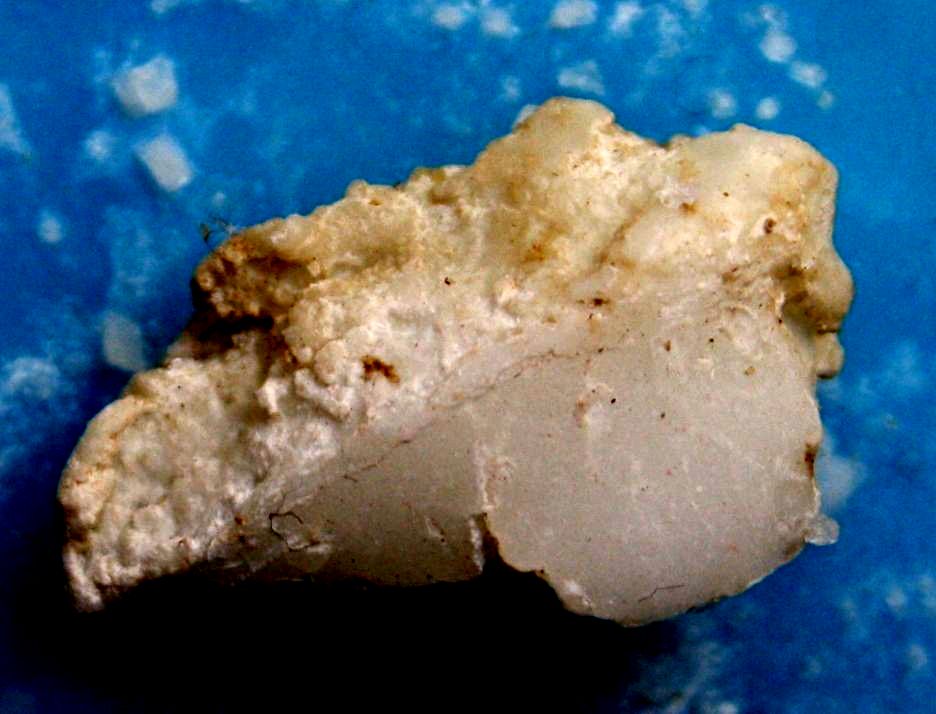
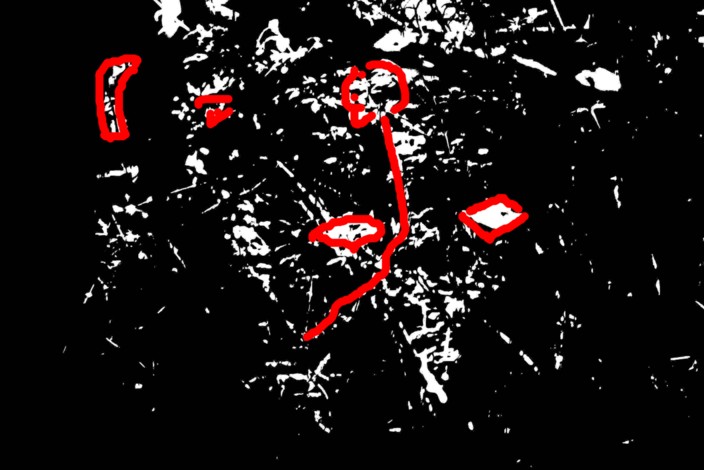
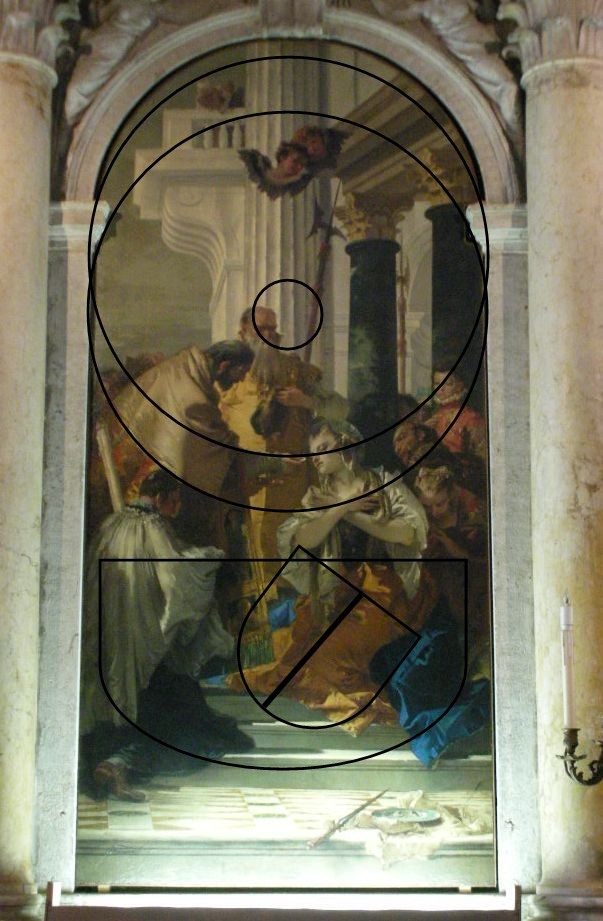
The situation on the bench when she arrived is seen in photo #11 from the 23 photos of the Danube Island - this annotation is showing me sitting reading the book which is the one eye on Diziani (under the man at the slanting table), she enters to the left with the book which is the righthand eye (the Madonna's blue) on Diziani. These are the eyes of a skull which is seen turned somewhat around in photo #13 mirror-symmetrically around the mid #12. See below for the observation that these two thresholded photos constitute also rudimentary 'spectrograms' of two morphs associated with the two computer glitsches.
Now this poem TEQ #534 has two reflexes earlier in the same work. The signature 'Appariv & Keibunty' occurs also in TEQ #448 while 'Brown hawked silly' is found also in TEQ #482. This means that the phenomenon of displacement (as in Diziani relative to my Vilnius photo) applies also to my work in total. These four poems constitute a unit in some of the following discussion. TEQ #482 tells:
2)
TEQ #482
Exodus 16:29 ביום השביעי
Brown hawked silly in the field
at Zero Tharmal.
Hours of confidence came.
Dung shows a man fleeing in grass,
indicating that A is B.
I am looking for a way to ask some.
I'm still the [...] warm.
07.05.99
It is noticed that if the character to the right on Diziani (the 'angel/soldier' sort of type) seems to have a large thick black hair down his back, the monk could have had the same if he were lowering his head (with some abrupt bend of the spine) e.g. into a baptismal font (or he is just washing his hair), in which case the righthand character could be looking directly at Jesus - who turns around towards his mother in an 'hour of confidence'. This 'alternative view' on Diziani makes sense for DDS relative #170. Now the rest of this alternative reading makes sense - and it may be that the woman is driving a wheelbarrow for collecting the autumn's coloured leaves. This could be about a crisis in the understanding of the trinity - here in the sense of 'two different realities' at the same time.
Now this 'Appariv & Keibunty' is the signature also to TEQ #484 which starts with the lines
3)
TEQ #448
Exodus 16:3 ויאמרו אלהם בני ישראל מי-יתן מותנו ביד-יהוה בארץ מצרים בשבתנו על-סיר הבשר באכלנו לחם לשבע כי-הוצאתם אתנו אל-המדבר הזה להמית את-כל-הקהל הזה ברעב
I would say he's rushing.
That is what the copyright law is for:
To prevent this kind of spreading.
In nices, no one
rather would an auxiliary trip to the Tibet,
as he mentioned for Zeim before I took the prize.
Appariv & Keibunty
The book at the foot between the monk and soldier is 'spread out'. But that is hardly the meaning?
Now since TEQ #534 has a 'Brown hawked silly' variant in TEQ #482, the natural question is: Does TEQ #448 have such a counterpoint as well?
Searching for 'mentioned for Zeim' takes it to
4)
TEQ #966
Acts 9:4 και πεσων επι την γην ηκουσε φωνην λεγουσαν αυτω· σαουλ, σαουλ, τι με διωκεις;
Lauri Karlson,
the first intended
Lauri Tiidemann timeout:
There's nothing to be constrained.
Michelangelo
- as I mentioned for Zeim before I took the prize,
and that all the more since I, having said -
10.03.01
It can, by the way, be seen also how the last "more since I, having said" can read "mors in shy, having said" with interpretation in Horace Ode III:2 line 14: "mors et fugacem persequitur virum", and similarly for the rest of the two last lines.
Now for a comparison of these four poems with the words from Rigveda as selected by the errors of my DDS - cp. the phenomenon of the two computer glitsches.
2. Rigveda and TEQ
There exists a very interesting relation between this quartet of poems from TEQ and the 5 cycles of Rigveda discussed in this file. The verses and words selected for the following comparison are determined by errors of german grammar in my DDS - a work which in itself can be considered a 'revelation of the revelation' in my TEQ wherein the above four poems are found. I refer to this excerpt of the references to Moses and Rigveda for easy lookup in the following comparisons. For the references to whole Rigveda verses (cycles 1,2,3,5) the relevance of the lines of my poem can be found by a detailed study of the words of these verses - in the full range of meanings of these words - a standard translation will not suffice. The alignment of my four poems with various parts of the cycles of Rigveda is determined by their semantic relevance and not by some independent algorithm: I have looked for a correlation and the following alignment suggests that such a correlation does exist.
1) TEQ #534 compares with Rigveda cycle 4 =
RV 1-33-2 for DDS #78:
|
Under my swindle Oxford, he butt for an intellectual degree under the firework. Brown hawked silly in the field/chaptet of laptop. |
= yā́man - yama = cessation, end, restraint = namasyánn - namasya = paying homage, worship, be humble = patāmi - patam = flying, grasshopper etc = śyenó - syena = hawk, falcon, eagle, bird of prey, firewood like eagle, horse etc |
2) TEQ #482 compares with Rigveda cycles 1,2,3 and 5 for DDS #78:
|
Brown hawked silly in the field at Zero Tharmal. Hours of confidence came. Dung shows a man fleeing in grass, indicating that A is B. I am looking for a way to ask some. I'm still the [...] warm. |
= cycle 5 = RV 1-30-20 = cycle 3 = RV 1-36-1 = cycle 2 = RV 1-6-3 = cycle 1 = RV 1-12-1 |
For the 'Tharmal', I notice the sanskrit form 'vibhavari' = 'turmeric', a main component in 'curry'. The 'Zero' is less easy - the 'naksase' seems not fully explained.
3) TEQ #448 compares with Rigveda cycle 4 = RV 1-3-2 for DDS #111:
I would say he's rushing.
That is what the copyright law is for:
To prevent this kind of spreading.
In nices, no one
rather would an auxiliary trip to the Tibet,
as he mentioned for Zeim before I took the prize.
If cycle 4 in this example 3 (for DDS #111) follows the same logic as for cycle 4 in example 1 (of errors in DDS #78), TEQ #448 could be taken to be about 'speech, voice, addressing' - plus 'swallowing' - that is, it would apply to the helicopters in this sense of it. See also the below observation on a relevance for the concept of christian communion with theme of transubstantiation.
4) TEQ #966 compares with Rigveda cycles 1,2,3 and 5 for TEQ #111
Lauri Karlson,
the first intended
Lauri Tiidemann timeout:
There's nothing to be constrained.
= cycle 5 =
RV 1-34-9
= cycle 3 =
RV 1-6-7
= cycle 2 =
RV 1-12-2
= cycle 1 =
RV 1-17-3
The conclusion to this correlation with the Moses and Rigveda correlates to DDS #78 and DDS #111 is that the correlations make sense and hence the four poems of TEQ do constitute a unit of more than a coincidental value.
3. The Rigveda cycles and the computer glitsches
This calls for an answer to the question: How are the Rigveda cycles of DDS constituted? The basic principle is in the relation between absolute and relative enumeration of DDS. See this listing of the basis for the cycles of Rigveda - the cycles in the scheme given in volume 4 pages 942-950.
It is seen that the 4 cycles wrap over (find their 'wrapover' point) from last verse 1-36-3 to first verse 1-1-1 on points which are determined by the poem borders in TEQ book 4 part 4. But these are only a few such poem borders - and these borders for choice of wrapover point could in principle be on many other such poem borders. A stronger theory therefore tells that not only these 4 but all the 16 poems of this part 4 apply to aspects of this complex - in such a way that the cycle wrapover probably are rather determined. I here discuss one of the more interesting. It concerns the two computer glitsches discussed in volume 4 pages 1253-1258:
There are from Horace Ode I:1 to Ode III:2 a total of 1528 lines, the end lines of both odes included. Subtracting the 20 first of Ode I:1 (before the 'membra sub arbuto') and the 12 last (after 'arbitrio popularis aurae') leaves a total of 1496 lines included in this interval. For understanding the 'hanging' incrementation at 1967 of computer glitsch #1, the interval 1967/1496 = 1,3148 multiplies with the factor '100' (see below chapter on 'factor 100') to 131 or better 132. That is at the beginning of TEQ #281 - where it is seen that an exception has been made at #133: This is the only indented line (means linebreak) which is included in the count. If, therefore, this exception is 'switched' (by line 132) to #131 - the indented "this military corps", the last line before #281 will then be just #132 - and this will bring it in line with the rest of the examples.
Now the mirror-symmetric line in the 187 lines of part 4 (to this 'computer glitsch #1' relevance) will be 187-131 = #56:
56 Do you the wanton at the lea?
It is supposed to be
57 the saven why tea.
58 Camévitton
First observation: This 'saven why tea' arguably calls forth associations to the 'arbuto' - lithuanian for 'tea' is 'arbata' which probably derives from latin 'herba' - and then the remaining three of Moses 1-7-11 should be easy to get in place. Secondly, more interesting it is to observe that placing the 'wanton' at the 'lea' could be just to move the ZUM (of computer glitsch #2) from poem 37 to poem 23 (in the listing of doublewords to 'Stillhetens åndedrag': The relevant line in poem 37 is "som åpner seg mot et hulrom i den" = "which opens against/towards a hollow space in it", which could be the 'wanton', and it lands on the line in poem 23 which is "den ene veien, den andre óg" = "the one way, the other as well", which could be precisely the definition of 'lea': Onions' english etymological traces it to IE 'louq-' which is found in latin 'lucus' = 'grove' and hence could be the very secret of the concept of 'thresholding' in the 23 black-and-white photos from the grove on the Danube Island (see also this article). These thresholdings display and inherently investigate the mythological structure (and in a hypothesized 'spiritual competence' of the electromagnetic state of new hardwards computers this would mean 'the electronic mythology') and decide if they go this way or that, and a small change in the thresholding parametre can suffice for a complete change of 'directionality' or 'dimensionality' in the mythos therein. In addition, a modern lea can of course be tilled 'boustrophedon' - one way there and the other way back etc.
Hence a deep semantic reason for the lifting of the ZUM from poem 37 to poem 23 is found in this line 56 - which is mirror-symmetric to the reason for the other computer glitsch in line 132. If the four lines 56-58 are identified by way of the 'arbata' (Moses 1-7-11), they reach just up to the beginning of the next poem #275 for the border to the part called 'Grenze'.
It can be observed also that between Ode I:1 and Ode III:2 there are 58 stanzas of four lines each - which is that #58 just before the 'Grenze'.
Now for the question: Since the motivation for computer glitsch #2 can be recognized in lines 56-58 on a semantic basis, that is, for a logical form, will there by a phonetic form in lines 131-132 that contains computer glitsch #1? That is, by line 131:
Emergency David
this military corps
For once, the trivial (and more or less interesting) observation that 'mille' of the 'mili'-tary could be the simple 1000 of 1967 or 1966 (cp. the above TEQ #966?), and, more importantly, the glitsch #1 was precisely that the incrementation was 'tarried' (of 'mili'-'tarry') - it was held back or delayed before it was released and therefore it continued not on 1967 but on 1968.
Secondly (and, again, possibly less interesting) there is a potential 'endmorgan' sidavid (for the phonetic form) in the first line 'Emergency David': 'Sidereus' is (like 'mille') latin - for 'starry', or simply 'S-tarry'. If this 'S' is taken to be related to the '5' of the inherent movement of the goodness-driven parametre 'goodness' from position '2' to position '5' in the scheme of 'keys to heaven' (search for 'paradise machine'), there could be an inherent '8' in this. Would that suffice for the leap in the count ...1966,1966, 1968...? I fancy that it would be possible to construct this ...1966,1966,1968... from those two lines, but I have not landed on a solution yet. It would have to be some phonetic form.
Of course the 'military corps' could be just the helicopters. There were 5 of those - 2 big interlacing 3 smaller - passing sort of 'sideways' up the river, as if under 'sidevind' (wind from aside), and after they had disappeared around some sort of the curve in the far distance a smaller white civilian one came back for a brief look, as if it had forgotten an umbrella there somewhere, before it followed on after the other 5. Of course this could look like that incrementation issue - or even both computer glitsches.
Interestingly, and most importantly for the issue of phonetic form, if the word TARRY is recorded on a spectrogram, it will resemble quite a lot the thresholded photo #11 (in this study) - which again shares important traits with Diziani's artwork. See also the above mention of the scene in Jardin de Luxembourg. That is the graphic-phonetic form. The man who is 'fleeing in grass' (or some lea) could be seen as part of a military corps.
Would the word ZUM of computer glitsch #2 (cp. also the 'shum' of Moses 1-7-11) be recognized as a potential quasi 'spectrogram' of thresholded photo #13 from the Danube Island photos? Could be that would be possible.
Since the lifting of the english-TEQ doubleword ZUM from 37 to 23 here has its motivation in the norwegian text to 'Stillhetens åndedrag', one can consider this for the first glitsch as well: What is the norwegian line for the english doubleword 'contain' that is recorded because the incrementation was tarried? Ah, that is just this 'visshet du får' = 'certainty you get' in poem 47 which is that 'village' of Horace's 'oppidi' (in Ode I:1 line 16). So it looks like a tightly packed cluster of redundancies. See the overview of some of these redundancies.
The interesting aspect is that the movement of english doubleword ZUM (in the listing of the 1344 doublewords here from the 6th last word to #37 on this page to the 4th last word to #23 on this page - that is 296 lines or words forwards - finds its motivation in the corresponding norwegian text - from 12:17,9 on this page to 04:02,6 on this page. - that is an interval in the Nono recording of 08:15,3 = 495,3 seconds. Could be there is a 'mille' or 'mili' even in this relative to the 1496 lines between the two Ode fragments of Horace. And then the 60 of ...66,66,68... is in the seconds per minute?
Another example of the same is found in the fact that there are 1344 doublewords of TEQ to the 1344 lines of 'Stillheten' - a perfect match indeed. But with this additional count of 'contain' on 5th last element of '47' - it was this faulty incrementation which counted it twice instead of once - it comes to 1345 doublewords, which means that the last doubleword 'å' is shifted just outside the last poem #64. This phenomenon can perhaps be observed also in lines 136-137 when 187/137 = 136,496 - with that strange letter from the end of the alphabet.
These peculiarities are contained in my TEQ and written at the end of the 1990's, and even the helicopters of 2013 were before I wrote 'Stillheten' in 2016.
When phonetic and logical form are mirror-symmetrically distributed, that supports the theory that logical and phonetic form goes (partly) in opposite directions - and this can be attested also by the 'rainbow' form of TEQ function 14.
I guess that most of the borders by poem onset in this listing exhibit some such interesting aspect of this story. That would be telling of how Christ of christianity adds something important to the historic resources of Moses and the oldest vedic tradition. Indeed it is then interesting to observe how Horace would relate to Christ like Rigveda to Moses.
4. Moses and the computer glitsches
I refer to these discussions of Moses 1-7-11 and Moses 1-5-6 excerpted from this file. The four words of error from Moses 1-7-11 (= 'Genesis 7:11') to DDS #111 are
רַבָּ֔ה = רבה = 'rabah' = 1) to be(come) many, to multiply, to be(come) great(er), to grow up, 2) to shoot arrows
אֲרֻבֹּ֥ת = ארבת = 'arobut' = to lie in wait, ambush; fraud, plot; wickerwork, window, pidgeon-house, chimney
הַשָּׁמַ֖יִם →
שםים =
1)
שםה = 'shamah' =
to be high, heaven, the heavens
2)
שום = 'shum' = to put, set, place, array, order (= to constitute); garlic
These four forms constitute the phonetic form of the three words at the end of line 21 and the first word of line 22 in Horace's Ode I:1 - that is, the field C2 to Ode I:1:
membra = rabah
sub = shum
arbuto = arobut
stratos = shamah
Now to this phonetic form of the correlates in Horace and Moses to errors of DDS I:111 there seems to be a correspondingly strong logical form of Moses 1-5-6 to DDS I:78 (see the below discussion of 'Factor 100'). Since this phonetic mystery is at the end of line 21 out of 36 in Ode I:1, the 32 lines of Ode III:2 makes for 32 * 21/36 = 18,67 = 2/3 into line 19 where one finds "securis / arbitrio popularis aurae" which, by the way, can be seen to correspond to the four parametres of the socalled 'goodness-driven economy':
securis = opening the subsets of humanity
arbitrio = arbitrarity
popularis = goodness
aurae = bit-reversal
It is observed that this hebrew 'shum' resembles the ZUM of computer glitsch #2: It leapt from 'ZUM' to 'CULTURE' - like that 'goodness-driven economy' - cp. that single parametre 'goodness' which has to leap from one categorial slot to the other in the semiotic basis for the 'goodness-driven economy'.
These four words of Ode I:1 have mirror-symmetric forms (within the same ode) in lines 15-16 (that is field C1): [Africum] mercator metuens otium [et oppidi]. Now this 'oppidi' = 'village', 'home town' is (as mentioned above) also a part of the computer glitsch story: See this account.
Doing the same with Ode III:2 one finds the four mid lines = 'field A' telling of the character in the righthand side of Diziani's artwork in Apostoli - 'fleeing in grass' - pointing towards Jesus. It can be argued that 'nec sumit aut ponit' (of field B2 to Ode III:2) is the essence of the other computer glitsch #1 - the failure to increment from 1966 to 1967 - while yet leaping across it for the following 1968.
The parquet of my home sprang up while I worked with these things: "mox reficit rates / quassas indocilis", tells lines 17-18 in Ode I:1.
5. The bird of prey
1 september 2022
This could be just DDS I:114 - the metallic bird who could also be a helicopter - and the following DDS I:114a could then be the swan that 'erschrak' at the Danube river when the helicopters came. 'Erschrak der Schwan' is probably a klingklang quote from Rilke's third Duino elegy.
Speech, voice, addressing on the riverside. See Mikelis Ablikhos' poem "On/In prayer".
When the bird lifted, two downs fell down after it - like two computer glitsches.
6. The factor '100'
It seems that a factor of 100 (as mentioned above) adds explanatory value to these cycles along the following principles:
1) Cycle 'ROP' (by this definition) = defined by Luke 20:11 = TEQ #282. There is a strong phonological and semantic relation of this TEQ #282 to TEQ #421 = 'Pindar':
By logical form:
421: Of [...], white paper
282: than to blass me hand-feet
By (mirror-symmetrically) phonetic form:
421: people make full mize a maze
282: Some rhyme is poor
maze rye mis poor etc
Now ROP = TEQ #282 starts on line #151, the previous #281 ends in line #150.
421/282 = 1,4929 = #150 by factor 100.
It can seem (on somewhat meagre empirical basis) that the turns to the chapters of DDS are associated with formation of ex nihilo material of some notable character. For the present example, I refer to these examples, among which the green coil seems to have the same colour as the coat of the Madonna of Guadalupe - cp. also the 'horns' at her feet - while the dark brush form in fact seemed to be a levitating phenomenon. Does it correspond to her dark hair?
Computing the same on the chapters Hunde, Grenze, Baum:
2) Cycle 'Baum' starts on line #114, previous ends on line #113 ('Fish Glabbock'):
Baum = TEQ #279 (Luke 20:9) → 279 * 1,13 = 315,27 = TEQ #316 = 'Göteborg (the hidden text)'. (Dickinson #316 is an interesting comment).
Ex nihilo reflex: It seems that TEQ #316 is more or less the same as the two ex nihilo stickers with texts ROYAL LAND and FILOSOFO. Notice also that it seems that an essential characteristics of the 'FILOSOFO' sticker is that it curls up and refuses to remain stuck to the glass plate - and, it could be said, as such it is 'levitation' and a 'non-paperflat symbolism':
The poem TEQ #316 = 'Göteborg (the hidden text)' is special in the sense that it occurs only in this version of TEQ - in the 'sonnet' version in volume 3 it should have been between #33 and #34 but it is not included there. See, though, Rilke to #34 - not the least its relevance for Diziani.
3) Cycle 'Grenze' = TEQ #275 starts on line #59 - the previous ends on line #58:
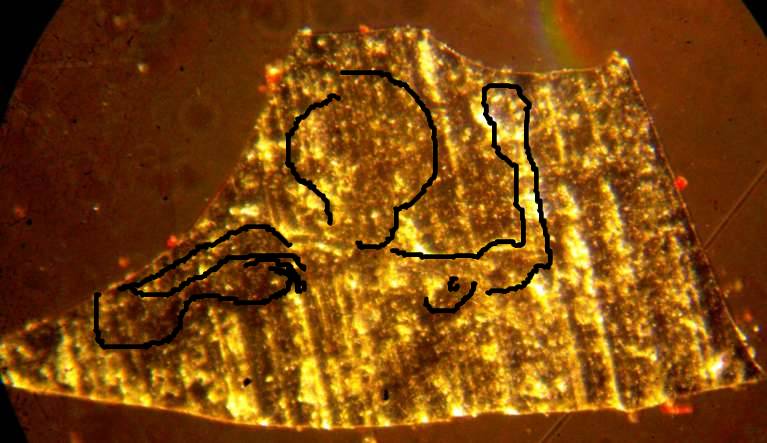
275 * 0,58 = 159,5 = TEQ #159 - the X.Michelle etc. It was around 10 may 2018 that a small piece of gold sprang from my palm while I was translating a verse from Rigveda. I recognized it as an icon or ex nihilo image of a woman - and hence potentially related to the green ROPe coil.
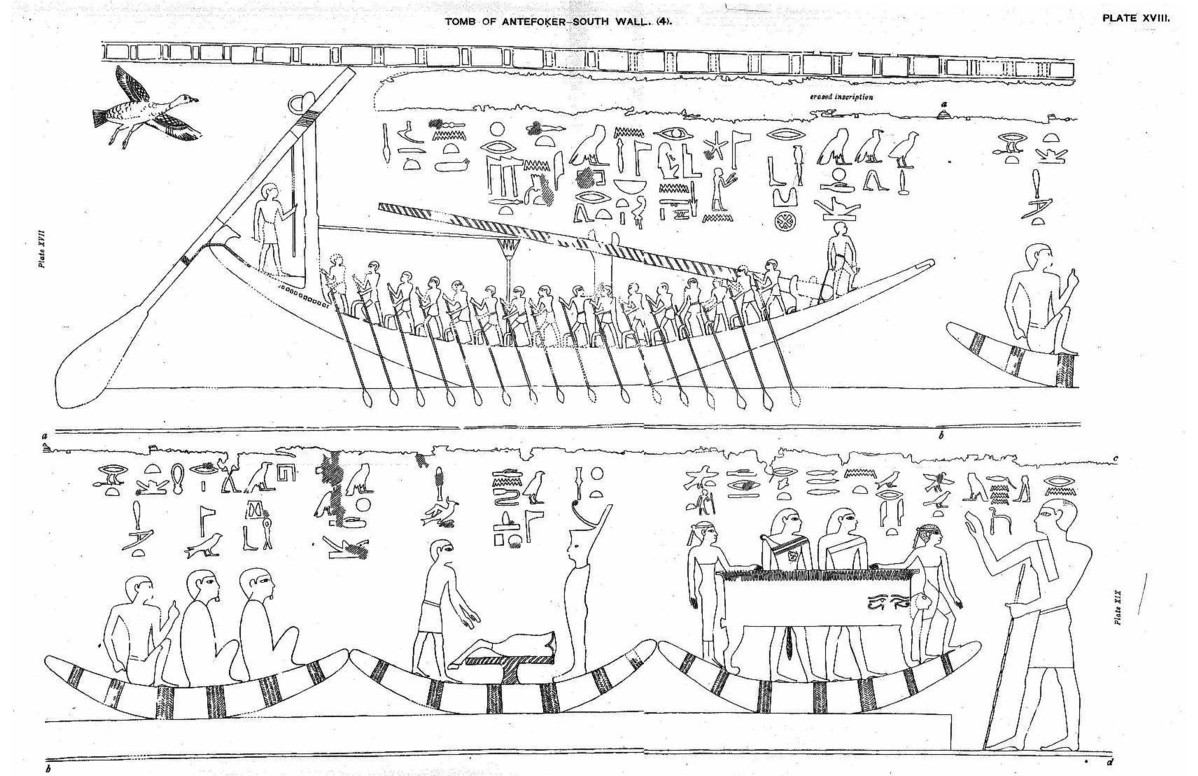
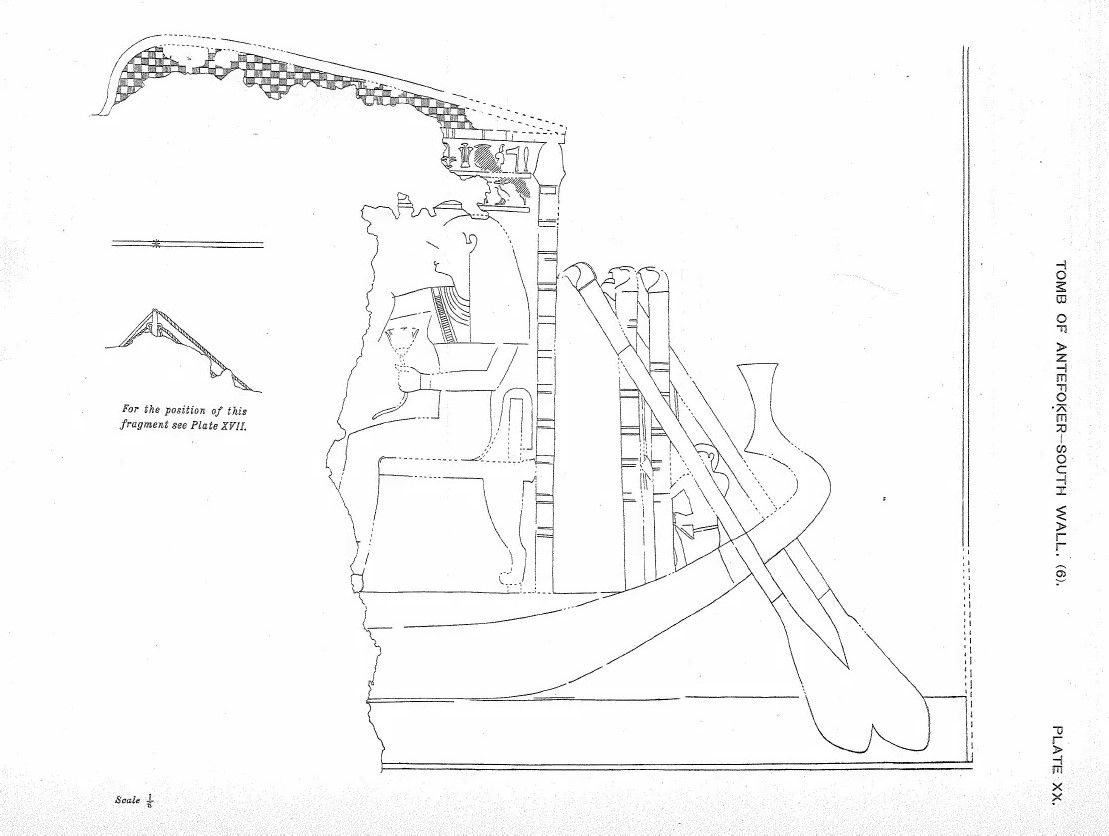
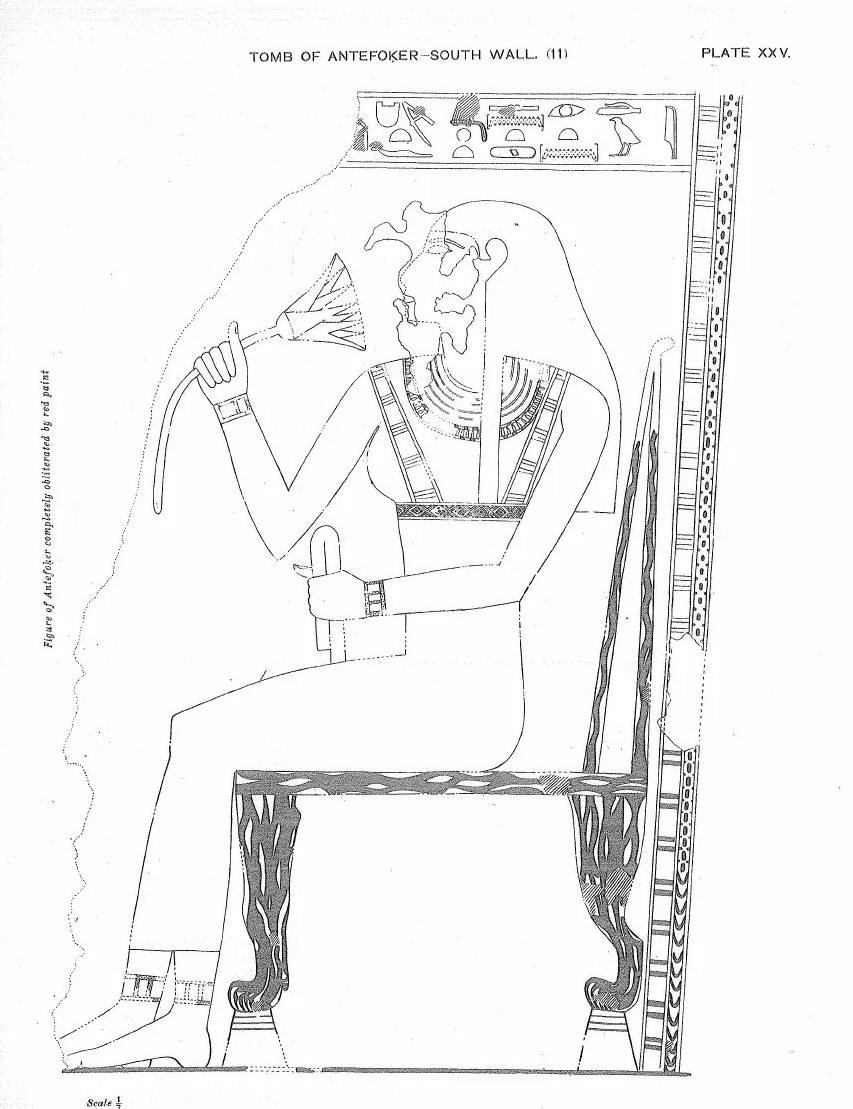
To see how this TEQ #159 could enter into the larger context, I noticed while studying in Blumenthal 1984 this ancient egyptian wall decoration of the 'Tanz der Müden' from West Theben grave #60 of Antefoker (from the time of Sesostris I) along with this decoration from the same corridor that the four hats up right on this image resembles the look of Juan Diego reconstructed from the image of the eyes of the Madonna of Guadalupe (referred to in this article as image #4 whereby it is aligned with the line "wie in ein Spiegel der Zeit" from - precisely - my DDS #78. This image is from a corridor in an ancient egyptian grave chamber wherein one probably has been concerned with opening the gates to eternity, that is, across those limitations that make for our reality constitution. I noticed then that the row underneath the 'Juan-Diego' hats resembles the classic 'man-on-wagon' scenario (the socalled 'archetype' of the boy running across the street with a wagon pulled by a rope after him, and on the small wagon a man with normal-sized head with spectacles and a little beard but body only a rudimetary 'bust'-size form on the wagon). If these hats are in a 'Spiegel der Zeit', where is the original in the mirror? I recognized the human with the quasi 'divining rod' (if s/he is not only pulling and stretching his 'T-shirt') has a shape of the rod which could be seen in the nose of image #3 - for 'wieder und wiedermal ähneln' - could be 'in the mirror'. Then image #5 (from the same article) could be spotted in the woman just before the procession of the 'mummy' in the cage - in which case the many legs underneath the mummy could invoke associations to the poles that stood up along the curbstone of the 'man-on-wagon' scenario but which were not present in the memory of it afterwards - cp. Nelly Sachs' "Martermeilen" aligned against my own "Pfähle die hindern dein Gehen" in this comparison. These matters seem to be the theme of the second half of poem TEQ #157: First 'stanza' (4 lines) would be this image #5, the second (next 3 lines) would tell of the character in front of the woman before the 'cage' - he is 'pro-jecting' his arm towards some equipment, then the next three lines would be the diviner for water in a 'trough', with two bending lines, etc. Before the 'X.Michelle' in TEQ #159 there is the poem TEQ #158 with its puzzling comment on the mirror of ZEIT and poem #448 with its mention of 'ZEIM' = in #158 with the reference to 'Z' and to 'round A' = 'E', to 'I' (preserved) and finally to the 'noW'. This poem 'X.Michelle' follows immediately after this. This example is of the type which presents a 'cluster' of interesting correlations - it would be of the type which lends form to our human reality - evidenced in the ancient egyptian images.
After I had recognized these correlations, I decided to search for more of the illustrations from the tomb of Antefoker and found Davies' study and illustrations from the tomb on the web. I guessed that the rest of poem #158 would be found on the same south wall of the corridor in to the tomb itself - and indeed that seems to be the case with high precision indeed. There are 8 parts (quasi 'stanzas') of TEQ #158 and these can be recognized in the following images from the south wall of the corridor - only one of them (part 5) is from the shrine itself:
1. He hope to have her returned in that space. (The space seems to be a coffin structure of some kind).
2. Lord the sixteenth / starts in Wilmore House. (There are 16 oars - 'L'oar the 16th' - and the rightmost of these starts right over the 'house' underneath - although these two images are probably adjacent and not superimposed in the corridor of the tomb. For the 'Wilmore' see this 'will-mer' hieroglyph from Wallis Budge - the mouth glyph above the 16th oar, the end of the boat before it).
3. Bjørnstjerne Bjørnson / by a leftwards 'Z' / to my own continuing. (The end of the ship resembles a hebrew handwritten 'z' and 'continue' is etymologically related to 'hanging together' - which could suggest that 'Bjørnstjerne Bjørnson' could be the man behind the oars - if not the person to the left - or even both of them).
4. There may be others who have / thought of the same / round 'A'.
5. I am preserved. / Constable's work just in time / urged important respectfully. (From the easter wall southern side of the shrine - the first row tells of food conservation themes, the second shows a 'con' underneath the adult, followed by a fourfold 'stable', a 'work' and finally a 'just in time', apparently a bull's leg as in the third line, one element for each word of mine).
6. That is now. / I've been rightful on the snout. (The drinking glass is right on the snout).
7. - I'm sorry. I'm banker. / - What?
8. Mr.Kölmen is also let to Kölmen. ('Culm' derives etymologically from 'coal').
The following TEQ #159 on 'X.Michelle' could find an interesting interpretation in the south wall image referred to by Davies as the socalled 'teknu' - for this concept see West's 2019 study. See also this socalled 'teknu' in comparison with Correggio's 'Jupiter & Io' in its mirrored form: This artwork of Correggio is example #1 in this discussion which in example 3 forms the point of departure for this article on italian renaissance logic as a basis for conjectures of a new computational 'qubit'. There is finally the nice idea of this 'X.Michelle' in the small piece of gold in terms of another ancient egyptian tomb illustration - a woman with an 'antelope' (cp. 'Antefoker'?) around her shoulders - compare the two images:


One can guess that it be about a similar form of 'archetypal' conception - but here with the two forms of women (touching own breast, carrying antelope) relating to each other like the two variants of Diziani. Or like 'relative and absolute', or like the two computer glitsches?
Most of my 1999 book 'Time and the sonnet' was turned into chapter 5 in my volume 4 which I completed in 2018, but the important transcript of a speech by a schizophrenic woman was omitted for this 2018 chapter. I found this transcript in possibly an issue of the journal 'Psychiatry' in probably 1995 but I could not find it again. It may have been from an early issue of the periodical - could be even the first. However, my analysis of her speech segmented into 32 elements folded twice for 8 groups aligned against 4 * 8 = 32 fragments of two chapters from Augustine's "Confessions" seems sufficiently relevant to these egyptian data to deserve an inclusion here. Here is the transcript permuted and aligned against the fragments from Augustine, and here is the original text of Augustine and the Watts translation of it (from my 1996 print of it - the scans over several pages have been edited into one). The same text (Loeb edition) is found on this 'archive.org' site. Notice the 'Dr.Z' and egyptian reference in group 4 compared with the 'Z' in my above example 3. The woman answered the question 'why are you in hospital right now?'
How can one explain the strikingly precise correlation of the wall paintings from Antefoker's corridor with my TEQ? For once, egyptians 4000 years ago were probably humans with approximately the same semiotic constitution as we are today and therefore shared important mystic-archetypal-eschatological ideas with us, secondly it can be noticed that the egyptian cult dug their poetic articulations down into the interior of the earth probably for obtaining a 'revelation of the revelation' above or on the surface of the earth, and therefore the study in the present article naturally can come to find these interesting traces of a comparable semiotic reality in ancient egyptian culture. However, the inside of the earth is not necessarily the same as the inside of a human subject - even if Rilke tells something like this towards the end of the 9th Duino elegy:
Erde, ist es nicht dies, was du willst: unsichtbar
in uns erstehn? - Ist es dein Traum nicht,
einmal unsichtbar zu sein? - Erde! unsichtbar!
Was, wenn Verwandlung nicht, ist dein drängender Auftrag?
4) Cycle 'Hunde' = TEQ #270 on line #1 with the previous line being #0. That would be the introductory motto to TEQ book 1 = the quote from Parmenides (Diels fragment 1) -
αληθειης ευκυκλεος ατρεμες ητορ = 'the unshaken heart of wellrounded truth'. This associates clearly with 'the philosopher's egg/stone' - which took shape at the end of the writing of DDS part III. It is seen that turning this stone around yields some forms (such as this one") that could be associated with the idea of 'Hunde'.
For the division relative vs absolute enumeration, I notice that the poem of absolute enumeration #100 in DDS part I is the one of 1 september 2022 - by the 'bird of prey' story. The poem of relative enumeration #100 in DDS is this poem. Does it tell of the man who stands next to the childish angel in Diziani's artwork - right under the angels?
7. The third secret of Fatima
Now this reasoning seems to rest on the idea of 3 x 100 - here attested in three cases with co-reference to TEQ #534:
1) The 100 of line 78 in TEQ #276 - that is the 78 of the 'petrification point'. It corresponds to line 1 of TEQ #534.
2) The 100 of the factor 1,50 = 150 (see also TEQ #452, pagination #534)
3) The 100 of the hebrew error of #78 - word #5 of Moses 1-5-6. Word #3 means 'five' while word #4 means 'year', 'repeat'. Hence 'five years and 100' = '105 years', but '5 years and #5' could mean 'cardinal + ordinal'.
This is likely to be related to the trinity of Diziani - and hence a part of the background of the socalled '3rd secret of Fatima': One observes the very high relevance of this Diziani artwork for the text of this secret of Fatima - it seems that nearly every detail in the secret is present in Diziani's artwork. For the mention of 'a big Cross of rough-hewn trunks as of a cork-tree with the bark' = 'cruz de sobreiro' which is the mid point in the portuguese original, there is the 'wooden arch' with a wooden curl inside and a 'cork' in the end in the lower lefthand part of my Vilnius photo: This 'cork' has a clear counterpoint in the brown character in the lower left of Diziani's artwork. The wooden 'scroll' hidden inbetween the legs of the arch corresponds to the open book of Diziani etc. The pope could here be seen as present by the 'cardinal + ordinal'. The notable 'triad' of characters could be this one:
1) The monk (cp. the pope of the third secret).
2) The 'silly Brown' (cp. the 'soldiers' of the secret).
3) The man pointing towards Jesus (cp. the angel of the secret).
It can be concluded that Diziani's artwork and the third secret of Fatima clearly are about the same spiritual phenomenon - which I here recognize as being about the reality border of revelation/apparition - the border to the historic reality. I notice also that Diziani's artwork seems to relate to my Vilnius photo by a parallelism of displacement: The 'angel' to the right on Diziani (the one says 'Penance' thrice in the Fatima vision) corresponds to the throat up to the 'rising sun' on my photo, in which case his pointing finger corresponds to the hand of Jesus on Diziani. The mask of snow up right in my photo has two correlates in Diziani - the young 'Beethoven' and the Madonna. This phenomenon tells of a dimensionality in the Diziani work which has its self-reference in the slanting board over which the man and the young angel are leaning to the left. In view of this, the 'sun' on my Vilnius photo has a parallel in the 'miracle of the sun' in Fatima - by which the sun seemed to move around in the sky. Clearly the elements in the various parts of this complex (Diziani, Fatima, my photo) tell in combination of the same phenomenon of constraints on the human semiotic constitution defining the border to the human reality. It is possible that it is this border which is subject to a new formalization with the new computer technology.
Now these correlations - including the 'throat' and 'sun' of my 2001 photo from Vilnius (discussed in this article) - find a highly interesting counterpoint in a correlation with Horace for the two Odes that exhibit the 'throat' of the field A in these correlations. This field A here seems to constitute the channel of just the bread of the christian communion. What calls for interest is the '3rd secret of Fatima aligned with Horace Ode I:1 mid stanza'. For this high relevance compared with field 'A' of Ode III:2, it is noteworthy that it could suggest that the socalled 3rd secret of Fatima would have been about just this phenomenon of the transubstantiation - but here in the sense of DDS #78 and DDS #111 (by this concordance).
8. Trinity
My model of the semiotic sign can be extended to a theory of the christian (and related forms of) trinity - by the socalled 'Shield of Trinity'.
The study has shown a systematic conception of 'relative' vs 'absolute' enumeration by way of the 'border to metaphysics' - historic TIME can be conceived in terms of 'the fundamental theorem of logic' - while SPACE can be conceived in a three-dimensional format by 'the fundamental theorem of linguistics':
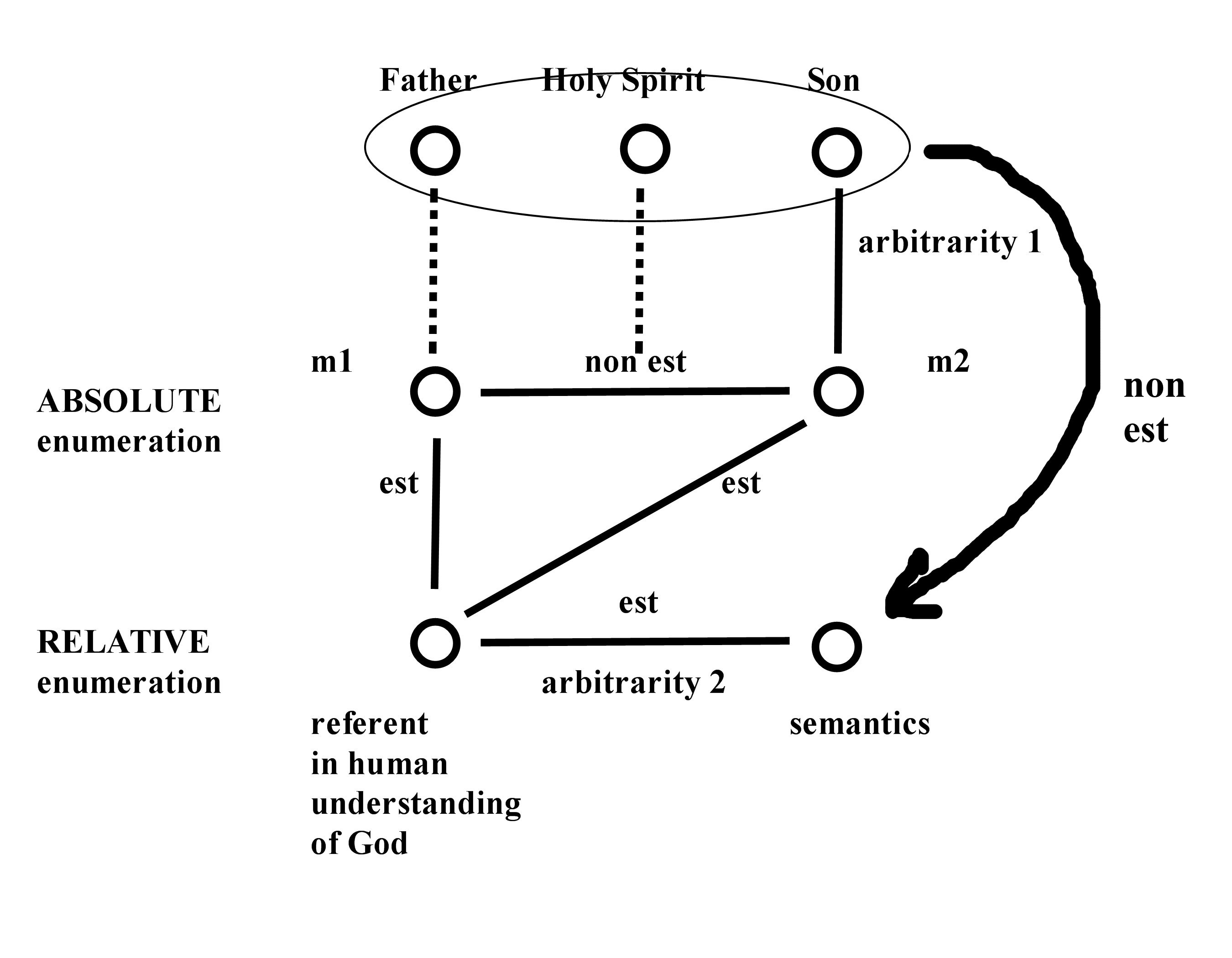
For the 'non-est' connection to the right, the history since about 1844 can be seen to struggle with just this problem of recognition of the arbitrarity 1 relating to arbitrarity 2. If Cauchy plagiarized Grassmann instead of replying to his letter, the reason why Saussure could have been credited with being 'the father of semiology' is perhaps only tragic vanity in the sense that his name sounds like a 'plagiarism' of the name of Cauchy - and hence it turns a potential tragic plagiarism of Cauchy (from Grassmann) around (leading to the 'western doubleworld' or 'double fold'). Saussure probably did not write many words about semiotics - and the few he wrote were perhaps not so very groundbreaking. But the story tells of the rejection of this righthand link - and this rejection could have prompted a protest called marxism and communism. Cauchy was concerned with differential (infinitesimal) calculus, which could be an efficient method for computing on History (ignoring Eternity and its moral concerns) under the assumption that arbitrarity 1 goes towards zero - and if Grassmann's theory ('Ausdehnungslehre') implied that arbitrarity 1 (albeit not the profit) could be arbitrarily large, it could have looked like a threat against Cauchy's work and interests. Clearly arbitrarity 1 will be comparable to the classic 'faculty of faith' as determining for the constitution of the (spiritual and historic) reality.
In order to regain not only the spiritual freedom but also a healthy basis for a computation theory without the need for broomriding technology (by 'nazi mythology'), it can be important to understand the role of this arbitrarity 1.
It is also important to see the relation between informational 'semantics' created by equiprobability of occurrence (in the fundamental theorem of logic) and a semantics established by a 'transcendent' understanding of this in the sense of 'the principle of meaning rather than symbol occurrence being equiprobable' - relative to the phenomenon of relative vs absolute enumeration. But that would mean only that 'absolute enumeration' can be defined in precisely this way.
The petrification is the creation of ontological reality by the falldown of metaphysics into physics with the recognition of metaphysical item m1 as being 'the same' as m2 - sameness recognized by the constraints of the human semiotic constitution (those constraints which lead to a 'faulty' human conception of the world, ignoring finer differences, including moral difficulties) which also creates its ideas of the character of God. Christian dogma recognizes the Son as the 'Word' which here is recognized as the word of existing speech and the modulus of prayer. Phonetic form is form in ontological reality, like logical form is form in metaphysical reality - such as the order of the constituents Father, Holy Spirit, Son in christian trinity. Since arbitrarity 1 can apply equally to m2 as to m1, and to the relation between them, this constitutes the trinity factor. 'Three and only three items can be the same': That would mean that for a logical form to arise there has to be at least two items and a relation between them.
SPACE will then be conceived as the three dimensions contained in this trinity - the three 'est' or conceptually 'non est'. Revelation or apparition (including the formation of the white stone which here is called the 'petrification point' with DDS #78 and #111) takes place in the conversion from 'non-est' to 'est'. It can be argued that the faculty of faith is involved also in the constitution of 'space' generally by the possibility of this three-fold conversion.
TIME in the historic version of 'the fundamental theorem of logic' will be conceptualized as the equiprobability of the three constituents of the trinity - in the present discussion by the cycles of the Rigveda - which, though, are not 'equiprobable' but that is precisely what shifts this element of expectation/information over onto a 'non-est' principle of semantics.
NUMBER will then be what unites two metaphysical realities in a dependency relation which assigns 'gravity' to their ontological union. The principle of NUMBER will be that at least two items are needed and a third difference between them - hence it is possible to measure the distance between two points in the two metaphysical realities by a number. Poetic number (my SNEEFT COEIL chapter 7) will then be the phonetic form as a mirror-symmetric image to the logical form.
'Trinity' in an intuitive mystic sense will then mean that the mystic inquiry strives towards understanding how the two 'similars' had been collapsed to one gravity-burdened ontological being - and then to try and regain the integrity of the originally different metaphysical units and the difference between them - this latter difference will then constitute the Holy Ghost - and contemplating this 'trinity' will open up the space of mystic inquiry.
The Word as the 'modulus of prayer' is that little white civilian helicopter coming back to look for its umbrella after the 5 military ones have disappeared with its mighty roars around a curve in the horizon. I notice, by the way, that the TEQ poems of the above discussion relates in a quasi 'golden ratio' in the form of 966/534 + 534/448 which sums up to something near '3' - as for that 'arbitrary' trinity value? Would the 'modulus' 0,0009530497592295345104333868379... be something? For example, of a kind similar to the Catalan constant? How long is its 'rosary' periodicity? I am only speculating. I refer to my 'Rosens triangel' which is the counterpoint to 'Stillhetens åndedrag'. This triangle is supposed to find its correlate in this 'shield of trinity' - that is, with its ultimate interpretation in the mystic trinity.
Absolute enumeration (of my DDS) converts to relative enumeration by the creation of phrase structure in language - as is the theory here. There are few leaps in the relative enumeration - there is one just before REL 111 (which is the theme of the above discussion) and one poem is missing between REL 91 and 93 - which could be seen as a leap from time to helicopter-space.
In these trinity terms, the yellow metre including the ex nihilo formation of matter is a step from 'non-est' to 'est'. It is assumed that this conversion goes to the linguistic (lower righthand) component in the formation of the inner poetic articulation - and into the ontological (lower lefthand) component in the formation of ex nihilo matter. This is therefore the 'apparition border' which also Diziani's artwork is about - as it takes spatiotemporal form.
It can be assumed that the lapis philosophorum materializes in the conversion from absolute to relative enumeration - that is, from #111 to #78. But #111 is also a relative number which is absolutely enumerated #170 in DDS. When even this is read in relative enumeration DDS #170, which is absolute #271, one finds a poem which interprets Diziani's artwork from top to bottom - from the top 'horse' (or female archetype, sort of) to the lower 'a votre santé' in white marble - in fact this poem seems to describe a vertical mid pole through Diziani's work. It seems to include this 'alternative' interpretation of the monk - here with lowered head, with Jesus turning towards his mother, the angel-soldier looking towards Jesus etc.
It is possible to illustrate this 78 → 111 → 170 in the form of a conversion diagram resembling the model of a 'trinity' discussed above:
It is when the #111 turns from ABSolute to RELative that the 'non-est' turns to 'est' and hence the two metaphysical items turn into an ontological referent and a linguistic unit. The 'petrification' can then apparently be studied in the relation between Ode III:2 and I:1.
The curving arrow from top row to bottom includes both arbitrarity 1 and 2, and it includes poem #170 and #78 as for 'two different realities'. It would have been this 'multiple-reality' phenomenon which the 'western world' developed its anxieties against when it developed its 'double fold'.
It is seen how DDS #170 runs like a vertical axis mid pole from top to bottom of Diziani, and similarly DDS #78 seems to be concerned with the textual/textile element constituting a horizontal axis. Notice that the woman of Diziani is dressed in blue clothes but is not 'Negerin' except in the sense of the vague sense of 'Nescia' attached to her character via Horace Ode III:2. The combination of the vertical and horizonal axes should expectedly be about the mystery of how diachrony relates to synchrony and syntagm to paradigm.
It is noticed that Diziani seems to display the idea of two different realities - one in terms of DDS #78 and another by DDS #170 - in a way potentially comparable with the two women on the piece of apparent gold that sprang from my hand while I was translating from the Rigveda:
|
|
|
|
In the one interpretation, the woman holds her arm up to touch her own breast, in the other she has the elbow down - and the egyptian woman could resemble the M curling around a crossbar with a cross on top in the Miraculous Medal of 1830. This corresponds to Diziani with the monk bowing down his head, Jesus turning towards his mother and the angel looking towards Jesus.
9. Some political observations
It was observed how a story with Grassmann and Cauchy could have been a part of the background of the 20th century western world. Grassmann sent his 'Ausdehnungslehre' to Cauchy and Grassmann seems to have reported a plagiarism of Cauchy on this background. Marxism could have sprung forth and unfolded in the east in response to this development of an unfortunate rejection of arbitrarity 1 in the west. Could be this led to world wars I and II?
I followed some of Fredrik Otto Lindeman's lectures in comparative indoeuropean and read some hittite with him around the mid 1980's - he explained how the laryngeal theory (which had been his field of study) had its origins in Saussure's discoveries of a fourfold redundancy in the laryngeal/pharyngeal area in proto-indoeuropean. Saussure had described three of them and the fourth emerges by itself from the three first. The problem was that they were hard to prove - untill hittite was deciphered around 1915 and these four back articulations seemed to be evidenced. Lindemann talked of it as a classic example from the history of science - after the theoretic redundancies had been described one could dig the evidence up from the earth. The problem with hittite from ths point of view is that it is written in cuneiform which is brimming over with ambiguities, the decipherment is full of loan words from accadian, sumerian and other cuneiform languages, the grammar resembles hungarian but the vocabulary looks more german (or, say, austrian). When the decipherment also came around the time when Hitler was about to start his political career, it could have looked 'hitlerite'. What is the story? My guess is that the four historic redundancies I have described in this article - recognizable as Rigveda and Moses clusterings around the mid four lines in Horace's Ode I:1 and III:2 - that is, fields B1, B2, C1 and C2 - resemble structurally the redundancies in the laryngeal theory of proto-indoeuropean in the same way as the grammatical errors of my DDS do, and hence if the decipherment of hittite is right then the story from Grassmann-Cauchy as a double fold - which somewhat unjustly credits Saussure (by name-similarity with Cauchy) for 'the foundations of semiotics' in a political mixmax confusion which thereby somewhat fails to recognize that it is Saussure's observations on the laryngeal-pharyngeal redundancies in proto-IE which deserves the credits - this explains how Hitler could have run off with these while Saussure was left as a semiologician of few words. Hitler's confused ideas of an 'aryan' origin of the german 'Volk' could have been fishing around in these quasi-messianic waters, and his attack on the jews could have been a result of a feeling of a threat from the Moses part of this story against the power which he could have accumulated on such a basis.
I notice also that Horace Ode I:1 as discussed in the present article indicates by this function the wording on the essential place of 'viridi membra' (line 21) which by political intrigue could have been mistaken for 'virile membrum' (= 'male gender organ') for the 'martial pisrepresentation' which lends ultimate responsibility onto e.g. 'landen' = 'L/D' - in the formula 'daz volc von drizec landen' in Wolfram von Eschenbach's 'Parzival'. For example, Hitler's 'Volkswagen' = 'folkevogn' could have been this 'volc von'. When he was from 'Braunau am Inn', it is close to this 'membra'.
There are some reasons to guess that a quasi-political (or 'intelligence') project has been environmental on these matters - I notice a norwegian 800 runner called 'Audun Boysen' whom my official mother decades ago told she knew from her days of studies of psychology at the university. (Boysen was born 2 days before her - which would have been exactly around those days of mid may 1929 when the most experienced stockmarket speculants started to pull their shares out of the market before it crashed on 'Black Friday' of Wall Street). This name can be spotted in Ode III:2 in terms of 'aurae' = 'Audun' and 'virum' (= 'poison', 'man') - with mid word 'sordidus' = 'dirty' - which could have been for the combined effect of 'lapis-filosofo-aurum' - cp. the two ex nihilo stickers discussed above, which again could tell of the philosophical problem whether Jesus, born around the time when Horace could have written this ode, were an 'ex nihilo' phenomenon and hence if this could be brought 'under control'. Does this mean that the present work is but a 'jumping jack' response to a quasi-political project of more or less shady character? Of course it means only that this ode of Horace is a bottleneck which is hard get around for these matters. There are another two elements to mention for a possible political involvement in these lines of Horace for the present study: 1) Search this file for 'Tiepolo in Apostoli': The following comparison of this image with this Tiepolo found in the same Apostoli church as Diziani's artwork could introduce some further 'political' interests, and 2) there are not many metres from this church with to Diziani to the evangelic church across the piazza where they have a Tizian work. This image from the US film "There's no business like show business" could thereby provide a link to the image exactly 42,666% through the film - that is the image which today could bring forth associations to 11 september 2001. Were the attack on Israel (the land of Ezekiel) on 7 october 2023 motivated by my writing of the present article? That is, as a quasi 'responsibility claim' to the theories in this article by the idea of a rooting or quasi rooting ('Sderot') of it in a possibly old secret intelligence project indexed by this 800 metre runner whose career had its peaks in the 1950's? Although this sounds improbable, it is noteworthy that the family had in 1970-71 a neighbour called 'Bo Breigan' who also was an accomplished 800 metre runner. Could be, therefore, that the attack on Israel also could have encoded interests concerning US politics ('Reagan' etc).
There could also be some potential political interests in terms of the helicopters of 22 september 2013. The Donbas conflict broke out in april the following year - and from the viewpoint of the present article it is not impossible to see this as a case of a 'Don-au-bass' in the mighty roar of the helicopters here with a link to line #78 with the factor 100.
.
10. Conclusion
The article has explained with exemplification how the inner poetic articulation of TEQ (1997-2008) turns into the outer poetic articulation of DDS (2009-2015) via the changes in cultural context which the revelational character of TEQ has created and by which it influences the form of DDS. (The revelational character of the 1719 poems of TEQ can perhaps be confirmed by comparison with the 1775 poems of Emily Dickinson in Johnson's enumeration - the idea of a 'revelation' of a poetic Elysium). The examples have shown that this quasi-causal link between the inner and outer poetic articulation is found in the diachrony contained in the grammatical errors of my german language in DDS such as this has reflexes in the ancient book of Moses and the Rigveda. These 'humanoid' grammatical errors again appear to be systematically related to the two computer glitsches ('errors') with a humanoid logic which behave in a way which would make them comparable to a sort of apparition into history - comparable perhaps to the imprint of the Madonna on the 'tilma' in Guadalupe.
Do the errors of my german language on this background feel insulting to those who prefer proper normative grammar for the german? Of course it should not be taken that way - if one understands how the TEQ can correlate with 4000 year old egyptian data, a 'revelation of the revelation' from this into my diachronic DDS could then make sense for the closer to 3000 year old hebrew and vedic data. But that does not mean that language does not change. But maybe there is something about the idea that my grammatical errors can correspond with a deep diachronic intuition, although some could perhaps feel that this rather would have been about a sort of 'steproot' to the origins of the language and the culture.
The conclusion to the above study is likely to be that it can open for a glimpse beyond the border between history and eternity. In principle, this should intuitively also open for a computation beyond the Turing boundary.
This could also have been the character of the helicopter vision (possibly of an 'Ezekiel' kind) - and, more specifically, if the description could come to be sufficiently precise, it could also come to include a controlled printout of phenomena such as the two ex nihilo stickers.
Schizophrenic speech aligned with Augustine tells of the need for solving the historic problems since Cauchy - and, more generally, it tells of the immense importance for the new information technology to understand the value and necessity in crediting the source.
Sources:
St.Augustine: Confessions. Vols.I-II. Translated 1631 by W.Watts. Loeb Classical Library. Harvard University Press, Cambridge, Massachusetts 1977. (Internet source pages 278-279, pages 280-281, pages 282-283).
Blumenthal, E. (ed): Altägyptische Reiseerzählungen. Die Lebensgeschichte des Sinuhe. Der Reisebericht des Wen-mun. Reclam, Leipzig 984.
Correggio, A.A.: Reproduction from 'I maestri del colore' #5, Fratelli Fabbri Editori, Milano 1963.
Davies, N. de G.: The tomb of Antefoker, Vizier of Sesostris I, and of his wife, Senet. Tomb #60. With a chapter by Alan H.Gardiner. The Theban tomb series. George Allen & Unwin, London 1920. (Source https://www.academia.edu/13365153/The_Theban_Tomb_of_Antefoker_TT_60_)
Diels, H.: Die Fragmente der Vorsokratiker. Berlin 1922.
Diziani, G.: Gaspare Diziani's 'Virgin with child' in Chiesa dei SS. Apostoli in Venice (with source of reproduction)
Evans, H.: An introduction to the history of mathematics. 6th edition. The Saunders Series. Saunders College Publishing, 1990.
Grassmann, H.G.: Die Ausdehnungslehre 1844. In: Gesammelte Mathematische und Physikalische Werke. Herausgegeben von Friedrich Engel. Teubner, Leipzig 1894.
Grover, J.B.: Collected works volumes 1-4
Grover, J.B.: Horace and chinese radicals
Grover, J.B.: The two petrification points
Horatius Flaccus, Q.: Ode I:1
Horatius Flaccus, Q.: Ode III:2
Horatius Flaccus, Q.: Epistle I:vii
Lindeman, F.O. (1987): Introduction to the 'Laryngeal Theory'. Norwegian University Press.
Lucia, Sister: The three secrets of Fatima. In english translation on http://www.vatican.va/roman_curia/congregations/cfaith/documents/rc_con_cfaith_doc_20000626_message-fatima_en.html.
Moses: Genesis
Onions, C.T.: The Oxford Dictionary of English Etymology. Oxford 1982.
Rigveda: https://vedaweb.uni-koeln.de/rigveda by University of Köln database
Rilke, R.M.: Sämtliche Werke (12 Bänden), Insel 1955.
Wallis Budge, E.A.: Egyptian hieroglyphic dictionary. A hieroglyphic vocabulary to the theban recension of the book of the dead. Kegan, Trench, Trübner, London 1911. Printed by Adolf Holzhausen, 19-21 Kandlgasse, Vienna. Issued by Book Jungle, PO Box 2226, Champaign, IL 61825. Reprinted by Lightning Source UK Ltd, Milton Keynes UK on 02 December 2010.
West, G.: The Tekenu and Ancient Egyptian Finerary Ritual. Archaeopress Egyptology 23. Archaeopress Publishing, Oxford 2019. (Source https://www.archaeopress.com/Archaeopress/DMS/1FE15862C4A34970B1E4D55D7DDE35FF/9781789691825-sample.pdf
https://de.wikipedia.org/wiki/Datei:Maler_der_Grabkammer_des_Menna_011.jpg
© John Bjarne Grover
On the web 10 october 2023
Last updated 11 october 2023

_-_La_vergine_col_Bambino,_san_Giuseppe,_san_Giovanni_Battista_e_sant'Antonio_da_Padova_(1755)_Gaspare_Diziani.jpg)